
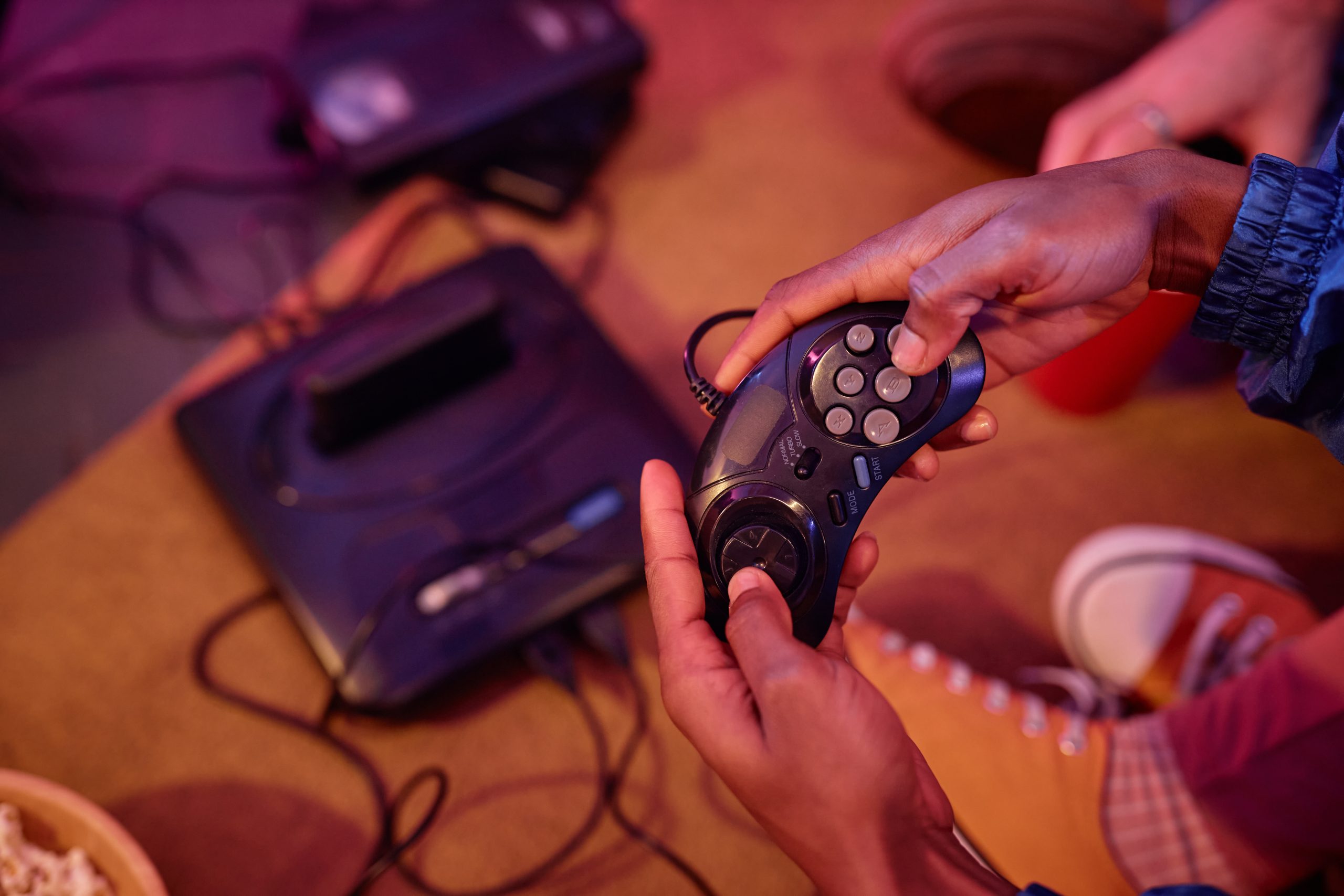
I am a history teacher from Phoenix, Arizona and I’ve watched people write off the Sega Genesis for nearly 30 years now. They say the Super Nintendo Entertainment System (SNES) had better games. They say Nintendo dominated the 16-bit era. They say the Genesis was technically inferior. None of that is true. The Genesis was not inferior; it was simply different. While the market was moving toward home-developed games, the Genesis focused on arcade-style gameplay. Additionally, the Genesis was technically superior in many ways that people often choose to ignore. Unfortunately, Sega was victimised by timing issues and Nintendo’s stranglehold on third party publishers.
The Sega Genesis was released in Japan as the Mega Drive on October 29, 1988, and in North America on August 14, 1989. The Genesis sold 30.75 million units as a first party platform, which is roughly 38% fewer than the 49.10 million units of the SNES. However, the 11 million unit difference between the two consoles does little to tell us about the quality of each system. Instead, the 11 million unit difference is largely reflective of Nintendo’s dominant position in the market and its ability to secure exclusive publishing agreements with the majority of third-party developers.

Sega Genesis Technical Specifications
| Specification | Details |
|---|---|
| Release Date | October 29, 1988 (Japan as Mega Drive), August 14, 1989 (North America) |
| Main CPU | Motorola 68000 at 7.67 MHz NTSC / 7.61 MHz PAL |
| Co-processor | Zilog Z80 at 3.58 MHz (audio/FM synthesis) |
| Audio Chip | Yamaha YM2612 (6-channel FM + 1 PSG channel) |
| Main RAM | 64 KB |
| Video RAM | 64 KB |
| Audio RAM | 8 KB |
| VDP Chip | Sega VDP supporting 320×224 or 256×224 resolutions |
| Colour Support | 512 colours from 16.7 million colour palette |
| Sprites | Up to 80 sprites (32×32 pixels max) |
| First-Party Sales | 30.75 million units worldwide |
| Generation | 16-bit home console |
The Technical Truth
We will begin with the specifications since the Genesis has been grossly misrepresented when it comes to specifications. The Genesis utilised a Motorola 68000 processor operating at 7.67 MHz in NTSC mode and 7.61 MHz in PAL mode. The SNES used a Ricoh 5A22 processor and had an average speed of 3.58 MHz. Therefore, the Genesis had over twice the raw processing power of the SNES. There is no small difference here; there is a large difference.
In addition to the Motorola 68000, the Genesis had a dedicated Z80 co-processor at 3.58 MHz for handling audio and FM synthesis. The SNES did not have a separate audio processor. The Genesis also featured Yamaha YM2612, a 6-channel FM synthesiser with one PSG channel. This is a tremendous amount of audio capability.
As far as colour support goes, the Genesis can display 512 colours from a 16.7 million colour palette. The SNES, however, displayed 32,768 colours total. At first glance, it appears as though the SNES has a greater colour capacity, but this is misleading. The Genesis’s colour architecture is far more flexible than the SNES. With the Genesis, you can show 512 colours at once, and they can be any of the 16.7 million colours available. The SNES, however, was restricted to a set palette of 32,768 colours. In reality, the Genesis provides more options for colour selection.
With regards to sprite capabilities, the Genesis can support up to 80 sprites at 32×32 pixels, while the SNES can support up to 128 sprites at 64×64 pixels. Based on the numbers alone, the SNES has a higher sprite count and larger sprite size. However, larger sprites are less valuable for fast-paced action games, such as most arcade titles. Smaller sprites provide faster rendering for arcade-style games, making them ideal for the Genesis. Larger sprites are better suited for slower-paced games.
From every measurable aspect of raw processing power, the Genesis clearly surpassed the SNES. This is not an opinion; this is fact. The SNES did not have more processing power than the Genesis; it was architecturally different and optimised for a completely different type of game.
Arcade Ports: Where the Genesis Really Shined
One major advantage that the Genesis possessed over all other home consoles was its ability to port arcade games directly onto the Genesis. As mentioned earlier, in the late 1980s and early 1990s, arcade games were still very popular and many gamers enjoyed playing arcade games in arcades. Many fans of arcade games desired to experience the same fast paced action at home that they experienced in the arcade. Due to its faster processor and its focus on arcade-style games, the Genesis was capable of providing arcade-quality ports of arcade games in a manner that no other home console could match.
Street Fighter II was one example of a game that played much better on the Genesis than on the SNES. Another example is Strider, which also ran smoother on the Genesis. Golden Axe, Altered Beast, Sonic the Hedgehog, Gunstar Heroes, etc., were all arcade-quality games that played much better on the Genesis than they would have on other consoles. For those who cared about experiencing arcade-quality games at home, the Genesis was the clear choice.
While the SNES had better exclusive games, it does not mean that the Genesis was inferior. Rather, the Genesis and the SNES were optimised for entirely different aspects of gaming. The Genesis was optimised for arcade-style performance. The SNES was optimised for home developed RPGs and platformer games. Both of these approaches were equally viable. Ultimately, the market chose to favour the SNES’s approach to home game development over the Genesis’s arcade-style performance.
Sonic the Hedgehog: The Coolest Mascot Ever
Sonic the Hedgehog was cooler than Mario. Don’t bother trying to argue this with me – it’s a fact. Mario was Nintendo’s safe, family friendly guy-next-door. Sonic was faster, edgier, and cooler. Choosing between Mario and Sonic in the early 1990s was a choice between listening to your parents’ music versus listening to the music that was actually cool.
Sonic the Hedgehog was a system-seller. Super Mario World was not. Sonic had style. Sonic had attitude. Sonic was the cool mascot that made the Genesis appealing to teenagers who wanted cutting edge cool rather than wholesome family fun. Not being able to market a console to the demographic that wants cool and hip is a huge disadvantage.
There was not anything wrong with Sonic. There was a lot wrong with the SNES. The SNES had Final Fantasy VII and Chrono Trigger. Those games appealed to an older demographic. They were story-driven games with stories that rivalled films. Sonic may have been cooler, but Final Fantasy VII was a more ambitious game. And the market awarded ambition.
The Library Problem
Although the Genesis library is smaller than the SNES library, it is not due to the fact that the Genesis was technically inferior. Rather, it is due to the fact that Nintendo had a near monopoly on the relationship between developers and platforms. If you wanted to develop and publish a game for a home console in the early 1990s, you almost had to deal with Nintendo to get access to the developers. Although some third-party publishers were willing to develop and publish games on the Genesis, Nintendo offered better terms to those publishers, resulting in a much smaller library of games for the Genesis compared to the SNES.
The SNES had an enormous library of exclusive games including all of the Final Fantasy series, Dragon Quest, Chrono Trigger, and Earthbound. Sega simply could not compete with that level of library depth because it could not secure the same level of commitment from third-party developers as Nintendo.
It is not a testament to the quality of the SNES that it had a better library. It is a testament to Nintendo’s business prowess and its ability to control and limit the access of its competitors to the resources and talent needed to produce a competitive library of games.
Is the Genesis Still Relevant Today?
I have personally played through the entire Genesis library. The controls are responsive. The arcade ports still feel great. The Genesis graphics still look great today because the Genesis was designed with arcade aesthetic in mind. Sonic the Hedgehog is still fun to play. Gunstar Heroes still demonstrates impressive technical abilities. Street Fighter II Turbo still runs smoothly on the Genesis.
The audio in Genesis games is surprisingly good. The Yamaha YM2612 produced music that was extremely FM synthesiser-heavy, whereas the SNES audio was sample-based. Although the audio produced by the Genesis YM2612 is not as rich and orchestral as the audio produced by the SNES, it is unique and effective in its own right. The Sonic the Hedgehog soundtrack is catchy. The Gunstar Heroes soundtrack is amazing. The audio design of Genesis games is simply less musical and more electronic than that of the SNES.
Overall, the framerates are consistent. Most Genesis games are capable of running at a smooth 60 frames per second, unlike many SNES games that cannot achieve a similar framerate. Fast-paced, arcade-style games benefit greatly from having a consistent framerate and the Genesis delivers this.
Market Reality
The SNES outsold the Genesis. This is true. The SNES won the 16-bit console war. However, this was due to the SNES possessing a more robust library of exclusive games and Nintendo’s superior market positioning. The SNES appealed to a broader demographic. The SNES had games for casual players and hardcore players. The SNES had something for everyone.
The Genesis appealed to a more limited demographic: those who cared about arcade games and action games. While this is a significant demographic, it is not as large as the demographic that the SNES appealed to. The SNES audience consisted of grandmothers playing Kirby and investment bankers playing Final Fantasy VI. The Genesis audience was primarily teenagers and young adults looking for fast-action games.
Ultimately, the market size matters. The market influenced the outcome of the console wars. However, winning the market does not equate to technical superiority. The Genesis was technically superior in raw processing power. The SNES was architecturally superior in regards to the type of games that the market ultimately wanted to play. Both of these statements are true.
Why the Genesis Was Important
The Genesis demonstrated that Sega could challenge Nintendo. For the first time, a competitor had a console that was technically superior to Nintendo. Although Sega did not ultimately win the war, it showed that Nintendo was not invincible. The Genesis also established a loyal fan base and provided Sega with a foundation to continue producing high-quality consoles, which culminated in the Dreamcast.
The Genesis also demonstrated that it is possible to design consoles that are optimised for different types of gameplay. Just because you are not going to try and win a war based solely on home game development does not mean that you cannot create a successful console. You can design a console that focuses on arcade-style gameplay, thereby appealing to a different demographic. You can be technically superior and still lose the console war if your target demographic is smaller than that of your competitor.
The Genesis’s impact on subsequent consoles was substantial. Subsequent Sega consoles continued to utilise the same arcade-style design philosophy. The Saturn was designed to optimise arcade-style gameplay. The Dreamcast was designed to optimise arcade-style gameplay. Sega understood that it could not compete with Nintendo at home game development, so it focused on developing arcade-style games.
Conclusion
The Sega Genesis was a superior console to what people give it credit for. Technically superior processor. More arcade-quality ports. Cooler mascot. Designing games with a focus on arcade performance is a completely different approach than designing games for home development, and both approaches are equally valid.
The Genesis lost the 16-bit console war. However, that was a market decision, not a technical one. The SNES appealed to a broader demographic. The SNES had better exclusive games for the demographic that ultimately mattered. The SNES won because the market ultimately wanted Final Fantasy and Chrono Trigger more than it wanted Sonic and Gunstar Heroes.
However, that does not mean that the Genesis was technically inferior. It simply means that the Genesis was a different console. Different does not always result in success in the market, even if the differing product is technically superior.
30.75 million units sold worldwide. That is not the sales figure of a failed console. That is the sales figure of a console that had significant success in the marketplace, albeit a smaller one than the SNES.
Rating: 9/10 – Technically superior console that lost to a more effective marketing strategy
Want to find out more about retro consoles? Cheque out our full Top 10 list of the greatest 80s and 90s consoles