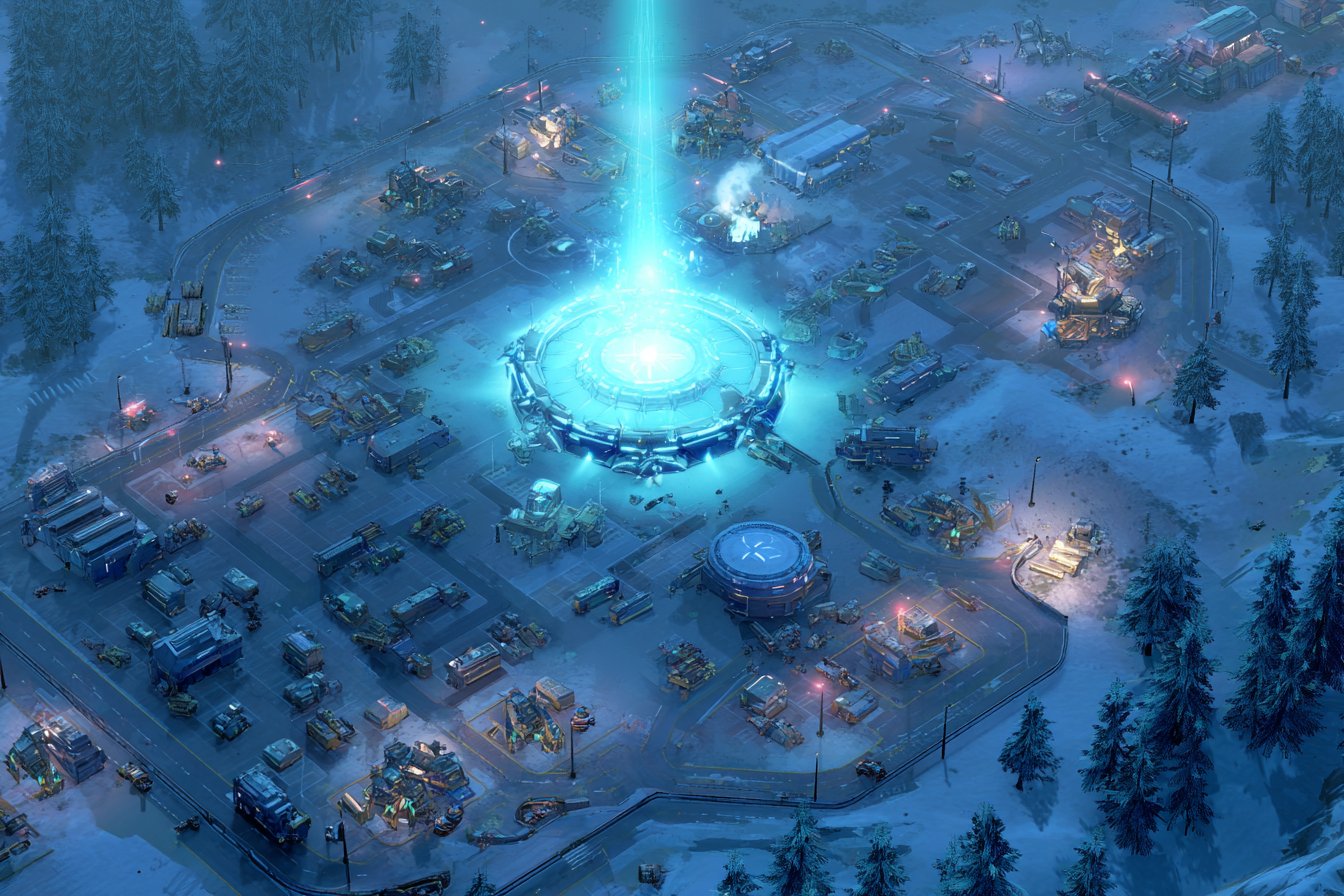
John here and I’ve got to bring up some old business that’s been eating at my brain for nearly 30 years. Whilst everyone else was busy mucking about with their fancy video game consoles back in the early ’90s, PC gaming was providing experiences that would make any Mega Drive user green with envy. XCOM: UFO Defense (a.k.a., UFO: Enemy Unknown if you’re one of the lucky ones living outside of America) was more than just another game – it was evidence that computer gaming could provide levels of complexity and depth that were just too much for consoles to handle.
This is the game that taught an entire generation of people what real strategy looked like. No hand holding, no “difficulty curve” based on marketing committee deliberations, just straight up, no nonsense, take it or leave it, tactically challenging combat that required you to think before acting. XCOM: UFO Defense was released in 1994 and encapsulated everything brilliant about PC gaming culture: sophisticated mechanics, actual consequences for your mistakes and systems so deep that you can spend months learning new ways to execute your strategies.
The great thing about XCOM: UFO Defense was that it trusted you to be intelligent enough to figure things out on your own. There were no tutorials telling you what each button did or reminders popping up to tell you to save your game before attempting that critical mission. You learned by failing – big time and repeatedly – until you finally figured out what the game was trying to teach you.
| Developer | Mythos Games / MicroProse |
| Platform | PC DOS (originally) |
| Year Published | 1994 |
| Genre | Turn based strategy / Squad tactics |
| Players | Single player |
| Our Rating | 10/10 |
XCOM: UFO Defense found itself included in our Top Ten list due to the fact that it was the first to establish systems that developers are still trying to copy today. Modern day XCOM (the reboot) receives praise for its tactical depth but the original was the first to implement all of the ideas that the reboot is now praised for.
The Revolutionary Two Layered Strategy System
What made XCOM: UFO Defense so innovative was the fact that it took two completely different strategy games and combined them into a single cohesive experience. The global strategic layer gave you control over the overall direction of your alien war effort. In addition to researching new technologies, you managed your manufacturing schedule, constructed new buildings for your base and operated your interceptor squadron(s). With a finite number of resources, every decision you made during the game directly affected the outcome of your efforts to defeat the alien threat.
You didn’t have the luxury of building everything anywhere. Researching new technologies gave you access to new tactical options but doing so required a significant amount of time. If you researched laser technology, for example, you’d likely be delayed in developing armour upgrades. Expanding your operations to other continents would only stretch your already thin resources even thinner. These weren’t artificial means of making the game harder – they were real strategic trade offs that forced you to develop your own tactical philosophy based on the resources available to you.
The tactical combat layer translated those strategic decisions into life and death squad battles. The research you conducted affected the types of weapons available to you. The manufacturing choices you made determined whether your soldiers would have the right gear to face the advanced alien threats. Your base construction decisions determined the size of your squads and whether you had adequate backup available to bail you out when your missions went wrong.
Because of this integration of strategic planning and tactical execution, the gameplay of XCOM: UFO Defense had emergent qualities that created uncertainty and unpredictability. Completing a successful Terror Mission may give you access to alien technology that completely changes your research priorities. Losing a UFO Recovery Operation may lose you months of progress and require you to adapt to the changing landscape of the battlefield with suboptimal gear. Every strategic choice has consequences that cascade down into the tactical layer in ways that keep the gameplay interesting for weeks of play.
It’s easy to forget that XCOM: UFO Defense was a major departure from the norm of computer gaming at the time. Typically, strategy games focused either on resource management or tactical combat but rarely on both simultaneously. XCOM: UFO Defense demonstrated that computer gaming could support complex systems where the depth of the game came from the interaction of the systems themselves, not from pre scripted scenarios.
Unforgivably Brutal Tactical Combat
The turn based tactical system used in XCOM: UFO Defense was merciless in the way it punished poor decisions. Each of your soldiers has a limited number of time units to perform movements and actions, requiring you to engage in serious tactical thinking regarding positioning, cover and action economy. You cannot just send your whole squad marching forward and expect to succeed – the aliens will systematically pick off any exposed soldiers whilst your remaining troops stand idly by and watch.
The reason that XCOM: UFO Defense’s tactical combat was so effective was that it adhered to the basic principles of small unit tactics. The concept of cover truly matters. Flanking provides a significant advantage. Overwatch creates serious tactical dilemmas regarding movement vs. defence. Soldiers can become panicked and shoot their fellow soldiers or drop their guns. These are not random game mechanics – they simulate real world tactical considerations that make every engagement feel like a high stakes gamble.
The accuracy of your weapons decreases with range, causing you to engage in serious tactical movement to get to the optimal position to fire upon your enemies. Different weapons have unique roles in the battle. Rifles are good for reliable medium range engagements. Heavy Plasma is excellent for destroying enemy formations in close combat. Auto Cannons are good for suppressing enemy movements and denying areas to enemy forces. Ammo is limited, requiring you to decide when to engage the enemy and when to fall back to a safer location to wait for a better opportunity.
Reaction Fire causes continuous concern with regard to movement decisions. Aliens can interrupt your turn with Opportunity Fire if your soldiers move too recklessly through the field of view of the aliens. Therefore, every movement requires tactical thought – which route will minimise your exposure, which soldiers should move first to provide covering fire etc. Whether advancing into enemy territory is worth the risks or if you should stay in defensive positions is also a serious tactical decision.
Veteran soldiers offer a level of value to your team that rookie soldiers simply do not. Rookies have poor accuracy and are less brave than veterans. Therefore, placing rookies in vulnerable positions and providing them with sufficient supporting fire is a serious tactical consideration. Losing a veteran can cripple the effectiveness of your team for multiple missions.
Long Term Strategic Planning Based on Resource Allocation
Unlike most contemporary games, the research system in XCOM: UFO Defense does not follow a linear path with predetermined results. Instead, your research priorities represent strategic decisions about the current state of your technology and what you want to focus on in the future. Acquiring alien technology represents new opportunities for research but first you must complete the missions to obtain the technology.
Similarly, your manufacturing system presents serious resource allocation problems. Creating conventional equipment is quick but ultimately ineffective against more advanced alien threats. Creating alien technology requires rare and exotic materials that are in short supply. You cannot outfit every soldier with plasma guns immediately – the choice of which soldiers receive advanced equipment affects the tactical options available to you.
Engineers and Scientists are limited resources that determine how quickly you can develop new technologies and how much equipment you can manufacture. Hiring more researchers increases the rate at which you develop new technologies but reduces the money you have available to purchase equipment. Building more manufacturing facilities requires a lot of space in your base and money to maintain. These are not arbitrary resource drains – they represent serious strategic decisions about organisational priorities.
Therefore, the interdependencies between research, manufacturing and tactical requirements represent serious planning challenges that extend well beyond individual missions. Researching Power Armour is pointless unless you have the manufacturing capacity to produce it. Developing advanced weapons is equally irrelevant if your soldiers lack the skill to use them properly. Creating a strong defensive posture for your base is useless if the aliens have technology that can overwhelm your defences.
This type of long term planning is what distinguishes XCOM: UFO Defense from most contemporary strategy games which are often focused on achieving specific short term tactical goals. To win at XCOM: UFO Defense you must be able to think several months ahead of your opponents whilst also adapting to the unpredictable alien attack patterns.
Real Consequences of Poor Base Design
Building your base in XCOM: UFO Defense extends far beyond the usual building mechanics common to strategy games. Your base design directly impacts the operational effectiveness of your base and the likelihood of success for your missions. Placing facilities in close proximity to each other can increase efficiency in terms of adjacency bonuses for workshops and laboratories. However it can also lead to serious logistical problems if you don’t manage your facilities wisely.
Your Living Quarters limit the number of soldiers you can have in your squads which limits your research potential and your ability to conduct missions. Your Storage Facilities affect how much ammo and equipment you have available for extended campaigns. Your Hangars limit the number of interceptors you can deploy to intercept UFOs. These are not cosmetic elements of base building – they are serious operational limitations that impact your ability to successfully execute your missions.
Defending your base from an alien attack becomes a tactical problem as much as it is a defensive one. Your facility layout determines your defensive choke points and where you can place your soldiers to defend your base. Poor base design can allow aliens to bypass your defences and destroy key parts of your base before your defenders can respond. The base layout becomes a tactical environment that you must fight in.
If you have multiple bases you must carefully allocate your resources amongst them and specialise each base according to its function. Research Bases require clusters of Laboratory Buildings and Scientist Quarters. Manufacturing Centres require Workshop Clusters and Engineer Accommodations. Interceptor Bases require Radar Coverage and Hangar Facilities. Each base represents a significant resource investment that must pay for itself in terms of the operational benefits it brings to the table.
Finally, your base locations influence the availability of tactical missions and strategic resources. Bases located in different regions of the world provide you access to different sources of funding and different patterns of alien activity. Poor base placement can cause you to miss out on entire continents allowing alien infiltrators to operate unchecked whilst your forces are concentrated in other regions.
Why XCOM: UFO Defense Remains The Best Example of a True Tactical Strategy Game
Thirty years after its initial release XCOM: UFO Defense is still available today through modern digital distribution platforms and attracts new players every day who discover what real tactical depth feels like. XCOM: UFO Defense was a commercial success selling over 600,000 copies on PC DOS and more than 400,000 copies at full retail price with minimal marketing. This demonstrates that complex strategy games could be commercially viable when they respected the intelligence of their players.
In addition to its success in Europe half of all US net sales were generated in the United States illustrating that American PC gamers were just as hungry for complex strategy experiences as their European counterparts despite the prevailing narrative that consoles were the dominant platform.
Computer gaming reached its zenith with XCOM: UFO Defense – delivering experiences that were simply impossible on console hardware at the time.
Contemporary strategy games are still struggling to emulate XCOM: UFO Defense’s seamless integration of strategic planning and tactical execution. The 2012 reboot of XCOM simplified many of the systems to broaden the appeal of the game sacrificing much of the original’s depth in the process. Indie developers are still digging through the design principles of XCOM: UFO Defense because its underlying systems represent the pinnacle of how to create meaningful player choices with real consequences.
XCOM: UFO Defense never apologised for being complex. It assumed you wanted to engage with sophisticated systems and was happy to let you learn through trial and error (and repeated failure) instead of hand holding you through the game.
That was PC gaming culture at its most confident – creating experiences for players who valued depth over accessibility, challenge over convenience.
You know what consoles couldn’t do in 1994? Support the memory requirements necessary for XCOM: UFO Defense’s simultaneous strategic and tactical systems. Whilst console gamers were enjoying simple arcade style games PC gamers were managing a global alien invasion scenario with dozens of connected systems operating simultaneously. This was not technical showmanship – it was utilising computer capabilities to create fundamentally new forms of gameplay.
XCOM: UFO Defense demonstrated that computer gaming could provide strategic complexity that would remain engaging for hundreds of hours of playtime. Every campaign in XCOM: UFO Defense felt different because the tactical challenges presented by the game arose from system interactions not pre scripted scenarios. The replayability of XCOM: UFO Defense came from mastering the interconnected systems of the game not from unlocking set content.
For all these reasons XCOM: UFO Defense is a true classic of the genre and earns its place as one of the top ten strategy games ever created. Not because it was the first to break new ground although it certainly was but because its design principles remain the gold standard for tactical strategy gaming to this very day. Every modern strategy game that incorporates Permadeath, Resource Scarcity, Meaningful Tactical Positioning and Long Term Strategic Planning owes a debt of gratitude to XCOM: UFO Defense for originally implementing these concepts.
Unfortunately we will never again see a game that combines all of the design elements of the original XCOM: UFO Defense because the gaming industry has shifted towards appealing to a broader audience and has thus abandoned the complexities of the original XCOM: UFO Defense. Nonetheless for those who have played through the original’s unforgiving and strategically brilliant tactical combat XCOM: UFO Defense remains the ultimate example of what PC gaming can achieve when it trusts the intelligence of its players.