Look, I will be blunt with you – when the PlayStation came out, and everybody was talking about 3-D polygons being the way of the future, I thought we may lose something wonderful. Thirty years into this hobby, I watch kids dismiss everything that does not have ray-tracing, and it is an experience that reminds me why Metal Slug meant so much to me when it came out in arcades.
This was not just another run-and-gun shooter. Metal Slug was a declaration that 2D animation could be art; that sprite work could have heart; that there are still better ways to do things than those we now find antiquated.
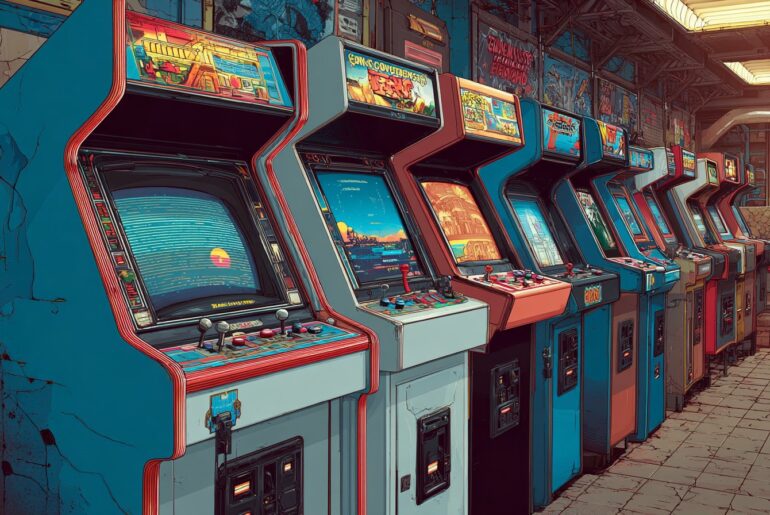
Metal Slug entered arcades on April 19th, 1996, produced by Nazca Corporation and distributed by SNK. The timing could not have been more perfect, nor more bold. As the rest of the world was racing toward 3D polygons and proclaiming 2D dead, SNK chose to double-down on what the Neo Geo was greatest at – beautiful, flowing animation that gave each frame the feel of having been hand-crafted. Do you understand what I mean? This was a statement of intention regarding sprite work.
Within weeks, Metal Slug had reached Game Machine’s seventh most popular arcade title and was listed amongst America’s Top Ten Highest Grossing Arcade Games of 1996. In a year when arcades were fighting to maintain relevance compared to the rising tide of home console gaming, Metal Slug showed that 2D gameplay executed flawlessly could fill arcades. That is no minor feat.
| Developer | Nazca Corporation |
| Publisher | SNK |
| Platform | Neo Geo MVS / AES |
| Release Year | 1996 |
| Genre | Run and Gun |
| Number of Players | 1-2 (local co-op) |
| Rating | 9/10 |
Animation That Is Still More Visually Impressive Than Most Modern Games
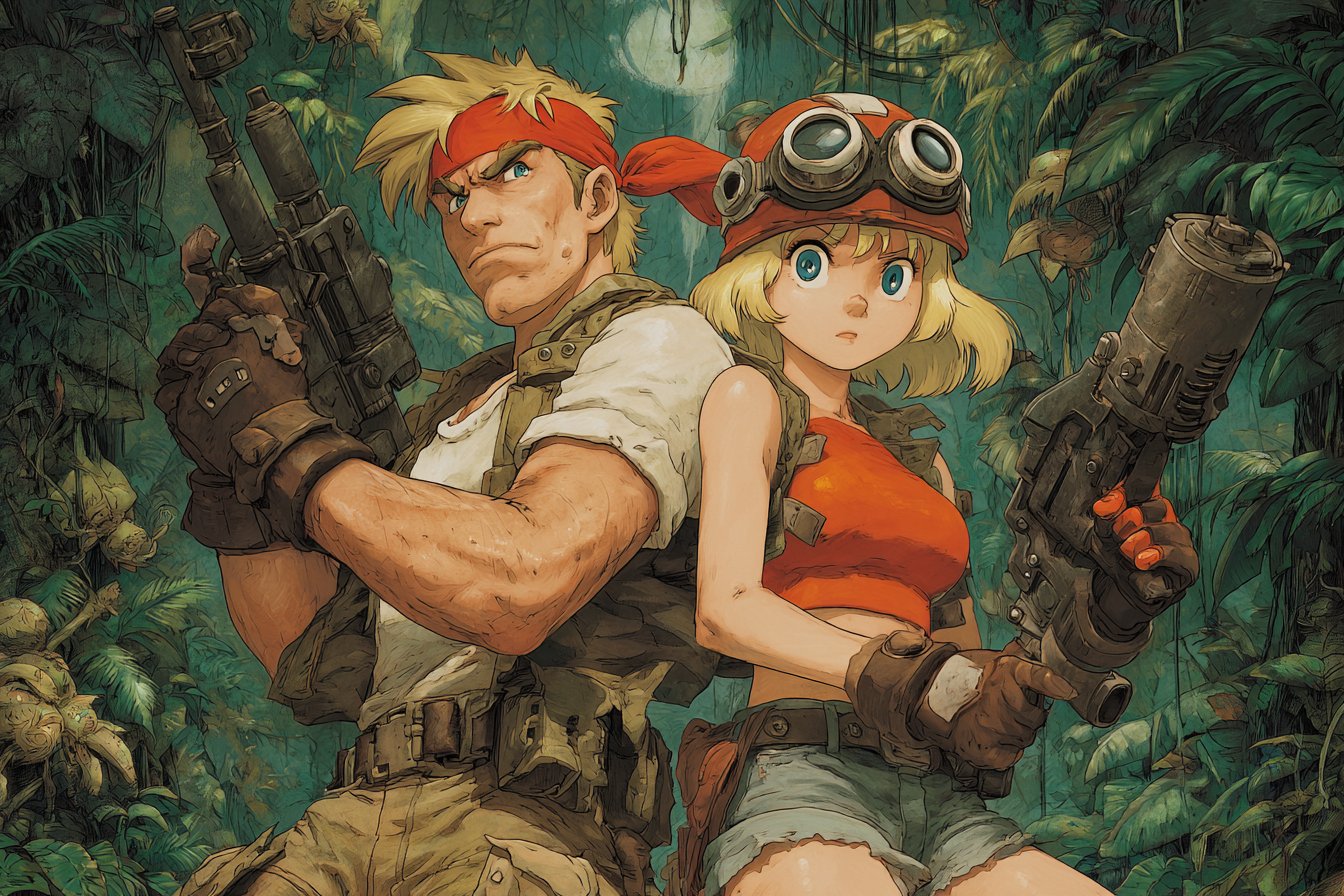
Metal Slug’s animation is still breathtakingly impressive nearly 30 years later. Every single character sprite has dozens of individual frames of animation that provide movement that is natural, rather than mechanical. When you throw a grenade, you see the build-up, the release, the follow-through. When enemies take damage, they do not simply flash and disappear – they react with exaggerated facial expressions, dramatic death animations, and comedic timing that would be right at home in classic cartoons.
The amount of detail put into these sprites is obsessive. Characters sweat when they run. They show strain on their face when climbing up steep terrain. When you rescue POWs, they react with complete body animations that show them real relief and gratitude. These are not simple sprite swaps – these are individually crafted sequences that provide every character with personality.
In comparison, early 3D games on the PlayStation from roughly the same time period feature characters that move like articulated action figures. Metal Slug’s sprites have mass, velocity, and character expression that the 3D polygon models of the time cannot possibly match. Due to the massive ROM size of the Neo Geo, Nazca was able to include animation frames that other platforms would have forced them to cut back on. Every single movement in Metal Slug feels deliberate, calculated, and polished.
The enemy animations deserve special attention. Rebel soldiers do not simply march – they walk with a swaggering stride reminiscent of a military parade. When you catch them off-guard, their surprise animations are downright comical. Larger enemies, such as the various Metal Slug tanks, move with a mechanical weight that makes every single step feel perilous. These are not simply animated sprites – these are actual animated characters with unique personalities.
Even environmental details receive the same attention to detail. Explosions animate outward in layers. Water ripples and animates correctly as you swim through it. Flags flutter in the wind due to correct wind physics. No matter how much animation polish you apply to a game, it costs money and time. However, in Metal Slug’s case, that expense resulted in a visually impressive experience that modern pixel art games still fail to match.
Run and Gun Gameplay That Remains Unmatched
Metal Slug perfects the standard run and gun gameplay model through careful control over pacing and variety in weapons. At its core, the gameplay is simple – move, jump, shoot, throw grenades – but the game adds complexity by including weapon pickups, vehicle sections, and enemy patterns that necessitate different tactics.
The weapon system finds a perfect balance between power and weakness. The default pistol provides endless ammo, however it has limited range and damage. Power-ups such as the Heavy Machine Gun, Flame Shot, and Rocket Launcher all temporarily provide extreme firepower, however they also exhaust their respective ammo supplies, compelling strategic decisions about when to utilise your strongest weapons versus conserving them for the tougher encounters.
Vehicle sections serve to break up the on-foot combat without disrupting the overall flow of the game. The titular Metal Slug tanks operate differently than on-foot movements – they are extremely powerful, but far less agile, providing additional risk/reward opportunities when deciding whether to prioritise firepower over mobility. If your tank sustains too much damage, you have mere seconds to escape before it explodes, raising the stakes in each encounter.
Enemies are placed according to traditional arcade design. Basic soldiers are placed in predictable patterns that allow you to develop a sense of the standard combat rhythm. Toughest enemies emerge at locations that compel you to employ different strategies using different weapons or adjust your tactics. Bosses increase the level of challenge whilst maintaining the same fundamental gameplay, demonstrating the versatility of the gameplay mechanic.
Cooperative gameplay for two players alters the gameplay experience without modifying the fundamental gameplay. Having a partner does not reduce the level of difficulty – instead it changes the strategic considerations. Partners can revive one another, share power-ups, and coordinate attacks, yet they can also fight for power-up pickups and suffer friendly fire. Cooperative gameplay requires good communication and strategy.
What Set Metal Slug Apart From Every Other Run and Gun Shooter
When Metal Slug emerged, the run and gun shooter genre had evolved into a very formulaic entity. Arcades were filled with Contra clones featuring virtually identical gameplay mechanics and linear progression. What distinguished Metal Slug from all the others was its emphasis on diversity and character.
Every level introduced new variables whilst maintaining consistent gameplay mechanics. The initial stage teaches the base gameplay loop, however subsequent levels introduce a beach setting, underground settings, a moving train setting, and an aerial battle setting. Each environment affects how you engage in combat without causing you to need to relearn completely new gameplay mechanics. For example, the beach level causes you to find alternative cover options. The train level emphasises timing your movements properly. The underground settings severely limit your ability to move, however the increased enemy population forces you to be even more aggressive.
The bosses represent this variability principle. Instead of merely increasing the number of regular enemies, each boss presents you with a unique mechanical challenge. Some require precise positioning. Others require careful weapon management. The final boss combines multiple elements from previous bosses, thus testing your mastery of every skill you’ve acquired. These are not mere damage sponges – they are mechanical puzzles presented with tremendous flair via fantastic animation.
The game’s humour separates it from more serious military-themed shooters. Prisoners of war rejoice with wildly enthusiastic celebrations upon rescue. Enemies die in comedic pratfalls and exaggerated facial expressions. Many power-up effects provide humorous visuals in addition to their mechanical advantages. This humour prevents the violence from feeling oppressive whilst maintaining the arcade-style action experience.
Nazca’s history with developing arcade games shines through in every decision related to Metal Slug. The difficulty curve progresses in a manner consistent with classic coin-operated arcade games – challenging enough to provide satisfaction, but forgiving enough to prompt repeated attempts. Power-ups appear at exactly the right moment. Enemy patterns instruct you in increasingly complex strategies. Metal Slug is perhaps the ultimate example of refined coin-operated arcade design.
The Neo Geo Advantage That Modern Ports Cannot Replicate
Metal Slug was designed to function specifically on the Neo Geo MVS arcade platform, and the Neo Geo influenced nearly every aspect of the design. The large ROM size of the Neo Geo permitted uncompressed sprites and hundreds of animation frames, which were impossible to produce on competing systems. When you observe Metal Slug running on the original hardware with accurate CRT scan lines, the difference is immediately apparent.
The colour depth and sprite layering in Metal Slug produce visual effects that modern LCD monitors have trouble replicating. The Neo Geo’s sprites move with pixel-perfect accuracy against detailed parallax backgrounds. Multiple transparent sprites are layered to create explosion effects that demonstrate true depth and complexity. These effects were optimised for CRT phosphors and therefore appear slightly askew on modern displays.
The audio design of Metal Slug benefits greatly from the Neo Geo’s proprietary sound processors. The soundtrack combines military-inspired marching rhythms with energetic arcade sounds to produce memorable themes that reflect the tempo of each level. The sound effects have a strong, crisp quality reminiscent of classic arcade games – guns fire with a loud ‘crack’, explosions reverberate with satisfying low-end bass, and voice samples provide clear, compressed character dialogue.
Original Neo Geo AES carts retain significant value today, with North American units selling for greater than £20,000 on secondary marketplaces. This value is derived from both the rarity of the item and continued collector demand for authentic Neo Geo hardware experiences. Experiencing Metal Slug on authentic Neo Geo hardware is not simply nostalgic – it is experiencing the game as it was originally intended.
Modern ports of Metal Slug strive to reproduce the original hardware experience with varying degrees of success. The Steam PC port has sold 156,631 copies worldwide, indicating continued interest, but emulation inherently introduces latency and compromises with display fidelity. Whilst these versions are fully playable, they cannot recreate the original arcade experience.
Why Metal Slug Matters in 2026
Metal Slug was included in the book “1001 Video Games You Must Play Before You Die” because it represents the pinnacle of 2D game design. When the majority of the video game industry began embracing 3D graphics and denouncing 2D-based games as archaic, Metal Slug proved that 2D animation could reach artistic heights that the early 3D graphics failed to reach.
Modern indie developers frequently reference Metal Slug as a source of inspiration for pixel art styles and animation techniques. Games such as Cuphead and Hollow Knight adhere to many of the same principles established by Metal Slug – that hand-crafted animation provides character-specific personality and emotional connection that procedural methods struggle to provide. Metal Slug illustrated that limiting technical capabilities can lead to innovative solutions rather than stifling artistic expression.
The influence of Metal Slug reaches beyond aesthetic concerns. The method of incorporating weapon variety, vehicle sections, and cooperative balance is evident in modern games across numerous genres. The concept of temporary power-up benefits versus limitless basic weapon supply remains a relevant design consideration. Boss encounters that emphasise recognising enemy patterns and strategically utilising available resources to defeat enemies remain influential in contemporary game design.
To gamers discovering Metal Slug today, the gameplay remains surprisingly fresh. The gameplay mechanics do not possess the dated feel of many other 1990s titles. The controls react quickly, the animations animate smoothly, and the challenge curve is relatively fair for modern standards. This is not an artefact of a bygone era – Metal Slug offers genuine entertainment nearly thirty years after its release.
Whilst the run and gun genre never died, few modern run and gun games offer the combination of mechanical precision, visual artistry, and pure arcade enjoyment as Metal Slug. Playing Metal Slug today serves to remind you why 2D game design matters, why pixel art remains a valid artistic medium, and why certain classics never truly fade away.
That is the key point – Metal Slug achieved greatness because it improved on existing concepts rather than pursuing fads. Whilst other developers abandoned 2D gameplay for 3D novelty, Nazca elevated 2D sprite animation to artistic heights. The reason Metal Slug remains timeless is because it emphasised craftsmanship over technology, personality over computational resources. That is a lesson worth remembering, regardless of whether you are building games or simply attempting to comprehend why the best ones endure.