I am a Phoenix area high school history teacher who has been a Sega fan my whole life. I have spent many years saying that Sega got taken down by poor timing in the market and that the Genesis was better than the SNES. I have also spent a lot of time writing about how the Dreamcast was robbed and should have done much better. I continue to fight to keep using the term “blast processing,” even though I get teased for it. When I say that the Game Boy was the most successful handheld console of all time, I am saying that begrudgingly. Since the Game Boy was made by Nintendo, not Sega, and since I am a die-hard Nintendo hater, it pains me to admit that Nintendo completely destroyed the handheld market in ways that make the Console Wars seem like just a small argument.
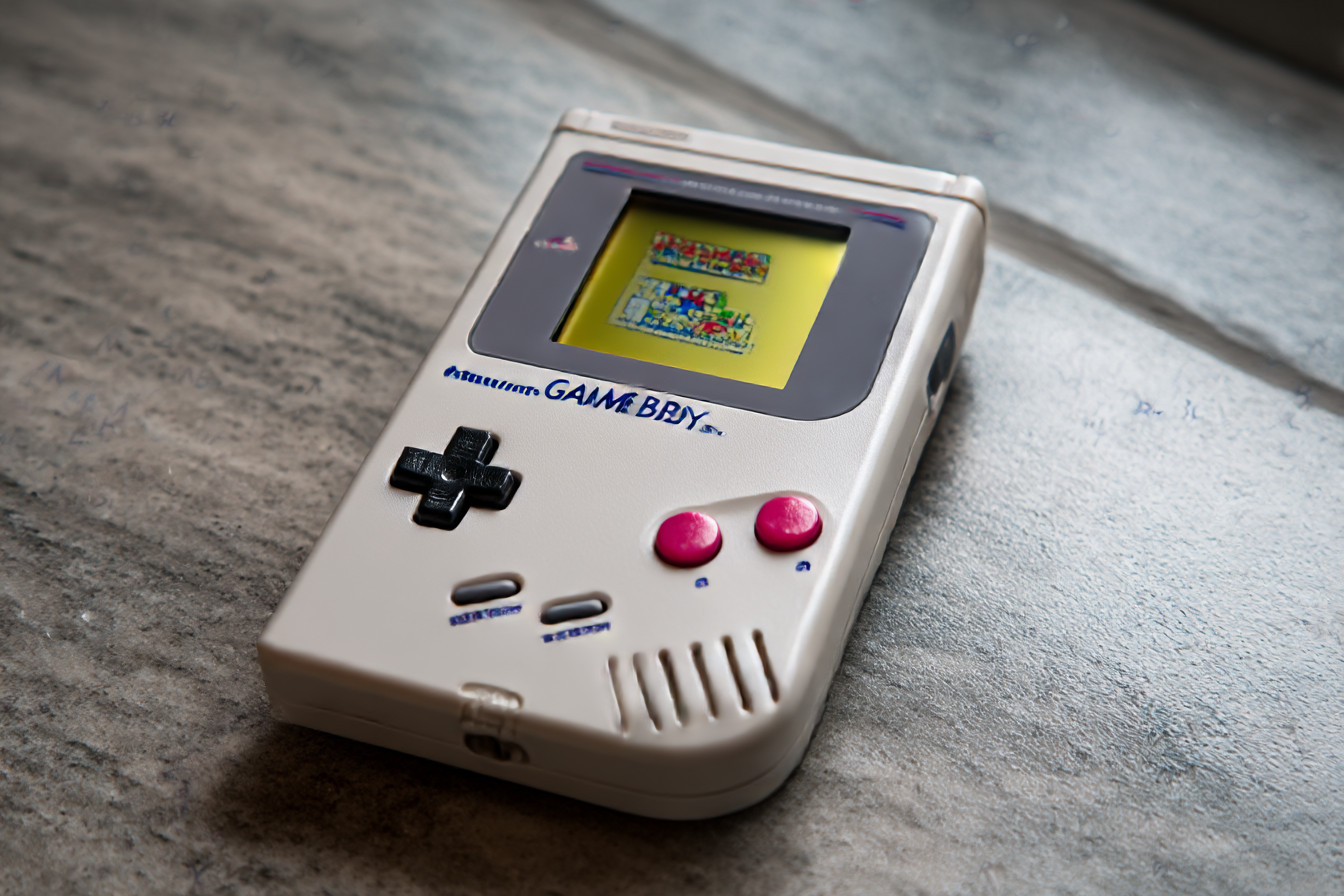
The first Game Boy came out on April 21, 1989, in Japan and on July 31, 1989, in North America. With the Game Boy Colour included, the system sold around 118 million units worldwide. The Game Boy didn’t just dominate the handheld market; it wiped out the competition so thoroughly that none of the competition really registered.
Game Boy Technical Specifications
| Specification | Details |
|---|---|
| Release Date | April 21, 1989 (Japan), July 31, 1989 (North America) |
| CPU | Custom 8-bit Sharp LR35902 (Sharp SM83 core) at 4.19 MHz |
| Internal RAM | 8 KB (cartridges up to 32 KB) |
| Display | LCD 160×144 monochrome (4 shades of grey) |
| Sprites | Up to 40 sprites (8×8 to 8×16 pixels) |
| Audio | 4-channel (2 pulse waves, 1 wave, 1 noise) |
| Cartridge Capacity | 32 KB–1 MB |
| Battery Life | Approximately 30 hours |
| Lifetime Sales | ~118 million units (including Colour variant) |
| Generation | 8-bit handheld |
The Competition That Didn’t Matter
Before we discuss why the Game Boy won, we need to know what it competed against. The Sega Game Gear. The Atari Lynx. The Nintendo Virtual Boy. On paper, by every single measure of pure hardware capability, the competition was better than the Game Boy. The Game Gear had a colour screen. The Atari Lynx had more powerful processors. The Virtual Boy had 3D.
But the Game Boy won anyway. And that’s because specs don’t mean squat if your batteries die after five hours.
The Game Gear was a technological wonder. A colour LCD screen in 1990 was amazing. Better-looking graphics than the Game Boy. However, the Game Gear went through four AA batteries in about five hours. Therefore, you had to bring batteries with you. You therefore had to continually purchase batteries. You therefore had a “portable” device that was connected to a power supply because the battery life was so poor.
The Atari Lynx had the same issues. More powerful processors didn’t help if the battery didn’t last long enough to keep them going for more than a few hours. The Virtual Boy had 3D, which was cool, but the Virtual Boy caused physical sickness in players after only a few minutes of playing.
The Game Boy had 30 hours of battery life on four AA batteries. Therefore, you could take a Game Boy on a week-long road trip and only have to replace the batteries once. Therefore, you could play it anywhere you wanted without having to worry about finding a power outlet. That was not a small advantage. That was the deciding factor.
Hardware: Intentional Design Choices
The Game Boy used a custom 8-bit Sharp LR35902 CPU with a Sharp SM83 core that ran at 4.19 MHz. The Game Gear ran faster. The Lynx ran faster. The display was a monochrome LCD screen with 160×144 resolution and only displayed four shades of grey. The Game Gear displayed colours. The Lynx had better resolution. The Game Boy’s internal RAM was only 8 KB, expandable to 32 KB with cartridges.
These were not design constraints that Nintendo was forced to live with. These were intentional design decisions. Nintendo knew you could not have both a colour display and 30 hours of battery life. Therefore, Nintendo chose to prioritise battery life. All of the design decisions were based on minimising power drain to allow the system to run for 30 hours on four batteries.
This was the engineering philosophy that the Game Gear and Lynx got wrong. They attempted to provide cutting-edge graphics and processing power in a portable format. However, they could not provide the battery life necessary to create a truly portable system. Nintendo realised something fundamental: portability means little if you’re constantly searching for batteries.
Tetris: The Killer App
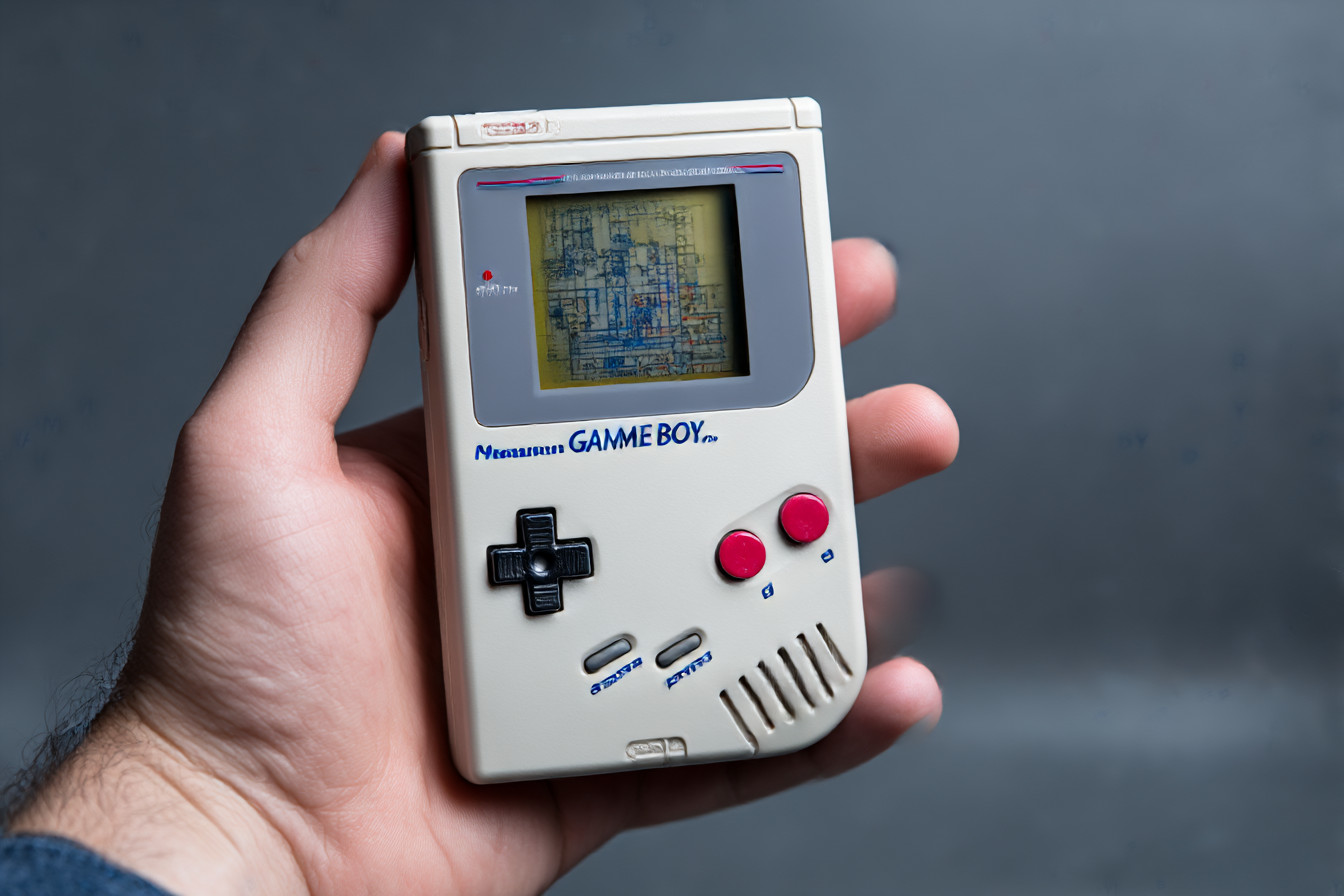
The Game Boy was released with only Tetris. Only one game. But Tetris was the killer app that all of the other games had been waiting for. Tetris is a simple puzzle game. You arrange falling blocks. You remove lines. That is the entire gameplay loop. But Tetris is addictively engaging in a way that very few other games have ever come close to achieving.
Tetris made the Game Boy essential. Parents who had no interest in video games purchased a Game Boy in order to play Tetris. Children begged their parents to purchase a Game Boy to play Tetris. Tetris provided the Game Boy with cultural penetration that the Game Gear and Lynx never could achieve.
The Game Gear had arcade-quality ports that looked better. The Lynx had more impressive graphics. But neither the Game Gear nor the Lynx had Tetris. By the time they produced their own version of Tetris, the Game Boy had already become the preferred handheld gaming platform.
The Library: Volume vs. Showmanship
The library of the Game Boy grew exponentially over the course of the Game Boy’s lifespan. The Legend of Zelda: Link’s Awakening was a full-fledged Zelda game on a handheld. Metroid II carried the Metroid series onto portable hardware. The Final Fantasy Legend series created RPGs on a handheld. Kirby’s Dream Land showed that Nintendo’s main franchise characters could thrive on a handheld with limited graphics.
When the competitors finally developed their marquee titles, the Game Boy already boasted hundreds of games. The Game Gear had dozens. The Lynx had fewer than that. The volume of the Game Boy library was enormous. If you owned a Game Boy, you had options. If you owned a Game Gear, you had Sonic the Hedgehog and maybe 30 other games.
The library superiority built upon itself. More games meant more people purchased the system. More people purchasing the system meant more developers developed games for the system. More games made the system more appealing to the consumer. The competitors couldn’t catch up because the installed base was so massive.
The Game Boy Colour: Dominant Once Again
In 1998, nine years after the original Game Boy debuted, Nintendo introduced the Game Boy Colour. Now the Game Boy featured a colour screen. The CPU was upgraded slightly. The cartridges were still the same size as the original Game Boy cartridges, so original Game Boy games still functioned properly. This was not a radical redesign of the Game Boy. This was a marginal improvement.
However, it didn’t matter. The Game Boy Colour sold incredibly well because the Game Boy already held a stranglehold on the handheld gaming market. Consumers upgraded their systems because their friends had upgraded theirs. Because there were more games available for the Game Boy Colour. Because Nintendo spent nine years demonstrating to consumers that the Game Boy was the handheld gaming system that mattered.
The introduction of the Game Boy Colour effectively solidified the Game Boy’s position as the dominant handheld gaming system for another five years before the arrival of the Nintendo DS. The competition was essentially irrelevant by then. Sega ceased production of handhelds. Atari became largely irrelevant. Nintendo’s only serious competitor was itself.
Why the Game Boy Won
The Game Boy won because Nintendo recognised that portability was not about specs. Portability was about usability. A handheld gaming system must be usable as such. Therefore, battery life is more important than graphics. Durability is more important than processing power. A library of quality games is more important than technical specs.
The Game Boy demonstrated something that the entire industry seemed to forget: you do not always have to produce the most advanced hardware to succeed in a market. What is required is hardware that functions as intended for its users. A killer app that creates demand for your system. A library of games that continues to engage your users. An awareness of what your users actually desire rather than a focus on creating products with the most technical specs.
Each and every one of the Game Boy’s competitors failed because they placed their emphasis on the wrong priorities. Each of the competitors emphasised graphics and processing power while ignoring battery life. Each competitor emphasised technical specs over actual usability. Each competitor believed that producing hardware with better specs would lead to greater sales. They were incorrect.
The Game Boy teaches a fundamental lesson about product design: knowing what your customers truly require is more valuable than emphasising specs. The Game Boy was technically inferior to each and every one of its competitors. However, it was unambiguously superior in usability. It was a device you could actually carry with you. It was a device you could play for extended periods. It was a device that offered games that you actually wanted to play.
This lesson can be applied to designing technology far beyond gaming. Occasionally specs are not relevant. Occasionally functionality is more valuable than performance. Occasionally battery life is more important than processor speed. The Game Boy demonstrated each of these points. And it demonstrated that the marketplace recognises and rewards this type of thinking.
Does the Game Boy Still Hold Up?
I’ve played the Game Boy. The graphics are primitive. The monochrome display shows four shades of grey. The resolution is low. The sound is basically bleeps and bloops. By modern standards it sounds like a toy. But here’s the thing: it works. The controls are responsive. The games are actually fun. Tetris is still addictive. Link’s Awakening is still engaging.
The battery life is still incredible. A fresh set of four AA batteries will keep a Game Boy running for 30 hours. Modern handheld systems with rechargeable batteries run for maybe 5 to 10 hours. The Game Boy’s battery life is still superior to most modern handhelds in terms of usage per battery investment.
The durability is legendary. Game Boys are still functional after thirty-five years. The LCD screens still work. The buttons still respond. The cartridges still load. I’ve owned electronics that are ten years old that don’t work as well as Game Boys from 1989. That’s the result of good engineering.
118 Million Units: The Market’s Final Word
The Game Boy sold 118 million units including the Colour variant. That’s more than any home console on this list except the PlayStation 1. That’s not just commercial success. That’s market dominance so complete that competitors basically gave up.
Sega released the Game Gear. It sold maybe 11 million units worldwide. Atari released the Lynx. It sold maybe 3 million units worldwide. Nintendo released the Game Boy and sold 118 million units. That’s a difference of magnitude. That’s not a close competition. That’s a complete market takeover.
The handheld market wasn’t supposed to be bigger than the home console market. But the Game Boy proved that people wanted games they could carry with them. People wanted portability more than they wanted cutting-edge graphics. People wanted battery life more than they wanted colour screens. Nintendo understood that market better than anyone else.
Conclusion
I am a Sega guy. I’ve spent my life defending Sega’s decisions and arguing that Sega got a raw deal from the market. But I have to acknowledge that Nintendo absolutely crushed the handheld market in a way that makes the console wars look like a polite disagreement. The Game Boy didn’t just win the handheld market. It defined the entire handheld market for the next two decades.
118 million units sold worldwide. That’s not just success. That’s dominance. That’s proof that understanding your market matters more than having the best specs. That’s proof that practicality beats performance. That’s proof that Nintendo understood something about portable gaming that everyone else got wrong.
I still think Sega makes better arcade games. I still think the Dreamcast was ahead of its time. But I have to give Nintendo credit where it’s due. The Game Boy was the right handheld system at the right time. And that’s why it won so decisively.
Rating: 10/10 — The handheld that proved specs don’t matter if your battery dies after five hours
Want to learn more about retro consoles? Cheque out our complete Top 10 ranking of the best 80s and 90s consoles