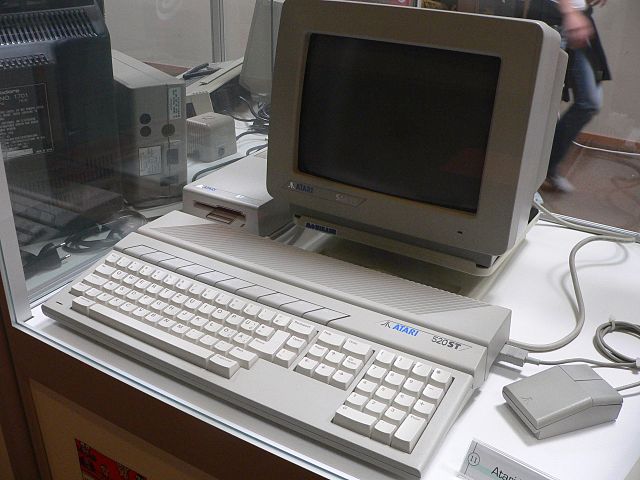
Why the Computer That Sold Millions in Europe Was Purposely Deleted From Gaming History
I work as a librarian in Dublin. I know every freakin’ obscure European computer game there is that English language gaming sites will never cover. I’m biased towards the underdogs, systems that almost didn’t get book entries because companies went belly up. Atari ST is Exhibit A for why we need European game libraries.
The Atari ST was wildly successful in Europe, but has been completely forgotten in North America. It’s more than just a gaming computer. Musicians used the Atari ST. Programmers used the Atari ST. Creators used the Atari ST. Atari ST changed how Europe viewed computers and gaming. Yet here we are, a computer so erased from English-language gaming history it might as well not exist.
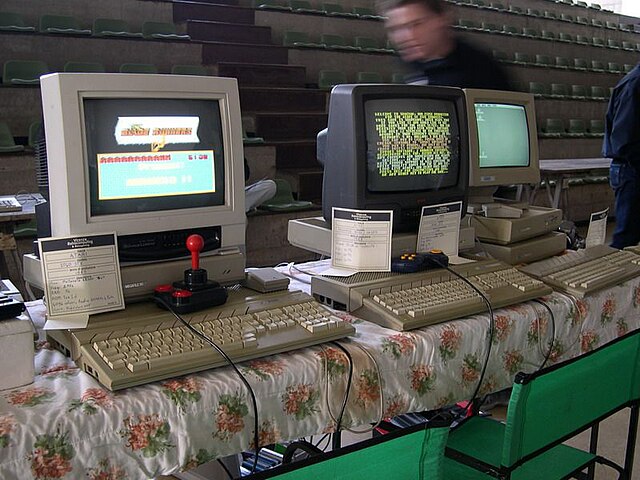
Atari ST Technical Specifications
| Specification | Details |
|---|---|
| Release Date | June 1985 (520ST launch) |
| CPU | Motorola 68000 at 8 MHz |
| RAM | 512 KB–4 MB (variants) |
| Display Options | Monochrome 640×400 or colour 320×200 |
| Colour Palette | 512 colours |
| Audio | Yamaha YM2149 PSG (3 channels) |
| Storage | 3.5-inch floppy drive |
| Connectivity | Built-in MIDI ports |
| Operating System | TOS OS |
| Graphics Enhancement | Optional blitter chip (later models) |
| Sales Estimate | ~2–6 million units (strong in Europe) |
| Generation | 16/32-bit home computer |
The Context: Why Europe Was Different
You can’t talk about the Atari ST without understanding why it was successful. And you can’t understand why it was successful without understanding that gaming in Europe wasn’t the same as gaming in North America.
In North America, everyone who wasn’t rocking an Apple Mac or IBM PC was using a Commodore 64. Home computers were how you experienced gaming if you weren’t using a console.
In Europe, consoles were the exception, not the rule. Home computers like the Commodore 64 were standard. But so were computers like the Sinclair Spectrum, the BBC Micro, and later the Atari ST.
The Atari ST wasn’t viewed as a toy like consoles were viewed as toys. Computers in Europe were serious business.
You grew up learning how to program on a computer. You bought computers to play games on them, not special consoles you’d need to buy games for separately.
Europe was different, and the Atari ST rode that wave of difference. Computers like the Atari ST were powerful enough to do real work, but could also play amazing games. Gamers and hobbyists gravitated towards them because they weren’t limited by strict boundaries like consoles were.
The Atari ST launched in Europe in 1985 at a time when computer gaming was booming. The Commodore 64? Great, but dated by 1985. Sinclair Spectrum? Famous, but limited by technology.
The Atari ST was powerful. It could match the graphics tech of consoles and do so much more.
The Hardware: A Powerful Computer in Small Package
The Atari ST’s CPU was powerful. The Motorola 68000 processor at 8 MHz was impressive in 1985.
Remember that Apple used the exact same processor, at the same speed for their Macintosh computers. But the Atari ST was vastly cheaper than the Apple line of computers.
Programmers could make games with immensely complicated instructions that simply weren’t possible on 8-bit home computers.
What made this possible? RAM.
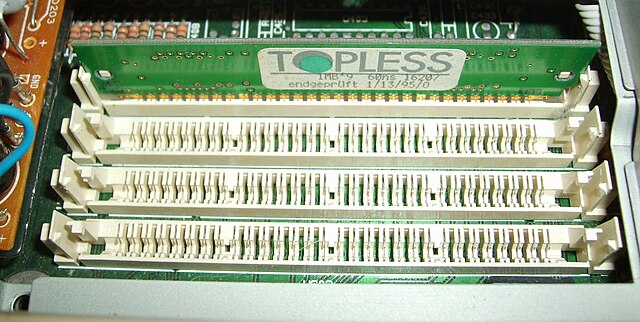
The Atari ST could have between 512 KB and 4 MB of RAM, depending on the variant. More RAM meant you could have games with huge bitmapped graphics, smooth scrolling, and other intensive tricks.
That high RAM maximum was unheard of on machines like the ZX Spectrum or Commodore 64. The Atari ST wasn’t limited by hardware when developers were making games.
The Display: High Colours Means Detailed Graphics
If you played on a Commodore 64 you were used to seeing 4 colours on screen at once. The Atari ST boasted 512 colours in its palette.
You could have far more colours on screen at once. Games didn’t need to be pixelated messes with blocky graphics.
Graphically, games could be better on the Atari ST. You could fit more detailed graphics on screen. Game worlds felt alive rather than made of abstract shapes.
The Blitter Chip: Making Games Look Like Consoles
The real innovation of the Atari ST wasn’t just in how much colour you could have onscreen. The Atari ST had an optional blitter chip in later models that changed how games looked on the computer.
Graphics on earlier models of the Atari ST were displayed through the CPU. That slowed down rendering. By adding a blitter chip, the Atari ST could move graphics onscreen faster than ever before.
Scrolling on Atari ST games with the blitter chip looked smooth. Sprite animation looked flawless.
Games on the Atari ST looked like console quality graphics because of that blitter chip.
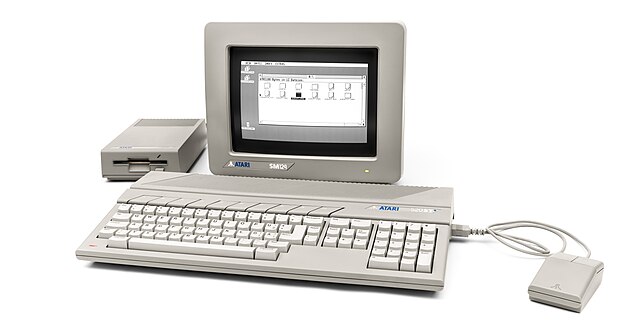
The MIDI Ports: An 80s Computer for Gamers and Musicians
The Atari ST had built-in MIDI ports that supported sequencing music and talking to synthesizers. This feature wasn’t designed with gamers in mind, but it made the Atari ST attractive to musicians.
Programmers made games on Atari STs, but so did musicians. The Atari ST became a standard for musicians in the 1980s.
There are actual bands who made music with Atari STs. Professional studios used Atari STs to produce music.
Musicians loved the Atari ST. Gamers loved the Atari ST. Creatives loved the Atari ST.
And that’s because the Atari ST wasn’t JUST a gaming computer.
The Library: Wonderful Games That Defined Gaming in Europe
Europe had access to games like Populous. Gods made games on the Atari ST. Populous was one of the earliest examples of the god game genre.
People played games like Karateka, a stellar action game on the Atari ST.
Europe got Dungeon Master, perhaps the most ambitious first-person RPG of its generation available on home computers.
Europe got games like Realm of the Kraken, one of the best tactical RPGs of its era.
Europe got games like Missile Command. Which honestly plays BETTER on the Atari ST than on anything else.
The point is this: English language articles will cite European games that were released in Europe but not North America. But that means the Atari ST library will be completely unfamiliar to anyone researching gaming history outside of Europe.
The North American gaming library pales in comparison to European libraries from the 80s and 90s.
The Computer vs Console Culture Distinction
This one’s important: The Atari ST was a COMPUTER. This matters when you talk about gaming culture differences between Europe and North America.
Consoles were a category. Computers were a category. In North America you bought consoles TO play games. You bought computers FOR work.
Creative computers like the Atari ST or Commodore 64 blurred that line between console and computer.
In Europe that line didn’t exist. Home computers RULED. Consoles existed, sure. But gaming culture centred around home computers first and foremost.
Did the Atari ST directly impact this difference in culture? I don’t know. But the Atari ST is an important part of that history.
The Regional Gaming Success Story
Keep in mind, sales estimates for Atari ST sit between 2 and 6 million worldwide. Less than Commodore 64’s 12.5 million.
Less than Sega Genesis’ 30.75 million.
That said: The Atari ST sold AMAZINGLY in Europe.
Keep in mind that in some countries, the Atari ST sold just as well (if not better) than the Commodore 64.
In Britain, the Atari ST became a legitimate competitor to both the Spectrum AND the Commodore 64.
In Germany, the Atari ST crushed it.
The Atari ST found passionate fans in Scandinavia.
Where DID the Atari ST sell poorly? North America.
Herein lies the tragedy of why the Atari ST will never be remembered by English language gaming sites.
The US dominates English language gaming discourse. British sites tend to care about the Atari ST because Britain loved the Atari ST. But North America didn’t care about the Atari ST. And sites based here won’t cover a system that sold poorly here.
Europe as a whole loved the Atari ST. The Atari ST mattered to Europe.
Sales and Market Reality
Sales for the Atari ST are tricky. We’re looking at 2 to 6 million total units sold. But those numbers hide how well the Atari ST did in Europe compared to North America.
Conservative estimates say 2 million units sold worldwide. Liberal estimates say 6 million units sold worldwide.
Remember how well the Atari ST sold in Europe? Expect the higher estimates to be much closer to reality IN EUROPE.
Expect the lower estimates to apply to North America.
Arguments can be made that the Atari ST did horribly in sales. Arguments can be made that the Atari ST did great in sales.
Neither matters because of how important the Atari ST was to gaming culture where it sold well.
Does the Atari ST Still Hold Up?
Yes, you might say that honestly. The Atari ST turns 35 years old this year and holds up better than you might think.
Graphics? Yeah they’re ugly. This was pixel art at its finest.
Sound? Basic 3 channel PSG audio. You won’t win any awards.
…but it has STYLE.
Games made on the Atari ST have a charm to them. They don’t TRY to look like anything more than they are. They’re allowed to be pixel art because the hardware required it.
Plus ST games are FUN. Populous was revolutionary and still plays well. Dungeon Master was brilliant and still challenges you. Karateka is still one of the most intense games I’ve played period.
The mouse and keyboard controls still feel great for the right kind of game. Mouse driven gameplay on ST games was years ahead of joystick gaming in some instances.
The Forgotten History
As I’ve mentioned throughout this piece, the Atari ST matters to gaming history.
Gaming history in Europe developed differently because of computers like the Atari ST. Game programmers learned HOW to program on computers like the Atari ST.
Europeans developed games differently because they grew up WITH computers like the Atari ST.
Go back and read through this article. The parts of European gaming that were affected by the Atari ST’s success.
Then ask yourself: How would English gaming history change if consoles were just as commercially unsuccessful as computers were in North America?
We wouldn’t talk about gaming history the same way. We’d focus less on consoles and more about computer gaming.
English language gaming sites WON’T cover the Atari ST because companies here didn’t make bank off of it.
So regions outside of North America AND Britain loved the Atari ST. The Atari ST still matters to gaming history because it matters to Europe.
Its preservation matters. Its culture matters. Games created on it AND for it matter.
Preservation and Cultural Value
Sure. The music lives on because you CAN play MIDI files created on ST computers.
You can buy Atari STs on eBay. You can emulate Atari ST games.
There’s even an active hobbyist community creating new games for the Atari ST today.
Why Preserve the Atari ST?
Simple: Gaming history isn’t just about selling records in North America.
The Atari ST is part of history that shows computers were amazing multi-use machines.
Systems like the Atari ST blurred the lines between gaming, productivity, and hobbyist computers.
That’s special. That deserves preservation.
Conclusion
The Atari ST wasn’t just successful in Europe because of how great the hardware was. The Atari ST was part of gaming culture in Europe in a way consoles weren’t.
The Atari ST made an impact on how creative professionals thought about computers.
The Atari ST was powerful enough to do serious programming work… AND play AMAZING games.
Why does this matter? Because gaming in Europe was driven by computers first, consoles second.
If you want to understand WHY Europeans approach game design differently than American companies, look at the Atari ST.
Rating: 8/10 — The Atari ST was a beast of a computer popular in Europe that will never be remembered by English language gaming outlets
Want to learn more about retro consoles? Cheque out our complete Top 10 ranking of the best 80s and 90s consoles