I came to Chrono Trigger embarrassingly late. No childhood nostalgia clouding my judgment, no rose-tinted memories of Christmas morning 1995. I first played it in 2019, sitting in my basement after the kids went to bed, expecting to appreciate a “classic” the way you appreciate old architecture – impressive for its time, but ultimately dated.
I was completely, utterly wrong.
Chrono Trigger isn’t just good “for a 1995 game.” It’s one of the best RPGs ever made, period. And I spent three weeks arguing with the New Player Ready crew about why it deserved the number one spot on our SNES list before finally compromising at number three. I’m still bitter about it.
What Makes Chrono Trigger Special
Developer: Square | Released: March 1995 (Japan), August 1995 (North America)
Chrono Trigger was created by what Square called the “Dream Team” – Final Fantasy creator Hironobu Sakaguchi, Dragon Quest creator Yuji Horii, and Dragon Ball artist Akira Toriyama. The result was a JRPG that broke basically every convention the genre had established and somehow made it all work perfectly.
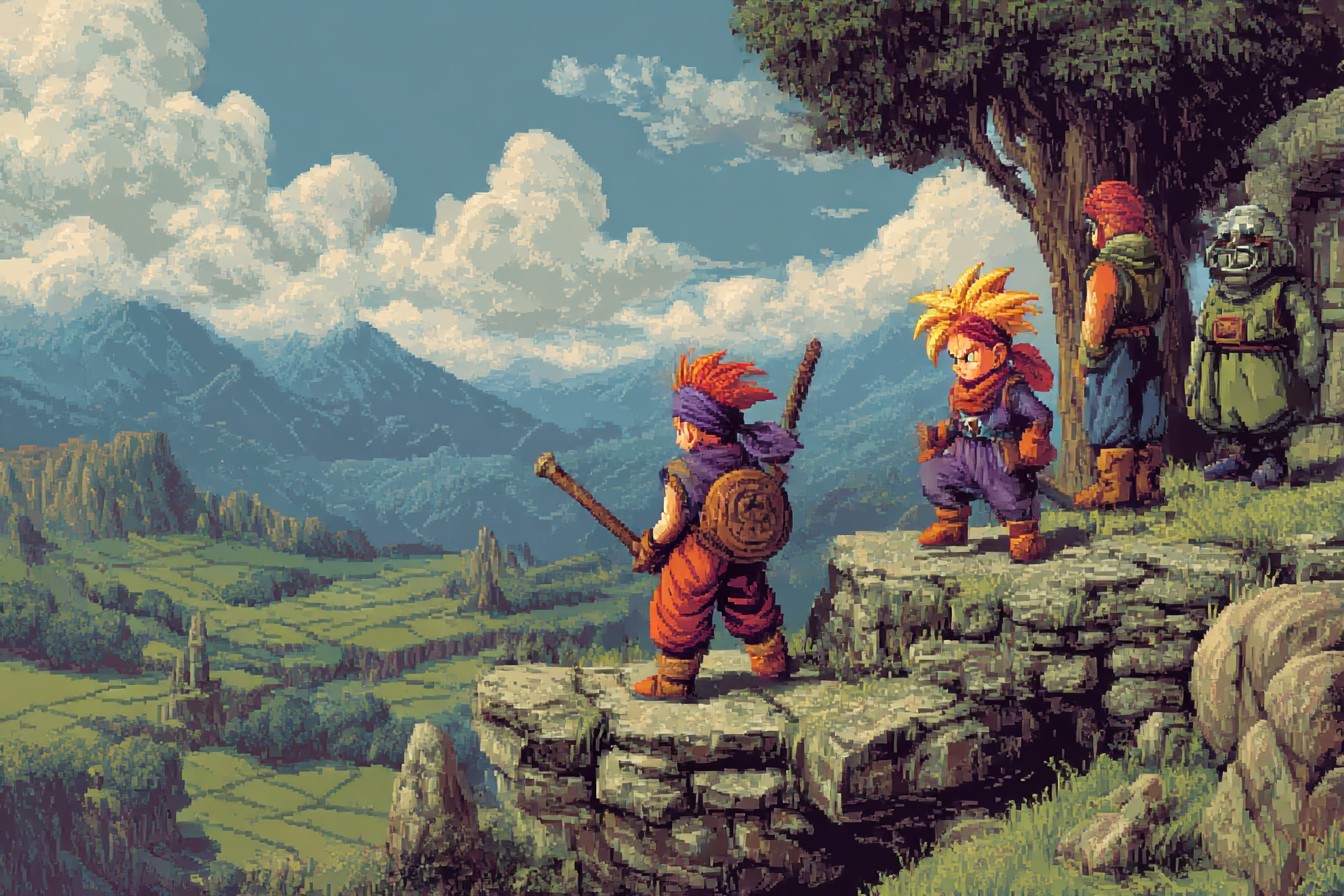
The premise sounds simple: a young man named Crono gets caught up in time travel after a teleportation experiment goes wrong at the Millennial Fair. What starts as a rescue mission becomes a quest to prevent the apocalyptic destruction of the world in 1999 AD by an alien creature called Lavos. You travel between six different time periods – from 65,000,000 BC to 2300 AD – and your actions in the past directly affect the future.
Time travel in games usually means going back and forth between two eras with minor changes. Chrono Trigger said “that’s cute” and built an entire narrative structure around causality that actually worked. Plant a seed in 600 AD, find a forest in 1000 AD. Help a character’s ancestor in the past, meet their descendant in the future who remembers your kindness through family stories. Prevent a war in one era, see a completely different civilization flourish later.
The Combat System That Made Turn-Based Feel Dynamic
Coming to JRPGs fresh without the “this is how it’s always been done” mentality, I can tell you – most turn-based combat is boring. You select commands from menus. You wait for animations. You repeat for hours. Chrono Trigger’s Active Time Battle system changed this by making positioning and timing actually matter.
Characters moved around the battlefield based on their attacks. Tech skills could hit enemies in specific patterns – lines, circles, areas. Dual Techs let two characters combine abilities for more powerful attacks. Triple Techs used all three active party members for devastating combinations. You weren’t just selecting “Attack” from a menu – you were thinking tactically about positioning, combinations, and timing.
The New Game+ feature was revolutionary for 1995. After beating the game, you could start over with all your levels, equipment, and abilities intact. This wasn’t just for easy mode replays – it unlocked multiple endings based on when you defeated Lavos. Beat him at the Millennial Fair right at the start? Different ending. Defeat him halfway through the story? Different ending. The game had twelve different endings, and getting them all meant actually engaging with the NG+ system.
Why The Story Still Hits
Here’s what struck me playing Chrono Trigger without nostalgia: the story doesn’t waste your time. Most JRPGs from this era – hell, most JRPGs today – pad their runtime with fetch quests and grinding. Chrono Trigger is lean. Every area serves the plot. Every character interaction matters. The 25-30 hour runtime feels perfectly paced because nothing is filler.
The characters are archetypes done right. Crono is the silent protagonist who lets you project onto him. Marle is the princess who wants adventure. Lucca is the inventor best friend. Frog is the cursed knight seeking redemption. Robo is the robot learning humanity. Ayla is the prehistoric warrior. Magus is the villain-turned-ally with the tragic backstory. On paper, these are standard JRPG types. In execution, they all get genuine character development and memorable moments.
That moment when you lose at the first Lavos fight and wake up in 2300 AD to a post-apocalyptic wasteland? Genuinely shocking. Most games don’t let you fail story battles with consequences. Chrono’s death halfway through the game – which you can choose to reverse or not – gave weight to decisions in ways RPGs rarely attempted.
The Soundtrack That Defines The Game
I need to talk about Yasunori Mitsuda and Nobuo Uematsu’s soundtrack because it’s legitimately one of gaming’s best. Coming to this fresh, I expected “good for 16-bit” music. What I got was compositions that would sound incredible in any era.
“Corridors of Time” for the Kingdom of Zeal. “Frog’s Theme” for the cursed knight. “World Revolution” for the final battle. “To Far Away Times” for the ending. These aren’t just memorable video game tracks – they’re genuinely great music that orchestras still perform today. The Super Nintendo’s sound chip was limited compared to CD-based systems, but Mitsuda and Uematsu composed around those limitations beautifully.
Each time period has distinct musical identity. 600 AD sounds medieval. 1000 AD sounds bright and hopeful. 2300 AD sounds desolate and electronic. 65,000,000 BC sounds primal and rhythmic. The music tells you where and when you are before you even see the visuals.
Does Chrono Trigger Hold Up In 2024?
This is where my lack of nostalgia becomes useful. I played this game for the first time five years ago, decades after release, and it held up completely. The sprite work is gorgeous – detailed, expressive, animated beautifully. The menu systems are intuitive. The combat is engaging. The story doesn’t feel dated. The pacing is modern by today’s standards.
Compare this to other “classic” JRPGs I’ve tried. Final Fantasy VII’s graphics have aged poorly. The early Dragon Quest games are brutally grindy. Even acclaimed modern retro-styled RPGs often have pacing issues or padding. Chrono Trigger feels like it could have been released yesterday with a fresh coat of paint, and that’s remarkable for a game pushing thirty years old.
The DS version and mobile ports add some quality-of-life improvements and extra content, but honestly, the original SNES version is still the definitive experience. The translation holds up. The difficulty curve is fair. The optional content rewards exploration without being required. This is game design that understood what it was doing.
Why I Argued For Number One
During our ranking debates, I made the case that Chrono Trigger should be number one on our SNES list. Not because of nostalgia – I don’t have any. Not because of historical importance – though it is important. But because by pure objective game design standards, it’s nearly flawless.
Every system works together perfectly. The time travel isn’t gimmicky – it’s central to gameplay and story. The combat is engaging without being overwhelming. The pacing is tight without feeling rushed. The difficulty curve teaches you mechanics naturally. The optional content adds depth without padding runtime. The story has emotional weight without melodrama. The characters develop without lengthy exposition dumps.
Sam argued for A Link to the Past being more influential. Joe pushed Earthbound’s weirdness and heart. John kept trying to derail the conversation to talk about Amiga games. Carl had to literally mute people. But I maintain – if you’re judging these games on pure design excellence divorced from nostalgia or personal attachment, Chrono Trigger is the pinnacle.
We compromised at number three. I’m still annoyed.
The Technical Achievement
Understanding game development from a modern perspective, what Square accomplished with Chrono Trigger is absurd. The game uses multiple graphical modes simultaneously. The parallax scrolling in some areas. The Mode 7 effects for the world map. The detailed sprite work with dozens of unique animations per character. The compressed audio that sounds better than most SNES games.
The cartridge was pushing SNES hardware limitations hard. 32 megabits of storage – huge for 1995 cartridges – packed with content, music, graphics, and game systems. No loading times despite swapping between time periods. Smooth transitions. Complex battle animations. The technical polish is evident even to someone who doesn’t usually care about the technical side.
Why It Matters For Modern Gaming
Here’s what playing Chrono Trigger taught me about game design: respect the player’s time. Don’t pad your game with grinding or fetch quests. Make every area meaningful. Give players agency through meaningful choices and multiple paths. Create a combat system that’s engaging beyond menu selection. Write lean dialogue that serves character and plot simultaneously.
Modern indie RPGs have learned these lessons. Undertale, CrossCode, even massive games like The Witcher 3 understand that player time is valuable. But in 1995, when 60+ hour JRPGs with 20 hours of grinding were standard? Chrono Trigger’s tight design was revolutionary.
The Verdict
Chrono Trigger isn’t just the best JRPG on the Super Nintendo – it’s one of the best games ever made, full stop. The fact that I came to it almost 25 years late and it still held up completely tells you everything you need to know about its quality.
If you’ve never played it, play it. If you played it as a kid, replay it and appreciate the design work that went into every system. If you bounced off JRPGs because they’re grindy or slow, try this one – it proves the genre can be lean, engaging, and respectful of your time.
And yes, it should have been number one on our list. I will die on this hill. The rest of the crew can write their own articles defending their rankings. This is mine, and I’m using it to state definitively: Chrono Trigger is gaming perfection.
Rating: 10/10 – As close to flawless game design as gaming has ever achieved
Timothy discovered retro gaming at forty and never looked back. A construction foreman by day and collector by night, he writes from a fresh, nostalgia-free angle—exploring classic games with adult curiosity, honest takes, and zero childhood bias.