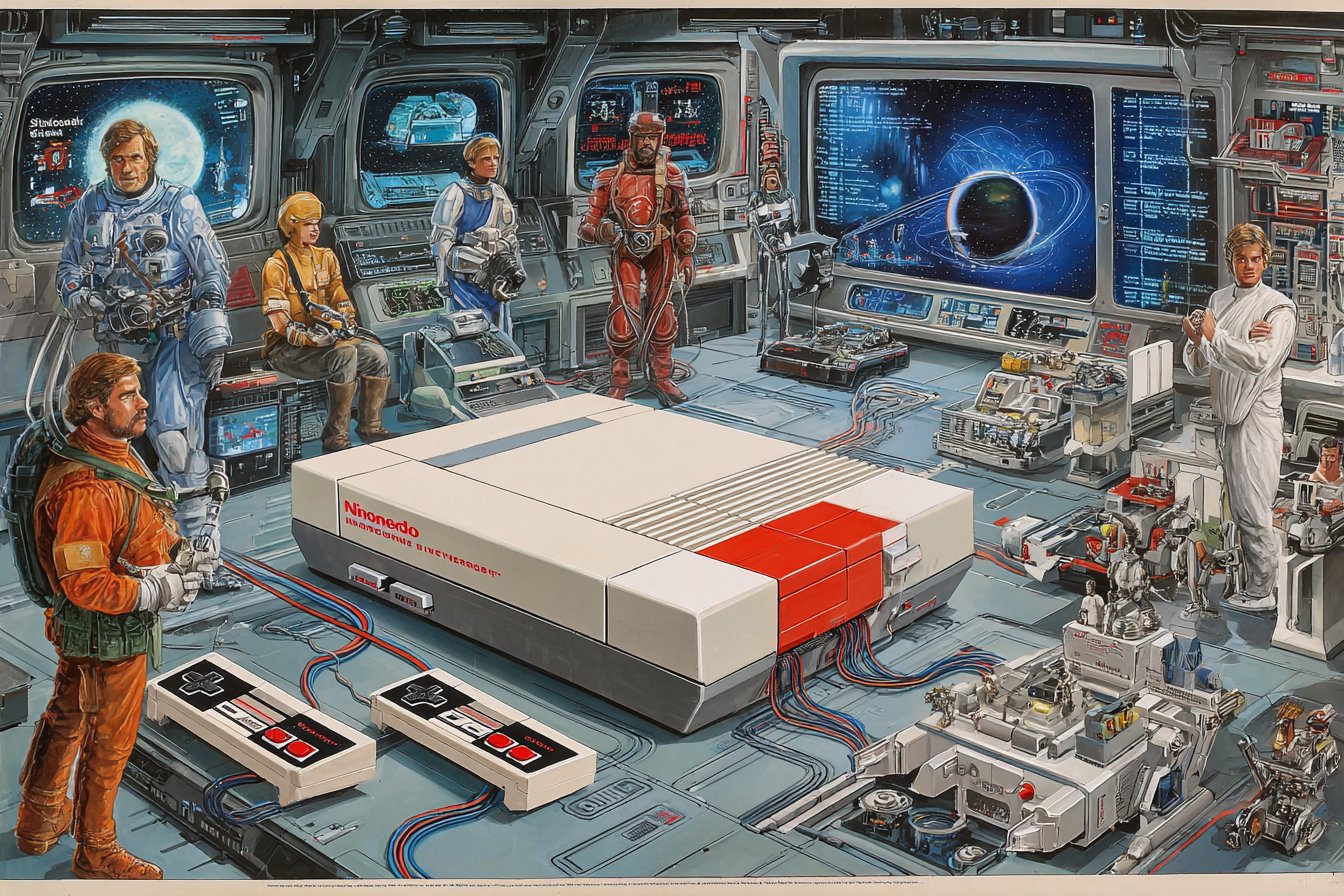

The Console That Saved An Entire Industry
When I entered into the world of retro gaming, I did so with no nostalgia of childhood gaming memories. No nostalgic recollections of blowing into cartridges or begging my parents to purchase a Nintendo. I am a construction foreman, who discovered this stuff at age 40, and I instantly became a fan. Therefore, I evaluate the NES the way a genuinely interested adult would, not the way someone who has defended their childhood would. I am telling you that the Nintendo Entertainment System (NES) is the most important console ever made. Not just in terms of commercial success, but structurally, philosophically and historically as well. The NES did not just help revive the video game industry; it helped create the structure that the entire modern video game industry uses today.
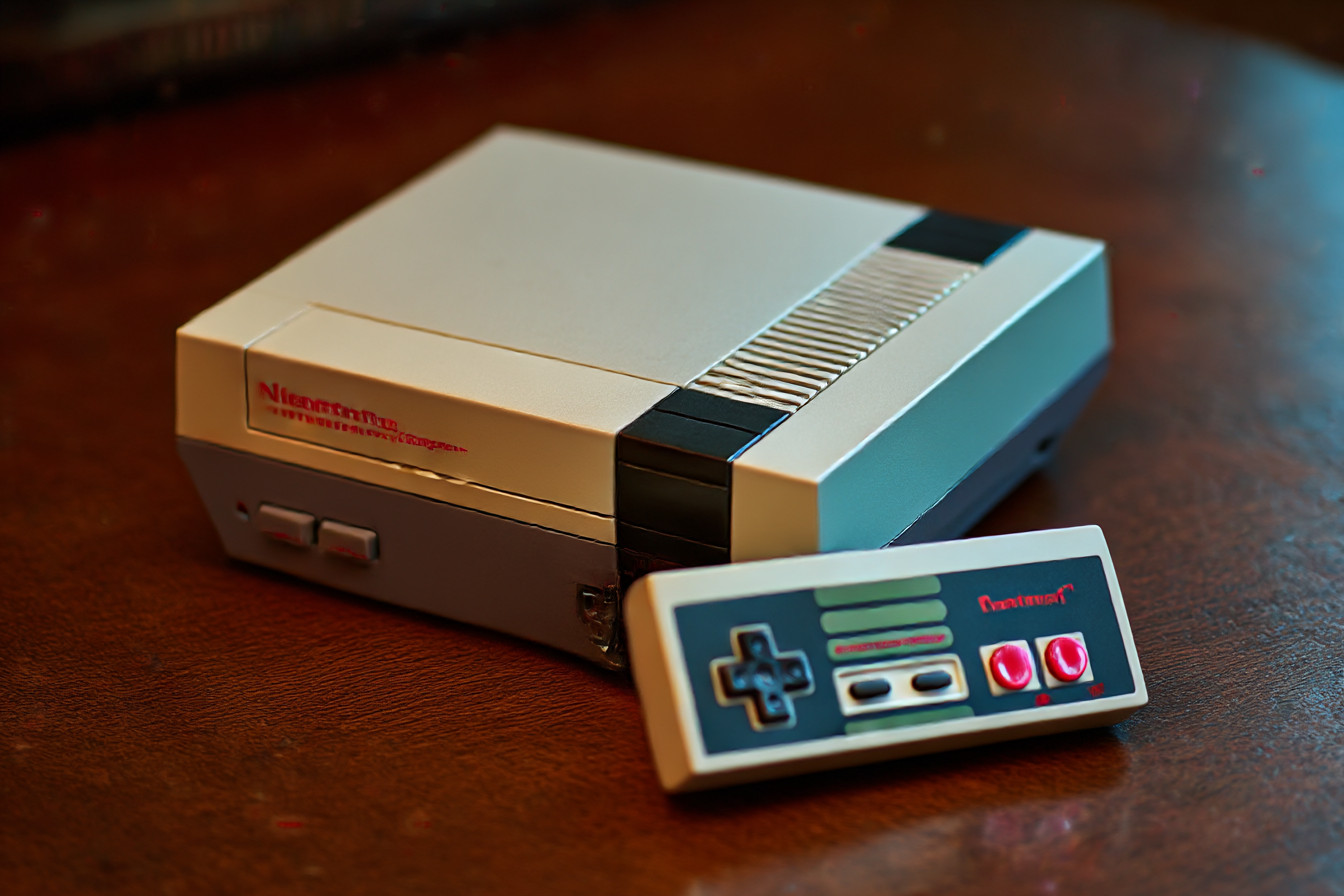
NES Technical Specifications and Sales Data
| Specification | Details |
|---|---|
| Release Date | July 15, 1983 (Japan), October 18, 1985 (North America) |
| CPU | Ricoh 2A03 (6502-based) at 1.79 MHz NTSC / 1.66 MHz PAL |
| RAM | 2 KB main RAM, 2 KB video RAM |
| Video Resolution | 256×240 pixels |
| Sprites | Up to 64 sprites (8×8 to 8×16 pixels) |
| Colour Palette | 52 colours with 25 simultaneous on screen |
| Audio | 5-channel (2 square waves, triangle, noise, sample) |
| Lifetime Sales | 61.91 million units worldwide |
| Generation | 8-bit home console |
Why The Industry Was Dead in 1983
By 1983, video games were basically dead in North America. In other words, they were dead. The Atari 2600 had proven that home gaming was possible. However, the market collapsed. Game publishers dumped terrible games on the market with no quality control. E.T. was a classic example, but it was much worse than just a bad game. There were literally hundreds of horrible games released into the wild. Retailers quit buying video game inventory because they didn’t believe in the product. Parents quit buying consoles because they were tired of being ripped off. The home video game market had disappeared by 1983.
Therefore, the market needed to be rebuilt from scratch. Not just repaired. Built from scratch. Nintendo knew something that no one else did. They knew that you can’t just release a machine with games. You need to release a machine with standards. You need to show retailers and parents that Nintendo was committed to quality. You need to establish that you will do things differently than Atari did.
The Famicom: Japan Got It First
The NES was released in Japan on July 15, 1983 as the Famicom and in North America on October 18, 1985. The NES used a Ricoh 2A03 CPU (a modified version of the 6502) running at 1.79 MHz NTSC/1.66 MHz PAL. The NES had 2 KB of RAM for main use and 2 KB of RAM for video use. The PPU provided a 256×240 pixel resolution, and allowed up to 64 sprites (8×8 to 8×16). The NES also allowed for a colour palette of 52 colours, and 25 colours could be displayed simultaneously on screen. The audio section consisted of five channels, including two square wave generators, a triangle wave generator, a noise generator, and a sample channel. The NES went on to sell 61.91 million units worldwide. While these specifications may seem pitiful compared to the specifications of modern systems, in 1983, they were enough.
What mattered wasn’t the specifications. What mattered was that Nintendo was able to demonstrate that the concept worked.
The NES Redesign: Nintendo Knew What Retailers Wanted
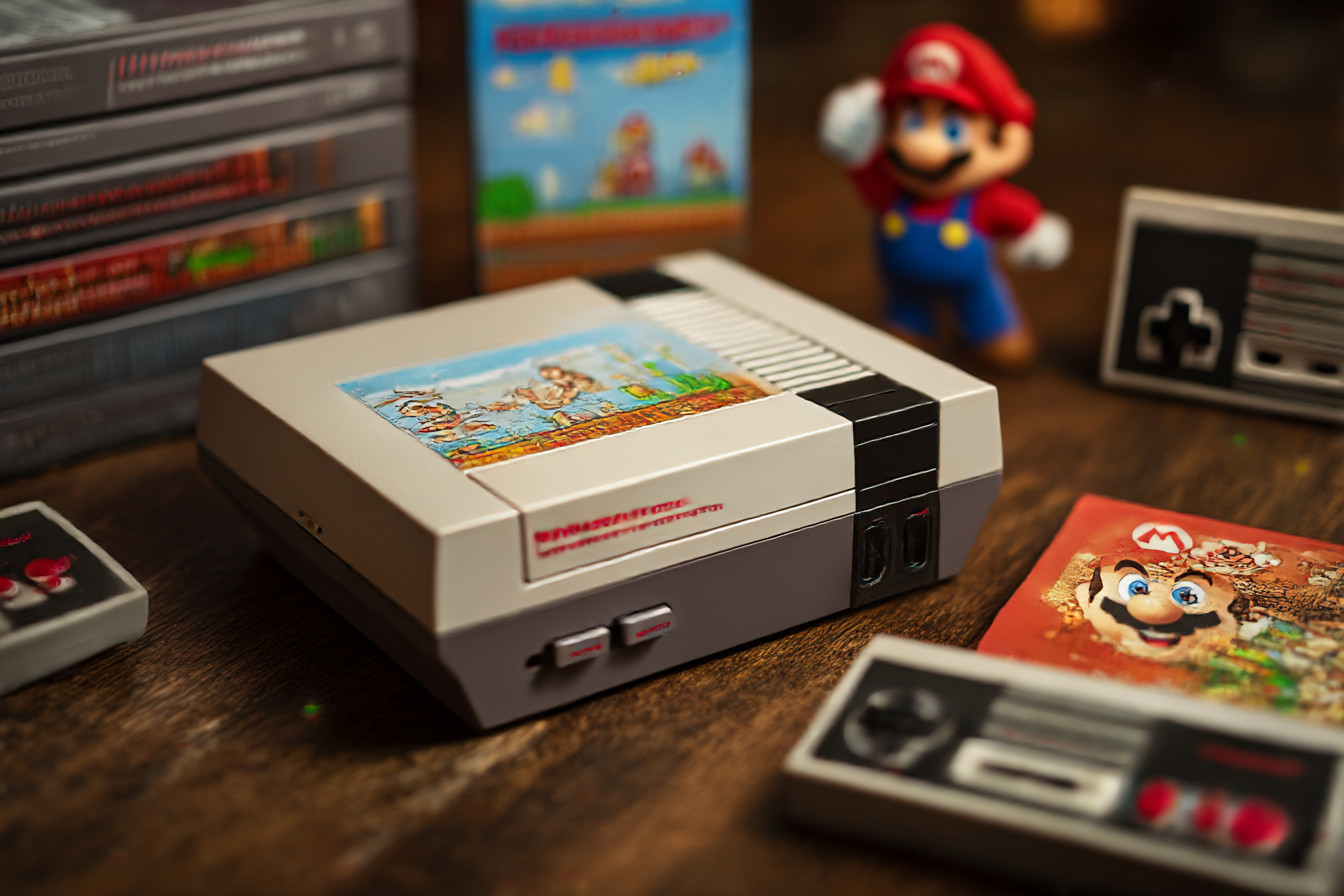
Nintendo did not simply take the Famicom, and rename it for North America. They redesigned the Famicom, and gave it a new name. The American NES looked vastly different from the Famicom. The NES had a cartridge loading mechanism that loaded the cartridge from the front, rather than from the top like the Famicom. The NES had a front-loading cartridge design, and resembled a VCR more than a toy. Nintendo did this intentionally. Nintendo knew that retailers had been burned. Nintendo wanted the NES to look like serious consumer electronics, and not a toy. Nintendo wanted it to look like it belonged on your entertainment centre, right next to your VCR and TV.
The NES was released in North America on October 18, 1985, two years after the Famicom hit Japan. During those two years, Nintendo made certain that the library of games was ready to go. Super Mario Bros., The Legend of Zelda, Donkey Kong, Excitebike, 1942. These were not garbage games. These were games that were specifically designed to show the capabilities of the NES hardware.
The Cartridge Lockout Chip: Establishing Standards for Quality
One of the things that Nintendo did, that no one else had ever done before, was install a cartridge lock-out chip in the NES cartridge slot. This chip prevented unauthorised cartridges from working in the NES. Only cartridges that had received the stamp of approval from Nintendo could function properly. This may sound like a cynical tactic, intended to stifle competition. However, this was actually brilliant. With this chip, if a game bore the Nintendo logo, you knew that Nintendo had vetted it. Nintendo had tested it. Nintendo believed it to meet quality standards.
This was huge for retailers that had lost confidence in the video game market due to the Atari crash. This was huge for parents who had grown weary of purchasing their children games that were poorly made. This was huge for consumers. It established that the NES library of games was the first to have standards that none of the others had. The cartridge lockout chip was not anti-consumer. The cartridge lockout chip was pro-consumer. It stated that Nintendo would risk its own reputation to ensure that every game it approved met minimum standards of quality.
The NES Library: Games That Were Worth Playing
The NES library quickly became the largest and most popular. Super Mario Bros. alone sold more than 40 million copies. The Legend of Zelda quickly became a cultural phenomenon. Metroid created the Metroidvania style of gameplay. Castlevania IV demonstrated the potential of the NES for action-platformer games. Mega Man II, Mega Man III, Mega Man IV, Mega Man V. The Mega Man series itself was impressive. Final Fantasy, Dragon Quest, Kirby’s Dream Land, Donkey Kong Country, Double Dragon. The variety of games available on the NES was stunning.
What made the NES games stand out from the rest was that they were designed to take advantage of the NES hardware. Developers understood the 6502-based processor and the capabilities of the PPU. They understood the 2 KB RAM limit, and designed their games accordingly. They understood the limitations of the 52-colour palette, and used them to create colour schemes that added to the overall gaming experience. Each game on the NES was essentially created from the ground up using the NES hardware as a guide.
How Did Games Like Super Mario Bros. Run Using Only 2 KB of RAM?
Super Mario Bros. was able to utilise only 2 KB of RAM through brilliant design and programming. The developers used the 6502 processor and PPU to create a game that ran smoothly and efficiently.
The NES processor clock speed was only 1.79 MHz NTSC or 1.66 MHz PAL. This is extremely low compared to the speeds of modern processors that operate at GHz. However, the programmers wrote their code in assembly language. This allowed them to understand the exact number of clock cycles required for each operation. The programmers were able to optimise their code to get the maximum performance possible from the hardware.
Because the NES was not capable of having a physics engine, the programmers had to write game-specific code that would allow the characters to behave in the correct manner. The PPU was responsible for creating the graphics and allowing the CPU to handle game logic.
At first glance, the 256×240 pixel resolution appears old-fashioned. However, when you realise that the resolutions used for NES games were perfect for the type of games being developed, the 256×240 pixel resolution begins to look more acceptable. Additionally, the 52-colour palette and 25-colour display capability forced the developers to think creatively regarding the use of colours in their games. The developers had to decide which colours would provide the greatest amount of visual feedback for the players.
The five-channel audio capability on the NES allowed for actual music composition using the limitations of the hardware. The soundtrack to Super Mario Bros. is so well-known and remembered today, because it was composed with such care and attention to detail using the technical limitations of the NES hardware. The fact that the soundtrack is remembered today is a testament to the creativity of the composer(s) who wrote it.
Each game on the NES was designed to work with the NES controller. The developers knew exactly what the player could and could not do with the controller. Because of this, the developers were able to create simple, intuitive, and easy-to-understand games. The controllers were not complicated to use, and players quickly understood how to play each game.
Sales and Market Dominance
The NES sold 61.91 million units during its lifespan. Considering that the global video game market barely existed in 1983, this is an enormous number. The NES did not merely capture the market, it defined it. The NES established the home video game market as a legitimate place where consumers would spend money.
Every console that followed the NES was influenced by the NES. Some consoles operated under a different model than the NES. Some consoles were able to improve upon the original NES model. However, each and every one of them was working under a framework that was established by the NES.
Is the NES Still Relevant Today?
I played the NES for the first time with no nostalgia clouding my judgement. I was a 40 year old man who had never blown into a cartridge in his life. What I found was that the games on the NES still hold up today. Super Mario Bros. is still a fun game to play. The levels are still creatively laid out. The difficulty curve is still spot-on. The Legend of Zelda still feels like an adventure. Metroid still feels like exploration. Castlevania IV still feels like a challenge and rewarding.
The NES controller still feels great. The response is still fast. The controller does not suffer from lag. When you push a button, the character responds immediately. The D-Pad still works accurately. It still is the best way to play 2D games. There is no jerkiness. There is no lag. It is simply a responsive controller.
The graphics still appear crisp and clean. The sprite work is still expressive. Mario’s animation tells you what he is doing. The enemies are still clearly visible. The platforms are still easily seen. The NES still provides a solid foundation for a wide range of artistic interpretations.
The audio on the NES still sounds great. The soundtrack to Super Mario Bros. is still catchy. The sound effects still provide a sense of realism to the games. The beeps and boops still feel like they were created to be part of the music, and not just random noise. The five-channel audio capability of the NES allowed for musical compositions that were incredibly sophisticated given the hardware.
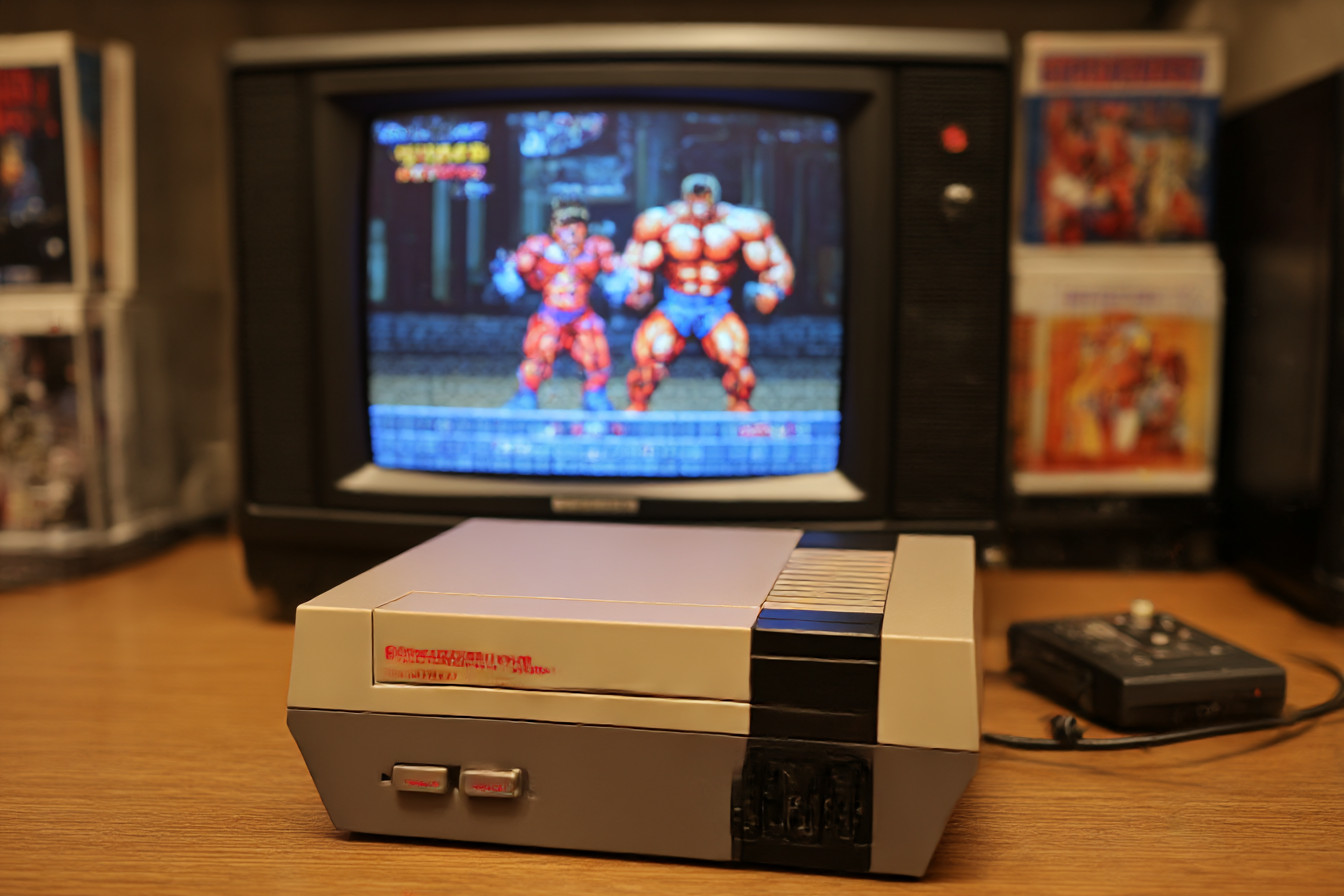
Why the NES Was So Important
The NES brought back the home video game market. Without the NES, the home video game market may have died out altogether. The arcade market may have continued to be the major force behind video games. Home computers, like the Commodore 64, may have been the leading platforms for video games.
However, the NES succeeded. The NES showed that home video games were a viable form of entertainment. The NES showed that quality control was necessary to protect both the retailer and the consumer. The NES showed that first party software could drive hardware sales. The NES showed that controller design was a critical component of a successful console. The NES established the basic principles that define a successful home console. All consoles since then, from the SNES to the PlayStation to the Xbox to the Switch, have evolved from the framework established by the NES.

0 Comments