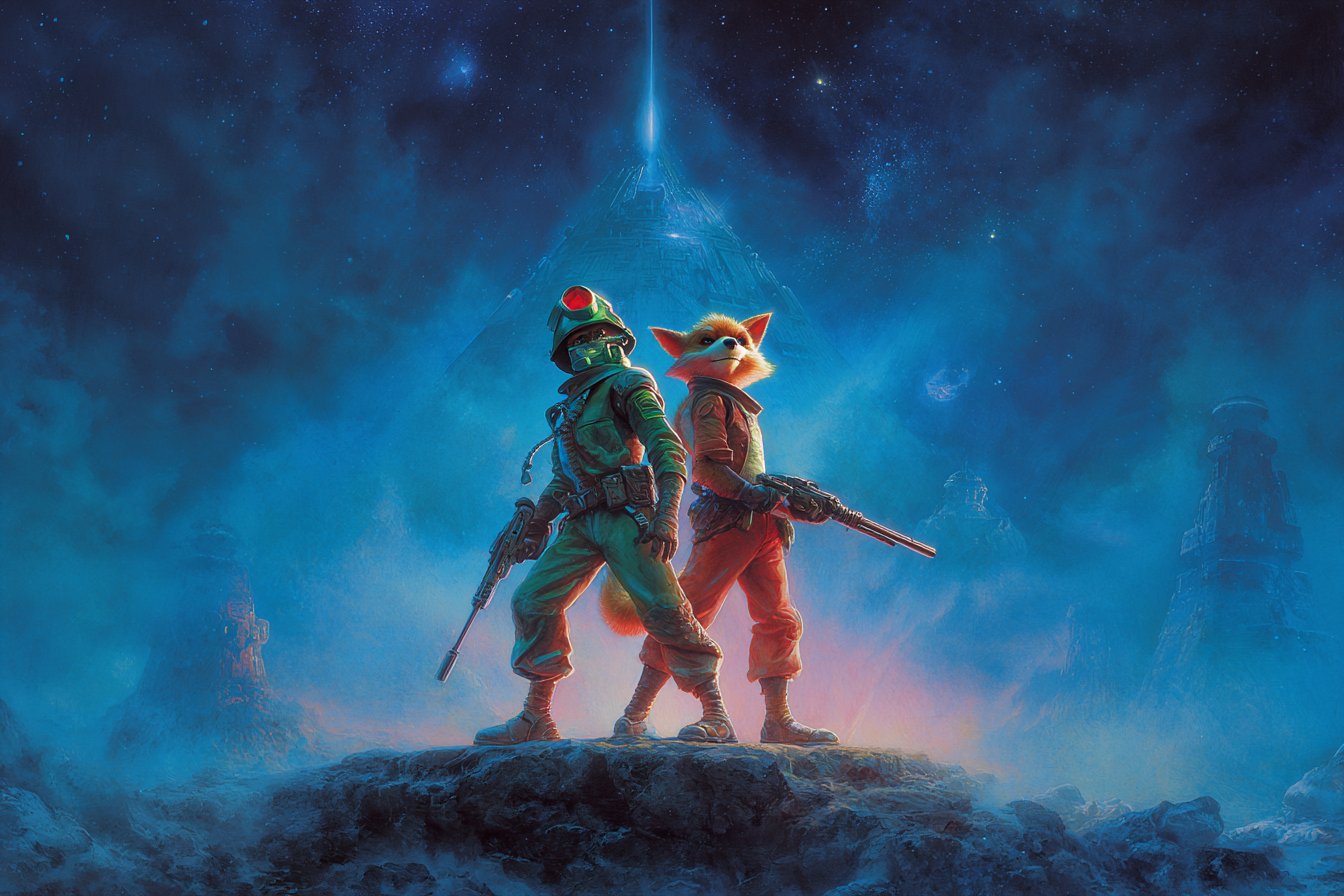
When I was 40 years old, and spending my time to catch up on every aspect of gaming history that I missed out on during my childhood, I was going to experience something that would completely change my perspective of what can be accomplished in the video game industry. The events surrounding this occurrence occurred approximately 2011, when my daughter continued to encourage me to play more SNES games and specifically encouraged me to play the game Star Fox. She stated that it was 3D on the Super Nintendo and I laughed and replied, “There’s no way that the SNES is 3D. That’s a joke.” At that time I had spent roughly a year catching up on 16-bit games, and while I was impressed with the creative ways that developers used sprites and Mode 7 effects on the SNES, I just could not imagine the SNES being able to render 3D graphics. Everyone knows that the SNES is a 2D platform.
Since my daughter hardly ever steers me wrong when it comes to games, I went to a local retro store and paid $40 for a copy of the game. At the time, I thought this was a lot of money for the game, however, I was later to find out that this was an absolute steal (as many retro game collectors will tell you).
The first thing I noticed after removing the cartridge from the box was its weight. The cartridge was significantly heavier than the majority of the SNES games I had in my collection and had some odd-looking vents on top. The individual at the retro store had told me that there was a custom chip inside the cartridge, but I had no idea how special this chip really was until I turned the game on. The fact that it took forever to load the game indicated that the system was having a difficult time with the demands that the game was placing upon it.
Once the title screen loaded and I heard the famous digitized voice say, “FOX!” followed by the epic space opera theme song, I knew that something special was happening. I sat in my living room, and I got goosebumps from a video game title screen. I should have been embarrassed, but I wasn’t.
Once I began the first level, I was absolutely amazed. These were actual polygons and 3D models flying through 3D space. These weren’t simple 2D images flying in a 3D environment that I had seen in arcade games in the past. An example of this is the arcade game Hard Drivin’. Here I was on my home console (the same console that played the likes of Zelda and Metroid) and I was seeing actual 3D graphics. It was like finding out that my old pickup truck could now fly.
The frame rate was absolutely terrible. I’d estimate that the highest frame rate I could achieve was around 20 frames per second, and the lowest was nearly a slideshow when too much was occurring on the screen. I didn’t care. I was watching spaceships and other objects fly through 3D space on a console that shouldn’t have been able to do such a feat, and I was absolutely mesmerized.
It took me quite a bit of time to understand what I was actually viewing from a technical standpoint. After conducting some research, I found out about the Super FX chip, which was essentially a secondary processor added to the cartridge itself that performed all of the 3D calculations. Argonaut Games (a British development studio) had convinced Nintendo to allow them to add additional hardware to SNES cartridges (i.e., modify them), thus creating the Super FX chip. To call this bold (or even crazy) is an understatement.
At any given time, the number of polygons displayed on the screen was comical compared to today’s standards. I’m guessing that the number of polygons displayed on the screen at any given time was somewhere in the range of 500-600. This is likely less than what is required to display a single character model in many modern video games. However, this limit provided the developers with the opportunity to utilize purely geometric forms to convey information to the player. As a result of this approach, the game has a highly stylized look, and to me, it has an almost art form quality to it – much like haikus represent a specific type of poetic simplicity.
From a control perspective, the game felt perfect right from the start. Classic Nintendo. The utilization of the shoulder buttons on the SNES controller enabled the ability to execute barrel rolls with an unprecedented degree of accuracy that created a sense of fluidity (despite the low frame rate) to the combat. When Peppy told me to “do a barrel roll” for the first time, and I realised that it caused the enemy projectiles to deflect off of me, I felt like I had discovered some fundamental truth about space combat. I realise that this may sound ridiculous, but that’s the exact way that game designers should make you feel when they create a game that is designed perfectly.
The branching paths system in the game also stunned me. There were three different paths (easy, medium and hard) that had entirely separate planets and gameplay challenges. This was not simply the same levels with additional enemies; these were two completely different experiences. Once I was able to successfully complete the correct targets to unlock the medium path (instead of continuing to follow the easy path), I felt like I had unlocked a secret code. I spent several weeks learning the easy path before I felt confident enough to attempt the medium path, and the hard path quickly became a mysterious challenge that I attempted to conquer for months.
I was also impressed with the amount of character personality that the developers were able to instill into their characters with only a handful of lines of text and a bunch of nonsensical sounding voice samples. Peppy was the mentor that was always providing me with advice. Falco was the arrogant wingman that made insults sound like compliments. Slippy was always flying into enemy fire and had very few instances of success. Fox, the main character, was a young man thrust with so much responsibility. Each of the characters received their personalities solely through a dozen or so lines of text and nonsense syllables that conveyed the perfect tone.
The final battle with Andross was a trial of frustration for me. Andross was a giant floating head that fired geometric shapes at me while teleporting everywhere throughout the battle area – unlike anything else I had ever encountered in a game prior to this. I must have lost twenty times trying to kill him in the face, which I considered to be the easiest target in the game. Once I figured out that I had to shoot his eyes first, and then his brain, I felt like a fool. However, that’s part of the fun – games used to require players to figure out problems, instead of simply pointing out where to shoot.
Following the first time I completed the game, I attempted to explain to my nephew why Star Fox was such a big deal. He had played through the initial few levels of the game with me a few days prior to this conversation using the SNES app on his Switch. He had difficulties tracking the various elements of the game (he is accustomed to playing Fortnite and Breath of the Wild, etc.), and he found the game to be virtually unplayable. However, I did observe that he was becoming increasingly excited as we navigated through the tunnel sections (with the same sensation of speed and motion that captured me years earlier).
Some things are bigger than polygon count and frame rate.
The impact of the Super FX chip was also felt long after Star Fox. Additional examples include Stunt Race FX, Yoshi’s Island, and Doom on the SNES, all of which expanded the limits of what was possible on the 16-bit hardware of the SNES with the assistance of the Super FX chip. This brief time period in gaming history marked the time when additional processing power via cartridge-based enhancement chips made seemingly impossible tasks possible, before CD-based systems and standardized hardware made such innovations obsolete.
In retrospect, Star Fox embodies something that I have come to respect about Nintendo at their best – their willingness to take huge technical risks to develop new types of gameplay experiences. They could have easily chosen the safer option, producing 2D games that the SNES excels at. Instead, they worked with a small British development team to produce custom hardware and stretch their system in ways that it was never originally intended to be stretched.
This kind of innovation is extremely rare in the current gaming landscape.
The flat-shaded polygons and stuttering frame rates opened my eyes to what the future of gaming might look like before that future was fully developed. It inspired me to think about possibilities I had never previously imagined, and excited me to see where the medium would eventually go. While I enjoy the photorealistic graphics and smooth performance of modern video games, I miss the days when a few hundred polygons moving at 20 FPS seemed magical. Sometimes the roughest version of something impossible inspires us more than the perfect version of something expected. END_TEXT.
Begin Text
You know how sometimes you encounter something that completely changes your vision of what is possible? Something like that occurred to me around 2011, when I was catching up on every aspect of the gaming history that I missed in my youth. My daughter had been encouraging me to try more SNES games, and she had already pointed out several games that I hadn’t yet tried. One of the games she kept bringing up was Star Fox. She told me that it was 3D on the Super Nintendo and I laughed and said, “There is no way that the SNES is 3D. That is a joke.” At that time I had spent roughly a year catching up on 16-bit games, and although I was impressed with the innovative methods developers utilized to employ sprites and Mode 7 effects on the SNES, I could not visualize the SNES being capable of rendering 3D graphics. Everyone knows that the SNES is a 2D platform.
Because my daughter rarely misleads me about games, I purchased a copy of the game at a local retro store for forty dollars. At the time I thought this was a high price for the game, but later I was to learn that this was a steal (as many retro game collectors will tell you).
The first thing I noticed when I removed the cartridge from the box was its weight. The cartridge weighed significantly more than the majority of the other SNES games I had in my collection and had some unusual-looking vents on top. The individual at the retro store told me that there was a custom chip inside the cartridge, but I had no idea how special this chip was until I powered the game on. The fact that it took an age to load the game suggested that the system was having a difficult time meeting the demands that the game was placing on it.
When the title screen of the game loaded and I heard the famous digitized voice say “FOX!” followed by the epic space opera theme song, I knew that something special was happening. I sat in my living room and I was experiencing goosebumps from a video game title screen. I should have been embarrassed, but I wasn’t.
When I began the first level, I was absolutely amazed. These were actual polygons and 3D models flying through 3D space. These were not simple 2D images flying in a 3D environment that I had observed in arcade games in the past. A prime example of this is the arcade game Hard Drivin’. Here I was on my home console (the same console that played the likes of Zelda and Metroid) and I was observing actual 3D graphics. It was like discovering that my old pickup truck could now fly.
The frame rate was terrible. I estimated that the highest frame rate I achieved was approximately 20 frames per second and the lowest was close to a slideshow whenever too much activity was taking place on the screen. I didn’t care. I was watching spaceships and other objects fly through 3D space on a console that shouldn’t have been capable of accomplishing such a feat, and I was absolutely captivated.
It took me a considerable amount of time to grasp the nature of what I was actually witnessing from a technical perspective. After researching the topic, I discovered the Super FX chip, which was essentially a secondary processor built into the cartridge itself that calculated all of the 3D graphics. Argonaut Games (a British development studio) had convinced Nintendo to permit them to incorporate additional hardware to SNES cartridges (thusly modifying them), therefore creating the Super FX chip. To call this bold (or even insane) is an understatement.
At any point in time, the total number of polygons displayed on the screen was laughable when compared to today’s standards. I am estimating that the number of polygons displayed on the screen at any point in time was somewhere in the ballpark of 500-600. This is likely fewer than the number of polygons required to depict a single character model in numerous modern video games. However, this limitation presented the developers with the opportunity to utilize purely geometric forms to convey information to the player. Therefore, the game has a highly stylized look, and to me, it has an almost artistic quality to it – similar to the type of poetic simplicity represented by haikus.
From a control perspective, the game felt ideal from the moment I began playing it. Classic Nintendo. Utilizing the shoulder buttons on the SNES controller permitted the execution of barrel rolls with a degree of accuracy that generated a sense of fluidity (despite the poor frame rate) to the combat. When Peppy told me to “do a barrel roll” for the first time and I realised it deflected enemy fire, I felt as though I had discovered some underlying principle of space combat. I know this sounds ridiculous, but that is precisely the manner in which game designers should inspire you when designing a game.
The branching paths system in the game also stunned me. In addition to three different paths (easy, medium and hard), each path contained entirely separate planets and gameplay challenges. This was not merely the same levels with increased numbers of enemies; these were two entirely distinct experiences. Once I was able to successfully complete the necessary objectives to unlock the medium path (rather than continuing along the easy path), I felt as though I had unlocked a secret code. I spent weeks learning the easy path before I felt confident enough to attempt the medium path, and the hard path quickly became a mysterious challenge that I attempted to conquer for months.
I was also impressed with the amount of character personality that the developers were able to instill into their characters utilizing only a small number of lines of text and a variety of nonsensical sounding voice samples. Peppy was the mentor