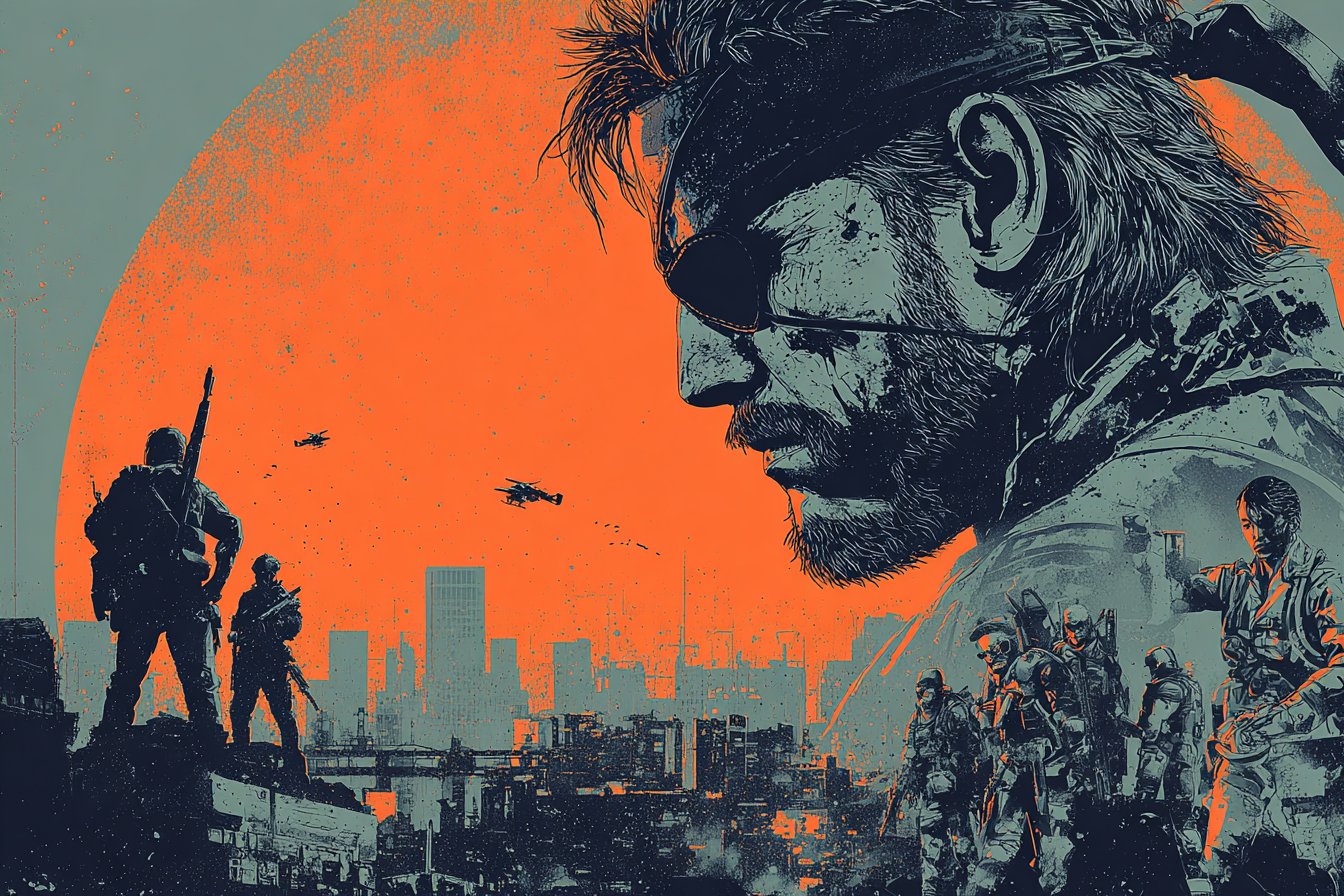
Hey guys, Joe here. Why has it been twenty plus years since the greatest “F*** You” in video game history? As Carl stressed about the frame rates and Sam cried about the balance patches, I’m still angry about the biggest trolling game design in history. Metal Gear Solid 2: Sons of Liberty didn’t simply break the 4th wall. It loaded it with C4 and asked you to question if walls really existed in the first place. Released in 2001 (Wikipedia), this was not simply Hideo Kojima’s sequel to his PlayStation classic. This was the moon landing for gaming’s greatest literary suicide bomber in stealth action clothes.
| Developer | Konami Computer Entertainment Japan |
| Platform | PlayStation 2, Xbox, PC, PlayStation 3, Xbox 360, PlayStation Vita |
| Year Published | 2001 |
| Genre | Stealth Action |
| Players | 1 |
| ESRB Rating | Mature 17+ for Animated Blood and Animated Violence |
| Completion Time | 25 hours story, 35-40 hours completionist |
| Our Rating | 9/10 |
It deserves its controversial place in gaming history, and to be fair, it encapsulates everything that is brilliant and infuriating about Kojima’s brand of interactive storytelling. But this is what everyone seems to miss when they complain about Raiden or the cutscenes being too long: MGS2 was never meant to be “better” than the original. It was an experiment. Something gaming had never seen before.
The Greatest Bait and Switch in Gaming History
The Tanker chapter begins with everything fans wanted. Solid Snake is infiltrating a military ship, utilising revamped stealth mechanics and a visually polished engine that showcases the PS2’s abilities. Controls felt the same yet different, first person aiming modes well-used, and interaction with the world is a natural extension of what was established in the original. For about two hours players got exactly what they expected from Metal Gear, a sequel. Then Kojima plays his trump card. You are no longer Snake. Meet Raiden, a rookie blonde, sent to do essentially what Snake did to Shadow Moses Island. The game switches from a military ship to an offshore facility. The assisting cast feels familiar to anyone who played the original. The colonel in your ear sounds like Campbell. The ninja dicing enemies is reminiscent of Grey Fox. Even the terrorist threat follows similar beats.
Note that this wasn’t some lazy game design or asset rehashing. This was intentional, the repetition there to unsettle the player. Kojima was asking whether a sequel just becomes a hollow echo of the original, did we really want a new experience or just the same.
Raiden himself became the target for this player frustration, but his design was conscious provocation. Where Snake was grizzled and wily, Raiden looked young and effeminate. Where Snake approached missions through tactical and espionage savvy, Raiden often appeared bewildered and confused. To players who identified with Snake’s competence, they were now in control of someone who felt more like themselves: uncertain, manipulated and struggling to comprehend the larger scales of control in the world.
The genius, then, was in not leaving the player with this frustration. As players grew ever increasingly annoyed that Raiden was not Snake, the game began to reveal that players’ own confusion was equal to Raiden’s. Where the player did not understand why they were not Snake, neither did Raiden understand why his mission felt so familiar, why these handlers felt so controlling, why everything felt like a carefully designed simulation.
The AI Overlords Who Predicted Everything
This is where MGS2 goes from elaborate troll job to prophetic masterpiece. The Patriots, revealed as an AI network controlling the flow of information and development of society, were more than just convenient antagonists. They were Kojima’s warning about algorithmic content curation, social media manipulation, and the gradual erosion of objective truth through information warfare.
Look at their stated goal. “An end to unnecessary information. An end to information fed to us by its producers. Leaving a model behind in a simplified artificially constructed state for human beings to play out what’s expected of them.” Science fiction paranoia in 2001. The blueprint for the way these companies do business in 2024. “A world where everyone withdraws into their own small gated community afraid of the larger forum.” Such a fantastically applicable concept for the social media echo chambers that didn’t exist when MGS2 was conceived.
When the AI explains how they “produce resonance between the two similar informations and amplify one whilst nullifying the other” we get genuinely chilling in their explanation. Scientifically using “digital manipulation carefully designed to keep social controls running smoothly”? This coming from a video game released in 2001. This was scary on an intellectual level then, now it feels like a Tuesday.
“I to the AI is the same as I to the Patriots. Nabi.” The AI’s explanation of how they would convince Raiden to repeat back what they’d told him. This is chillingly similar to how recommendation algorithms work, convincing us they’re guiding us. Replace Patriots with Meta, Google, TikTok and those conversations could have been recorded yesterday.
More than just technology, Kojima’s game was prescient about the psychology of how information overload drives people towards safe narratives, how they prefer their lies by omission to things they’d rather avoid hearing, how authority figures prey on these ‘insect’ tendencies for manipulation. The colonel’s gradual unreasonable breakdown in codec conversations, where he starts to become ranty and jibber jabbery whilst legitimately trying to explain how the game functions, is somehow a very relatable comparison for how muddied the waters of political discourse are now.
The entire lessons of MGS2 boiled down to the S3 Plan. Raiden’s entire mission was part of a simulation developed to produce yet another Solid Snake. Vicarious living at the hands of a video game. Just as young Raiden is groomed in virtual reality to become a soldier, we players are groomed through that same exposure to become consumers and citizens and believers in whatever narratives might best serve the system’s purposes.
Technical Brilliance Concealed by Philosophical Weight
MGS2’s innovations in gameplay often get lost amongst the grandiose narrative aspirations, but as with the previous game, Kojima’s team created mechanical systems to serve their thematic explorations. The “improved” stealth mechanics were a means to explore the themes of power and control. Through the new first-person view mode, making stealth more nuanced, MGS2 turned encounters with guards into psychology exercises instead of rote pattern recognition. Guards now had individualised patrol routes and routines, ways to communicate with one another, and suspicious reactions that encouraged players to think like true intruders rather than soldiers following the mission narrative syntax. Guards would investigate disturbances, call for backup when they found unconscious soldiers, and change their patrols based on past events.
The environmental interaction system supports the themes that the perception of reality is manipulable. You could hide in lockers, or beneath a staircase, behind a desk or wall, but only if you had a good idea of where the guard’s ‘sight’ fell and how the guard was patrolling. MGS2 never stops reminding you that your point of view is limited, that enemies may see things that you do not, and that psychological stealth requires an understanding of other people’s points of view. The mechanics of combat, should stealth fail, force you into the role of a helpless protagonist rather than a powerful action hero. Rather than trying to turn us into monster killing machines, MGS2 makes combat clunky and dangerous. Ammunition was rare, enemies were numerous, fighting most often meant death. This wasn’t bad game design, but rather part of the theme: violence is not success, it is failure.
The radar becomes a metaphor for our dependency on information. It can be turned off for a reward, but now the player has to create spatial awareness and observational skills instead of following an icon on the screen. Is a convenience of information better for us? Or just for the companies that can sell us what we want to consume?
The Cutscenes That Made Everyone Angry
Reports say the game takes about 25 hours (GameFAQs) to beat, but that is not all gameplay. There are long stretches of cutscenes, a length of time that would make players mad that there isn’t more gameplay, the medium being interactive after all. But even in this Kojima was experimenting, trying to blur the lines between “playing” and “watching,” between agency and passivity.
The codec conversations were in the news for being incredibly long, for being dense. There’s a conversation about information theory, about genetic determinism, about social control. Characters talk for several minutes and all the player can do is sit there and listen. But ironically, we all know the purpose: they’re interactive.
Until there’s a final scene in codec, a joke on where even the colonel is away from the codex, even us, the player. The familiar interface elements that had guided players’ decisions throughout the game turned into unreliable narrators that served contradictory information.
Kojima employed cinematic techniques to drive home his messages about media manipulation. Characters would look directly at the camera during key conversations, making players uncomfortable in their peeping tom role. The game would reference things on the player’s PlayStation memory card, suggesting that the wall separating video game fiction from reality was thinner than it appeared.
The infamous naked cartwheels part of the game was more than juvenile humour. It was commentary on how the players’ palates had been trained to accept gaming’s ludicrousness as kosher. It was only when Kojima presented something legitimately absurd to buttress the context of a stealth mission that he revealed the extent to which gaming ‘tropes’ had conditioned players to accept preposterous premises.
Why It Matters to You Today
The Master Collection Version includes a digital Screenplay Book and Master Book (MobyGames), perhaps because MGS2 has proved more interesting as a cultural document than as software entertainment. Its dire predictions about information warfare, algorithmic manipulation, and collapse of shared reality have held up remarkably well.
Modern speedrun categories even include Any percent and Glitchless, showing how players have learned to remove mechanical systems of the game outside of its narrative provocations. The community that sprang up around optimising MGS2’s gameplay is exactly the sort of human connection the game argued was being hollowed out and buried beneath the deep fake of digital mediation.
Metal Gear Solid 2 Substance features 200 virtual reality missions, compounding the game’s themes regarding simulated experiences and artificially generated challenges. From stealth scenarios to weird mini games, these were further developments of the game’s ideas regarding what happens when we confuse artificial challenges for real achievement.
The scope of the game extends far beyond the Metal Gear series into AI, social media, and digital identity. Academics tackle both the philosophical and technical sides of the game. Modern game designers point at its ability to challenge conventions and expectations wherever they lie.
The Sequel We Deserved And Didn’t Want
A completionist attempting all achievements in MGS2 can expect 35-40 hours of content that challenges our assumptions of what a video game ought to be. MGS2 would not rest until it was a better form of entertainment, would not stop there but had to be meaningful art that used the communicative power of interactivity to explore difficult ideas. Ideas that had no place in media that asked no questions.
The rating is Mature 17+ with Animated Blood and Animated Violence, but funnily, the Master Collection Version assigns itself additional warnings for Blood, Drug Reference, Partial Nudity, Suggestive Themes and Violence. The rating reveals the surface content of the experience, but not the psychological horror we are forced to confront that made MGS2 truly disturbing to anyone who went deep enough to get scared.
Twenty-three years later, it remains the biggest success of narrative subversion the industry ever pulled. Without a charge in the chilli, it funny-memed an entire medium of entertainment to the stern righteous laughter of everyone surprised it was a good thing to be. All because it could look into its future and showed the world the stark truths behind its old reflected shadow. Kojima predicted something that should terrify us all, and then made the 300-pound gorilla understand with the interactive horror story that got under the players’ skin. It wasn’t just too weird for us then; abruptly come to know we weren’t weird enough. It turned out to be just right.