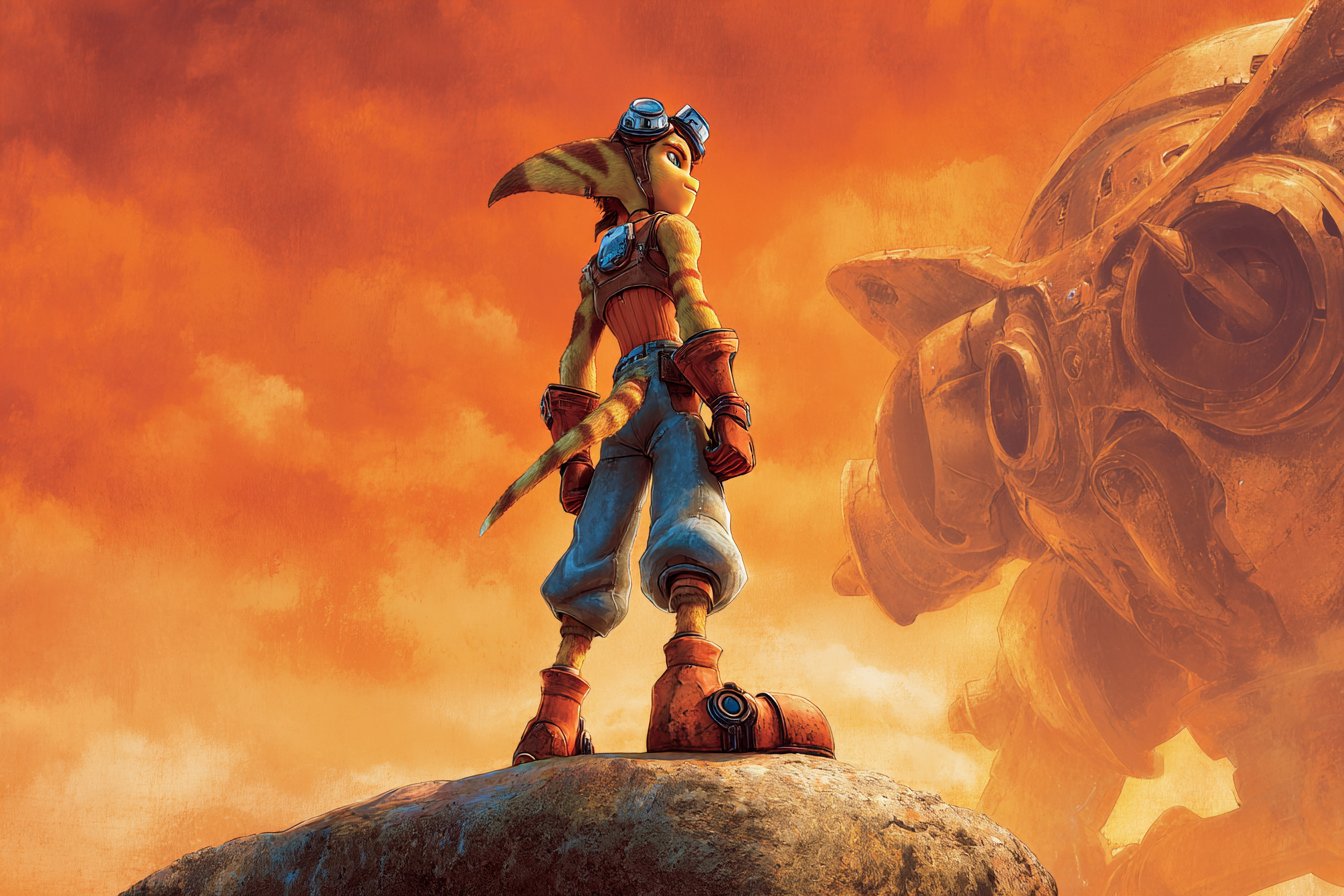
Tim is mistaken when he says that Jak and Daxter was just “another mascot platformer.” Joe is closer to correct that it was the last great traditional 3D platformer before all of them turned into open world. However, Joe is missing the technical innovations that made it possible.
Technical innovation enabled both the artistic vision and the engineering excellence necessary to make Jak and Daxter a great platformer. The GOAL programming language, the seamless world streaming, and the sophisticated character controller were not just technological demonstrations, but tools that permitted better gameplay. The technologies supported the design to create more fluid and responsive gameplay than what other developers were able to achieve using conventional development methods.
This is the right way for technical innovation to occur in the development of video games. Rather than pursue eye candy that does nothing for the gameplay, Naughty Dog pursued solutions to fundamental problems that have limited 3D platformers since the genre began. Loading screens break the immersion of the player in the environment. Unresponsive controls frustrate the player. Limited draw distances cause the world to feel confined. Naughty Dog solved these problems and developed a game that utilised these solutions.
The influence of the technology and methodologies that Naughty Dog employed are not limited to platformers. Many modern open-world games utilise streaming techniques that are based upon the approaches used in Jak and Daxter. Many studios now employ live code modification tools that allow developers to modify the game code whilst the game is running. The integration of the technical and design teams that Naughty Dog used to develop Jak and Daxter is a model of how successful development teams operate.
Jak and Daxter: The Precursor Legacy is important to play today for anyone interested in 3D platformers, or the history of the PlayStation 2. It shows how understanding the capabilities of your hardware and developing tools to take advantage of those capabilities can lead to experiences that seemed impossible given the technical limitations. Twenty years after its release, it still seems very modern in ways that few of its peers do.
Development and Technical Innovation
Developed by Naughty Dog and published by Sony Computer Entertainment via Wikipedia, this wasn’t Naughty Dog’s first rodent, so to speak. They’d already proven themselves with Crash Bandicoot on the original PlayStation. But moving to PS2 hardware gave them opportunities to solve problems that had plagued 3D platformers since the genre began. Released in 2001 as a PlayStation 2 platform game via Wikipedia, it arrived at a crucial moment when developers were figuring out how to use the PS2’s unique architecture effectively.
By 2002 it had sold over one million copies worldwide via Wikipedia, eventually reaching two million copies in the United States by 2007 via Wikipedia. Those numbers reflect more than just good marketing—they represent players recognising something genuinely different about how this game moved and felt.
| Developer | Naughty Dog |
| Publisher | Sony Computer Entertainment |
| Platform | PlayStation 2 |
| Year Published | 2001 |
| Genre | 3D Platformer |
| Players | Single Player |
| Our Rating | 9/10 |
The GOAL Language Revolution
The goal-oriented assembly lisp (GOAL) programming language was developed by Naughty Dog for Jak and Daxter, and it allowed for live code modification via Wikipedia. Live code modification means that the developers could make changes to the code for the game whilst it was running, rather than having to stop the game and restart it every time they wanted to test a change. This greatly increased the speed of the development process, and it helped to make the game feel smoother and more polished.
This wasn’t just a development convenience—it fundamentally changed how the game was constructed. The tight, responsive feel of Jak’s movement didn’t happen by accident. It was iteratively refined through hundreds of micro-adjustments that would have been impossible with traditional development workflows. Every subtle aspect of the character controller, from the way Jak builds momentum to how he responds to directional changes mid-air, was fine-tuned through this real-time modification system.
From an engineering perspective, this represented a significant advancement in game development methodology. Most teams were still struggling with PS2’s unusual architecture. Naughty Dog built tools that let them exploit this architecture more effectively than studios using conventional development approaches.
Seamless World Technology
The seamless world technology used in the game is another example of the technical innovations that were used to create it. In a traditional 3D platformer, the player moves from one screen to the next, and the game loads the next screen when the player reaches it. However, in Jak and Daxter, the world is loaded into memory as the player progresses through the game, and the game seamlessly loads the next part of the world when the player reaches it. This eliminates the need for loading screens, and it makes the game feel more cohesive and immersive. It was praised for a seamless world with no load times via Wikipedia.
PlayStation 2 had 32MB of main RAM and 4MB of video RAM—tiny by modern standards, but the clever bit here was how Naughty Dog managed memory allocation and data streaming. They implemented a sophisticated prediction system that began loading upcoming areas based on player movement patterns and camera positioning. As you approached the edge of one region, the system was already discarding distant geometry and textures whilst loading the next area’s assets.
More importantly, they designed the world layout to support this streaming technology. Areas were connected through natural chokepoints—caves, bridges, narrow pathways—that gave the system time to complete asset swaps whilst maintaining the illusion of seamless exploration. The level designers and programmers worked together to ensure that technical requirements enhanced rather than constrained the player experience.
Movement and Control Systems
Another major technical innovation that Naughty Dog used in the development of Jak and Daxter was the character controller. The character controller is responsible for determining how the player interacts with the game world, such as walking, running, jumping, etcetera. The character controller in Jak and Daxter is extremely well-designed and allows for a wide range of movement possibilities. For example, the player can run, jump, spin, and even roll. The character controller is also extremely responsive, allowing the player to make precise and accurate movements. The character controller has been highly influential in the development of many other games and has set a high bar for how character controllers should be designed.
Jak’s basic moveset includes running, jumping, double-jumping, spinning attacks, and rolling. Each action has specific properties that interact logically with others. The spin attack can be cancelled into a jump, maintaining horizontal momentum whilst adding vertical movement. The roll move provides both combat utility and traversal options, allowing players to duck under obstacles or build speed for longer jumps.
The double-jump implementation is particularly well-engineered. Rather than simply resetting vertical velocity, it applies additional upward force that varies based on timing and previous momentum. Early double-jumps provide maximum height, whilst late double-jumps offer more horizontal distance. This creates skill-based movement options that reward understanding the system’s underlying physics.
Visual and Audio Engineering Excellence
In addition to the innovations mentioned above, Naughty Dog also innovated in terms of the game’s visual and audio presentation. The game features beautiful and detailed graphics, and the audio is equally impressive. The game features a dynamic soundtrack that adapts to the player’s actions and surroundings, and the sound effects are all realistic and immersive. The combination of these elements creates a rich and immersive atmosphere that draws the player in and refuses to let go.
The graphics engine pushed PlayStation 2 hardware impressively hard. Naughty Dog’s rendering pipeline took advantage of the PS2’s vector units for geometry transformation and lighting calculations, allowing complex scenes with higher polygon counts than most contemporary games achieved. The draw distance was remarkable for 2001, with detailed environments visible far into the horizon without the aggressive fogging that most PS2 games required.
Environmental effects like water, fire, and atmospheric particles were implemented through custom shader programmes that ran efficiently on PS2 vector units. The water rendering, in particular, combined reflection mapping, transparency effects, and animated surface distortion to create convincing aquatic environments.
Modern Accessibility and Preservation
In order to facilitate access to this classic title, Jak and Daxter has been released numerous times including a remastered version titled Jak and Daxter Collection in 2012 via Wikipedia for the PlayStation 3. This collection provided improved graphics, trophies, and added features such as rewind and quick-save to help make the experience easier for modern players. Players today can also find modern versions of the game that include the rewind feature and quick-save feature via PlayStation Store. The rewind feature is specifically helpful for precisely timing platforming sequences, allowing players to quickly retry difficult jumps without losing significant progress. The quick-save function allows players to try different strategies for completing challenging tasks without having to replay long sections of the game.
Jak and Daxter is currently available on multiple platforms via GameFAQs allowing modern players to enjoy the innovative gameplay and technical achievements of this platformer. The gameplay of the original is still very enjoyable today; the precision controls and thoughtful level design remain effective despite advancements in graphics.
The critical reception of Jak and Daxter has been consistently positive via Metacritic, and modern players are appreciating the same technical and design innovations that impressed critics twenty years ago. Jak and Daxter’s influence can be seen in the many 3D platformers that followed, adopting many of the same approaches to creating seamless worlds and responsive character controllers.
Why Jak and Daxter Still Matters
Overall, Tim is mistaken in saying that Jak and Daxter is “just another mascot platformer.” Whilst Joe is close to correct that it is the last great traditional 3D platformer before all of them turn into open-world, he misses the technical innovations that made this game possible. The combination of artistic vision and engineering excellence, along with the use of advanced technologies such as GOAL and seamless world technology, resulted in a game that is both fun and visually stunning.
The preservation and accessibility of the game today, along with its continued relevance to the current state of gaming, are a testament to its lasting legacy. Jak and Daxter: The Precursor Legacy remains essential playing for anyone interested in 3D platformers or PlayStation 2 gaming history. It demonstrates how understanding hardware capabilities and building appropriate tools can enable experiences that seemed impossible given the technical constraints. Twenty years later, it still feels remarkably modern in ways that many of its contemporaries simply don’t match.