Elena here, and I want to address an issue that has bothered me for years. Anytime someone discusses the golden age of real-time strategy games, they immediately reference StarCraft or Age of Empires II. StarCraft and Age of Empires II are both outstanding games, but there is an omission in discussions about the golden age of RTS that is very significant: Command & Conquer: Red Alert did not simply exist during the golden age; it defined much of what made RTS games appealing in the first place. Released in 1996 (PCGamingWiki), Red Alert built upon the foundation that Westwood laid with the first Command & Conquer and turned it into a game that combined a serious level of strategic depth with the type of outrageous, comedic theatricality that got you genuinely excited to turn your computer on every night.
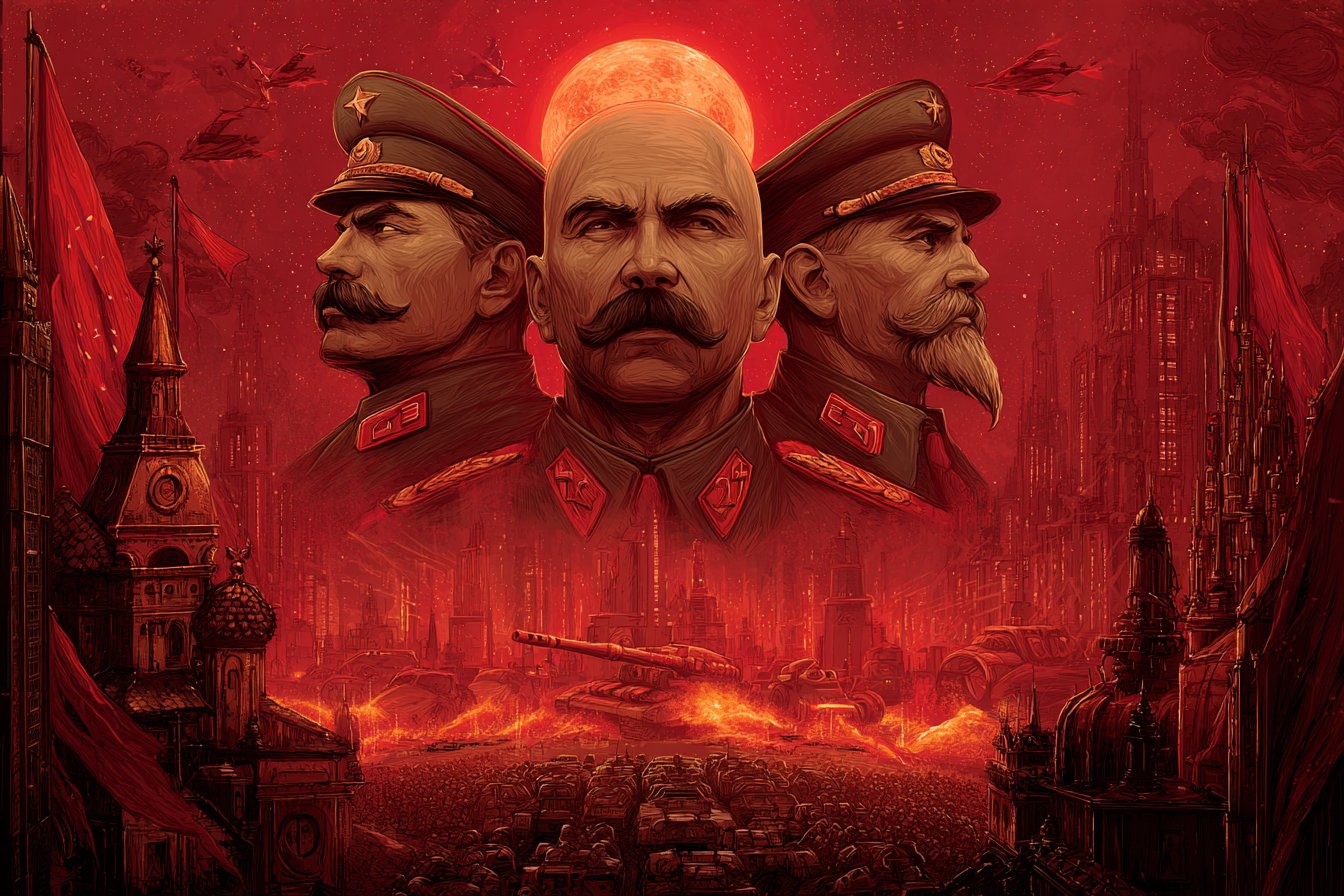
One of the things that makes Red Alert so intriguing is how the game approached its alternate history premise (MobyGames). Instead of viewing the Cold War as a foregone conclusion based on historical fact, Westwood asked: what if Albert Einstein travelled back in time and killed Hitler, causing him to accidentally create a world where Joseph Stalin’s Soviet Union was the major force behind a world-wide domination of the globe? It may sound utterly ridiculous written out like that, but the game commits so fully to this concept that it is brilliant. The alternate history framework allowed the developers to create units that were just believable enough to be grounded in real world military concepts whilst being outrageous enough to create memorable gameplay experiences. Giant Tesla coils. Chronosphere technology. Tanya Adams destroying entire Soviet bases on her own.
| Developer | Westwood Studios |
| Publisher | Virgin Interactive |
| Platform | PC (DOS/Windows) |
| Year Published | 1996 |
| Genre | Real-Time Strategy |
| Players | 1-8 (campaign/multiplayer) |
| Metacritic Score | 90/100 |
Red Alert is considered one of the defining PC strategy games of the 1990s and, really, it encapsulates everything that made that era of gaming so magical. In addition to receiving a Metacritic score of 90, which signifies not only critical success but also the cultural relevance that Red Alert retained well after its launch.
Strategic Depth With A Balance Of Aggressive And Planning
Westwood refined the strategic systems that they originally developed with the first Command & Conquer in order to increase the variety of possible strategies. Resource collection revolved around mining ore and protecting refineries to ensure continued access to resources. Resource collection was an integral component of the larger strategic decision-making process, and was not relegated to being merely a tedious chore to be completed before you could engage in battle. Harvesters were slow, costly, and vulnerable to attack. Protecting your own resource collection infrastructure, whilst simultaneously attacking your opponents’, became an ongoing strategic concern throughout the course of any game.
One of the things that made the interaction between units particularly interesting was how there were no hard counters to units. For example, heavy armour units dominated light and infantry units, but a well-placed group of Rocket soldiers could take down heavy armour units if micromanaged correctly. The Tesla coil was devastating against ground units, but had no impact at all on aerial units. Anti-aircraft units were essential for defending against air units, but were almost worthless against anything else. This resulted in actual strategic decisions having to be made about unit composition and position, rather than simply choosing the unit that countered another unit.
Each faction had a unique set of unit capabilities that differentiated them from the other faction. Soviet units were generally more resilient and damaging than Allied units, but Allied units were faster and more versatile. The Soviets had greater defensive capabilities and heavier armour than the Allies, whilst the Allies had greater reconnaissance capabilities and more diverse air capabilities. No one faction felt like a reskin of the other, and each faction encouraged different types of strategies regarding both resource collection and combat.
Base building also encouraged forward thinking. Since power generation limited the number of defensive structures you could construct, you could not simply construct a wall of defensive structures without consequence. Additionally, the adjacency requirements for certain buildings created clusters of defensive structures, which created vulnerabilities if you lost key structures. Radar domes were not simply conveniences for scouting and coordinating attacks beyond your line of sight, they were necessary for conducting coordinated attacks.
How Red Alert Differed From Other RTS Games At The Time
In 1996, the RTS genre was still finding its footing. Whilst many other strategy games focused on either historically accurate representations of warfare or pure fantasy settings, Red Alert sat in the middle of the spectrum of plausible impossibility. The alternate history framework of Red Alert permitted the developers to create units and technologies that were grounded in real world military concepts, yet fantastical enough to create memorable gameplay experiences.
Interface improvements in Red Alert compared to the original Command & Conquer were substantial. Unit selection was more responsive, building queue displays were clearer, and the mini-map displayed better tactical information. These small improvements reduced the amount of frustration between developing a strategic plan and executing that plan. Players could focus on defeating their opponents, rather than dealing with the interface.
Westwood’s design for campaign structure in Red Alert was a significant improvement over previous campaign structures in RTS games. Rather than a linear succession of missions, the two faction campaigns of Red Alert presented parallel stories from the perspective of each faction. When you played through both campaigns, you received a full understanding of the conflict and a knowledge of the strategic strengths and weaknesses of each faction. Mission objectives varied greatly, including base destruction, escorting units, and defence of a base. The variety of objectives maintained a high level of engagement in the single player experience, and provided a form of tactical training for multiplayer battles.
Multiplayer in Red Alert represented a significant departure from the traditional model of connecting via IP to play against other players. Westwood’s own Westwood Online service provided matchmaking and persistent statistics for players. The inclusion of LAN party support for up to eight players enabled some of the largest and most chaotic multiplayer strategy gaming sessions of the era. Battles in Red Alert multiplayer often evolved into sprawling conflicts across massive maps with changing allegiances and last minute resource wars.
The Audio Design and Presentation of Red Alert
Frank Klepacki’s audio design in Red Alert deserves special recognition, as it demonstrates how a sophisticated audio design can enhance gameplay mechanics. Klepacki’s soundtrack was more than simply providing atmospheric background music, it added to the strategic experience of the game. The main theme of Red Alert, “Hell March,” became iconic for capturing the essence of the game: military in nature but not bleak; serious but not pretentious.
Klepacki’s use of different themes for different aspects of the game is particularly brilliant. The themes used for constructing bases were energetic enough to make base building enjoyable, but not so frenetic that they distracted you from planning. Combat themes increased tension during battles, whilst providing enough clarity that you could still hear important auditory cues. The themes for the Soviet faction were industrial and heavy, whilst those for the Allied faction were electronic and orchestral.
Voice acting for unit voices was also highly effective. Each faction had distinctive voice characteristics for its units, which aided in identifying units during chaotic battles. The Soviet Conscript’s “Awaiting orders” and the GI’s “Yes sir!” were not simply flavour text to add to the atmosphere of the game. They were immediate auditory cues about whether a unit was selected or moved.
Audio design in Red Alert also provided auditory cues for tactical purposes. Different weapons produced distinct auditory signatures, allowing skilled players to identify potential threats based solely on sound. The audible warning of a unit being attacked by a Tesla coil gave you enough notice to potentially remove infantry units from harm’s way. The whining of incoming V2 rockets alerted you to disperse your units or prepare for considerable damage. These auditory cues were not mere atmospheric additions, they were additional mechanisms that rewarded attentive players.
The Visual Design of Red Alert
Whilst the graphics of Red Alert were impressive for 1996, they were primarily effective due to their adherence to the gameplay. Unit sprites were easy to distinguish during large battles. Building designs were easily identifiable and conveyed their purpose visually. The interface was clean and provided adequate amounts of information without being overly cluttered. These were not simply aesthetic decisions, but usability decisions that contributed to a smoother user experience.
Visual identity of each faction also assisted in communicating their strategic differences. Soviet structures were heavy, industrial, and imposing. Allied structures were sleeker and more technological in appearance. The visual identity of each faction helped players understand their respective identities, whilst also facilitating the identification of enemy structures during reconnaissance. The visual identity of each faction also applied to their units. Soviet tanks looked like rolling fortresses, whilst Allied vehicles looked faster and more agile.
The visual effects of advanced technologies were also well-executed. The lightning effects of the Tesla coil were visually stunning, but not so distracting that they interfered with your ability to read the battlefield. The teleportation effect of the Chronosphere was distinctive enough that you could quickly tell when your opponent had activated this vital ability. The nuclear explosion effects were suitably dramatic and visually communicated the area of effect.
Animation quality varied, but the animations that were most important to the gameplay were fluid and readable. Unit animation was responsive, construction animation provided visual feedback about the state of the construction process, and combat animation provided sufficient visual feedback to allow you to understand what was occurring during complex battles. Red Alert prioritised providing clear and functional visuals, rather than attempting to provide spectacular visuals, which was the right call given the strategic nature of the game.
Legacy and Modern Accessibility
Red Alert’s influence on the development of RTS games that followed was immense, although not always recognised. The concept of faction asymmetry that Westwood pioneered became a staple of the genre. The blending of cinematic storytelling with strategic gameplay that Red Alert pioneered has influenced numerous subsequent strategy games. Red Alert established a paradigm for the relationship between serious strategic depth and entertaining presentation that has been adopted by numerous successful strategy games.
The Command & Conquer franchise sold 13.5 million copies by January 2001 (GameSpot), with Red Alert being a significant contributor to that figure. However, the influence of Red Alert extended far beyond the numbers. It showed that strategy games could be both accessible and deep, serious and entertaining.
A Command & Conquer Remastered Collection has been released that includes Red Alert with improved graphics and modern compatibility patches. The remaster maintains the same gameplay as the original, but provides several quality of life improvements such as support for higher resolutions and improved multi-player connectivity.
The preservation of Red Alert is particularly relevant because Red Alert is a representation of a moment in gaming history when developers were able to produce polished, complex games without the development constraints that have come to dominate the gaming industry in recent years. Playing Red Alert today allows you to see the philosophical and design choices that are now mostly gone from modern strategy gaming.
Even a speed running community has formed around Red Alert (Speedrun.com), demonstrating the depth of Red Alert’s mechanics. Speed runners have identified optimal build orders, exploitation techniques, and strategic approaches that will likely remain unknown to casual players.
Why Red Alert Is Still So Important Today
Red Alert was a success because it understood that strategy games require a balance of mechanical depth and emotional investment. The alternate history setting provided the backdrop that made the individual battles of the game feel like they mattered. The faction design presented meaningful strategic choices without overwhelming complexity. The presentation of Red Alert was professional enough to seem substantial, and entertaining enough to sustain interest for long periods of time.
It is particularly impressive that Red Alert was able to solve many of the problems that continue to plague modern RTS game developers today. How do you create strategic depth without overwhelming new players? How do you create a sense of fairness in faction design without making one faction a total advantage over others? How do you successfully integrate story telling into a game without diminishing either the strategic depth or the entertainment value? Red Alert’s answers to these questions are elegant, effective, and remain so nearly thirty years later.
Red Alert is representative of the best parts of PC gaming in the 1990s. It embodied ambition, polish, and innovation within existing genres. Red Alert is a reminder that strategy games can be both intellectually stimulating and emotionally exciting. Red Alert made the Cold War fun not by trivialising actual historical conflicts, but by presenting a fictional framework that allowed for strategic complexity and engaging presentation.
If you’ve never played Red Alert or it’s been years since you last played it, Red Alert is still worth playing today. The Command & Conquer Remastered Collection makes it easy to play again on modern hardware, and the gameplay of Red Alert holds up surprisingly well today. Red Alert is essential gaming history, and it’s still a great deal of fun to play today.