Joe here, and yes, Carl asked me to review a PlayStation game. I know what you’re thinking – the Genesis fanboy reviewing Sony’s console? Well, I am a Genesis fanboy but I am not blind. The original PlayStation had some fine games and Syphon Filter is definitely one of them. And it illustrates exactly why Sony’s first party development strategy was so great whilst Sega was too busy killing itself with horrible business decisions.
Again.
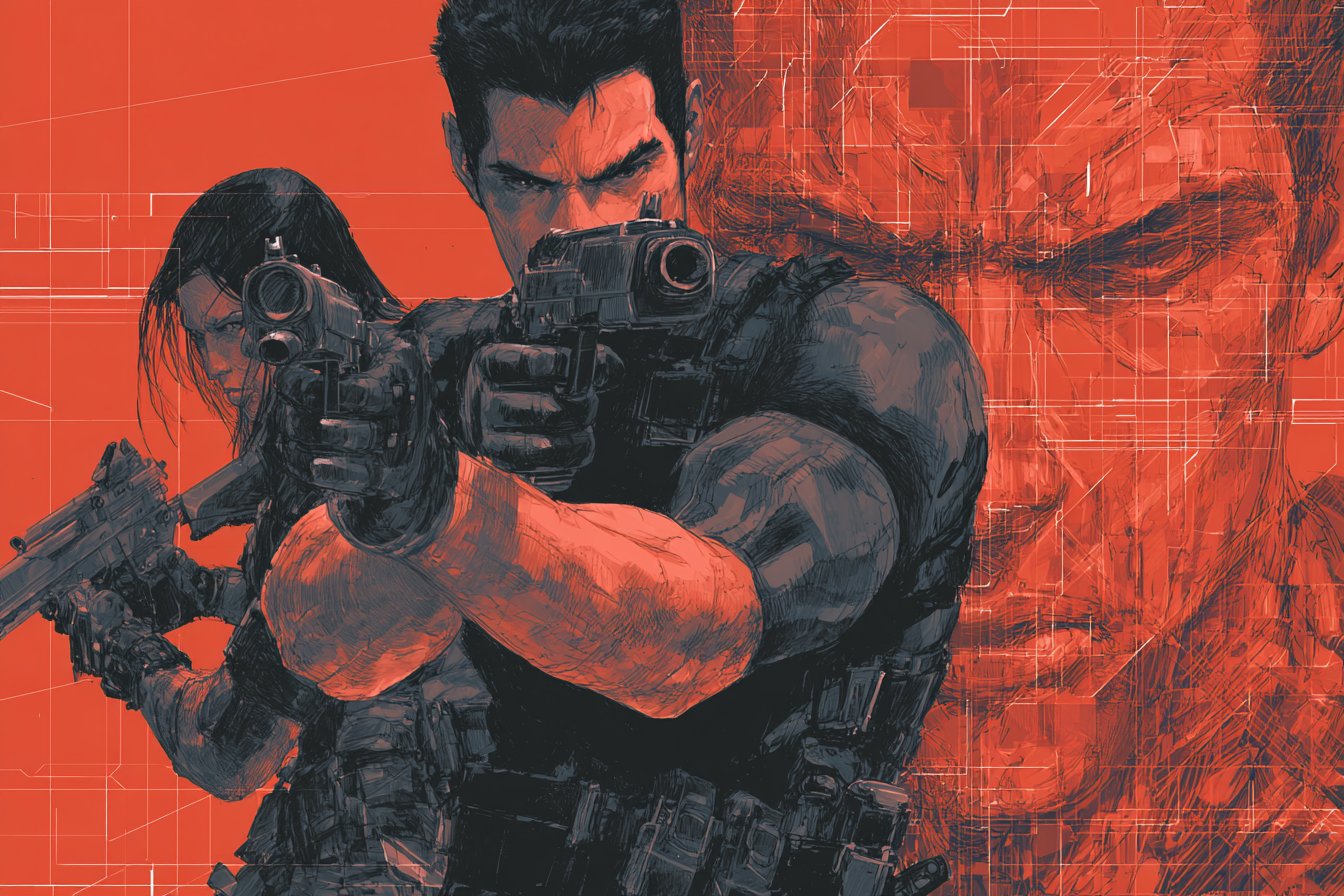
It was released in February 1999. Syphon Filter was Sony’s attempt to start their own espionage franchise similar to Konami’s Metal Gear series. The game was developed by Eidetic Interactive and was not just another third person shooter attempting to capitalise off Metal Gear Solid’s massive success. It was Sony taking a major gamble on an original piece of intellectual property which is something that Sega should have attempted rather than waste money releasing the 32X.
Syphon Filter received widespread critical acclaim earning a Metacritic score of 90. Sony’s PlayStation exclusives such as Syphon Filter could receive praise for both critical and financial success.
| Developer | Eidetic Interactive |
| Platform | Sony PlayStation |
| Year Published | 1999 |
| Genre | Third person action / stealth |
| Players | 1 |
| ESRB Rating | Teen |
| Our Rating | 8/10 |
Syphon Filter has its place in the reviews of the best exclusives on the PlayStation although again I believe that the Dreamcast had better third person action games. However there are aspects of Syphon Filter that set it apart from other Metal Gear clones – it knew how to make a stealth game function whilst establishing its own identity.
Combat That Was Deadly
The combat system in Syphon Filter was fantastic because it made every battle deadly. Unlike other action games the enemies in Syphon Filter died with realistic damage. Headshot kills were instant. Shots to the body killed quickly as well. This was no arcade style action game; this was tactical combat where position and accuracy were far more important than reaction time.
The targeting system is worthy of mention as well. Instead of using auto aim like almost all console shooters use Syphon Filter used a lock on system that required a great deal of skill to master. You could lock on to enemies however precision was necessary to get headshots and hit enemies behind objects.
Each weapon in Syphon Filter had unique characteristics and each had a distinct role in the game. For example the 9mm pistol was accurate but weak. The shotgun was a kill shot at close ranges but worthless at longer ranges. The sniper rifle was able to kill enemies quietly from a distance but put you in harm’s way if spotted.
Every single weapon in the game had a specific use and the 13 missions allowed players to show their preferred methods of playing the game.
Stealth Mechanics Were Also Excellent
The stealth mechanics in Syphon Filter were also excellent and were implemented in conjunction with the game’s health mechanics. When playing as Gabriel Logan you could take out enemies quietly with headshots from silenced weapons but if you fired a gun it would alert nearby guards. The AI was intelligent enough to investigate disturbances and call for backup if they found bodies. Unlike some stealth games that allow enemies to forget about their dead comrades after 30 seconds the guards in Syphon Filter remained vigilant.
The integration of the stealth mechanics with the game’s health mechanics created real tension. You cannot simply absorb bullets and continue to fight. As Gabriel Logan you could take a number of hits before slowing down and affecting your accuracy but you were not invincible. This created real danger in each and every encounter.
The Taser That Killed Gaming
I will finally talk about the elephant in the room – the taser. The taser in Syphon Filter was the most ridiculous yet most fun weapon in gaming history. In theory it was a non lethal taker down tool for stealth situations. In practice it was a death ray that could set people on fire if you held the trigger long enough.
The taser had infinite ammo locked onto enemies from large distances and if you held the trigger down enemies would begin to convulse scream and eventually erupt in flames. The ESRB rated the game for animated violence but they apparently did not expect gamers to find the taser’s pyromaniac capabilities.
It was not a bug; it was a design decision that became the defining characteristic of Syphon Filter. Players spent countless hours finding out how many enemies they could burn alive with the taser. It was completely unrealistic utterly ridiculous but absolutely genius. The taser allowed Syphon Filter to have a darkly comedic edge that separated it from other po faced military shooters.
Additionally the taser showed Eidetic Interactive’s willingness to be ridiculous whilst keeping the game serious. The core combat was strategic and realistic but the taser gave players the ability to test the limits of the game and try new things. You could play through missions carefully with realistic firearms or you could play through with the taser and see how many enemies you could incinerate.
The taser also served as an accessibility option albeit likely unintended. Casual players who struggled with precision shooting could use the taser’s automatic lock on capability. The taser was forgiving but still required players to think tactically about positioning themselves to avoid being overwhelmed by multiple enemies.
Mission Design That Told Real Stories
The mission design in Syphon Filter was brilliant because each mission felt like a self contained chapter in an ongoing thriller. The missions were structured around objective based gameplay rather than simply breaking levels to move from one area to the next. You would have to infiltrate buildings gather information and uncover corruption within government agencies.
The first mission perfectly illustrated the tone and gameplay mechanics of the game. You played as Gabriel Logan investigating a viral outbreak in a Washington DC subway station. The mission was designed to teach players basic movement and combat skills whilst introducing the bioweapon plot that would drive the rest of the story. By the end of the mission you had a solid understanding of both the gameplay systems and the stakes of the game.
The later missions showed impressive diversity compared to other PlayStation games. You would be tasked with sniping targets from rooftops sneaking past guards in enemy bases completing high speed chases navigating complex multi storey facilities etc. Each mission demanded different strategies and loadouts. The game never repeated itself or seemed padded.
The conspiracy storyline was engaging and followed Gabriel Logan and his partner Lian Xing as they uncovered a bioweapon conspiracy involving government agencies terrorist organisations and corporations. The plot was complex enough to keep the player interested without becoming incomprehensible. The voice acting in the game was also surprisingly good for a 1999 title and the actors delivered performances that helped sell the serious spy thriller atmosphere of the game.
Pacing was expertly handled as well. Intensive combat sequences were interspersed with quieter sections of the game where players were forced to sneak past or steal items. The game built tension gradually and then released it with explosive action sequences. The tension created a sense of engagement for the player throughout the experience without overwhelming them with non stop action.
Technical Innovation on Limited Hardware
Sony gets a lot of credit here – the original PlayStation was a capable machine when developers utilised its strengths. Syphon Filter exemplified what the system could accomplish through skilful programming and clever design decisions. The game contained impressive visuals smooth animation and detailed character models that took advantage of the PlayStation’s abilities.
The lighting system in Syphon Filter is particularly noteworthy. Syphon Filter utilised dynamic lighting effects that were innovative for 1999. Flashlights illuminated dark areas. Explosions cast realistic shadows. Lighting in the environment added to the mood in various environments. The lighting effects did not just add ambiance to the game; it also provided players with opportunities for hiding and revealed the positions of enemy agents.
Animations were incredibly smooth and lifelike. Movement felt weighty and natural as Logan moved around. Death animations were numerous and realistic. The infamous taser death animations were an obvious exception however. The game ran smoothly even during extreme combat scenarios with multiple enemies and explosions.
The audio in the game was also excellent. Gunfire sounded distinct and realistic. Environmental sounds created immersive atmospheres in each environment. The voice acting in the game fit naturally with the gameplay and did not seem separate from the action.
Music was tense but not overwhelming.
The team of 210 people that developed Syphon Filter had an excellent grasp of the PlayStation’s capabilities and limitations. Rather than competing with the graphical prowess of PC titles they designed a cohesive visual aesthetic that fit the limitations of the PlayStation. The results were a game that still looks relatively good today whilst demonstrating what dedicated console development could accomplish.
What Made Sony’s Strategy Successful
Syphon Filter exemplifies what Sega should have been doing in the late 1990s. Instead of dividing their consumer base with multiple hardware platforms Sony focused on building quality first party exclusives that offered consumers reasons to purchase a PlayStation. Syphon Filter was not just a quality game; it was a system seller that demonstrated Sony’s dedication to original intellectual property.
Syphon Filter was critically acclaimed receiving a 95 from IGN and spawned a successful franchise. The sequel Syphon Filter 2 and 3 continued the story of Gabriel Logan and expanded upon the gameplay. The franchise remained PlayStation exclusive providing Sony with a valuable asset that could not be obtained elsewhere.
In contrast Sega’s scattergun strategy of supporting multiple platforms simultaneously proved to be far less effective than Sony’s focus on first party exclusives. Whilst Sega was allocating their resources across Genesis Sega CD 32X and Saturn Sony was focusing on establishing the PlayStation brand with quality exclusives such as Syphon Filter.
Availability of Syphon Filter on modern PlayStation consoles demonstrates Sony’s continued commitment to protecting their gaming heritage. Unfortunately this cannot be said for many Sega classics.
Conclusion: An Overlooked Masterpiece
Syphon Filter accomplished its goal of creating a compelling espionage thriller that could stand alone amongst the likes of Metal Gear Solid as a defining PlayStation exclusive title. It succeeded by utilising smart design decisions technical proficiency and an understanding of what makes stealth action games enjoyable.
Syphon Filter’s legacy extends beyond its immediate influence. It proved that quality original intellectual property could compete against established franchises if developed with adequate resources and creativity. Syphon Filter’s series would continue for several additional instalments continuing to improve the gameplay and expand on the concept.
I’ll always prefer the Dreamcast’s library overall but Syphon Filter represents everything that the original PlayStation did right. It was a title that justified the purchase of a PlayStation and introduced significant innovation in the stealth action genre. 25 years later it is still an engaging experience that demonstrates why Sony’s first party development strategy was so successful.
If you missed Syphon Filter during its original PlayStation run it is certainly worth replaying today. And don’t forget to spend some quality time with that ridiculous taser – you won’t truly understand the game until you’ve burned a few dozen enemies alive with 50,000 volts of electricity.