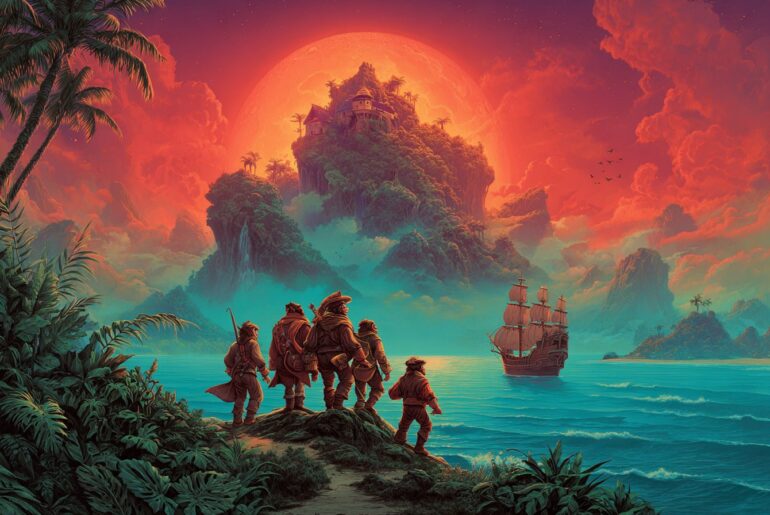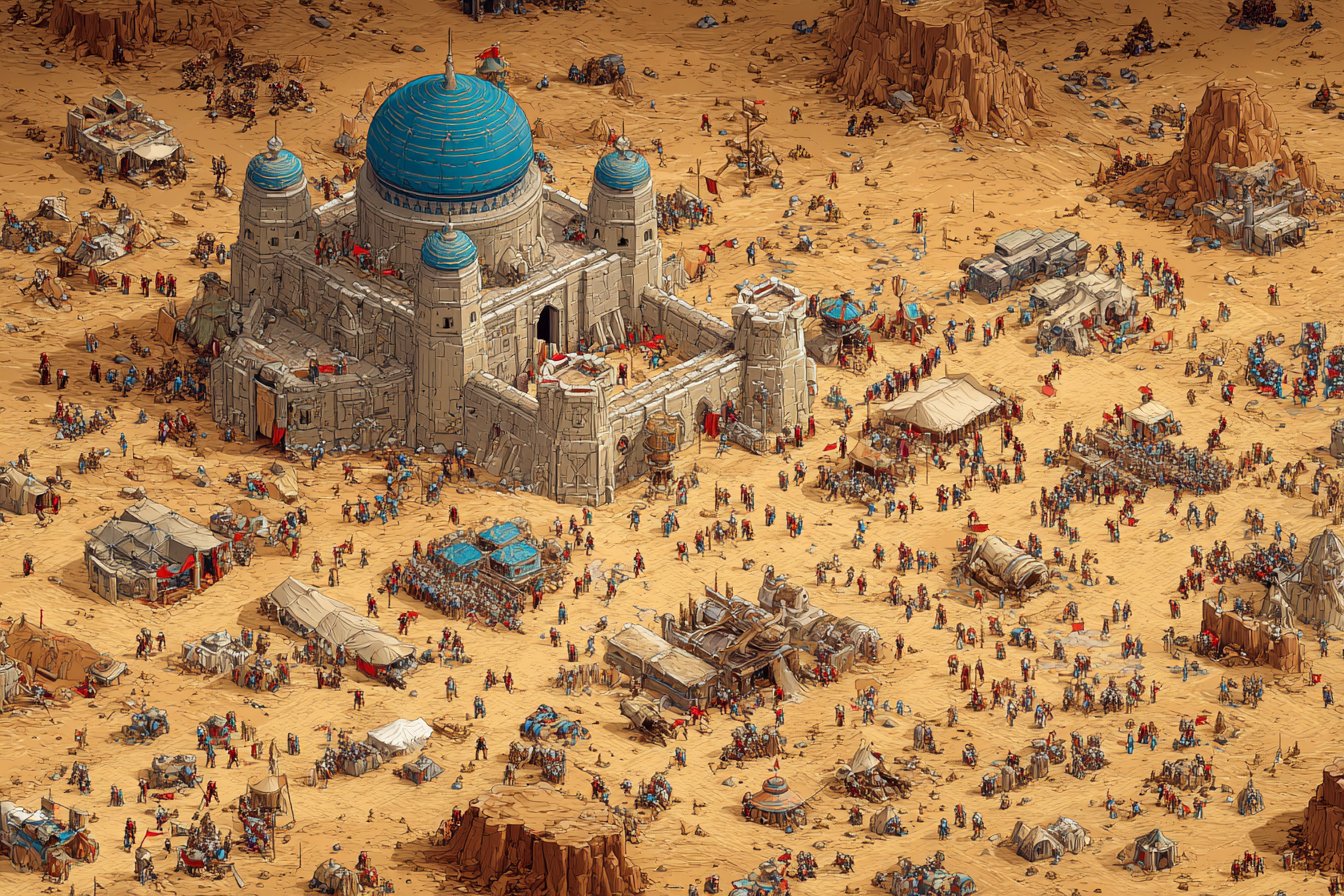
Beginning as a young gamer and now as an adult, I will write this review for Tim to show him why Age of Empires II is the best Real Time Strategy (RTS) game ever produced. As he continues to tell me that Command & Conquer is better than AOE2, I will show him why the engineering decisions in AOE2 are the basis for all RTS games today. Not just nostalgia, but the design of the simulation engine and the historical simulation systems in AOE2 are the foundation for many of the current designs in the RTS genre today.
As we enter into the year 2000, we find ourselves in the golden age of Real Time Strategy (RTS) games. Developers were pushing the limits of what PCs could do in terms of simulations, and Age of Empires II would prove to be one of the greatest RTS games of all time. With a Metascore of 92 and shipping two million copies by January 2000 (Wikipedia), AOEII was not only critically acclaimed, but commercially successful as well. But what made AOEII so great? It was the technical complexity hidden behind the accessible gameplay. The game engine was designed to allow players to simulate the rise of civilisation, from the Fall of Rome to the Middle Ages, within the memory constraints of late 1990s PC hardware.
| Developer | Ensemble Studios |
| Publisher | Microsoft |
| Platform | PC |
| Release Date | 30 September 1999 |
| Genre | Real-Time Strategy |
| Number of Players | 1-8 (Single-player Campaigns/Multiplayer) |
| Rating | 9/10 |
AOEII’s success in being a technically competent game earns it a spot in our larger look at strategy games that pushed the technical envelope, but AOEII should be recognised specifically for how its technical decisions helped to make both the gameplay and educational value of the game come together. The simulation systems did not simply serve as background elements to add to the game. They modelled the same historical restrictions and technological advancements that the game taught players about.
The Resource Chain System That Mirrors Medieval Development Patterns
What makes AOEII interesting from a technical standpoint is the way in which the game’s resource chain system mirrors actual medieval development patterns. The code does not simply track four resources – food, wood, gold and stone – but also tracks how civilisations expand their ability to produce those resources through technological advancement. The villager AI routines demonstrate sophisticated path-finding algorithms that take into consideration terrain obstacles, resource depletion, and drop off efficiency. When players see villagers switch automatically between tasks or find the optimal location to gather resources, they are witnessing algorithms that have taken into account several variables including distance to resources, carrying capacity, travel time to drop-off locations and availability of alternative locations to gather resources. The system adjusts economically based on player orders and resource availability to create emergent behaviour that is perceived as natural rather than scripted.
The clever part of the resource chain system is how it educates players about historical development concepts without explicitly teaching them. Players learn that stone is more valuable for building defensive structures than food production and that gold is scarce in the later stages of the game mirroring actual medieval economic pressures. The technology tree forces players to understand prerequisite relationships. They cannot develop advanced military units until they have established the infrastructure and knowledge base necessary to support those developments.
The trading system represents another example of the technical sophistication in AOEII. Trade routes take into account profit margins based on distance between markets, thus encouraging players to develop large-scale commercial networks. The algorithm takes into account route security, travel time and market saturation, all of which are factors that are representative of actual medieval trade economics. Players quickly realise why controlling trade routes historically was an important aspect of medieval economics and why developing a commercial network in a distant land was typically more profitable than doing business locally, despite the increased risk associated with transporting goods.
Combat Systems That Mirror Actual Medieval Warfare Principles
The combat systems in AOEII represent some of the most historically accurate military simulation systems that have been implemented in an RTS game to date. Unlike other RTS games that use abstract damage calculation systems, the combat system in AOEII uses algorithms to simulate actual medieval warfare principles: unit formations, terrain advantages, technological superiority and combined arms tactics.
Each unit type in the game has its own set of combat algorithms that mirror the role that each unit type played in medieval warfare. Cavalry units receive a charge bonus when attacking infantry but suffer a penalty when attacking spearman. Archers inflict reduced damage when attacking heavily armoured units but excel when attacking lightly armoured infantry. These are not arbitrary game balance decisions. They are encoded representations of the actual medieval combat dynamics.
The siege warfare implementation is especially noteworthy in terms of its technical complexity. The walls that surround castles in AOEII are not simply decorative barriers with hit points. They are structural systems with specific weaknesses. Trebuchets use physics calculations to determine the arc of projectiles and the impact zone where the projectiles will land. Battering rams must be placed in a very precise position relative to the gates of a castle. The code simulates how medieval siege engines actually worked, creating gameplay that simulates historical siege tactics and encourages players to learn those tactics in order to successfully conquer a castle.
What is impressive is that the unit production systems in AOEII mirror the actual organisational structure of medieval armies. Producing knights requires not only resources but specific building prerequisites that are reflective of historical requirements, stables, blacksmiths and universities to support military engineering research. The technology trees force players to understand why certain military innovations required specific prerequisite knowledge and infrastructure.
Another notable feature of AOEII is the formation systems. When units are moving in formation, the path-finding algorithms ensure that the units remain cohesive whilst avoiding obstacles. Each unit in the formation adjusts its movement speed and positioning to maintain formation integrity, demonstrating sophisticated group AI behaviour that was technologically challenging to implement on 1999 era hardware. These formations provide actual combat bonuses that are reflective of historical military advantages provided by organised troops versus disorganised troops.
The Single Player Campaigns Represent an Extraordinary Achievement in Both Technical and Educational Terms
The single player campaigns in AOEII represent an extraordinary achievement in both technical and educational terms. Instead of providing generic scenarios with historical window dressing, the campaigns provide players with actual historical events through gameplay mechanisms that teach cause-and-effect relationships.
Take the Joan of Arc campaign, for example. The campaign does not simply tell players about the Hundred Years’ War; it forces players to understand the strategic challenges that Joan of Arc faced. Players must manage limited resources whilst coordinating with unreliable allies, defend against superior English forces using siege warfare, and maintain morale amongst a fractured French army. The scenario design teaches players historical context through practical challenges that mirror actual historical constraints.
The Saladin campaign provides even greater historical simulation complexity. Players learn about Crusader castle construction by attacking historically accurate fortifications. Players learn why controlling access to water sources is crucial in desert warfare. Players experience the diplomatic complexities of uniting fractious Arab tribes against a common enemy. The gameplay mechanisms teach these lessons through practical consequences rather than through expository text.
Each scenario in the campaigns includes victory conditions that mirror the historical objectives of the players rather than arbitrary game objectives. This educational value comes from the fact that players must understand what historical figures were trying to achieve and why certain strategies were successful or unsuccessful. The game’s technical implementation tracks multiple objectives simultaneously to create complex scenarios that mirror the decision-making pressures of historical leaders.
The AI opponents in the single-player campaigns represent another achievement in historical authenticity. Rather than using generic aggressive algorithms, the AI opponents in the campaigns use documented historical tactics and priorities. The English opponents in the Joan of Arc campaign prioritise defensive positions and utilise superior archery to reflect the actual historical military doctrine of the English. The Mongol opponents in the eastern campaigns utilise mobile and harassing tactics to reflect the actual historical Mongolian strategic approach.
The Technology Trees that Represent Civilisational Development
The technology research systems in AOEII represent a truly sophisticated level of historical modelling. The technology research systems include actual prerequisite relationships that governed the technological development of actual civilisations. This is not simply a game mechanic. It is a functional simulation of how civilisations actually advanced their capabilities.
The metallurgical technologies in the blacksmith section of the technology tree progress from basic iron working to advanced steel production. Each step in the process requires specific prerequisites that mirror historical technological dependencies. Players learn why certain military innovations required advances in metallurgy, why architectural improvements required advances in engineering knowledge, and why agricultural efficiency was a prerequisite to population growth.
Each civilisation in AOEII has a unique technology tree that represents the documented historical strengths and weaknesses of that civilisation. The Byzantine civilisation excels at defensive technologies and has lower cost Imperial Age advancements to reflect the historical Byzantine emphasis on defensive fortification and administrative efficiency. The Mongols have bonuses to cavalry production and hunting to reflect the historical nomadic culture of the Mongols. These are not superficial cultural references. They are actual implementations of documented historical characteristics.
The university building represents another example of the educational potential of AOEII. Research projects in the university require specific amounts of time and resources to complete, similar to actual medieval scholarly development. Players learn why certain innovations took generations to develop and why knowledge preservation was essential to the advancement of civilisations.
The economic research tree in AOEII represents a second area of educational potential. Agricultural improvements improve food production efficiency to reflect actual medieval agricultural innovations. Trade technologies reduce the costs associated with conducting commerce to reflect the importance of commercial development to economic growth. These systems create emergent learning experiences for players, where players learn historical economic principles through practical application rather than through explicit instruction.
Why AOEII Remains a Technically Relevant Game Today
The engineering architecture that supported AOEII established design patterns that continue to influence RTS game design today. AOEII shipped with robust multi-player networking code that supported eight player games over 56k modem connections, a major achievement given the bandwidth constraints and networking protocols available in 1999.
AOEII’s success in terms of commercial appeal went far beyond the realm of strategy gamers. The game reached number one on the sales charts in seven countries within three months (DOS Days), and Microsoft sold two million copies within three months (Wikipedia), demonstrating that the game had a wide appeal beyond the strategy gaming community.
The long-term viability of AOEII is a testament to the quality of the underlying code architecture. The high-definition version of the game was released in April 9, 2013, and included graphical upgrades and improved networking, but preserved the original gameplay systems. The definitive edition of the game was released on 14 November 2019, and added new civilisations and campaigns, but retained the core simulation engine developed twenty years previously.
The continued competitive multi-player community surrounding AOEII is a testament to the durability of the core gameplay balance in the game, a rare occurrence in complex strategy games. Players continue to discover new strategies and optimisations, demonstrating that the underlying systems of the game provide a deep level of strategic engagement rather than shallow complexity. Tim can keep his Tiberium harvesting. Real strategy games teach you something about the world whilst you’re conquering it.