Grim Fandango Review: The Noir Adventure Game That Demonstrated Games Can Be Art
Okay, I need to post this review before Carl starts telling me again how “games as cultural artifacts” and Tim starts telling me all about how modern adventure games have “progressed” beyond Grim Fandango. Let’s be honest – they’ve really gone nowhere. Tim’s as wrong as he usually is, and I’m going to demonstrate why this 1998 masterpiece is the pinnacle of the adventure genre, and probably one of the most important games of all-time.
I know exactly what you’re thinking – Joe’s yapping away about some old-school retro game whilst ignoring the amazing things happening in modern gaming. But Grim Fandango isn’t just nostalgia – it’s the game that first demonstrated interactive entertainment can be actual art, the sort of thing that should be in museums. In 1998, when LucasArts published Grim Fandango, they created something greater than gaming – a genuine cultural achievement. Critics immediately recognised its value, and that recognition has endured – Grim Fandango boasts a Metacritic rating of 94, putting it amongst a select few that even today’s gaming standard bearers can’t touch.
Tim Schafer and the rest of the LucasArts crew did not simply produce an adventure game; they produced a four-year long odyssey of the Land of the Dead that combined noir film aesthetic with Mexican Day of the Dead folklore, layered in the most advanced adventure game technology to date, and topped it all off with a soundtrack to rival anything Hollywood produces. They didn’t just push the limits of adventure games – they destroyed those limits entirely.
| Developer | LucasArts |
| Platforms | PC (original), Multiple platforms through the Remastered edition |
| Release Year | 1998 |
| Game Genre | Noir / Adventure |
| Number of Players | 1 player |
| Our Rating | 10/10 |
Creating a Reality Unmatched in Gaming History
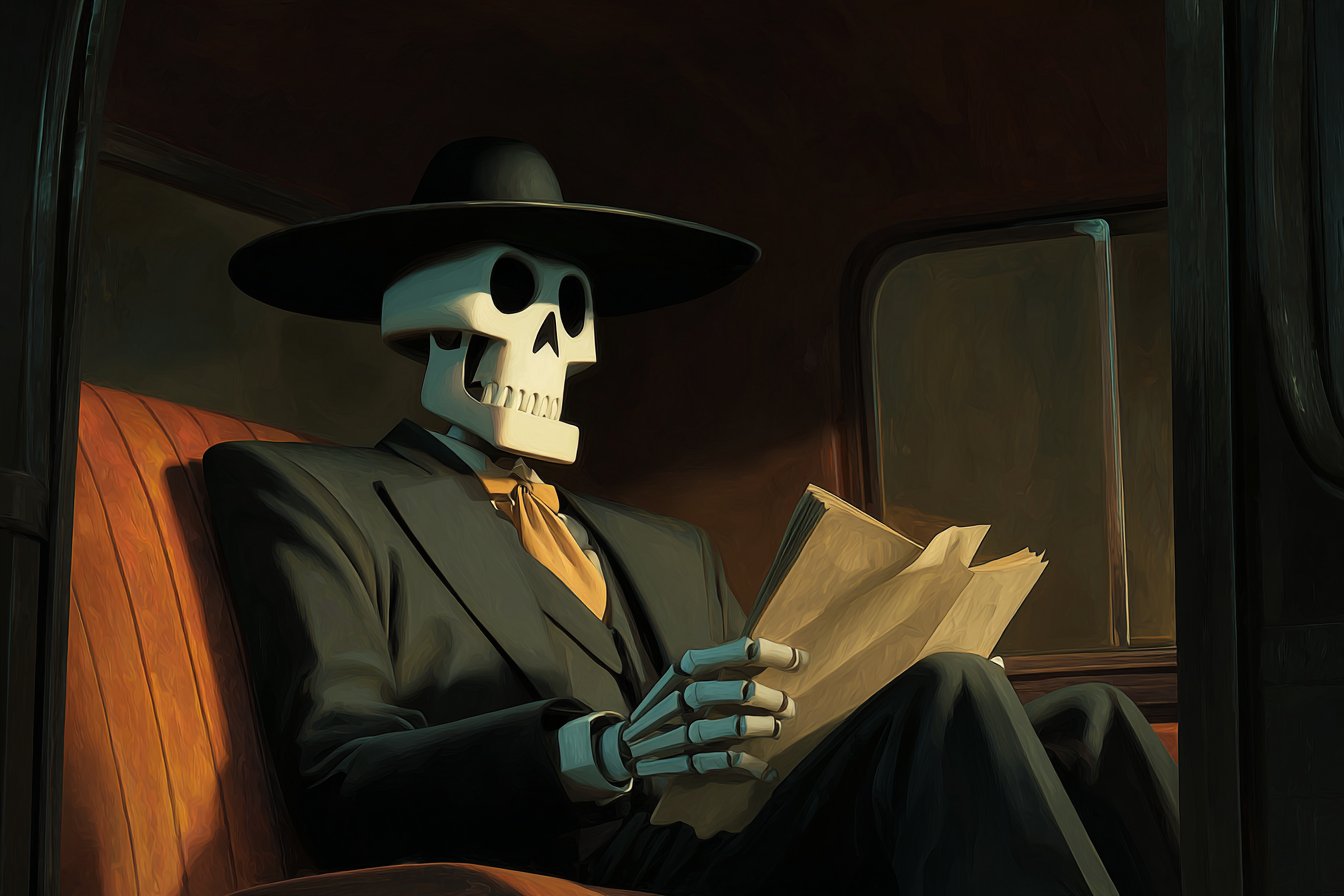
Grim Fandango created the most authentic alternate reality in the history of gaming. The Land of the Dead is more than a setting – it is a fully-realised world with its own culture, politics, economy, and social hierarchies. As a travel agent in the Department of Death, Manny Calavera sells passage packages to the recently deceased attempting to reach the Ninth Underworld. Better lives result in better travel options – saints get express tickets to the Number Nine train, whilst sinners are condemned to a four-year walk through hostile terrain.
That is not simply impressive world-building – it is allegorical sophistication working on multiple levels. The underlying bureaucracy of the afterlife reflects the same types of corrupt and unequal systems that exist in the real world. The wealthy pay their way to better treatment whilst the poor fight against the very systems designed to exploit them. Manny discovers his clients are being robbed of the premium packages they deserve, and thus begins his involvement in a conspiracy that spans the entirety of the underworld.
Visually, Grim Fandango combined Art Deco buildings with Aztec imagery and Mexican cultural references to create something both timeless and uniquely original. Every area told a story through its environmental design. The Calavera Cafe embodied the essence of a bygone era. The Edge of the World felt foreboding. Rubacava felt alive, filled with the energy of a new frontier boomtown built on excess and possibility.
Character designs were also a masterclass. Manny embodied the classic cynicism of noir protagonists, whilst simultaneously possessing genuine warmth and resolve. Glottis, the gigantic orange demon mechanic, provided humour without ever becoming cartoonish or forced. Meche added a layer of complexity to the traditional damsel-in-distress role, developing her own story whilst avoiding clichés. Even the smallest of characters such as Velasco the beatnik poet or Carla the revolutionary felt like genuine inhabitants of this world, as opposed to mere quest dispensers.
Elevating Storytelling in Interactive Media
Grim Fandango set itself apart from every other adventure game in terms of its storytelling. Rather than utilising the traditional “get item, solve puzzle, reach end” format, Schafer structured a proper four-act narrative that spanned years of gameplay. Each act took place in different areas of the Land of the Dead, supported different casts of characters, and explored various themes related to the overall mystery surrounding Manny’s clients.
Act One introduced the world and central mystery in Rubacava. Act Two followed Manny in the noir-infused port city of Rubacava, as he operated a nightclub whilst searching for Meche. Act Three placed Manny undercover in the perilous coral mines. Act Four brought all the disparate pieces together in the climactic confrontation on the Number Nine train.
This structure allowed for genuine character growth. Manny went from being a cynical bureaucratic functionary to someone willing to risk everything for justice and love. Supporting cast members developed and grew along side Manny. Relationships developed naturally throughout the extended timeframe, rather than feeling rushed or contrived.
Dialogue writing rivalled the best film noir scripts. Every conversation was imbued with wit, subtext, and individuality. Voice acting brought Manny and the rest of the cast to life, with performances that would likely embarrass most Hollywood productions. Tony Plana’s portrayal of Manny perfectly encapsulated the character’s transformation from cynical to heroic. Alan Blumenfeld’s Glottis managed to bring a mix of childish exuberance and surprisingly deep emotion to his performance.
Innovative Technology Concealed Beneath a Masterpiece
Grim Fandango revolutionised the transition from 2D point-and-click adventure games to 3D environments, whilst preserving the core elements of the genre including puzzle-solving and storytelling. The GrimE Engine enabled cinematic camera angles, atmospheric lighting, and character animation that captured the personalities of each character. This was not simply a matter of showcasing technological prowess – every element of the GrimE Engine served the storytelling.
The control system eliminated the frustration of pixel hunting present in so many other adventure games. Players no longer needed to click on small hotspots in order to move Manny through environments and interact with objects in context. The control system offered a more immersive experience, whilst retaining the deliberate pace necessary for adventure games.
The puzzle design struck the ideal balance between challenge and logic. Each solution was logical and coherent to the internal world of the game. The infamous cat-racing sequence in Rubacava exemplified how adventure game mechanics can generate genuine tension and excitement, without using arbitrary difficulty.
The audio design deserves special note. Peter McConnell’s jazz-influenced soundtrack captured both the melancholic beauty of the afterlife and the energetic thrills of noir adventure. Each location featured unique musical themes that further enhanced the atmosphere of the game, without overwhelming the player. The sound effects used in the game provided a believable ambient experience for each location.
Why Critical Acclaim Matters
The widespread critical acclaim of Grim Fandango was not simply a product of the industry patting themselves on the back. When Encyclopedia Britannica lists your video game, you have achieved something far beyond entertainment. Grim Fandango demonstrated that interactive media can deal with serious topics, create meaningful art, and tell compelling stories that truly matter.
The game influenced countless developers and designers. Its use of environmental storytelling, character development, and thematic depth can be seen in everything from modern adventure games to large-scale, high-production action games. The remastered edition continues to receive strong reviews because the fundamental experience of Grim Fandango remains unmatched.
Playing Grim Fandango Today
The practical part – you can indeed play this masterpiece today. The remastered edition is available on Steam and GOG, featuring updated graphics and modern compatibility. Plan to invest approximately 20 to 25 hours of gameplay in order to experience the full story of Grim Fandango, although you will want to savour each and every moment.
The remastered version retains every aspect that made the original great whilst correcting compatibility issues and enhancing the player experience. Should you experience any technical difficulties, PCGamingWiki has detailed patches and tweaks. A dedicated fanbase at Grim Fandango Network has been assisting fans since 1998, offering walkthroughs, forums, and preservation efforts.
Grim Fandango remains surprisingly effective today. The art direction transcends the technical limitations of the time. The story remains engaging and relevant. The puzzles remain challenging without becoming frustrating. There is nothing nostalgic about this – there is simply an acknowledgment of timeless craftsmanship.
The Pinnacle of the Adventure Genre
Carl continues to argue that adventure games were already a form of art prior to Grim Fandango, citing earlier LucasArts classics and Sierra’s work as examples. Whilst he is correct regarding the excellence of those games, he is overlooking the key distinction. Previous adventure games were superior forms of entertainment that may occasionally achieve artistic moments. Grim Fandango was a work of art that happened to be packaged as a game.
There is a reason the distinction is significant. Prior adventure games told stories in familiar frameworks – pirates, aliens, fairytales. Grim Fandango created its own mythological framework and dealt with universally applicable themes of life, death, corruption and redemption, and presented them through gameplay that cannot occur in any other medium. The interactivity of the game was not merely a method of delivering the experience – it was fundamental to the emotional resonance.
Sam states that modern narrative-driven games have surpassed what Grim Fandango achieved, but Sam is comparing apples to orchestras. Modern games may feature more complex graphics or more intricate gameplay mechanics, but none have come close to the complete artistic vision realised by Schafer and his team. They created something that stands alongside the best films, novels, and paintings as a work of art that happens to be interactive.
That is precisely why Grim Fandango represents essential gaming. Grim Fandango demonstrated that our medium can create experiences that matter beyond the scope of pure entertainment. Grim Fandango demonstrated that our medium can tackle serious themes without sacrificing the inherent playfulness of gaming. Grim Fandango demonstrated that interactive storytelling can achieve depth and emotion that cannot be attained in non-interactive media.
Twenty-five years later, we continue to attempt to replicate what Tim Schafer accomplished. Most games claiming artistic ambitions either appear pretentious or hollow. Grim Fandango achieved genuine artistic merit whilst remaining utterly fun. It is not simply one of the greatest adventure games of all time – it is arguably one of the most culturally significant artefacts of the late 20th century.
You know what the real tragedy is? This commercial failure upon release nearly killed the adventure genre. Players were not prepared to engage with something as sophisticated as Grim Fandango. Publishers lost faith in the genre. We lost two decades recovering from what was lost. However, the game survived, found its audience, and ultimately demonstrated that true artistic merit will be appreciated in due course.
Grim Fandango is not merely worth experiencing – it is a necessity for anyone who considers themselves culturally literate with regards to interactive media as an art form. Stop reading about it – go experience it for yourself. Only through direct experience can certain arguments be won.