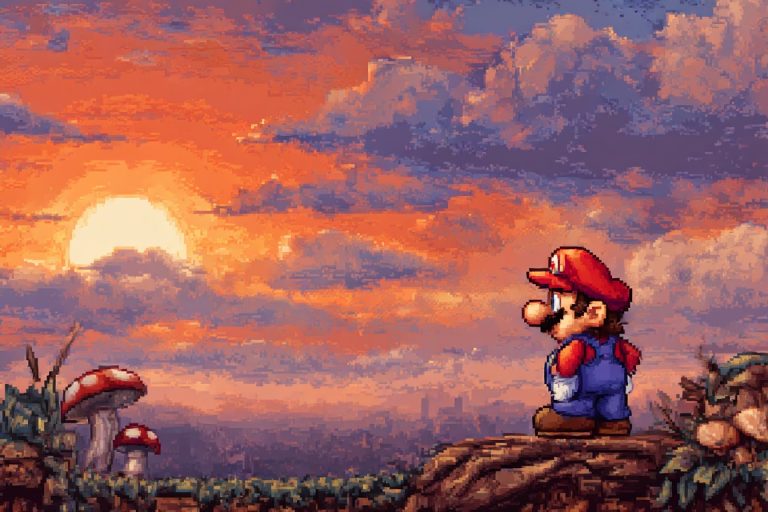

Although I was coming to retro gaming without nostalgia for the past, I had to judge games based solely upon how they perform now — not on how they affected me in 1991. Therefore, when the New Player Ready crew claimed that Super Mario World should be among the top 10 games in my list of best SNES games, I was a skeptic. Just another Mario Platformer. How good could it possibly be?
When I finally played it fully — not just a couple of levels, but all 96 levels — I got it completely. Super Mario World is one of the greatest platformer games of all time. Period. The controls are perfect. The level design is fantastic. The secrets are everywhere. Super Mario World has game design working at the highest level.
What makes Super Mario World so special
Developer: Nintendo | Release Date: November 1990 (Japan), August 1991 (North America)
Nintendo decided to bundle Super Mario World with the Super Nintendo as a pack-in game. This was a bold decision. Your pack-in game needs to demonstrate new hardware capabilities to consumers while still providing a fun experience for casual gamers. Nintendo succeeded on both accounts.
Classic Mario premise:
Bowser has kidnapped Princess Peach (once again) and taken her to his Castle in Dinosaur Land. Mario and Luigi will journey through seven worlds, rescue Yoshi’s friends and locate Bowser’s Castle to save Princess Peach. Classic setup that gets out of the way and allows the gameplay to take center stage.
Cape Power-Up — the headlining feature. To build up speed, take off and fly across entire levels. When you master the timing, the cape feels perfect during flight. Too high and you stall; too low and you crash. Developing the ability to keep flight going for an entire level is an incredibly rewarding learning experience.
Not just a power-up, but a companion character with unique abilities. Depending on the color of the Yoshi, eating certain shell types provides various abilities. You can eat most enemies with Yoshi. Use Yoshi as a “sacrifice” to allow for a longer jump to platforms. The relationship between Mario and Yoshi provide additional movement and strategic possibilities.
Excellent Level Design Teaches Without Tutorials
One thing that Super Mario World knows better than many other platformers: Good level design teaches without tutorials. The early levels in Yoshi’s Island teach the player to spin jump through natural gameplay encounters. You learn to discover secret exits through thorough exploration.
Difficulty Curve Masterfully Implemented
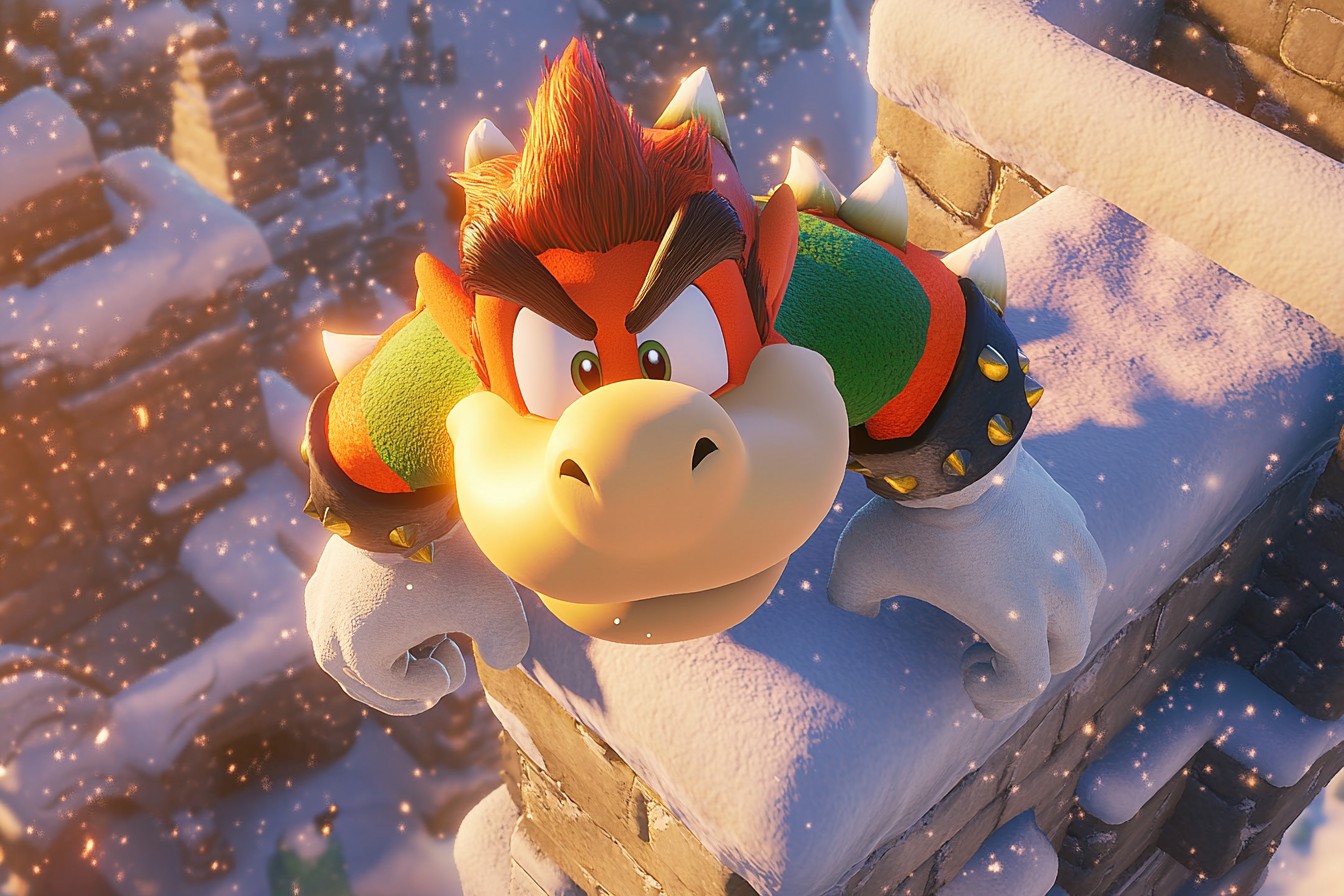
World 1 is very accessible to anyone. By the time you reach World 6 and 7, you will be expected to have mastered every mechanic. The Special Zone – unlocked after finding all switch palaces and secret exits – increases the difficulty to very difficult levels for experienced players. Tubular has you performing cape flight through an obstacle course. Awesome forces you to land pixels perfectly and time perfectly.
Telegraphed Secrets Everywhere
The game includes excellent secret exits. The entrance to a suspicious pipe located in a strange place. A key and key hole are visible, but seemingly unreachable. Alternate pathways are available if you have the correct power-up. The game trusts you to realize that there are secrets in plain sight.
Ghost Houses — Brilliant Design
Twisted mazes that loop back on themselves. Doors that go to places that were not apparent. Platforms that appear and disappear. Each ghost house is a spatial puzzle that requires you to understand the maze in order to find the exit – and there are secret exits that are even harder to access.
Perfect Movement
I am playing Super Mario World for the first time, without any prior knowledge of Mario games, and I can say, objectively: these controls are perfect. Mario reacts exactly as I intend him to react. The jumps have mass and momentum. The spin jump gives me greater height and lets me bounce on enemies that would otherwise harm me. The cape flight takes practice, but feels great when I master it.
P-Meter — Building Running Speed
The way my momentum carries through jumps. The precision of landing on tiny platforms. The slight coyote time that allows for jumping just after leaving a ledge. These are details that modern platformers are still studying and implementing.
Yoshi Changes Movement Significantly
You are taller, affecting your jump height and collision detection. You can perform a flutter jump for extra distance. Losing Yoshi results in losing a life instead of losing a power-up. Developing skills for using Yoshi is its own curve.
Meta-Game of Secret Hunting
There are 96 exits total in the game. Many levels contain multiple exits – normal and secret. Find every secret exit to unlock Star Road, which ultimately leads to Special Zone. Complete Special Zone to give yourself bragging rights for completing the 96 star version of the game.
This creates a meta-game outside of simply defeating Bowser. You are finished when you complete the last castle. You are finished when you have found everything. Finding everything requires thorough exploration, experimentation and sometimes sharing knowledge with other players because some secrets are very hard to find.
Dragon Coins
Find all five dragon coins in each level to typically reveal a secret or shortcut. The moons in the sky of several levels grant extra lives. There are 1-up blocks hidden throughout the levels. The game rewards thoroughness and curiosity at all times.
Switch Palaces
Each palace unlocks colored blocks throughout the entire game – red, yellow, green and blue. These blocks appear in levels you have already completed, opening new pathways and revealing new secrets. The game encourages you to replay earlier levels using new tools, adding longevity without feeling like filler.
Boss Battles With Unique Arenas
Koopaling battles are probably the weakest part of the game. However, they are not terrible. They primarily consist of “Jump on them three times while avoiding their attack“. But the arena design and the specific mechanics used in each battle add a twist to the standard formula.
Iggy’s battle with the tilting platform above lava. Larry’s battle with moving pipes. Wendy’s battle with bouncing rings. Roy’s battle with closing walls. Each battle incorporates environmental hazards that add interest to the basic formula. While not revolutionary, they are solid and fair.
Bowser’s Final Battle
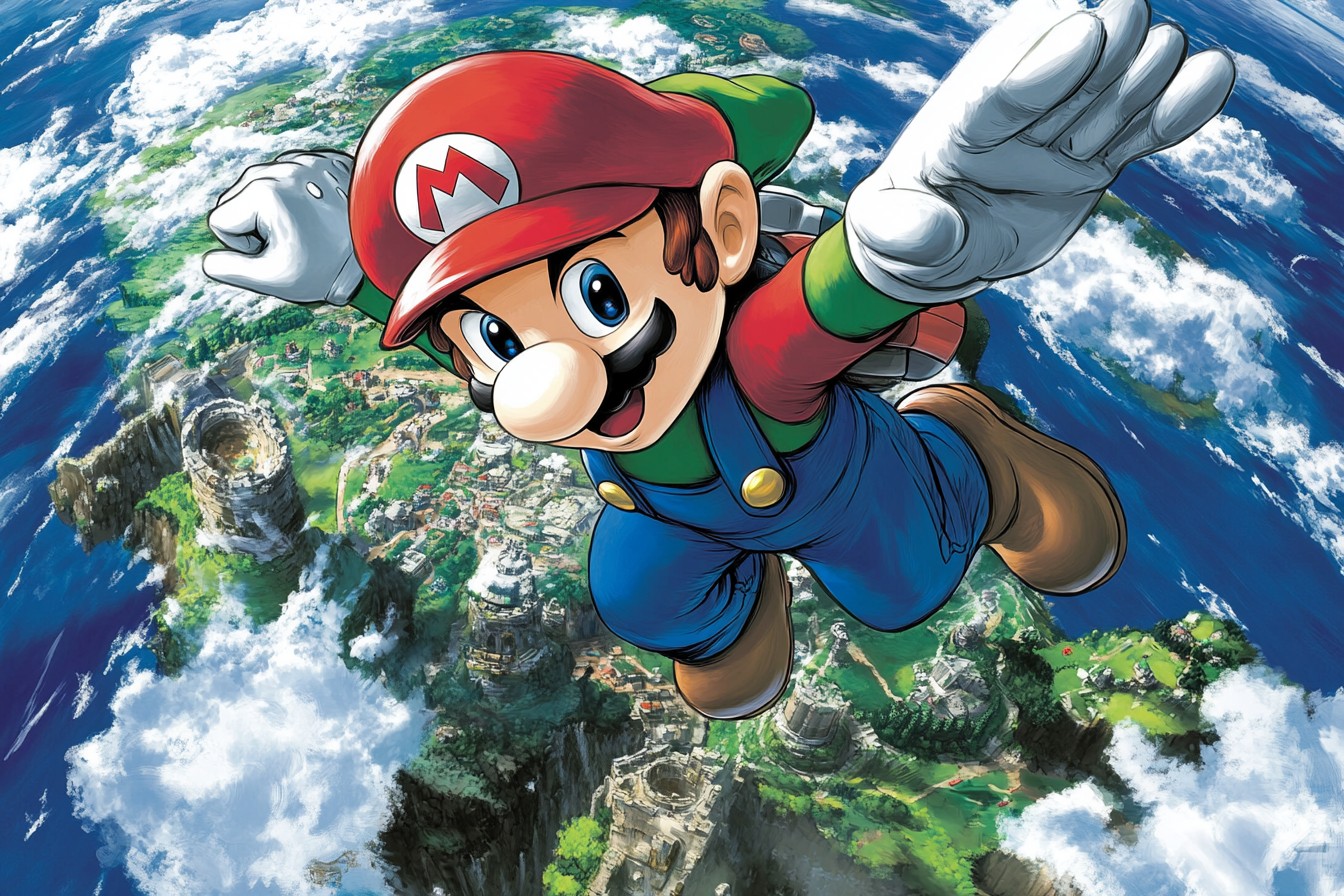
Bowser’s battle is suitably epic. He uses a clown car that releases bowling balls. You jump on the car, it breaks apart and the battle moves to the roof of the castle where you throw the Mechakoopas back at Bowser. Mechanically simple, yet visually pleasing and satisfying as a final battle.
Graphics Demonstrating SNES Capabilities
Super Mario World was designed to show off the capabilities of the Super Nintendo in comparison to the NES. Larger sprites with more detailed animation. Parallax scrolling backgrounds. Mode 7 effects when you complete a level and the camera spins around the map. Ghosts that are invisible in ghost houses.
Looking at the graphics today, they still look clean and easy to read. The animations of the characters are expressive – Mario’s cape flutters, Yoshi’s tongue extends, enemies behave accordingly. The worlds are colorful and distinctive – each world has its own visual identity. The art style is timeless in a way that the 3D games from the same era are not.
Chocolate Island Music
Athletic Music
Music for Ghost House
Castle Theme
The Koji Kondo soundtrack is iconic and memorable. Iconic melodies match each world’s atmosphere perfectly. The sound effects are also satisfying – the jump sound, the spin jump, the cape whoosh, the Yoshi gulp.
Does Super Mario World Still Work Today?
Yes. I played this for the first time in 2020 – almost 30 years after it was released – and it still works perfectly today. The controls are responsive and precise. The level design is creative and logical. The secrets are numerous and don’t feel like filler. The difficulty curve is excellent and teaches you without forcing you to follow a set of rules.
Modern 2D Platformers are still trying to create the foundation that Super Mario World created. Celeste’s tight controls. Hollow Knight’s exploration. Shovel Knight’s retro-style design. They are all building upon the foundation that Super Mario World provided.
It does not feel dated. There is no jank. No poorly timed spikes in difficulty. No confusing design. It is just pure, smooth platforming that functions as well today as it did in 1991. That is the mark of truly great game design.
Why It Is Number Four on My SNES Rankings
Super Mario World is ranked number four on my SNES rankings, behind only three games in specific areas. Chrono Trigger’s story. Super Metroid’s atmosphere. A Link to the Past’s dungeon design. Each of these games innovates in a way that is more significant in a single aspect than Super Mario World.
However, in terms of overall platformer design, Super Mario World may be the best on the SNES. The controls are perfect. The level design is excellent. The secret hunting provides an enormous amount of replayability. The difficulty curve is perfect. Every element in the game operates flawlessly.
In our crew debate sessions, this was the only time we agreed on a top-five selection. Even Joe – who normally says Genesis did it better – said this was the pinnacle of platforming. John attempted to argue that Zool on Amiga was better for a brief moment, but the rest of us ignored him. Sam enjoyed the precision required to execute speedruns at 100% frames per second. Carl was just happy that we agreed on something without debating.
Legacy of Speedrunning
Super Mario World has a large and active speed-running community. Any% runs complete the game in less than ten minutes using the most efficient methods of cape flight. 96-exit runs complete the entire game in under ninety minutes. Because of the creativity allowed for route planning, the possibility of executing a sequence break and the precision needed for execution, the game is complex enough to provide endless opportunities for speedrunners.
Watching speedruns after you have completed the game casually reveals depth you may not see. Optimized routes for cape flight. Frame-perfect jumps that skip parts of the game. Optimization of the P-meter to sustain speed. These elements speak to how well designed the system is.
Conclusion
Super Mario World is the ultimate example of platforming perfection. It was a launch title that demonstrated the capabilities of the SNES and made owning the console worthwhile by itself. The controls are responsive, the level design is excellent, the secrets are plentiful and the entire game is polished from beginning to end.
Play it if you have never played it. Replay it if you played it as a child and appreciate the design decisions that were made for every level. If you are developing a platformer, study this one as it is the template that still works today – 30 years later.
This is how you develop launch titles. This is how you show off new hardware capabilities. This is how you design platformers that are timeless.
Rating: 10/10 — The definitive 2D Mario platformer
Go to our full SNES rankings →

Timothy discovered retro gaming at forty and never looked back. A construction foreman by day and collector by night, he writes from a fresh, nostalgia-free angle—exploring classic games with adult curiosity, honest takes, and zero childhood bias.
0 Comments