
I began playing video games in 1982 when I opened an Atari 2600 on Christmas morning. I have witnessed the entire gaming industry evolve from a focus on arcades to consoles and now into some sort of hybrid era. All that experience teaches you something – sometimes the best thing to do isn’t always the most popular thing. Sometimes it’s the thing that comes out at the worst possible time with the least ideal timing and gets overshadowed by something that came before.
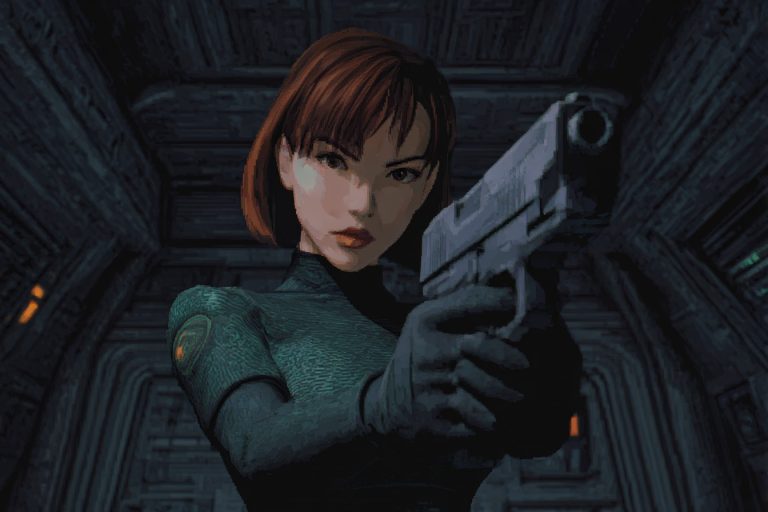
Perfect Dark is that game. Technically, it is far superior to GoldenEye in nearly all measurable ways. The AI is smarter. The guns are more balanced. The mission designs are more complex. The graphics are nicer on the same hardware. But Perfect Dark came out two years after GoldenEye so everyone was already invested in the multiplayer aspect of GoldenEye and then Halo came along on the Xbox a couple of months later and shifted the entire discussion of console FPS somewhere else.
So I’m going to write this article explaining, step-by-step, and with real technical details why Perfect Dark is the better game despite almost nobody remembering it that way.
What Perfect Dark Did Better Than Goldeneye
Joanna Dark is a spy working for the Carrington Institute (a private spy organization) to investigate a corporate espionage and alien technology conspiracy (which sounds like Final Fantasy VI). The story for Perfect Dark is a lot more grounded and much more interesting for an FPS campaign than Goldeneye’s. The campaign consists of twelve missions with objectives that are more complicated than those in Goldeneye. When you’re in Perfect Dark you’re not just making your way through an area; you’re coordinating with your allies, using disguises, developing plans to complete specific objectives, and extracting targets safely rather than killing them.
The AI in Perfect Dark is significantly better than Goldeneye. The AI in Perfect Dark can communicate with one another. They will flank you. They will react to your tactics as if they were thinking. If you make your way into an area one way and there are guards set up to cover their perimeter, you won’t be able to simply run in and kill them all – you’ll need a new tactic. This type of behavior is basic to modern shooters but back in 2000 this was state-of-the-art.
Perfect Dark has more and better designed weapons than Goldeneye. In addition to having many more options, each weapon in Perfect Dark serves a specific role in your arsenal. Tranquilizer darts allow you to disable enemies quietly. Proximity mines provide area denial. Rocket launchers are actually useful in Perfect Dark rather than just being novelty items. The farsight rifle allows you to see through walls and shoot over vast distances. The Magsec 4 provides you with a targeting system that locks onto your target.
Each weapon in Perfect Dark serves a specific function rather than being a variation of the same theme.
Difficulty levels also change the game in meaningful ways. Easiest mode removes complexity from objectives and decreases the number of enemies you face. Medium mode is normal. Hard mode increases the number of enemies, makes the AI smarter, and adds more objectives. Hardest mode is punishingly difficult – you are facing very intelligent and strategically positioned enemies. Because the difficulty settings create unique experiences, each difficulty level provides replayability.
The Combat Simulator That Revolutionized FPS
This is the feature of Perfect Dark that separates it from Goldeneye – the Combat Simulator. This was a mode where you could create your own custom match with your own specifications. You could select the weapons available. You could determine the skill of the AI opponents. You could determine the variant of the map. You could play against either the AI or other players. You could customize every aspect of the experience.
In 1999, this was revolutionary. For the first time in an FPS game, you could play against increasingly harder bots and train yourself. You could create tournaments. You could create custom training sessions that allowed you to develop specific skills against specific configurations. This was essentially the precursor to the standard practice of including training modes and customizable features in modern FPS games.
My teenagers and I spent literally hundreds of hours in the Combat Simulator. We created custom challenges such as sniping only on certain maps, melee weapons only in confined spaces, etc. The flexibility in creating the experience provided us with endless opportunities to experiment with new ways to play the game.
Technical Masterpiece
This is the portion of the article that fascinates me from a purely technical standpoint – Perfect Dark looks better than Goldeneye on the exact same hardware. The same cartridge space. The same amount of memory. The same processing capabilities. Rare simply took advantage of the N64 and optimized it even further than they did for Goldeneye.
Perfect Dark has better textures. The character models have more polygons. The animations are smoother. The draw distance is farther. The frame rate is more consistent. This is what you get when you take the time to truly understand your hardware and maximize its potential. Technical mastery transformed into game design excellence.
Each weapon model is detailed and uniquely animated. Reload animations for each gun are different. A reload animation may convey that a weapon is different than others without needing to narrate. The architecture in Perfect Dark is more sophisticated than in Goldeneye. As you increase in difficulty, you can visually see changes in the level geometry. Guards in Perfect Dark position themselves based on perceived threats.
Why the Campaign Matters Today
Modern FPS games are multi-player games with a single-player campaign bolted on. Perfect Dark was the opposite – the single-player campaign was the main event and the multi-player aspect was an added bonus. The mission narrative in Perfect Dark is coherent. Joanna develops as a character throughout the campaign. The conspiracy unfolds in a logical manner over the course of the twelve missions. You are not just shooting things – you are completing objectives that have a direct consequence.
The briefing for each mission is surprisingly well-written. You understand what you are attempting to accomplish and why. The level design in Perfect Dark supports a multitude of approaches – go loud or go silent, extract targets alive or kill them, utilize the tools available to you or find a way to improvise. Different load-outs are available for each mission. Perfect Dark respects player agency.
By the end of the campaign, you are faced with complex scenarios. The Chicago mission requires you to navigate a crowded nightclub while tracking multiple targets and extracting them safely. The Japanese penthouse is a vertically-oriented puzzle where positioning is more important than pure firepower. The alien base is a boss fight against advanced technology utilizing improvisational tactics.
Is Perfect Dark Relevant Today?
The campaign in Perfect Dark still holds up. The mission design is still strong. The AI is still smart. The objectives are still clearly defined. The pacing is still excellent. The game is not long – likely ten to twelve hours. However, it is focused and does not waste your time.
Multiplayer in Perfect Dark is clunky compared to modern games, yes. The graphics are outdated. The frame rate drops based on the activity occurring on the screen. However, the underlying design of the game is still good. The gun balance is still good. The map design is still good. The game is still fun to play today.
Adjusting to the controls if you’re accustomed to modern analog stick-based aiming takes time. However, once you adjust to the scheme of the controls, it is fully functional. People often misunderstand older games – they feel different, but different does not equal bad.
Why No One Remembers It That Way
Perfect Dark released in March 2000. By that point, Goldeneye had already released two years prior and established itself as the de facto multiplayer experience. Everyone had already invested in the multiplayer experience of Goldeneye. Additionally, the N64 was already old news – the PlayStation 2 was on the horizon and everyone was looking ahead to the next big thing. And then Halo came out on the Xbox in November 2001 and effectively defined the console FPS genre for the next decade.
Perfect Dark was stuck in-between eras – too late to capitalize on the momentum of the N64, too early to ride the wave of the new platforms and the changing gaming landscape. It is a genuinely excellent game that was lost in the shuffle due to the timing of the releases.
Conclusion
Perfect Dark is better than Goldeneye in nearly every technical way. The AI is smarter. The guns are more balanced. The mission design is more complex. The campaign is more engaging. The Combat Simulator is incredibly flexible. The graphics are better. The sound design is great.
If you want to play a perfect example of console FPS design from 2000, play Perfect Dark. If you want to learn about how developers can take advantage of hardware limitations by spending extra time to optimize the performance of their games, study Perfect Dark. If you want to learn about how the gaming world ignores the best games due to market timing and momentum, read about Perfect Dark.
Perfect Dark proves that Rare understands console FPS better than they ever showed with Goldeneye. Unfortunately, the majority of gamers remember it differently.
Rating: 10/10 – The FPS that deserved a whole lot more recognition than it received
Go Back to Our Full N64 Rankings →

Samuel’s been gaming since the Atari 2600 and still thinks 16-bit was the golden age. Between accounting gigs and parenting teens, he keeps the CRTs humming in his Minneapolis basement, writing about cartridge quirks, console wars, and why pixel art never stopped being beautiful.
0 Comments