I’ve been gaming since 1982 when I opened an Atari 2600 on Christmas morning. I’ve watched the entire industry transition from arcade-focused to home-console dominated to whatever we call this modern era. That perspective teaches you something – sometimes the best thing isn’t the most popular thing. Sometimes it’s the thing that came out at exactly the wrong moment with the wrong timing and gets overshadowed by something that came before.
Perfect Dark is that game. It’s technically superior to GoldenEye in basically every measurable way. The AI is smarter. The weapon balance is superior. The mission design is more complex. The graphics look better on identical hardware. But it came out two years later when everyone was already invested in GoldenEye, and then Halo arrived on Xbox a few months later and basically made the entire console FPS conversation move elsewhere.
So I’m going to spend this piece explaining, methodically and with actual technical specifics, why Perfect Dark is the better game even though almost nobody remembers it that way.
What Perfect Dark Did Better
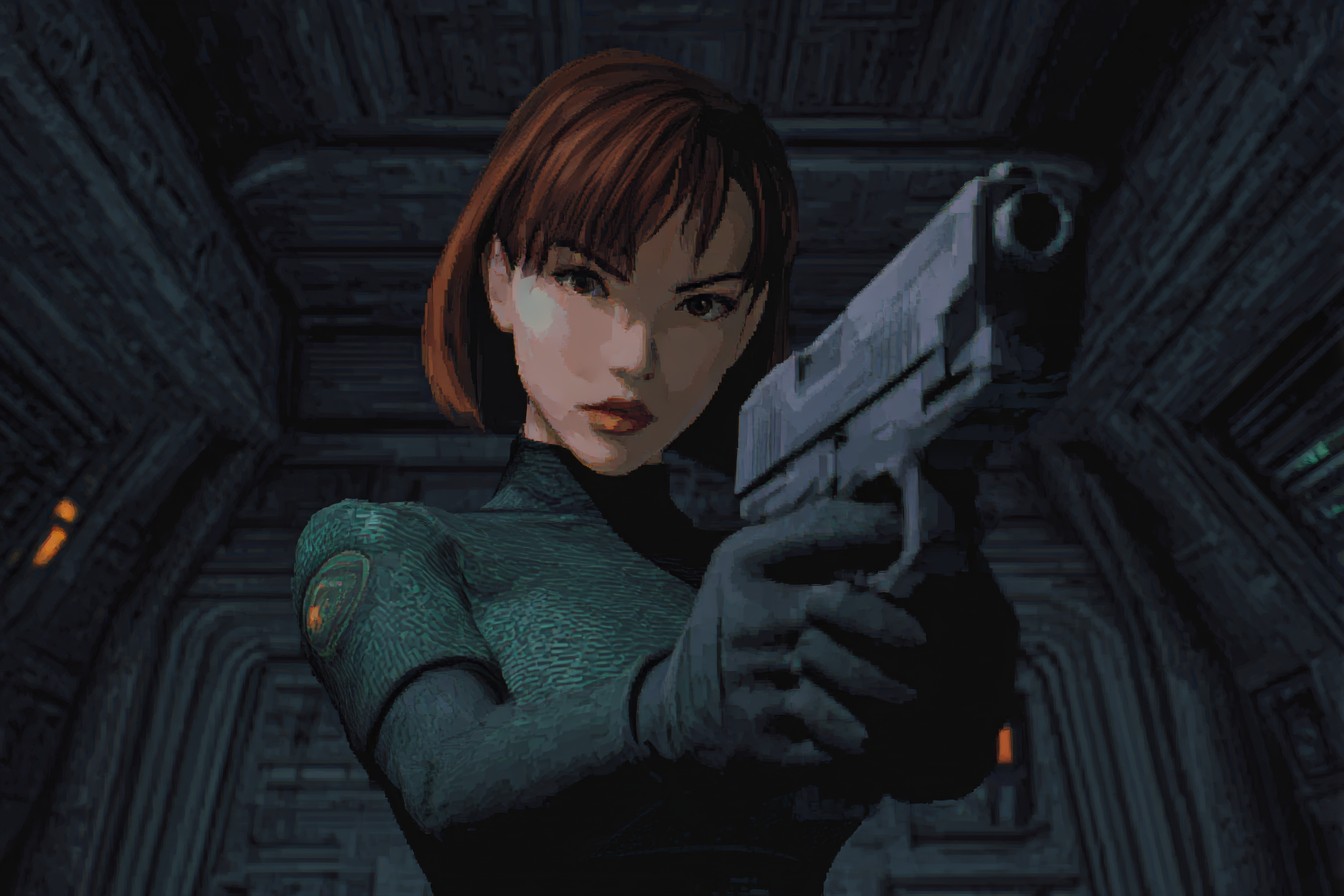
Joanna Dark is a spy for the Carrington Institute, investigating a conspiracy involving alien technology, corporate espionage, and weaponized Magitek… wait, no, that’s Final Fantasy VI. Joanna’s investigating corporate espionage and weaponized alien technology, which is actually more grounded and interesting for an FPS storyline. The campaign has twelve missions with objectives that are more complex than GoldenEye’s. You’re not just getting through an area – you’re coordinating with allies, using disguises, planning approaches around specific objectives, extracting targets safely rather than just eliminating them.
The AI is noticeably smarter than GoldenEye’s. Guards communicate with each other. They flank you. They react intelligently to your tactics. If you approach from one direction and they’ve set up a perimeter, you can’t just brute-force through – you need a different strategy. This is basic stuff by modern standards, but in 2000? This was genuinely advanced.
The weapon variety is superior. Perfect Dark has more weapons, and they’re more creatively designed. Tranquilizer darts for non-lethal approaches. Proximity mines for area control. Rocket launchers that are actually useful instead of just novelty items. The farsight rifle that lets you see through walls and zoom across impossible distances. The Magsec 4 that can lock onto targets. Each weapon serves a distinct purpose rather than just being variations on similar themes.
The difficulty settings actually change the game meaningfully. Easiest mode simplifies objectives and reduces enemy count. Medium mode is standard. Hard mode adds more guards, smarter AI, and additional objectives. Hardest mode is genuinely punishing – you’re dealing with highly aware enemies with optimal positioning. This creates replay value because each difficulty level feels like a different experience rather than just a damage adjustment.
The Combat Simulator That Changed Everything
Here’s where Perfect Dark separated itself from GoldenEye – the Combat Simulator. This was a separate game mode where you could create custom matches with specific parameters. You could set the weapons available. You could configure the difficulty of the AI opponents. You could choose specific map variants. You could play against AI bots or with other players. You could configure literally everything about the experience.
In 1999, this was revolutionary. You could play against progressively harder bots and actually train yourself. You could create tournament-style matches. You could practice specific skills against specific configurations. This was essentially the precursor to what would become standard practice in modern FPS games – having training modes and custom configurations.
My teenagers and I spent literally hundreds of hours in the Combat Simulator, and I’m not exaggerating. We’d create specific challenges – sniping only on certain maps, melee weapons only in tight quarters, no grenades just raw gunplay. The flexibility meant you could get genuinely creative with how you wanted to play.
The Technical Achievement
Here’s the part that fascinates me from a technical standpoint – Perfect Dark looked better than GoldenEye while running on the exact same hardware. Same cartridge space. Same RAM. Same processing power. Rare basically optimized the N64 even further than they had for GoldenEye.
The textures are higher resolution. The character models have more polygons. The animations are smoother. The draw distance is better. The frame rate holds more consistently. This is what you get when you have two years to really understand your hardware and push the boundaries. It’s technical mastery rendered as game design improvements.
The gun detail is impressive – each weapon is modeled carefully and animates distinctly. Reload animations are different for each gun, which is a small detail that communicates “this weapon is different” without narration. The level design is architecturally sophisticated – you can see the geometry changes based on difficulty level, and guards position themselves differently based on threat assessment.
Why The Campaign Still Matters
Modern FPS games are basically multiplayer games with single-player campaigns tacked on. Perfect Dark inverted that – the campaign felt like the primary experience and multiplayer was the bonus. The missions have genuine narrative coherence. Joanna has character development. The conspiracy unfolds logically across twelve missions. You’re not just shooting things – you’re accomplishing objectives with specific consequences.
The mission briefings are surprisingly well-written. You understand what you’re trying to accomplish and why it matters. The level design supports multiple approaches – go loud or go silent, extract targets alive or eliminate them, use specific tools or improvise. Different loadouts are available for different missions. The game respects player agency.
By the final missions, you’re dealing with genuinely complex situations. The Chicago level involves navigating a nightclub while tracking multiple targets with different extraction requirements. The Japanese penthouse is a vertical puzzle where positioning matters more than raw firepower. The alien installation is basically a boss rush where you’re fighting advanced technology with improvised strategies.
Does Perfect Dark Hold Up?
The campaign absolutely holds up. The mission design is still solid. The AI is still competent. The objectives are clear. The pacing is excellent. It’s not a long game – maybe ten to twelve hours – but it’s focused and doesn’t waste your time.
The multiplayer is chunkier than modern games, sure. The graphics are dated. The frame rate varies based on action on screen. But the underlying design is still sound. The weapon balance still works. The map design still rewards strategy. You can play Perfect Dark today and have a genuinely good time.
The controls take adjustment if you’re used to modern analog stick aiming, but the scheme is perfectly functional once you understand it. This is where people underestimate older games – they feel different, but different doesn’t mean broken.
Why It Got Overlooked
Perfect Dark came out in March 2000, when GoldenEye had already been out for two years and was an established phenomenon. Everyone was already invested in GoldenEye multiplayer. The game came out as N64 was already aging – the PlayStation 2 was arriving and everyone was looking forward. Then Halo launched on Xbox in November 2001 and basically defined console FPS for the next decade.
Perfect Dark was caught between eras – too late to capitalize on N64’s momentum, too early to benefit from the broader gaming conversation shifting to newer platforms. It’s a genuinely excellent game that got lost in the shuffle of market timing.
The Verdict
Perfect Dark is technically better than GoldenEye in almost every measurable way. The AI is smarter. The weapons are more balanced. The mission design is more complex. The campaign is more engaging. The combat simulator is brilliantly flexible. The graphics are superior. The sound design is excellent.
If you want to experience perfect console FPS design from the 2000 era, play this. If you’re interested in how developers can optimize hardware further with additional development time and experience, study this. If you want to understand why game quality sometimes gets lost to market timing and momentum, here’s your case study.
Perfect Dark is the game that proved Rare understood console FPS even better than they’d demonstrated with GoldenEye. The fact that almost nobody remembers it that way is a failure of market timing, not design quality.
Rating: 10/10 – The FPS that deserved way more recognition than it got
Return to our full N64 rankings →