I came to Burnout 3 expecting a competent arcade racer. What I found was a complete philosophy shift about what racing games could be. Coming from construction, I understand something about breaking things down and rebuilding better. Burnout 3 took racing game conventions and completely rebuilt them around destruction as a core mechanic. Instead of avoiding crashes, you embrace them. You ram opponents. You create massive pile-ups. The wreckage becomes the point.
This is design philosophy at its most innovative. Most racing games say “don’t crash.” Burnout 3 says “crashing is beautiful when done right.” That shift fundamentally changes how you play. Aggressive driving is rewarded. Near-misses are thrilling. Destruction is satisfying. The game understands that arcade racing is about excitement, not simulation, and commits to that philosophy completely.
What Burnout 3: Takedown Actually Does
You’re racing recklessly through traffic, earning points for near-misses and crashes. The “Takedown” mechanic lets you ram opponents and send them crashing spectacularly. The closer you get to other cars without touching them, the more points you earn. The “Crash Mode” is a separate game where your only goal is maximum destruction in a traffic intersection.
The core racing is straightforward – win races, earn money, unlock cars. But the mechanics completely change how you approach racing. Driving defensively loses races. Driving aggressively wins them. You’re learning to balance speed with risk. Cut corners too tightly and you crash. Avoid traffic completely and slower racers beat you. The sweet spot is threading the needle at maximum speed.
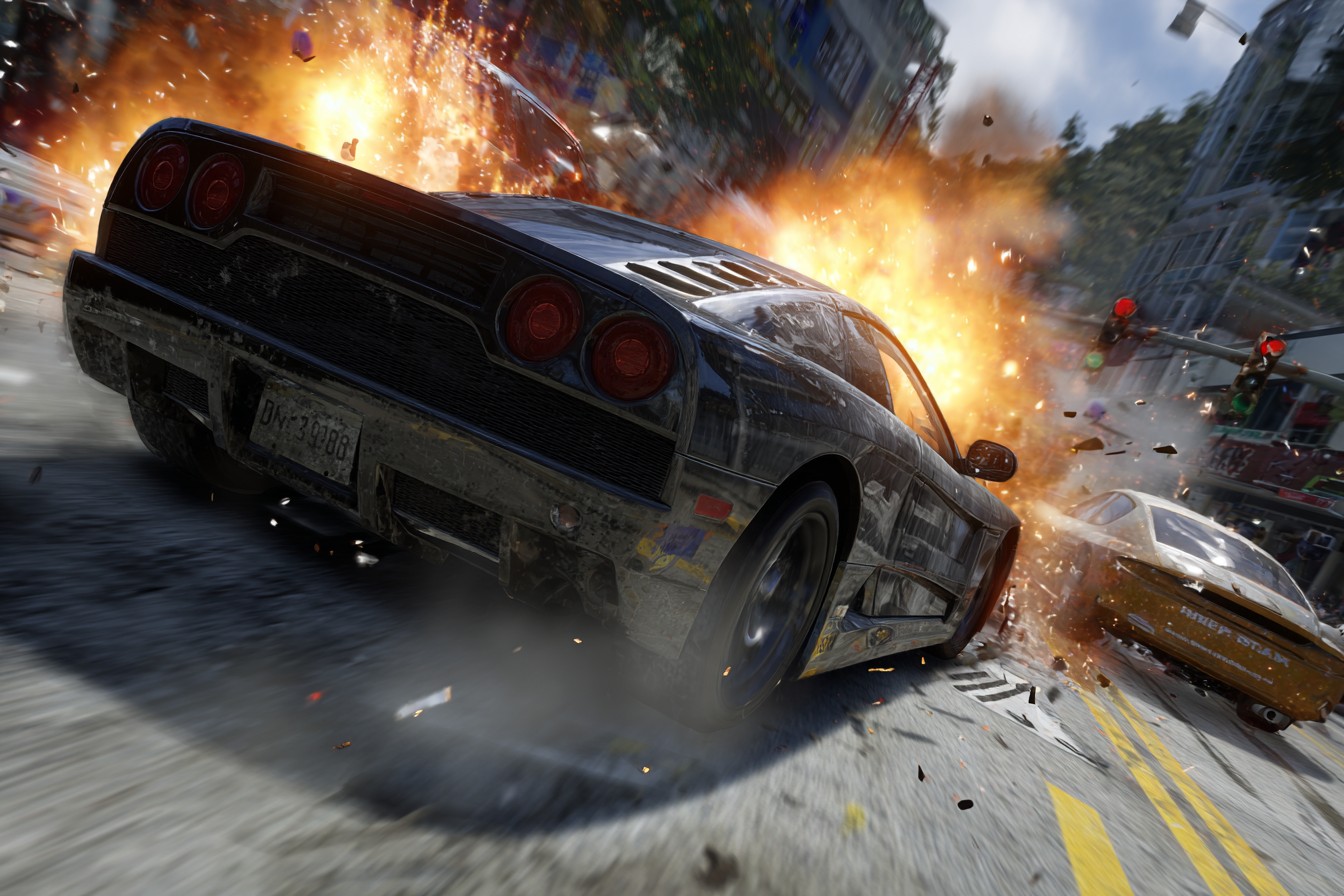
The Takedown mechanic is genuinely satisfying. Ramming an opponent at the right angle sends them crashing spectacularly. The slow-motion replay celebrates your destruction. The points reward aggression. This creates a feedback loop where aggressive play is mechanically rewarded and visually celebrated.
Crash Mode is addictive. You’re placed in traffic intersections with a car. Your goal is maximum destruction. Figuring out the right approach angle, the right speed, the right moment to impact creates puzzle-like depth within destruction. Some intersections have secondary objectives – hit a specific total value, destroy a specific number of cars, hit a specific car type. The variety keeps Crash Mode engaging.
Why This Design Philosophy Worked
Here’s what Burnout understood that simulation-focused racing games miss – excitement trumps realism for arcade racing. Players want thrills, not lap time optimization. The destruction feedback is immediate and satisfying. The slow-motion replays celebrate your success. The sound effects make crashes feel impactful.
The difficulty progression teaches you risk-reward understanding. Early races are forgiving. Later races demand aggressive play and precise timing. The game teaches you that aggression is rewarded but recklessness is punished. That balance creates engaging difficulty.
The visual feedback is crucial. Crashes create massive explosions and debris. The screen shakes with impact. The slow-motion replay emphasizes the destruction. Takedowns get special treatment – cinematic angles showing the ramming and aftermath. This visual celebration makes destruction feel important and rewarding.
The Technical Achievement
The graphics are impressive for 2004. The environments are detailed and varied. The car models are recognizable and damage visibly. The destruction effects are elaborate – cars crumple, glass shatters, debris flies. The motion blur during near-misses creates a sense of speed. The visual clarity during chaos is impressive.
The physics are arcade-oriented but believable. Cars handle realistically enough to feel weighty without demanding simulation precision. The destruction physics make sense – impacts create appropriate damage. The slow-motion replays are technically impressive and visually clear.
The sound design is excellent. Engine sounds vary by car. Crash sounds are satisfying and impactful. The music is energetic and matches the pace. The audio feedback makes aggression feel rewarding.
Does Burnout 3 Still Hold Up?
The graphics are dated but the destruction effects are still impressive. The car models are simple by modern standards but distinctive. The environments are less detailed than modern games but serve the gameplay well.
The racing is still engaging. The destruction mechanics still feel satisfying. The Crash Mode is still addictive. The difficulty still provides appropriate scaling. Playing this now, you understand why people still celebrate this game.
The Takedown mechanic still feels rewarding. Ramming opponents still creates satisfying results. The risk-reward of aggressive driving still creates tension. The progression from careful racing to aggressive takedowns still feels natural.
The Crash Mode scenarios still present interesting challenges. The variation in objectives keeps things fresh. The physics still feel arcade-appropriate. The destruction still feels visually satisfying.
Why This Game Changed Racing Games
Burnout 3 proved that arcade racing could embrace destruction as a core mechanic. It proved that excitement could trump realism. It proved that immediate feedback and visual celebration make destruction satisfying.
The franchise would continue with Burnout Paradise, which expanded the open-world destruction philosophy. Modern racing games understand that variety keeps things fresh. Simulation and arcade racing can coexist because they serve different audiences. Burnout proved that arcade racing had legitimate appeal.
The Verdict
Burnout 3: Takedown is a racing game that proves destruction and excitement can be core mechanics. The aggressive driving is rewarded mechanically and visually. The Takedown system is satisfying. The Crash Mode is addictive. The difficulty scales appropriately. The progression is engaging. The visual feedback is immediate and rewarding.
This is a game where every system serves creating exciting, destruction-focused racing gameplay. The developers understood that arcade racing is about thrills, not simulation. That understanding created something genuinely unique and genuinely fun.
If you’ve never played Burnout 3, play it and understand why arcade racing fans still celebrate it. If you played it when it released, replay it and appreciate how well the destruction mechanics still satisfy. If you make racing games, study Burnout 3 because it’s proof that philosophy-driven design creates innovation.
Rating: 9/10 – The racing game that proved destruction could be beautiful and rewarding