I spent fifteen years in IT management learning to appreciate systems that are elegantly designed. Castlevania: Symphony of the Night is that kind of game – it takes the Metroidvania formula that Super Metroid established and perfects it. The game understands exactly what makes the formula work and commits to every element completely. Exploration, level design, power-up progression, difficulty balance – everything works together toward a singular design goal.
You’re Alucard exploring a massive castle in 2D side-scrolling perspective. You gain power-ups that unlock new areas. You’re finding secrets through careful observation. The controls are tight. The level design is brilliant. The atmosphere is thick. This is what Metroidvania can be when designed by developers who completely understand the genre.
What Symphony Of The Night Actually Does
The castle is interconnected – you can’t just load separate levels. You’re navigating a cohesive environment where every passage connects logically. The geography makes sense. Finding new areas feels like genuine exploration rather than just following a predetermined path. The castle feels massive because it actually is – you’re constantly discovering shortcuts and secret areas.
The power-up progression is logical. You start with basic sword skills. You gain new equipment that increases damage and reach. You find relics that grant new abilities – increased jumping power, underwater breathing, invincibility frames. Each new ability opens previously inaccessible areas. You’re not just becoming stronger – you’re gaining tools that change how you navigate the world.
The combat system is satisfying without being complex. You have a primary weapon, secondary items, and special attacks. You’re managing stamina bars. You’re learning enemy patterns. You’re executing dodge rolls and defensive maneuvers. The difficulty scales appropriately – early enemies teach patterns, late enemies demand mastery of all mechanics.
The 2D Art Direction That Transcends Technical Limitations
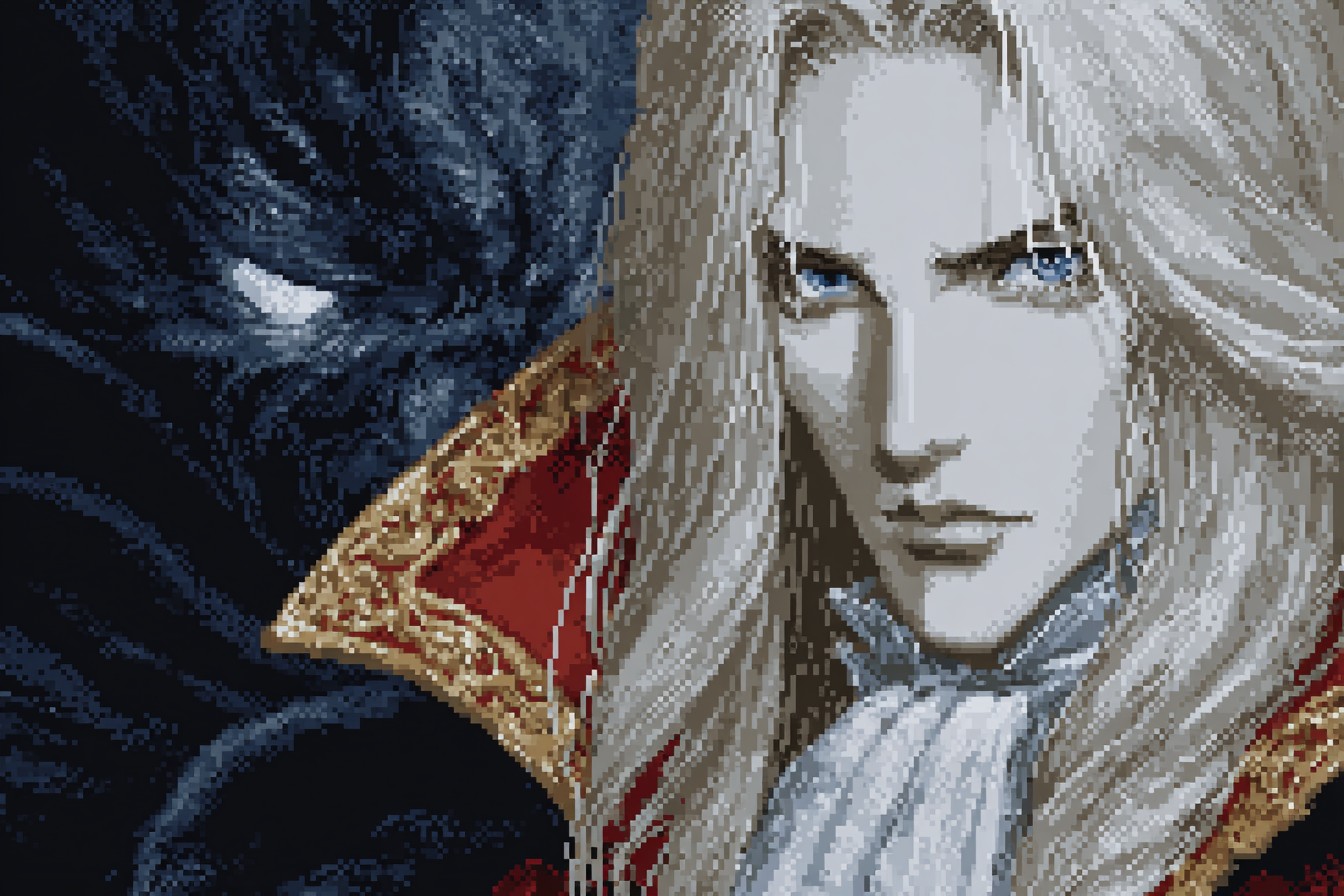
What impresses me about Symphony’s presentation is how the hand-drawn animation is gorgeous. The sprites are detailed and animate smoothly. The backgrounds are detailed and create real atmosphere. The character designs are expressive. Every frame of animation communicates information about game state and character intent.
The visual clarity is excellent despite technical limitations. You can see exactly where you can jump. Platforms are visually distinct from background. Enemies are readable. Special effects don’t obscure gameplay-critical information. This is graphical design that serves gameplay rather than sacrificing clarity for visual flash.
The soundtrack by Michiru Yamane is phenomenal. Each area has distinct music that establishes atmosphere. The boss themes are memorable and intense. The track selection uses music psychologically – building tension and excitement through composition rather than just playing constantly.
Why This Game Perfected Metroidvania
The genre didn’t start with Symphony, but Symphony perfected it. The castle design is brilliant. The power-up progression creates genuine exploration. The enemy variety keeps combat fresh. The secret areas reward thorough exploration. The pacing never drags. The difficulty never spikes brutally.
What makes Symphony special is how completely it understands the genre’s philosophy. You’re not playing this for story. You’re not playing this for constant action. You’re playing this to explore a world, understand its geography, find secrets, and gradually become powerful enough to access deeper areas. Every system serves that goal.
The optional content is substantial. Secret bosses. Hidden abilities. Weapon variations. None of it is required, but all of it rewards engagement. The game respects players who want to explore thoroughly without forcing that exploration on those who don’t.
Does Symphony Of The Night Still Hold Up?
Completely. The 2D graphics are timeless because they’re hand-drawn beautifully. The level design is still brilliant. The combat is still engaging. The exploration is still rewarding. The atmosphere is still effective.
The controls are responsive. The collision detection is fair. The difficulty is well-balanced. Playing this now, you understand why people still consider it the Metroidvania standard against which all others are measured.
The progression feels natural. You’re constantly finding new abilities that open new areas. You’re constantly discovering secrets. The pacing is perfect – challenges escalate gradually without sudden difficulty spikes.
Why This Game Defined The Genre
Symphony of the Night proved that Metroidvania was a legitimate genre with specific design philosophy. Exploration matters more than action. Power-up progression creates natural progression gates. Secrets reward observation and thoroughness. Atmosphere matters.
Every game since has learned from Symphony. Modern Metroidvanias expand on the formula – more complex combat, more mechanical depth – but the foundation comes directly from Symphony. The genre’s success owes enormously to how well Symphony executed the core concepts.
The Verdict
Castlevania: Symphony of the Night is a Metroidvania that proves the formula works when executed perfectly. The castle is massive and interconnected. The exploration is rewarding. The power-up progression is logical. The combat is satisfying. The difficulty is fair. The atmosphere is thick. The secrets reward thorough engagement.
This is a game where every system serves exploration and progression. You’re not playing for story or constant action – you’re playing to explore a world and become powerful enough to access deeper areas. That design philosophy, executed perfectly, creates a genuinely engaging experience.
If you’ve never played it, play it and understand why Metroidvania fans still consider this the gold standard. If you make Metroidvanias, study Symphony because it’s the template that still works perfectly.
Rating: 10/10 – The Metroidvania that perfected the genre