I need to start by saying – that title has a typo. It says “RPM” instead of “RPG.” But honestly, it’s kind of perfect because Paper Mario plays like it’s constantly in motion, constantly doing something unexpected, constantly rewarding you for paying attention. The team reviewed this and liked it so much that nobody bothered fixing the typo, which is probably indicative of something about the whole experience.
Coming from an IT management background, I appreciate systems that are clever but not overcomplicated. Paper Mario took the RPG template – turn-based combat, party progression, story progression through adventure – and said “what if we made the turn-based battles actually engaging?” Most RPGs have you select menu options and watch animations. Paper Mario demands active participation in combat.
What Paper Mario Actually Does
You’re Mario, and you’ve been invited to Princess Peach’s castle where Bowser shows up and causes chaos (as Bowser does). Peach gets kidnapped. The Star Spirits – magical beings that grant wishes – are scattered and captured. You need to reassemble them and stop Bowser. Standard Mario plot. What’s not standard is that Mario can’t talk and nobody finds this weird.
Instead of silent protagonist (most NPCs just ignore that you can’t speak), Paper Mario commits completely to it. Mario communicates through gestures and expressions. Other characters talk and Mario responds through actions. This creates a dynamic where Mario is a player character but also a defined character with personality communicated through animation rather than dialogue.
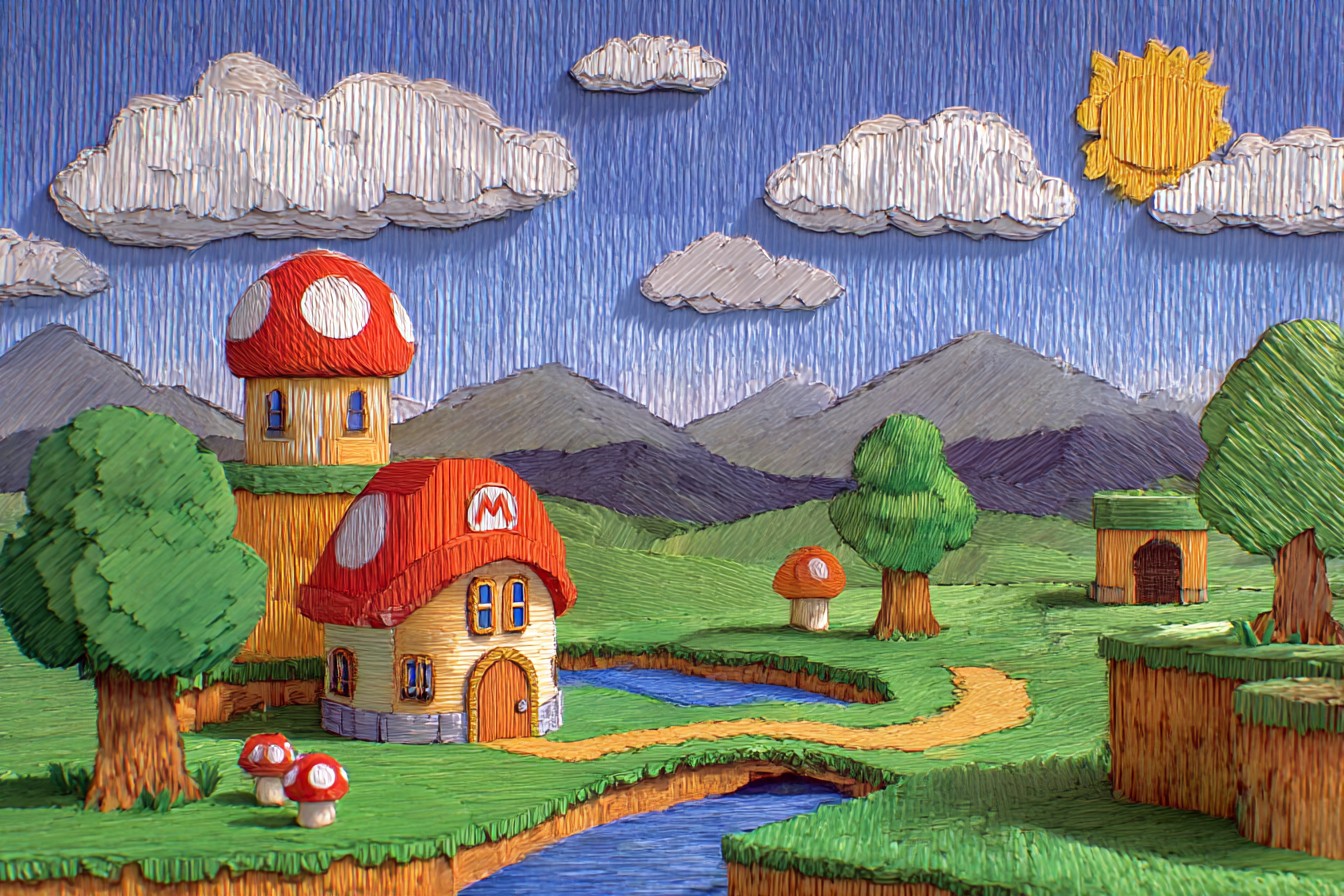
The world is gorgeous in a paper-craft aesthetic. Everything looks like it’s made from construction paper and cardboard. Rooms have depth created through clever use of perspective. Characters are flat but animated with personality. The art direction commits to the concept so completely that the simplicity becomes sophisticated. This is what happens when you have an actual vision rather than just technical ambition.
The Combat System That Stays Engaging
Turn-based combat gets a terrible reputation because so many games implement it badly – you select an action, watch an animation, repeat for hours. Paper Mario said “what if the player has to actually participate?” So every action demands player input. Attack and you press buttons at the right moment to increase damage. Get attacked and you press buttons to reduce damage taken. Use an item and you might spin a roulette wheel to determine effectiveness. Everything requires active participation.
This sounds simple and it is simple, but it creates engagement that most turn-based RPGs achieve through complexity rather than mechanics. You’re never just watching the game – you’re constantly doing something. That changes the entire experience.
Your party consists of Mario plus partners – Goombario who’s eager, Kooper who’s anxious about his stolen shell, Bow who’s a shy Boo, Watt who’s a young Lil Sparky, Bonetail who’s a dinosaur detective, and Vivian who joins later (and there’s actual character development there that was mildly controversial at the time). Each partner has distinct abilities in overworld exploration and unique attacks in combat.
The badge system lets you customize Mario and your partners with power-ups that provide stat boosts or special abilities. You collect badges throughout the game – some from NPCs, some from bosses, some from mysterious sources. Equipping different badges creates different builds. This is straightforward customization that doesn’t require min-maxing but rewards those who engage with it.
The Story That Actually Has Character
Paper Mario doesn’t take itself seriously, and that’s actually the design philosophy carrying through the entire experience. Peach isn’t just kidnapped – she’s an active character who escapes on her own and travels with Bowser for a stretch of the game. Bowser isn’t purely evil – he’s got character development and genuine vulnerability. The main antagonist has legitimate goals, not just “destroy the world” motivations.
The writing is genuinely good without being condescending. Character moments land. Dialogue is funny without being obnoxious. NPCs have personality. The world feels inhabited because characters talk to each other, not just to the player. There’s a completeness to the narrative that most RPGs aspire to.
Each chapter focuses on a different area and a different partner. You’re not just collecting party members – you’re developing relationships with them through story progression. By the end, the party feels like an actual group rather than just mechanical options.
The Technical Achievement That Nobody Mentions
The paper-craft aesthetic is deceptively technically clever. Creating convincing flat characters with visible depth, animating them expressively, maintaining readability – this requires understanding what you’re doing. The prerendered-style graphics with careful art direction create a visual cohesion that makes the technical limitations invisible.
The battle transitions where the world literally unfolds are gorgeous and stylish without being slow. The menus are clean and intuitive. The overworld exploration is readable and encourages thoroughness. The boss designs are creative and visually distinct. These aren’t flashy technical achievements – they’re competent execution that serves game design.
The music by Kota Nakamura is excellent and thematically appropriate. The overworld theme is cheerful but slightly off-kilter, matching the paper-craft aesthetic. Boss themes build intensity appropriately. Character themes are memorable without being intrusive. The soundtrack supports the experience rather than dominating it.
Why It Matters For RPGs
Paper Mario proved that you could do RPGs without massive scope or complex systems. You didn’t need a hundred spells or intricate leveling mechanics. You needed good storytelling, engaging mechanics, and a clear design vision. That’s not revolutionary – it’s basic game design. But it was worth proving at a time when RPGs were becoming increasingly complex.
The turn-based combat with active participation influenced countless games afterward. Undertale’s combat system owes a debt to Paper Mario. Modern turn-based RPGs understand that engagement comes from mechanics, not just story. Paper Mario demonstrated this before it became conventional wisdom.
Does Paper Mario Hold Up?
Completely. The story is charming and engaging. The combat is still engaging – you’re never just holding A through a grind session. The exploration is rewarding. The optional content is substantial without feeling required. The writing holds up. The character development works.
Some minor complaints – the difficulty is relatively gentle (some final boss spikes, but nothing brutally challenging), and there are stretches where you’re doing fetch quests. But these feel intentional design choices rather than flaws. The game respects your time while still providing content.
The graphics hold up because the art direction is strong. Character designs are memorable. Environmental design is creative. The paper-craft aesthetic is timeless because it’s a stylistic choice rather than trying to be technically impressive.
The Verdict
Paper Mario is an RPG that proved Nintendo understood what makes adventure games work. A strong visual identity. Engaging mechanics. Good storytelling. Character development. Efficient pacing. It doesn’t revolutionize anything – it just executes established concepts with complete precision.
This is a game where every system serves the larger design goal of creating an engaging adventure. The badge system, the partner abilities, the active combat, the exploration structure – they all work together to create a cohesive experience.
If you’ve never played it, play it and understand why Thousand-Year Door felt so much more ambitious – because Paper Mario proved the foundation could hold more weight. If you make RPGs, study how Paper Mario creates engagement through mechanics rather than complexity.
Rating: 9/10 – The RPG that proved Nintendo understood adventure
Return to our full N64 rankings →