I played Banjo-Kazooie in 2023, completely fresh, with no childhood attachment. I expected a charming relic of gaming’s past – the kind of game that’s “good for its time” but would feel dated compared to modern design. Instead, I found myself playing something that’s just plain good, full stop. And more importantly, I realized something about how the collectathon genre immediately got worse after this game established the template.
Every collectathon since Banjo-Kazooie – and I mean literally every one – added more stuff to collect. More items, more worlds, more complexity. They looked at Banjo-Kazooie and thought “this works, so let’s do more of it.” Nobody looked at Banjo-Kazooie and understood the actual design principle – that the amount of content should match the available space and challenge level. More isn’t better. Better is better.
What Banjo-Kazooie Actually Did
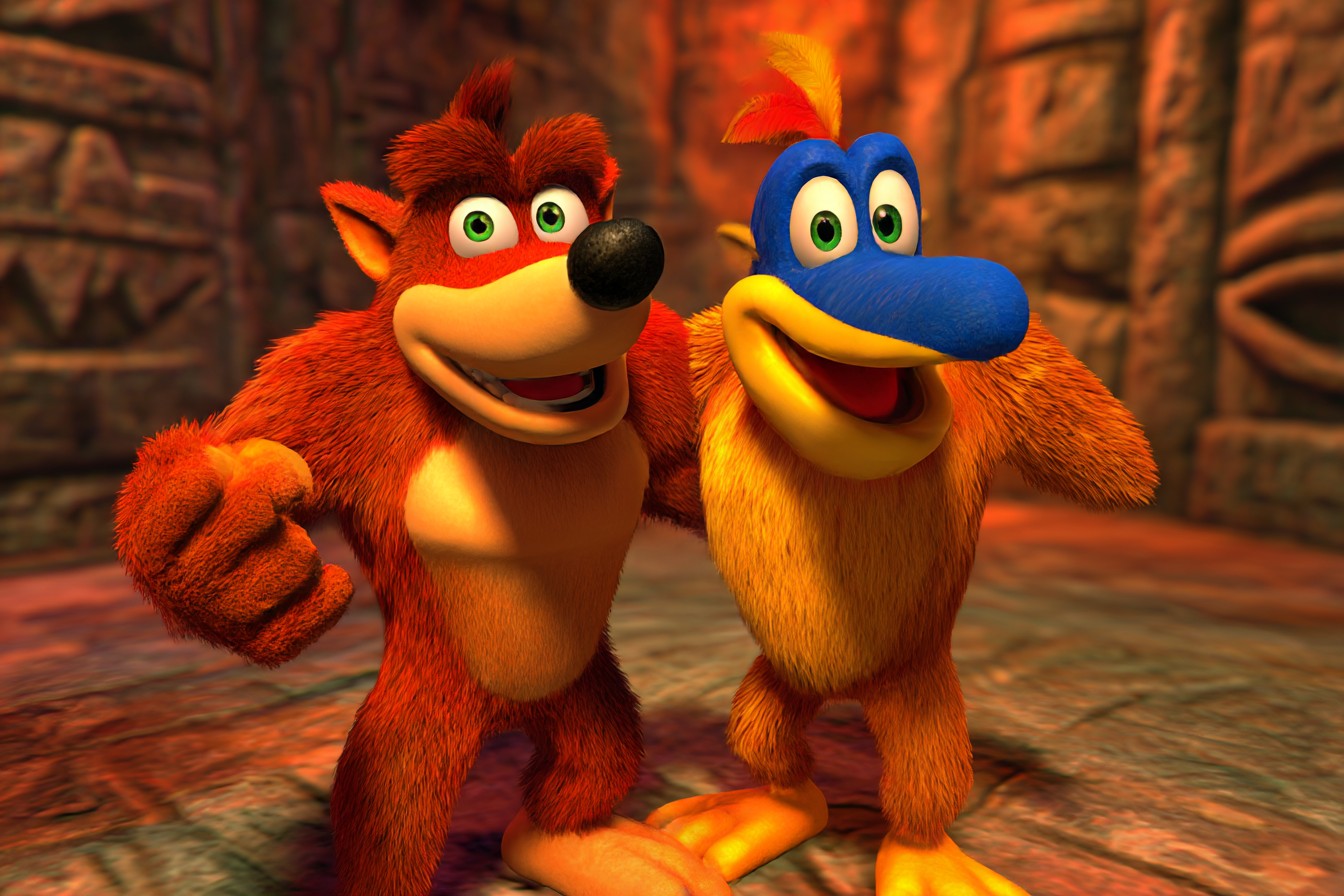
You’re Banjo, a bear, and Kazooie, a bird that lives in his backpack. The witch Gruntilda has kidnapped your sister Tooty because she’s vain and Tooty is prettier. Yes, that’s actually the plot. Yes, it’s slightly ridiculous. Yes, that’s intentional. The game doesn’t take itself seriously, which is honestly refreshing for a platformer.
The gameplay loop is straightforward – you have a hub world (Banjo-Kazooie’s house) with paintings that are portals to different worlds. Each world has Jiggy pieces to collect, Musical Notes to gather, Honeycombs to pick up, and Mumbo Tokens to find. Collect enough Jiggies and you can open new worlds. Collect enough Musical Notes and you unlock areas. The progression is gate-keeped just enough to encourage exploration without feeling restrictive.
What strikes me about the design is how much the collectathon economy works. There are 900 Musical Notes scattered throughout ten worlds. That sounds like it would be tedious. It’s not, because finding them never feels like grinding. Some are obvious – you just walk around and there’s one. Some require solving small puzzles. Some require traversing the environment in specific ways. Some are rewards for collecting all the Jiggies in a world.
Each world is distinct. Treasure Trove Cove is a beach with a pirate ship and underwater caverns. Clanker’s Cavern is a mechanical dungeon filled with machinery and gears. Gobi’s Valley is a desert with Egyptian aesthetics and actual Sphinx that poses riddles. Dire Dire Docks is a water-based world with submarines and underwater areas. Click Clock Wood progresses through seasons – the same geography but completely different challenges in spring, summer, autumn, and winter.
The Design That Respects Player Time
Here’s the crucial thing about Banjo-Kazooie that later collectathons forgot – respecting the player’s time means not forcing them to collect everything. Jimjam pieces are optional. Musical Notes are optional. Honeycombs are helpful but not required. You can beat the final boss with probably 50-60% of the content collected. Getting 100% requires dedication, but the game doesn’t demand it.
Compare this to later collectathons that basically require you to collect every single item to access the final boss. Banjo-Kazooie trusted you to engage with content because you wanted to, not because progression gates forced it.
The transformation sequences are excellent. Mumbo the shaman has his hut in each world and you can use Mumbo Tokens to transform into different creatures. Crocodile, walrus, pumpkin, bee, termite, dragon – each transformation has distinct abilities that change how you approach that world. The crocodile can break cracked walls. The bee can access high areas. The pumpkin is tiny and can fit through small spaces. The transformations aren’t arbitrary – they solve specific problems within each world.
What impresses me from a design standpoint is how efficiently Banjo-Kazooie uses its mechanics. The transformations aren’t extra complexity – they’re solutions to environmental puzzles. The moves you learn (Banjo has access to different attacks and mobility tricks as you progress) are taught through level design rather than tutorials. You try something, it works, you move on. You try something else, it doesn’t work, you find another approach.
The Charm That Doesn’t Rely On Nostalgia
The humor in Banjo-Kazooie lands without being obnoxious. The characters have personality. Banjo and Kazooie banter constantly but it’s actually funny rather than grating. Gruntilda poses riddles and makes puns, which should be terrible but somehow works. Mumbo speaks in third person (“Mumbo do this for Banjo”) and it’s charming. The British humor runs through the entire experience.
This is important because a lot of modern games assume charm requires constant quips and jokes. Banjo-Kazooie understands that charm comes from consistency. These characters have personalities, they stay true to those personalities, and the humor emerges naturally from how they interact. It’s fundamentally different from games that try to be funny by constantly breaking the fourth wall or making pop culture references.
The boss fights are creative and fun. Clanker in his own world. Gobi the camel. The Sphinx posing riddles. Gruntilda’s final challenge which is basically a quiz show about everything you’ve learned in the game. They’re not brutally difficult – they’re testing whether you understand the world and your abilities. Defeating them feels satisfying rather than frustrating.
The Technical Polish That Goes Unnoticed
The animation in Banjo-Kazooie is genuinely excellent. Banjo’s idle animation shows personality – he’s constantly moving, getting bored, stretching. Kazooie reacts to environments. The transformation animations are elaborate and communicate exactly what’s happening. Enemies have distinct movement patterns you can read. This is animation serving game design rather than just looking pretty.
The sound design is excellent and largely unsung. Each world has distinct music that establishes tone without being intrusive. The transformation sounds are distinctive. Item collection has satisfying audio feedback. The boss themes are appropriately epic without overstaying their welcome. Sound design in platformers often gets overlooked – people don’t realize how much they’re learning from audio cues about what’s happening.
The camera system is solid. It’s not as revolutionary as Mario 64’s, but it works well for the levels designed around it. You can control it manually and it doesn’t fight you. The targeting system for combat is intuitive. The controls are responsive. These basic quality-of-life features that seem obvious now were genuinely well-executed in 1998.
Why Later Collectathons Got It Wrong
The moment every collectathon started adding more stuff to collect, they missed what Banjo-Kazooie understood – constraints force creativity. Working within the limit of “this world should have exactly this much stuff to find” creates elegant design. Removing those constraints just creates bloat.
Donkey Kong Country 2 has tons of secret areas and collectibles, but they’re thoughtfully placed. Banjo-Kazooie takes that further by making sure every collectible serves a purpose. You’re not just hoarding for completion – you’re actually using what you collect.
Does Banjo-Kazooie Still Hold Up?
Playing this fresh in 2023, yes, completely. The platforming is tight. The controls are responsive. The level design is brilliant. The pacing never drags. The optional content doesn’t feel padded. The charm is authentic rather than forced.
Some minor complaints – the camera can be a bit awkward in certain areas (nothing severe), and the Turbo Talon Trot move is genuinely difficult to pull off and probably doesn’t need to exist. But these are genuinely minor quibbles in an otherwise solid experience.
The graphics hold up reasonably well. Prerendered backgrounds give it visual variety while keeping technical demands manageable. The character designs are charming. The world aesthetics are distinctive. Nothing feels technically outdated because the art direction is strong enough that technical limitations disappear.
The Verdict
Banjo-Kazooie is the collectathon done perfectly. Not “for its time,” just genuinely perfectly. The level design is brilliant. The character charm is authentic. The progression respects player choice. The optional content is genuinely optional rather than gated behind completion requirements. The controls are responsive. The world design is elegant.
Every collectathon since has tried to improve on Banjo-Kazooie by adding more stuff. The brilliant design choice would be to understand what makes Banjo-Kazooie work – constraints, elegance, respect for player time – and apply those principles instead.
If you’ve never played it, play it. If you bounced off later collectathons, try this one and understand why the genre immediately got worse after this. If you make platformers, study this because it’s a masterclass in design efficiency.
Rating: 10/10 – The collectathon that everything since has tried and failed to improve on
Return to our full N64 rankings →