Joe here, and I need to address something that bothered me throughout the 16-bit era: Konami’s apparent favoritism toward Nintendo consoles. The SNES got three mainline Castlevania games while Mega Drive owners watched from the sidelines. So when Castlevania: Bloodlines finally arrived in March 1994, it felt like validation – proof that Konami took Sega’s hardware seriously enough to deliver gothic platforming excellence.
This wasn’t a port or a lesser version of something Nintendo got first. This was a genuine Castlevania game designed specifically for Mega Drive hardware, using capabilities that SNES games couldn’t replicate. The multi-plane parallax scrolling, the rotating tower effect, the branching paths based on character selection – Bloodlines showed what happened when Konami’s A-team actually focused on Sega’s console.
Two Characters, Completely Different Games
John Morris wielded the legendary Vampire Killer whip with familiar Castlevania mechanics. The whip extended reach, could be used for swinging across gaps, and felt like playing classic Belmont-style Castlevania. He represented the traditional approach – straightforward combat with reliable, proven mechanics.
Eric Lecarde’s spear changed everything. Shorter reach required closer combat positioning. But the spear could thrust upward for vertical attacks, could be used as a pole vault to reach higher platforms, and attacked in completely different patterns. Playing as Eric meant navigating levels differently, finding alternate routes, solving platforming challenges through unique movement options.
This wasn’t cosmetic character selection – this was two genuinely different gameplay experiences. Stages had sections accessible only to specific characters. Eric could vault to higher platforms John couldn’t reach. John could swing across gaps Eric had to navigate around. Replaying as the other character revealed new paths, different challenges, alternate approaches to familiar obstacles.
The difficulty balance between characters felt intentional rather than accidental. John’s whip range made certain enemy encounters easier but limited his movement options. Eric’s versatility in reaching different areas came at the cost of requiring closer-range combat. Neither felt definitively better – they offered strategic tradeoffs.
Level Design That Showcased Mega Drive Capabilities
The first stage in Greece established Bloodlines’ ambition immediately. The collapsing pillars, the crumbling architecture, the multi-layered backgrounds showing depth – this was Konami proving they understood Mega Drive hardware. The technical execution matched SNES Castlevania games while adding effects that Sega’s console handled better.
Stage 3’s leaning tower demonstrated programming wizardry. The entire screen rotated as you climbed, creating disorienting perspective shifts while maintaining playable framerates. This wasn’t mode 7 rotation – this was custom programming that achieved similar visual effects through different techniques. The technical achievement impressed even skeptics who insisted SNES had superior graphical capabilities.
The German munitions factory level combined industrial horror with World War I theming. Gears churned in backgrounds, machinery operated as environmental hazards, and the steampunk aesthetic differentiated Bloodlines from fantasy-focused Castlevania entries. The darker, grittier tone matched the European setting’s historical context.
Atlantis featured rising water levels that changed gameplay dynamically. Sections you navigated normally became underwater challenges with different physics and enemy behavior. The mechanical implementation of water effects, the enemy adaptations, the platforming adjustments – everything showed sophisticated level design thinking beyond basic “add water to level.”
The branching path system added replay value through meaningful choices. After stage 3, you selected between two different stage 4 options with unique bosses and challenges. The alternate paths weren’t just aesthetic variations – they were entirely different levels requiring distinct strategies.
Gothic Horror in 16-Bit Pixels
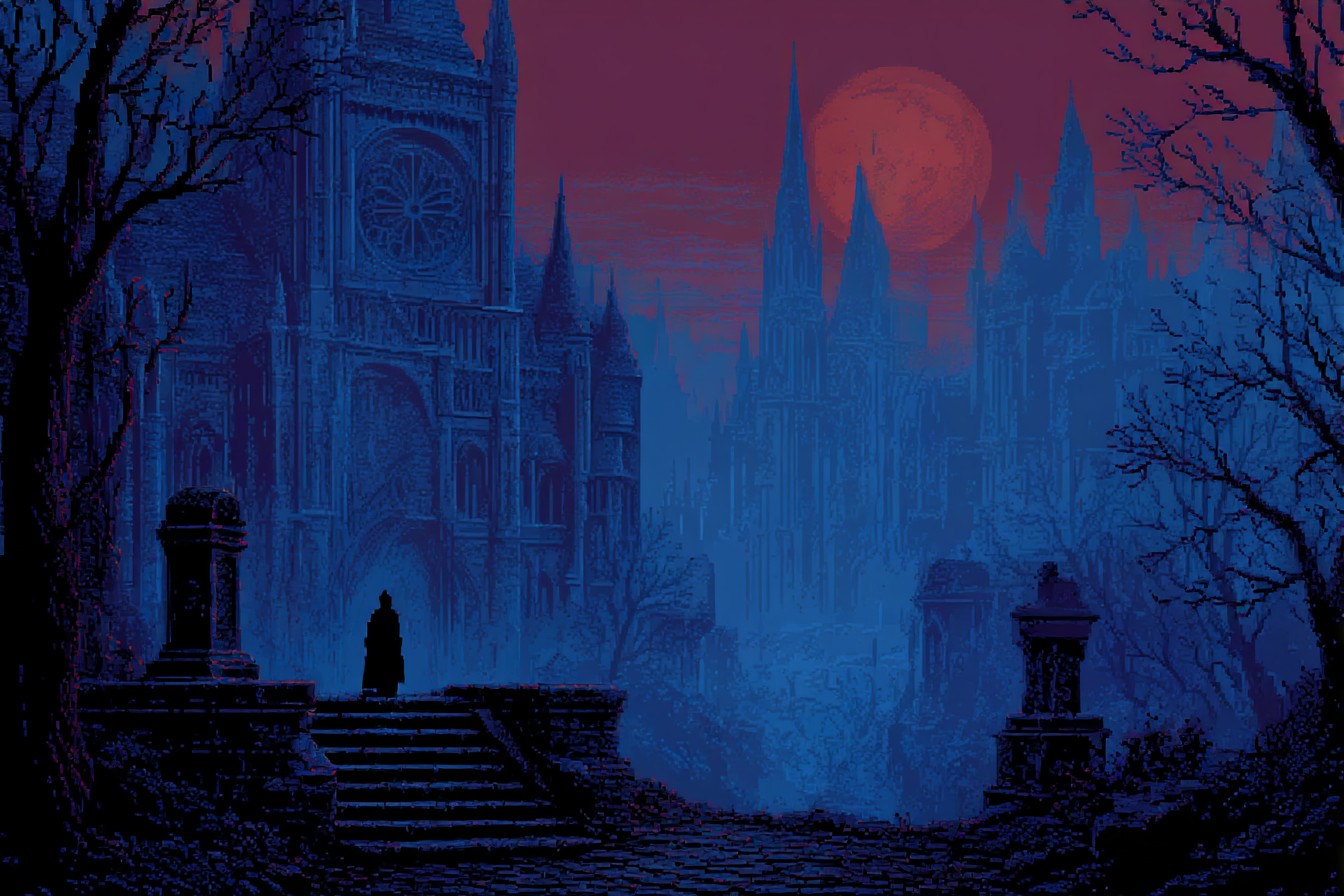
The sprite work captured Castlevania’s gothic atmosphere despite Mega Drive’s reputation for harsher colors than SNES. The detailed character animations, the grotesque enemy designs, the elaborate boss sprites – everything demonstrated that artistic direction mattered more than raw color palette capabilities.
The parallax scrolling created impressive depth across multiple background layers. The castle exteriors showed distant mountains and approaching storms. The indoor sections featured detailed architecture receding into darkness. The layering effects matched or exceeded what SNES Castlevania games achieved through different technical approaches.
Boss designs embraced body horror and mythological creatures with appropriate grotesque detail. The Hydra’s multiple heads, the mechanical monstrosity in the munitions factory, the Frankenstein’s monster homage – each boss had personality through visual design before you even engaged them in combat.
The color palette used Mega Drive’s capabilities effectively despite the console’s limitations. The darker, moodier tone actually suited Castlevania’s atmosphere. Where SNES games might have brighter, more varied colors, Bloodlines’ limited palette created oppressive gothic mood that matched the horror theme perfectly.
Michiru Yamane’s Exceptional Soundtrack
Michiru Yamane’s compositions for Bloodlines ranked among the best Castlevania soundtracks. The opening theme “Reincarnated Soul” established epic scope immediately. The use of drums, bass, and melodic hooks created music that stood alongside Super Castlevania IV’s legendary soundtrack.
Each stage had music that matched its setting and tone. The Leaning Tower’s mysterious, slightly off-kilter melody reflected the disorienting rotating environment. The factory stage’s mechanical rhythms suited the industrial horror. The Atlantis theme combined ancient mystery with underwater ambience.
The boss themes created appropriate tension without overwhelming the action. The music added urgency and drama while letting sound effects communicate gameplay information. The balance between music and sound design showed professional audio production understanding.
Why Bloodlines Mattered for Mega Drive
This validated that Konami could deliver flagship-quality games to Sega’s hardware when they committed. After years of watching Nintendo get the premium Konami treatment, Mega Drive owners finally received proof that third-party developers could create system-defining experiences on Sega’s console.
The technical achievements demonstrated that Mega Drive could handle complex effects and ambitious programming when developers invested the effort. The rotating tower, the parallax scrolling, the detailed sprites – these weren’t concessions to inferior hardware. These were showcases of what the console could achieve.
The European setting and World War I backdrop differentiated Bloodlines from other Castlevania games while respecting series traditions. This wasn’t just “Castlevania on Mega Drive” – this was a unique entry that expanded the franchise’s scope while maintaining gothic platforming excellence.
Modern Access and Legacy
Castlevania Bloodlines rarely appears in modern compilations, making it one of the harder classic Castlevania games to play legally. The Castlevania Anniversary Collection excluded it, possibly due to licensing complications. Sega Genesis Classics collections sometimes include it, but availability varies by platform.
The game’s influence on later Castlevania entries was minimal compared to Symphony of the Night’s genre-defining impact. Bloodlines represented the peak of classic linear Castlevania before the series evolved into Metroidvania territory. It’s a fantastic example of pre-Symphony design philosophy.
Speedrunners appreciate Bloodlines for its challenging execution requirements and character-specific routing options. The Eric runs differ significantly from John runs due to movement differences. The optimization potential keeps the game relevant in competitive circles decades later.
The Verdict
Castlevania Bloodlines is exceptional gothic platforming that proved Konami could deliver flagship-quality games to Mega Drive when they committed. The dual-character system with genuinely different gameplay, the technical achievements that showcased hardware capabilities, and Michiru Yamane’s outstanding soundtrack combined into the definitive Mega Drive Castlevania experience.
It’s shorter than you’d prefer – six stages feels brief compared to other Castlevania games’ length. But every stage delivers memorable moments and challenges. The quality throughout justifies the condensed experience. This was Konami showing Mega Drive owners they hadn’t been forgotten.
For understanding why third-party support mattered to Sega’s success, Bloodlines provides the perfect example. This level of quality from a premier developer validated the Mega Drive as a serious platform deserving major releases. This was exactly what Sega needed more of – and exactly what they too rarely received.
Finally, after years of watching Nintendo get the best Konami had to offer, Mega Drive owners got their validation. Castlevania Bloodlines proved Sega’s hardware could deliver gothic platforming excellence when talented developers applied their skills properly. And yes, it absolutely deserved to be on this top 10 list, regardless of what Carl thinks about length being a negative.