Look, I need to establish my credentials upfront – I’ve been playing Street Fighter II since it hit arcades in 1991. I spent quarters I should have been using for lunch. I practiced dragon punches until I could do them blindfolded. I learned frame data before I knew what frame data was called. So when the New Player Ready crew started debating our SNES rankings, I came prepared with tournament footage, win-rate statistics, and a seventeen-page document on why Street Fighter II Turbo was the only SNES fighter that mattered.
They didn’t read my document. But they did agree this game deserved a spot, which is all that matters.
What Makes Street Fighter II Turbo Special
Developer: Capcom | Released: July 1993
Street Fighter II Turbo was the third version of Street Fighter II on SNES, following the original and Champion Edition. Turbo added faster gameplay speeds, fixed some balance issues, and – most importantly – let you play as the four boss characters: Balrog, Vega, Sagat, and M. Bison. This was massive because those characters were previously CPU-only, and finally controlling them felt like accessing forbidden content.
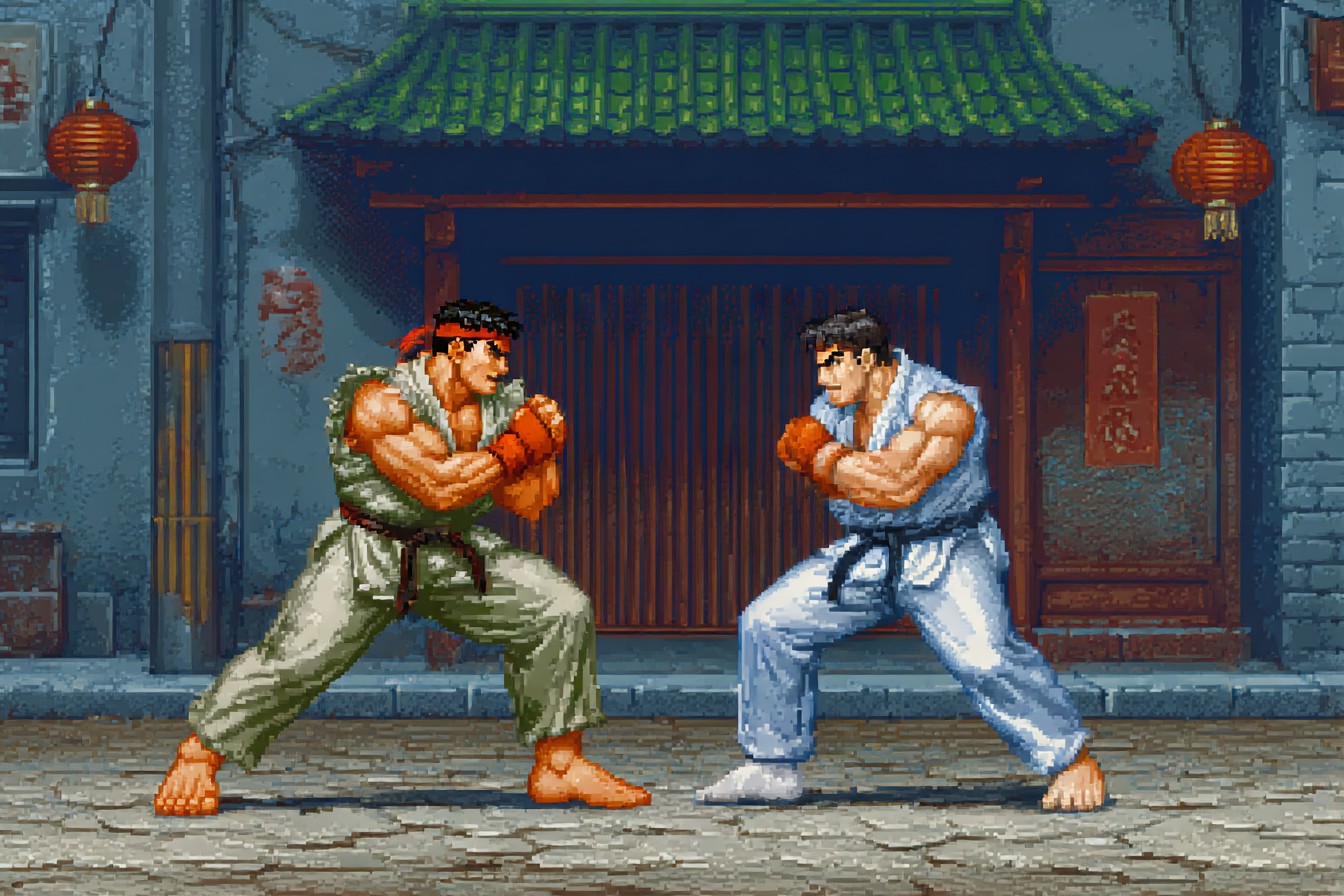
The game features twelve fighters total, each with genuinely different play styles. Ryu and Ken with their fireballs and dragon punches. Guile’s sonic booms and flash kicks. Chun-Li’s lightning legs. E. Honda’s hundred-hand slap. Blanka’s electricity and rolling attacks. Zangief’s command grabs. Dhalsim’s stretchy limbs and teleport. Each character requires different strategies, different timing, different approaches.
The SNES version was remarkably close to arcade quality. Not pixel-perfect – the graphics were slightly compressed, some animation frames were missing, the sound was a bit different. But for home console fighting in 1993? This was as good as it got. You could practice at home and your skills transferred to the arcade. That mattered enormously to competitive players.
The Combat System That Defined A Genre
Street Fighter II’s six-button layout became the fighting game standard. Light, medium, and heavy punches. Light, medium, and heavy kicks. Different strengths for different situations – light attacks are fast but weak, heavy attacks are slow but powerful. This creates a risk-reward calculation for every button press.
Special moves require specific joystick motions plus button presses. Quarter-circle forward + punch for fireballs. Dragon punch motion for Shoryukens. Charge back then forward for sonic booms. Half-circle motions for command grabs. These inputs add execution barrier – you need to practice the motions until they’re muscle memory.
But execution is just the foundation. The real depth comes from spacing, timing, and reading your opponent. When do you throw a fireball? When do you jump? When do you block? When do you counter-attack? Every decision has consequences, and good players make better decisions faster than their opponents.
Frame data matters even if you don’t know the term. A light punch might be 3 frames startup, meaning it’s faster than a heavy punch’s 7 frame startup. After blocking certain moves, you have frame advantage – a window where your attack will hit before theirs. Learning these windows through experience (or studying frame data like I did) separates good players from great ones.
The Character Balance That Mostly Works
Street Fighter II Turbo’s balance is… interesting. Some characters are objectively better at high-level play. Ryu, Ken, Guile, and Dhalsim dominate tournament play because their tools are versatile and reliable. Blanka and Zangief struggle against keep-away characters. E. Honda has limited options against projectiles.
But at casual-to-intermediate level, balance matters less than skill. A good Blanka player beats a mediocre Ryu. Understanding your character’s strengths and exploiting opponent weaknesses matters more than tier lists. The game is balanced enough that every character is viable until you hit serious competitive play.
The boss characters are intentionally overpowered – they were designed as AI opponents, not balanced fighters. M. Bison’s Psycho Crusher is fast and safe. Sagat’s Tiger Uppercut has massive range and damage. Vega’s claw gives him reach advantage. Balrog’s Dash Straight punches have armor properties. Playing as the bosses feels powerful but can be cheap in casual matches.
The SNES Version’s Compromises And Strengths
The SNES couldn’t perfectly replicate arcade hardware, so Capcom made compromises. The graphics were slightly compressed – characters and backgrounds less detailed. Some animation frames were removed to fit cartridge space. The sound quality was lower – voice samples more compressed, music slightly different.
Input lag was minimal but present. On CRT TVs with wired controllers, you barely noticed. On modern displays with wireless controllers, it’s more noticeable. Serious players needed to adjust timing slightly compared to arcade, but the game remained responsive enough for high-level play.
The SNES controller actually worked well for Street Fighter II. The D-pad was responsive for special move inputs. The shoulder buttons gave you six face buttons total. It wasn’t arcade-stick quality, but it was functional and better than most console controllers of the era.
The game supported head-to-head versus mode, which was crucial. Playing against human opponents reveals depth that fighting the AI never teaches. The CPU has patterns and exploitable behaviors. Humans adapt, counter-adapt, and force you to improve. The versus mode made SNES Street Fighter II viable for serious practice.
Why This Game Destroyed Friendships
Street Fighter II at competitive-casual level – where most players existed – created genuine rivalry. You’d develop patterns and habits playing the same person repeatedly. They’d learn to counter your fireball spam. You’d adapt by varying timing. They’d start jumping more. You’d anti-air them consistently. This back-and-forth created intense competition.
Losing streaks bred frustration. Winning streaks bred arrogance. Close matches bred trash talk. That moment when you land a perfect combo or catch them with a last-second reversal? Pure dopamine. That moment when they beat you with a move you should have blocked? Rage.
Tournament mode was perfect for group gatherings. Eight-player brackets to determine who was actually best. The trash talk during these sessions was legendary. The controller-throwing when you lost in finals was regrettable but understandable. Street Fighter II turned friendly gaming sessions into blood feuds that somehow made the friendships stronger.
The Techniques That Separated Players
Casual players could throw fireballs and land basic combos. Intermediate players understood spacing, anti-airs, and tick throws. Advanced players used frame traps, option selects, and mix-ups to dominate.
Tick throws – hitting with light attacks to push opponents into block, then immediately attempting a throw when they expect another attack. Meaty attacks – timing attacks to hit opponents exactly as they stand up from knockdown. Reversal dragon punches – executing invincible moves on the first possible frame to beat opponents’ offense.
These techniques weren’t named or explained in-game. You learned them through experience, observation, or community knowledge. The arcade scene was crucial for spreading information. Players watched each other, shared discoveries, developed local metas. The SNES version let you practice these techniques at home.
Does Street Fighter II Turbo Hold Up Today?
For casual play? Absolutely. The core gameplay is still rock-solid. The characters are distinct and memorable. The satisfaction of landing a dragon punch or throwing a perfect fireball remains. This is still fun in short bursts or casual versus sessions.
For competitive play? Modern fighting games have surpassed it. Street Fighter V, VI, and various anime fighters offer more depth, better balance, and smoother online play. But Street Fighter II’s fundamentals are still sound, and learning them teaches skills that transfer to modern fighters.
The SNES version specifically shows its age compared to arcade-perfect ports on modern platforms. The graphics are compressed, the sound is worse, the controls aren’t as tight. If you’re playing Street Fighter II today, grab the 30th Anniversary Collection or Ultra Street Fighter II. But the SNES Turbo version was remarkable for 1993 and remains playable today.
Why It’s Number Nine On Our List
Street Fighter II Turbo sits at number nine on our SNES rankings because it’s the definitive SNES fighter but not revolutionary for the console specifically. The arcade version created the fighting game genre boom. The SNES version was an excellent port of an already-revolutionary game.
During our crew debate, I presented my case with the intensity of a lawyer defending a murder suspect. Tim argued that Mortal Kombat on SNES was better (he was wrong). Joe questioned whether any fighting game deserved top ten (blasphemy). John tried pivoting to talk about Amiga games (ignored). Carl just wanted the meeting to end.
The games above it on the list are more uniquely suited to the SNES or represent innovations specific to the platform. Street Fighter II Turbo is brilliant, but it’s a port of an arcade game. That doesn’t diminish its quality, but it affects its ranking on a console-specific list.
The Legacy That Changed Gaming
Street Fighter II didn’t just create a genre – it created a culture. The fighting game community, EVO championship, frame data analysis, match-up charts, tier lists – all of this stems from Street Fighter II’s competitive scene. The SNES version brought that culture into homes and let players practice seriously.
Every fighting game since owes something to Street Fighter II. The six-button layout, special move inputs, combo systems, character archetypes – these became industry standards. Modern fighting games are more complex, but they’re built on foundations this game established.
The Verdict
Street Fighter II Turbo is the definitive SNES fighting game. It’s an excellent port of an arcade classic that brought competitive fighting into homes. The gameplay is rock-solid, the characters are memorable, the depth is genuine, and the satisfaction of getting good never diminishes.
If you’ve never played it, play it to understand fighting game history. If you played it casually as a kid, try approaching it seriously to appreciate the depth. If you’re into modern fighting games, go back and see where it all started.
This is how you do arcade-to-console ports. This is how you create competitive multiplayer. This is how you make a game that’s still being played and studied decades later.
Rating: 9/10 – The fighting game that defined a generation
Return to our full SNES rankings →
Samuel’s been gaming since the Atari 2600 and still thinks 16-bit was the golden age. Between accounting gigs and parenting teens, he keeps the CRTs humming in his Minneapolis basement, writing about cartridge quirks, console wars, and why pixel art never stopped being beautiful.