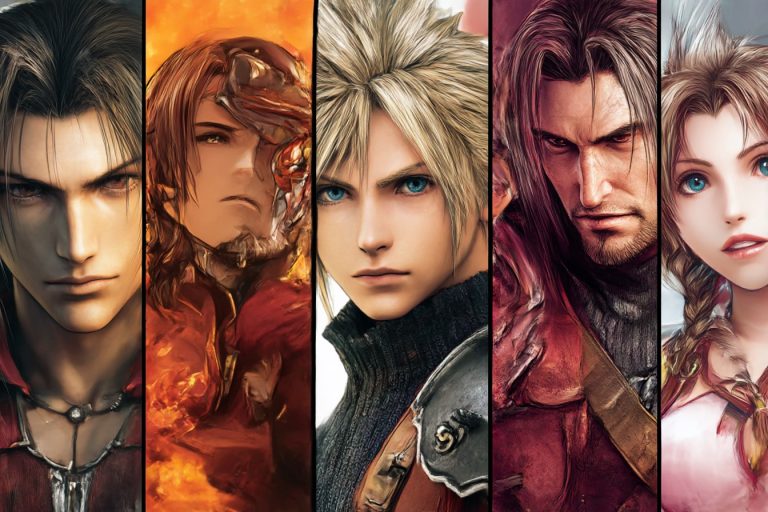

We all knew that arguing over the best classic Final Fantasy games would lead to another round of ruined relationships. Carl had to step in as mediator for our increasingly heated debates. Samuel insisted that Final Fantasy VI was the undisputed champion and defended this position with religious fervor. Marcus remained mired in his technical analysis of how each game pushed the hardware, and wouldn’t shut up about engineering elegance. Joe kept trying to argue that VII didn’t deserve its reputation and that earlier entries were criminally overlooked. Timothy found the entire series without childhood nostalgia and spouted off novel, yet annoying, opinions based solely on his “fresh perspective.” In the end, however, after three weeks of yelling back and forth via Slack and having a complete meltdown during a Zoom call about whether Kefka or Sephiroth was the better villain, we finally came to a consensus on these six games.
Final Fantasy arrived on the Famicom in 1987 and essentially created the template for how JRPGs would work for decades to come. We had turn-based combat that actually mattered. We had job systems that let you build your party however you wanted. We had stories that actually existed. And most importantly, we had music—Nobuo Uematsu creating orchestral arrangements on hardware that shouldn’t have been able to produce anything more sophisticated than a beep and a boop. The series evolved from niche Japanese import to genuine cultural force, transforming how the West understood gaming in the process. By 1997, Final Fantasy VII had sold 10 million copies and fundamentally altered what the industry believed JRPGs could achieve. But that explosion didn’t happen in a vacuum. It was built on six games that each took genuine risks.
Quick Rankings
Final Fantasy (1987) – The cartridge that started it all. Final Fantasy II (1988) – Radical stat growth experimentation. Final Fantasy IV (1991) – The Active Time Battle system changed everything. Final Fantasy V (1992) – Twenty-two jobs and infinite character combinations. Final Fantasy VI (1994) – Fourteen characters and a world that actually ends. Final Fantasy VII (1997) – The game that made JRPGs mainstream.
Rankings
1. Final Fantasy VI (SNES, 1994)
Genre: RPG | Developer: Square
Final Fantasy VI had fourteen characters. Not just playable characters—fourteen distinct personalities with their own stories that wove into the larger narrative. The game split into two halves: before the world breaks and after. That second half was almost unheard of. Most games ended when the antagonist was defeated. This one asked, “What if they won?” and actually answered it.
The Esper system—summons that also taught magic—replaced the job system. It was less flexible than Final Fantasy V. But it was cleaner. More understandable. The magic progression felt earned rather than arbitrary. The story shifted from a straightforward “stop the bad guy” plot into something more complex—a meditation on whether hope is rational when everything falls apart.
Samuel was the first to defend this game passionately. “This is my hill. This is where I die. Final Fantasy Six is the best 2D RPG ever made. Not just in the series. Ever.” Marcus leaned back. “I’m not going to argue it’s bad. But it’s also seventeen years of accumulated development budgets. It’s when Square had figured out almost everything. Of course it’s good.” And he’s right about both.
What makes it untouchable: The sheer ambition of fourteen characters all mattering. The opera scene—an actual operatic sequence in a video game. The World of Ruin, where half the cast was dead and the world was genuinely broken. Kefka as a villain who actually won and proved the game wasn’t going to hand you a clean victory. The Esper system creating magic progression that rewarded experimentation. Uematsu’s soundtrack reaching absolute peak—the opera theme, the Celes theme, the ending. The game’s willingness to be melancholic without being dour. The fact that you could take the entire second half in almost any order, giving genuine player agency over how the story unfolded.
Does it still hold up? Final Fantasy VI remains the gold standard for 2D RPG storytelling. The pacing occasionally drags, and some character development gets lost in translation. But the core experience—exploring a broken world, gradually gathering allies, discovering that hope matters even when it’s irrational—still resonates. This is the game that said, “2D can be this big” right before everything went 3D.
Read Samuel’s passionate defense of Final Fantasy VI as the franchise’s creative peak →
2. Final Fantasy VII (PlayStation, 1997)
Genre: RPG | Developer: Square
Final Fantasy VII arrived on four discs at exactly the right moment. PlayStation was new. 3D graphics were still somewhat alien. JRPGs were niche. And then this game happened—cinematic FMV cutscenes, a story that actually had mainstream appeal, Cloud Strife’s impossibly tall hair, and a scope that made everything that came before feel quaint.
It sold 10 million copies. The franchise wasn’t mainstream before this. After it, JRPGs were real. The Western gaming industry noticed. Console gaming shifted. This wasn’t the best game on this list, but it was unquestionably the most important one.
Joe kept trying to argue that VII didn’t deserve its reputation. “This is where we lose you,” he finally admitted to Timothy. “This is where my argument wins. Because what FF7 did wasn’t about being the best game. It was about being the right game at the right moment.” The Materia system worked well enough—plug gems into weapons and armor, each gem granting spells or abilities. It wasn’t as flexible as the job system in Final Fantasy V. It didn’t have the elegance of the Esper system. But it worked, and nobody cared because they were too busy watching the story unfold. Sephiroth. The One-Winged Angel theme. The plot twist that still holds up better than people expect. The fact that you could spend eighty hours in this world and still discover secrets.
What makes it untouchable: The cultural impact that can’t be separated from the game itself. The moment you first see Midgar. The music—Uematsu proving that 32-bit hardware could do orchestral arrangement justice. The fact that a video game character was on magazine covers. The boss design that evolved throughout the game, escalating in scope and threat. The story’s willingness to be weird and philosophical in ways gaming wasn’t yet. The Materia system’s flexibility—you could break this game if you wanted, but you could also play it straight. The writing captured something that made this game feel genuinely ambitious.
Does it still hold up? The 3D graphics are dated. The dialogue is occasionally stiff. The story gets unnecessarily convoluted in the back half. But the core remains solid. The character work is stronger than people remember. The world feels genuinely lived-in. This game proved that JRPGs could capture mainstream attention without sacrificing depth.
Read Joe’s historical analysis of how Final Fantasy VII changed the gaming industry forever →
3. Final Fantasy IV (SNES, 1991)
Genre: RPG | Developer: Square
Final Fantasy IV—called Final Fantasy II in North America because of localization confusion—introduced the Active Time Battle system. Characters didn’t take turns in strict order anymore. Time ticked down while you chose an action. Your speed stat actually mattered. Positioning affected outcomes. If your healer got knocked out, you were in genuine trouble. This changed how people thought about turn-based RPGs.
The story followed Cecil’s arc from Dark Knight to Paladin. Your party expanded and contracted throughout the game—characters joined, left, and sometimes died permanently. The game didn’t shy away from consequences. Rydia lost her home. Yang sacrificed himself. Tellah made a final stand. These weren’t just plot points; they were weight.
Marcus got technical about this one. “The SNES was pushing 16-bit mode and Mode 7 rotation effects simultaneously. This game squeezed everything. The soundtrack is a masterclass in what the S-SMP chip could do. Uematsu was writing for hardware that made MIDI look primitive.” Timothy nodded. “Is it the best? No. But it’s the one that said, ‘This can be more than a game. This can be art.'”
What makes it untouchable: The Active Time Battle system that set the template for the next three decades of JRPG design. The story’s emotional weight—actual consequences for failure and death. The fact that later games on this list built directly on what Final Fantasy IV proved possible. Cecil’s transformation from Dark Knight to Paladin feeling earned rather than arbitrary. The pacing that built from intimate character moments to genuinely epic scope. The lunar backdrop that made the world feel genuinely alien. The fact that every party member felt essential, not interchangeable.
Does it still hold up? Yes, though the SNES Mode 7 effects occasionally obscure what’s happening in battle. The Active Time Battle system is still tense in ways pure turn-based combat isn’t. The story occasionally leans too hard on melodrama, but the core emotional beats land. This is where JRPG storytelling became something worth taking seriously.
Read Marcus’s technical appreciation for Final Fantasy IV’s engineering elegance →
4. Final Fantasy V (SNES, 1992)
Genre: RPG | Developer: Square
Final Fantasy V didn’t come to North America until 1999, which meant most Western players missed it entirely during its original release. Which is criminal, because it’s the job system done absolutely right. Twenty-two jobs. Twenty-two completely different ways to build your character. You weren’t picking a class at the start and living with it—you were experimenting, breaking the system intentionally, discovering possibilities.
The Ability Point system meant you could learn a skill from one job, switch to another, and keep that skill. Build a Black Mage with Monk martial arts. A Knight who casts White Magic. A dancer with thief abilities. The game didn’t just let you break it; it actively wanted you to discover what was possible. The boss design adjusted to whatever broken combinations you came up with, which meant the challenge scaled with your creativity.
Timothy was vocal about this one. “Twenty-two jobs,” he said amazed. “Twenty-two completely different ways to build your character. You’re not picking a class at the start and living with it. You’re experimenting. You’re breaking the game intentionally. You’re discovering the system.” Joe grinned. “I beat it with a completely illegal party I made up. Swordmaster/Dancer hybrids that shouldn’t exist. The game said, ‘Fine. Have fun.’ That’s good design.” Marcus nodded. “The technical achievement isn’t flashy—it’s smart memory management. Handling 22 jobs without the cartridge melting required efficiency you don’t see. It’s elegant.”
The story was lighter than Final Fantasy IV, more playful. Sometimes games don’t need to destroy your emotional core to be worthwhile. Sometimes they just need to be genuinely fun.
What makes it untouchable: The flexibility of the job system creating genuine depth. The fact that you could approach every challenge with multiple valid solutions. The boss design that punished lazy play but rewarded creative thinking. The Ability Point system proving you could separate “learning moves” from “character progression” without making either feel arbitrary. The class combinations that shouldn’t work but did. The exploration that rewarded curiosity. The fact that this game sold 2 million copies in Japan but remained unknown in the West until years later, yet still holds up perfectly.
Does it still hold up? Completely. The job system is deeper than people realize on first playthrough. The freedom to experiment creates genuine replayability. The story won’t blow your mind, but it’s charming enough to keep you invested. This is the job system template that nobody else has successfully replicated.
Read Timothy’s analysis of Final Fantasy V’s design philosophy →
5. Final Fantasy (NES, 1987)
Genre: RPG | Developer: Square
Final Fantasy arrived on the Famicom in 1987 when Japanese developers were still figuring out what Americans would buy. It sold about 50,000 copies in its first year. Not massive, but enough that Square kept going. Enough that they kept making sequels nobody in the West had heard of.
The game itself was straightforward. Turn-based combat. You picked four jobs: Fighter, Thief, Black Mage, White Mage. Their stats mattered. Their equipment mattered. There was a shop, random encounters, a final boss that hit hard, and bosses before that that hit harder. It was Dragon Quest—Square knew what worked—but with its own flavor. Uematsu’s score doing things on 256KB of cartridge that shouldn’t have been possible.
Samuel still remembers finding his copy at a Kentucky Fried Chicken parking lot in 1989. “Actual cartridge. Actual plastic case. Actual instruction manual. It announced something. It said, ‘RPGs exist now. And Japan made one.'” Marcus nodded. “The 6502 processor running that clean AI on those encounter tables—the fact that it works without chugging says something about the engineering. These weren’t infinite budgets. This was optimization as an art form.” Timothy admitted, “I’d be lying if I said it holds up perfectly. The interface is brutal. Walking back to town to heal is tedious. But there’s something satisfying about it anyway. It’s direct. No cutscenes. No handholding. You figure it out or you don’t.”
What makes it untouchable: The historical importance can’t be separated from the game itself. This proved JRPGs were viable. The fact that it still works as a game despite being stripped to the absolute essentials. The character sprites conveying personality through pixel art alone. The encounters that taught you the game’s rules through play rather than tutorials. Uematsu’s score establishing what a JRPG should sound like. The exploration that rewarded curiosity. The fact that you could break the game if you knew the exploits, but you had to actually find them.
Does it still hold up? The interface is brutal by modern standards. Walking back to town to heal is tedious. The combat is bare-bones. But there’s something satisfying about it anyway. It’s direct. No cutscenes. No handholding. You figure it out or you don’t. It’s a foundation so solid that everything that came after was essentially building on it.
Read Marcus’s technical breakdown of Final Fantasy’s engineering constraints →
6. Final Fantasy II (NES, 1988)
Genre: RPG | Developer: Square
Final Fantasy II did something radical: it ditched experience points and levels entirely. Your stats grew based on what you actually did. Use a sword fifty times, your HP goes up. Cast Fire magic, you get better at it. It was a genuine gamble. It was weird. It also barely left Japan until far later, which meant most Western players never experienced it until emulation became standard.
The game experimented with narrative in ways the original didn’t. Characters existed. Backstory mattered. The game wanted to tell you something, not just give you a battler and a shop list. That was new for the series in 1988.
Joe defended this passionately. “Everyone forgets about Two. It’s in that weird space. Too old for casual fans, too weird for newcomers.” Samuel tried it for the first time in 1999. “I hated it at first. Where are the levels? Why isn’t anything making sense? Then I realized—oh, the game is learning what you’re doing. It’s responding to your strategy.” Timothy nodded. “It’s experimental. Some of it works. Some of it doesn’t. But that’s the charm, isn’t it? They tried something. They failed partly. They learned and moved on.” Marcus agreed. “The stat system was computationally inefficient—that’s partly why it didn’t catch on—but it proved you could build an RPG on different rules. That permission changed everything that came after.”
The stat growth system was computationally inefficient—that’s partly why it didn’t catch on—but it proved you could build an RPG on completely different rules. That permission changed everything that came after. You didn’t have to follow the Dragon Quest formula. You could try something else.
What makes it untouchable: The willingness to completely break convention. The stat growth system that responds to player behavior. The story that actually tried to exist. The fact that it didn’t work perfectly but worked well enough that its failure was interesting rather than just broken. The character designs that conveyed personality. The experimentation that defined Square’s approach in this era.
Does it still hold up? It’s rough. The stat system creates occasional imbalances. Some character design decisions feel arbitrary now. But there’s charm in the experimentation. This is a game that refused to just repeat what worked. It tried something different. Sometimes it worked, sometimes it didn’t, but the attempt matters.
Read Joe’s defense of Final Fantasy II as an underrated experiment →
The Games That Almost Made the Cut – And Why We’re Still Fighting About Them
Choosing six games from across the Final Fantasy series meant leaving off many entries that could have easily justified inclusion. Final Fantasy III offered four job classes and a cast of amnesiacs. Final Fantasy VIII had the controversial Draw and Junction systems and a story that got weird. Final Fantasy IX was a love letter to the classic series. Chrono Trigger wasn’t technically Final Fantasy but might as well have been. Final Fantasy X arrived on PlayStation 2 with voice acting and full 3D.
Samuel fought hard for Final Fantasy VI’s superiority and refused to acknowledge VII’s cultural dominance. Joe kept pushing that VII was overrated and that earlier entries had more creativity. Timothy insisted we were all wrong about something and suggested we rank them differently. Marcus got lost in technical specifications and forgot what we were actually arguing about. There were several times when Carl was forced to mute people from continuing their arguments.
But at the end of the day, these six games are the ones that represent not only the best of the classic Final Fantasy era, but also the games that defined what JRPGs could do and had the biggest impact on gaming in the decades that followed.
Your favorite didn’t make the cut? We understand. The Final Fantasy series has such an incredible library that any ranking will inevitably leave out someone’s personal favorite. So comment with how you feel. We can take it. We’ve already spent weeks yelling back and forth about this list.

0 Comments