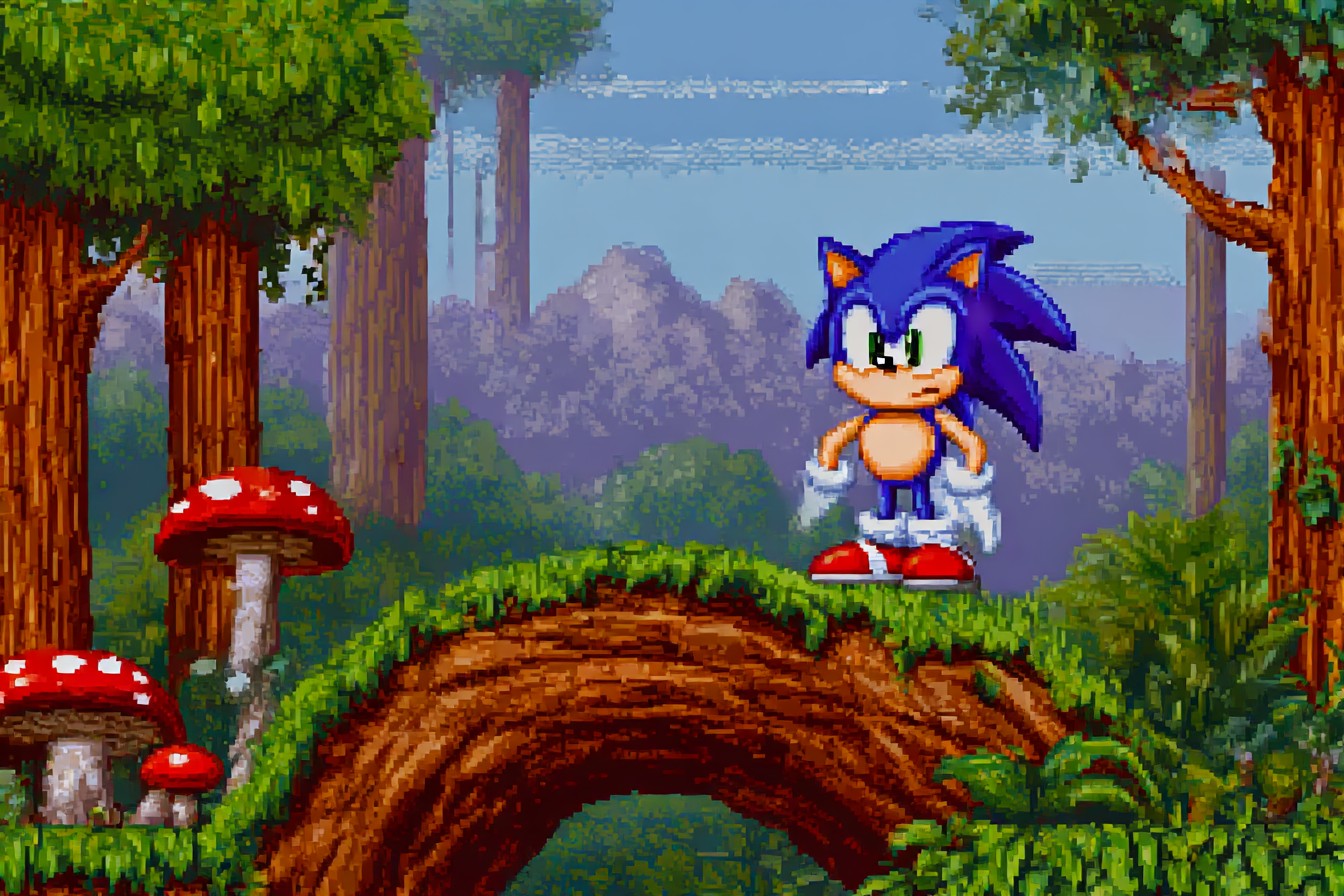
Joe here. This is the hill I’ll die on: Sonic the Hedgehog 2 is not just the best Sonic game – it’s the game that justified buying a Mega Drive instead of a SNES. I’ve had this argument approximately seven hundred times with Carl, and I’m having it again now in writing so there’s permanent evidence that I’m right.
Released in November 1992 on “Sonic 2’s Day” (yes, Sega created a global launch event for a video game), this sequel fixed everything awkward about the original while establishing Sonic as gaming’s genuine speed-based platformer. The addition of Tails, the perfection of special stages, and Chemical Plant Zone’s existence created the definitive Sega experience.
What Sonic 2 Got Right
The original Sonic had brilliant ideas wrapped in clunky execution. You’d build speed only to hit instant-death spikes you couldn’t see coming. Springs would launch you into enemies before you could react. The special stages required rotating an entire pseudo-3D environment and mostly resulted in motion sickness.
Sonic 2 fixed all of it. The spin dash meant you could generate speed from a standing position instead of needing a running start. Level design actually flowed – speed sections led into platforming challenges that tested reflexes rather than punishing momentum. The special stages became half-pipe races where collecting rings and avoiding bombs felt skill-based rather than luck-dependent.
Chemical Plant Zone remains peak Sonic level design. The industrial setting with pink liquid that slows Sonic down, the loops and corkscrews that rewarded maintaining speed, the perfectly-placed springs that launched you into alternate routes – it demonstrated what Sonic gameplay could be when everything clicked. That underwater section in Act 2 where you’re racing against drowning while navigating tight corridors? That’s perfect tension.
Emerald Hill Zone’s opening notes establish exactly what kind of experience you’re getting. It’s bright, it’s fast, it promises adventure without taking itself seriously. Then Mystic Cave Zone shows up with actual traps and bottomless pits, creating the difficulty curve Sonic 1 couldn’t manage. The level variety keeps surprising – from Casino Night’s slot machines to Oil Ocean’s rising platforms to Metropolis Zone’s lengthy industrial gauntlet.
The Tails Problem and Solution
Adding Miles “Tails” Prower as Sonic’s sidekick was marketing genius and gameplay complication. In single-player mode, Tails follows Sonic automatically, occasionally dying to traps you’ve already passed, providing unlimited continues through his respawning. For solo players, he’s mostly irrelevant – helpful for newer players who need the extra hits, ignored by experienced players going for speed.
The two-player split-screen mode, however, transformed Sonic into competitive gaming. Racing through truncated versions of levels while your screen ran at approximately four frames per second created its own chaotic appeal. The terrible performance became part of the charm – if you could win while everything stuttered and jerked, you’d clearly mastered the controls.
Playing as Tails in single-player mode (possible through options) revealed how much the game was built around Sonic’s speed. Tails’ flight ability broke level design in ways developers clearly didn’t anticipate. You could skip entire sections by flying over them, removing challenge but revealing alternate routes. It wasn’t the intended experience, but it was fascinating to explore.
Special Stages That Actually Work
The half-pipe special stages remain Sonic’s best attempt at bonus content. Collect the required rings while avoiding bombs in a 3D environment that curved around you, building speed to reach the Chaos Emerald at the end. The perspective worked, the controls felt responsive, and success felt earned rather than random.
Collecting all seven Chaos Emeralds unlocked Super Sonic – golden invincibility powered by rings that transformed the game into pure speed-running. It wasn’t balanced (you’re essentially immortal with enough rings), but watching Sonic blast through levels as a golden streak felt like earning god mode through skill rather than cheat codes.
The checkpoint system that let you retry special stages without replaying entire levels was quality-of-life design ahead of its time. Fail a special stage in Sonic 1? Too bad, replay the whole level and hope you do better next time. Fail in Sonic 2? Hit the checkpoint again and try immediately. This small change made collecting all emeralds feel achievable rather than tedious.
Boss Fights That Miss the Mark
Robotnik’s boss fights were Sonic 2’s weakest element. Most required hitting the same pattern eight times with minimal variation. The Death Egg Zone’s final boss rush impressed with scale – fighting Silver Sonic then the giant Robotnik mech – but the actual battles were more patience than skill.
The Mystic Cave Zone trap where you could fall into a pit with no escape unless you had enough rings to survive until time-out remains one of gaming’s cruelest design decisions. It’s not challenging gameplay – it’s just waiting to die. The developers knew exactly how mean this was and included it anyway.
Wing Fortress Zone’s difficulty spike caught everyone off-guard on first playthrough. The platforming precision required, the instant-death lasers, the aggressive enemy placement – it was Sonic 2 reminding you this was still a challenging game underneath the colourful exterior. Getting through it without losing all your lives took practice and patience.
The Soundtrack That Defined 16-Bit Audio
Masato Nakamura’s soundtrack elevated Sonic 2 beyond typical game audio. Chemical Plant Zone’s driving bassline, Emerald Hill’s cheerful adventure theme, Casino Night’s neon-soaked jazz – each track matched its level’s personality perfectly while standing alone as excellent music.
The sound design reinforced every action. Ring collection had satisfying chimes, speed had appropriate whooshing, hitting enemies provided punchy feedback. Even losing rings created distinctive audio panic as you scrambled to recollect them before they vanished. The audio cues became reflexive – you knew what was happening by sound alone.
The Western and Japanese versions featured different soundtracks, with the Japanese release offering alternate takes on familiar themes. Both versions work beautifully, with player preference usually matching whichever version they experienced first. The fact that both soundtracks hold up equally well speaks to the quality of composition.
Why Sonic 2 Still Matters
Sonic the Hedgehog 2 proved Sega could deliver on ambitious promises. The first game established Sonic’s potential. The second game realized it completely. Every system-seller needs a game that justifies the hardware purchase – Sonic 2 was that game for Mega Drive.
The level design philosophy influenced platform games for decades. The blend of speed and precision platforming, the multiple routes rewarding skilled play, the momentum-based gameplay that punished stopping – these ideas became standard for action platformers. Games still borrow Sonic 2’s approach to creating flow through level design.
For players who grew up with Mega Drive, Sonic 2 represents the console’s identity. It’s the game you’d show friends to prove Sega could compete with Nintendo. It’s the experience that justified the blast processing marketing. It’s the title that made “Sega does what Nintendon’t” feel true rather than empty corporate boasting.
The Legacy and Modern Access
Sonic 2 has been ported to everything with a screen. The mobile version by Christian Whitehead actually improves the original with widescreen support and additional features. The Sega Ages release on Switch offers multiple versions with quality-of-life improvements. You can play Sonic 2 on basically any platform imaginable, and most ports respect the original while adding modern conveniences.
The game influenced every subsequent Sonic title while rarely being matched in quality. Sonic 3 & Knuckles expanded the formula successfully, but later 3D Sonic games struggled to translate the 2D speed-based gameplay into three dimensions. Sonic Mania returned to Sonic 2’s level design philosophy, proving the core concepts still work perfectly decades later.
Speed-running communities continue finding new strategies and routes through Sonic 2’s levels. The game’s mechanics allow for impressive optimization, with skilled players completing the entire game in under twenty minutes. The depth beneath the accessible surface keeps revealing itself even thirty years after release.
The Verdict
Sonic the Hedgehog 2 is essential 16-bit gaming. It fixed the original’s issues, established Sonic’s identity, and delivered level design that remains impressive decades later. The Chemical Plant Zone music alone justifies its existence, but the complete package represents everything great about Mega Drive gaming.
Is it better than Sonic 3 & Knuckles? That’s another argument entirely. But for cultural impact, for proving Sega belonged in the conversation with Nintendo, for creating a genuine mascot that could stand alongside Mario – Sonic 2 achieved everything it needed to achieve.
I’m right about this. Carl can argue all he wants about how Yoshi’s Island had better graphics or whatever, but Sonic 2 defined what Mega Drive could do when Sega delivered on their promises. This is the game that made us Sega fans for life, even as the company made increasingly questionable decisions in the decades that followed.
Now if you’ll excuse me, I need to go play through Chemical Plant Zone again just to prove I can still do it without dying. The muscle memory never fades.