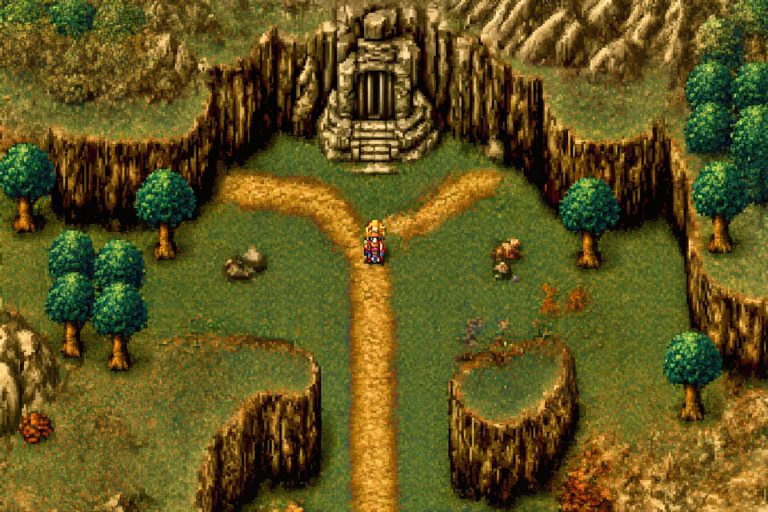

Release Date: December 6, 1992 (Japan) | Developer: Square | Platform: Super Famicom/SNES (16-bit cartridge) | ROM Size: 8 Megabits (1 MB total ROM) | Playtime: Main story 30–35 hours, Main + extras ~50 hours, Completionist 100+ hours | Sales: 2.07M (Japan), 2.5M+ worldwide (original + ports) | Critical Reception: 34/40 (Famitsu, 1992), Metacritic 86/100 (Pixel Remaster), ~87/100 (GBA Advance)
I discovered retro gaming at forty years old. No childhood nostalgia clouding my judgment. No “I remember this from when I was eight” excuses. Just me, a construction foreman, looking at these games and asking: does this actually work?
Final Fantasy V is the answer to a question nobody asked: what if we took the job system and made it actually deep?
The problem with asking this question in 1992 was timing. Final Fantasy V released in Japan on December 6, 1992, to critical acclaim—34/40 from Famitsu.(Wikipedia) It sold 2.07 million units in Japan and around 2.5 million worldwide including ports.(VGSales)(ActivePlayer) But the West never got to play it.
Not until PlayStation. Not until September 30, 1999. Seven years after release. By then, the context was completely different.(Wikipedia)
What They Actually Built
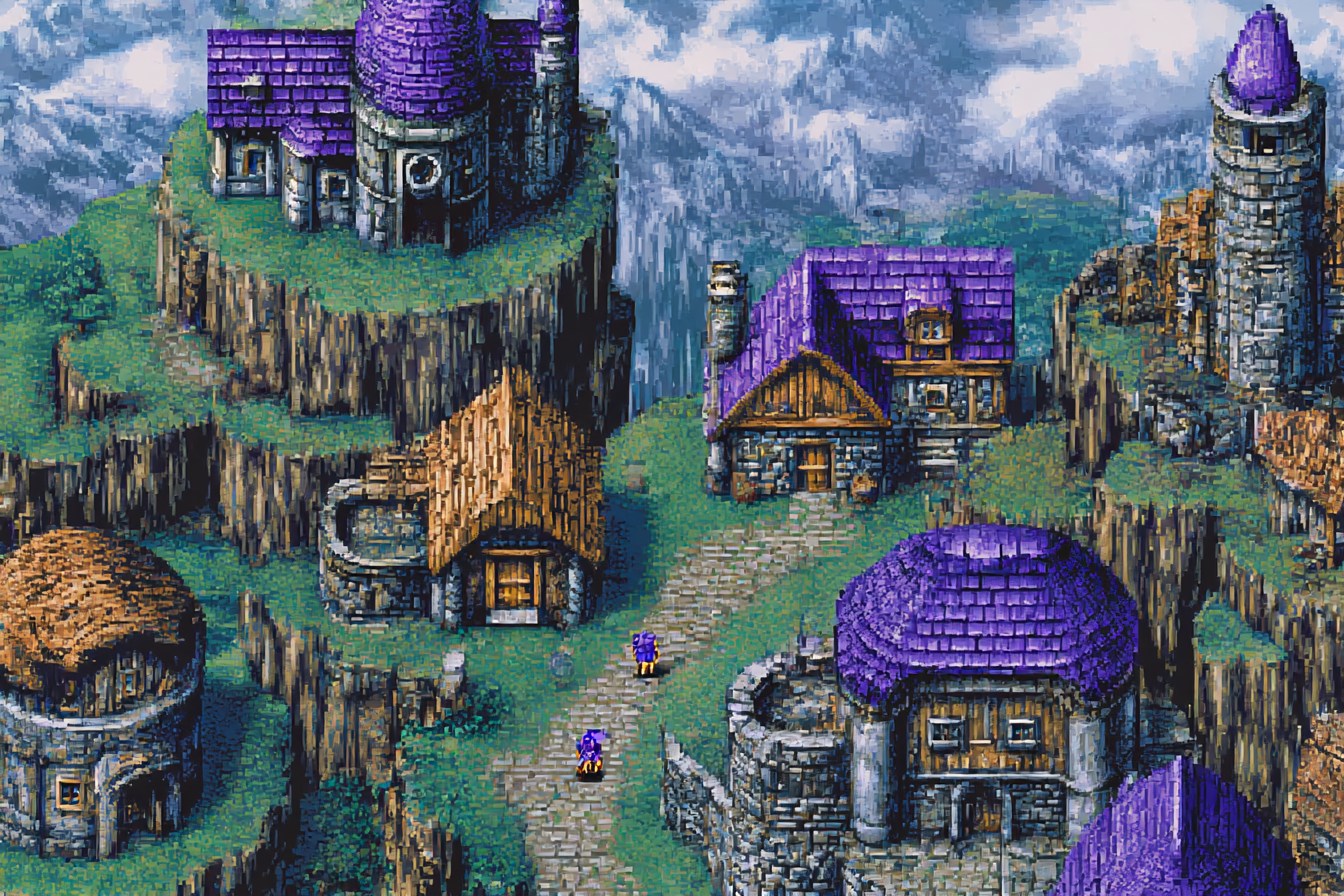
Twenty-two jobs. Not classes. Jobs. The distinction matters.
A job in Final Fantasy V isn’t just a role you pick at character creation. It’s a flexible identity you can switch at will. The Ability Point system meant you could learn abilities from one job, switch to another job, and keep those abilities while gaining new ones.(Final Fantasy Fandom)
That’s the design innovation here. You’re not locked into choices. You’re building a character through experimentation.
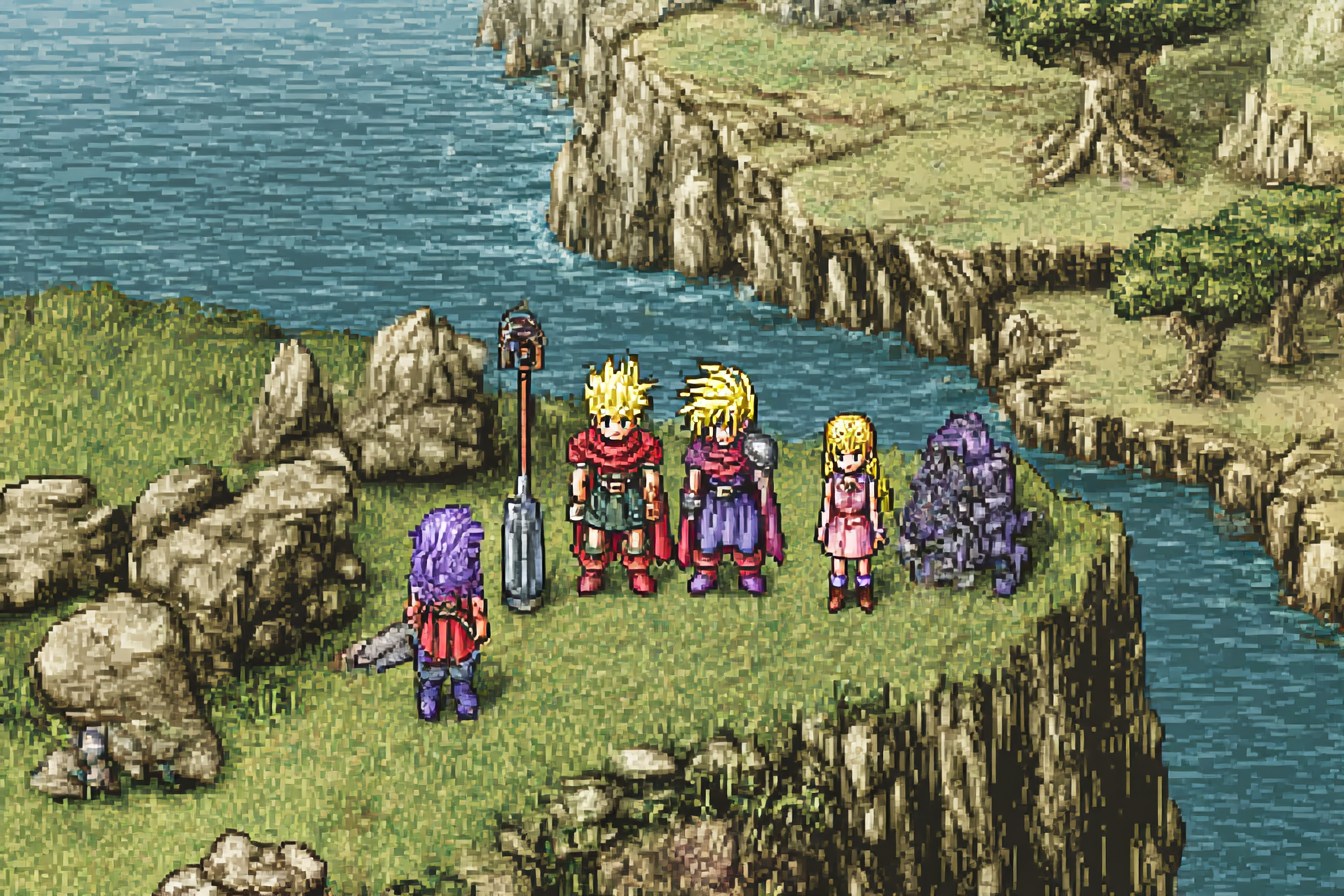
Want a Black Mage with Monk martial arts? The game lets you do it. Want a Thief with White Magic? Absolutely possible. Want something genuinely broken like a Dancer with every job’s best ability stacked together? The game doesn’t stop you—it expects you to try.(Final Fantasy Fandom)
The cartridge was 8 Megabits (1 MB total ROM) supporting expansive job data and world maps.(Final Fantasy Fandom)(Wikipedia) That’s not massive space. Every job had to be efficient. Every ability had to pull its weight. The developers couldn’t afford bloat.
So they built elegantly instead.
Why The Job System Works
Most job systems give you flexibility through choice. You pick a job, you commit. Flexibility comes from picking the right job for the right situation.
Final Fantasy V flips this: flexibility comes from mastery. The more jobs you’ve experienced, the more combinations you unlock. There’s a skill floor that encourages experimentation—you won’t break the game by accident. But there’s no skill ceiling. The game just keeps scaling with your creativity.
Main story playtime is 30–35 hours.(Final Fantasy Fandom) That’s reasonable. Main plus extras extends to around 50 hours.(Final Fantasy Fandom) Completionist runs pushing 100+ hours for job mastery, ABP grinding, and superbosses.(Final Fantasy Fandom)
Here’s where I need to be honest: the story is lighter than Final Fantasy IV. Significantly lighter. The emotional weight isn’t there. You’re not watching characters transform through personal tragedy. You’re watching an adventure unfold, and it’s charming, but it’s not devastating.
But that’s fine. Not every game needs to destroy you emotionally. Sometimes a game just needs to be genuinely fun. To respect the player’s time. To reward curiosity without punishing exploration.
Final Fantasy V does that. Ruthlessly.
Why The West Didn’t Get This
Square didn’t release Final Fantasy V in North America originally because they perceived complexity and the job system as barriers to Western audiences.(Wikipedia) That’s the official reason. And it’s probably true.
But it’s also a fascinating historical failure. Square was being protective of their Western audience. “They won’t understand the job system. They want simpler narratives. They need to be guided.” So they skipped V and went to IV (localized as FFII).
The West got the cinematic, emotional Final Fantasy IV instead. And that shaped everything. Western audiences learned that JRPGs were about narratives and character arcs. They learned emotional investment mattered more than mechanical depth.
By the time Final Fantasy V arrived on PlayStation as part of the Anthology compilation on September 30, 1999, a generation of Western gamers had already formed opinions about what JRPGs were.(Wikipedia) Final Fantasy V released into a market that had already moved on. It was a cult classic on arrival, not a mainstream revelation.
Does It Hold Up Without Nostalgia?
Yes. Completely.
Modern Pixel Remaster scores sit at Metacritic 86/100, with the GBA Advance version around 87/100.(Wikipedia)(Final Fantasy Fandom) These scores acknowledge the job depth and variety, and the game is praised as a cult favorite post-localization.(Wikipedia)
The job system is cleaner than Final Fantasy VI’s Esper system. It’s more flexible. The magic progression feels earned rather than arbitrary. The boss design punishes lazy play but rewards creative thinking.
Early ports included PlayStation (Japan 1998, and as Final Fantasy Anthology for the full collection).(Wikipedia)(Final Fantasy Fandom) Later ports on Saturn, Game Boy Advance (October 12, 2006), iOS/Android (2013), and Pixel Remaster (2021) added jobs like Blue Mage and Oracle, bug fixes, and mini-games.(Wikipedia)(Final Fantasy Fandom)
The interface is from 1992, so it’s clunky by modern standards. Navigating menus to switch jobs mid-battle requires planning. The random encounter rate is high. The difficulty occasionally spikes in ways that feel unfair rather than challenging.
But the core design—the permission to experiment, the flexibility of the job system, the respect for player agency—that doesn’t become less elegant with time. If anything, it becomes more elegant as gaming gets more linear and prescriptive.
Why I Don’t Apologize For This Rating
I approach games without nostalgia. I refuse to forgive them just because they’re old. That means I also refuse to punish them for being old.
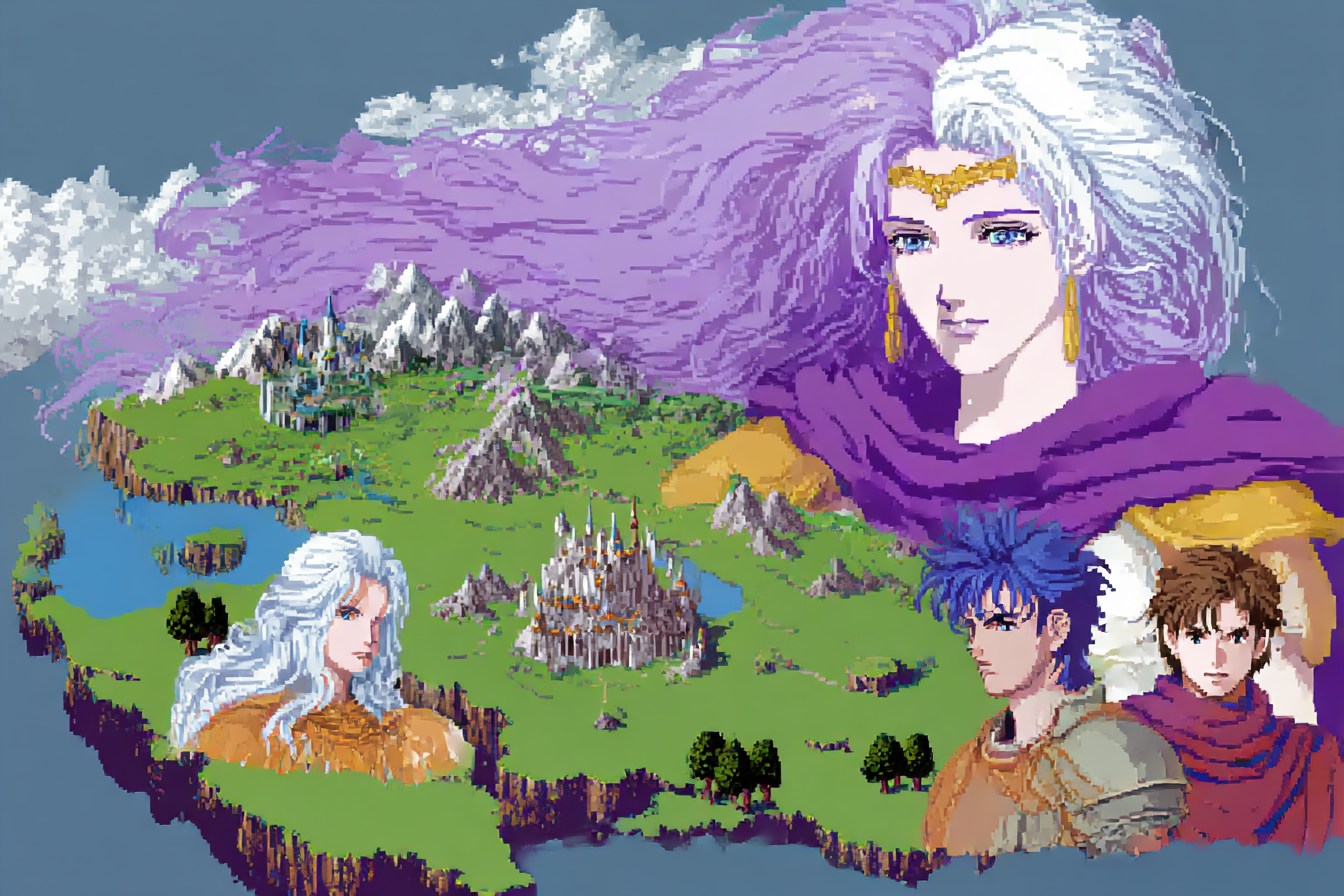
Final Fantasy V is a well-designed game. The job system works. The flexibility is genuine. The boss design respects your intelligence. The exploration rewards curiosity. It’s not perfect—the story is lightweight, the difficulty occasionally frustrates, the encounter rate is brutal.
But it’s honest about what it is. It’s a game about systems and exploration, not emotional narrative. And it executes that vision cleanly.
That’s all I ask of a game: execute your vision cleanly. Final Fantasy V does that. It’s why it’s criminally underrated despite modern critical appreciation. It’s why discovering it without nostalgia makes you realize: the West missed out by not getting this in 1992.
Rating: 8/10 – Job system perfection that the West took seven years to experience
Return to our full Final Fantasy rankings →

Timothy discovered retro gaming at forty and never looked back. A construction foreman by day and collector by night, he writes from a fresh, nostalgia-free angle—exploring classic games with adult curiosity, honest takes, and zero childhood bias.
0 Comments