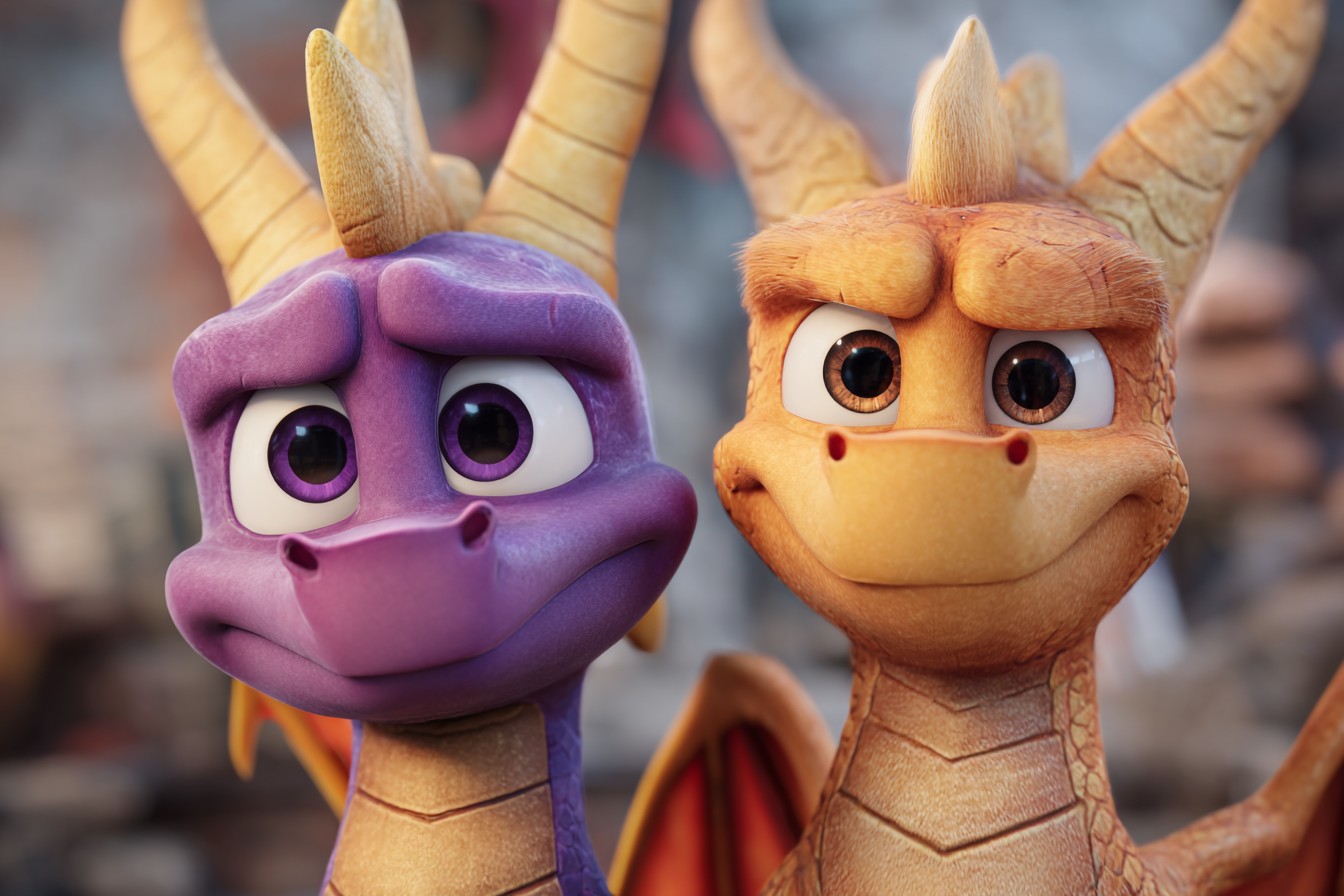

I expected to see a simple, yet charming 3-D Platformer when I opened up Spyro the Dragon. However, what I got was a game that knows that the best method of delivering quality is to use the least amount of material possible to achieve your desired outcome; elegance. Coming from Construction I have a lot of respect for simplistic designs that just work.
That’s all Spyro’s Mechanical Tool Kit is: he jumps, he breathes fire, he charges at you with his horns, and he flies for a few seconds. There are no fancy power-ups to accidentally make the player overestimate themselves. There aren’t even any complex special attacks. The same 4 mechanics are applied in unique situations throughout an array of progressively difficult levels. This game was designed with the player’s intelligence and their time being mutually exclusive.
What does Spyro The Dragon Do?
You jump around the world as Spyro, a tiny dragon who breathes fire. The controls teach you motion: move, jump, and attack. Within 5 seconds of picking up the controller, you will know how to play Spyro. The joy comes with how those simple mechanics are utilized in wildly creative ways to challenge you throughout the game’s levels.
Each level is stuffed with colour, creativity, and challenge. World design is impeccable. The graphics are clean and crisp, giving each area a feeling of personality. Level design doesn’t make you feel lost or overwhelmed. There are rarely any situations where controlled chaos is the goal. You’re given obstacle courses to traverse through and brain teasers to figure out.
Enemy designs and placement are often used in creative ways to challenge your platforming skills or punish you if you’re careless. It’s all fair gameplay. Storywise there isn’t much going on outside of the evil Gnasty Gnorc wanting to turn every dragon into a crystal, and you’re stopping him. Aside from that narrative nugget, you’re flying through levels acquiring gems.
You die, you learn, and you overcome. Each level feels natural to progress through: not too hard, not too easy. There is a certain level of freedom here as well. While the main path through each world is designed with precision, there are enough openings to explore and play around with Spyro’s capabilities.
Levels are generously equipped with gems to locate and collect. Finding every last gem in each world is not required to finish the game, but recommended to experience everything Spyro has to offer.
The Philosophy of Elegant Design
The thing I admire most about Spyro is how it mastered being charming. Characters throughout the game are endearing to watch. Level design isn’t cheesy or trying too hard to implement that lightheartedness from the characters into their surroundings. Combat is simple: you hit things until they stop moving.
The wizards that guide you through your adventure don’t beat you over the head with constant advice either. Yes, each level is designed to teach you the game’s mechanics. None of it ever feels irrelevant or stuffed in there for no reason.
Camera frequently is Spyro’s weakest attribute, yet it’s still fairly manageable considering the age this game was made. There are times where the camera may find you stuck on a model but for the most part Spyro The Dragon is extremely generous.
Spyro will teach you the basics of being a dragon. It doesn’t expose you to crazy mechanics that could potentially overcomplicate your play session. You learn how to jump properly, how to attack effectively, when to use your fire attack, and how to finish off enemies with a horn charge.
Other than mastering aerial combat mechanics you’ll also need to figure out how to maneuver Spyro through his environment.
Each area provides you with different vertical challenges. Whether it be reaching a rarely placed checkpoint gem or finding the exit door to finish the stage, level design keeps you guessing exactly how high Spyro can go.
Spyro Is Old But Gold
Graphics are dated, yes. But they’ve aged like a fine wine. Character designs are memorable and enjoyable to look at. Colour palette varies from world to world, but each level within those worlds feel related. Naughty Dog nailed the details necessary to expand each level you explore.
Music during your adventure is catchy and sets each world apart. Enemy placement and enemy design feel satisfying to overcome. Sound effects from enemies and Spyro himself help provide sufficient audio information on where to go and where to not.
Basic gameplay components such as controls and level layout are where Spyro The Dragon truly shines. Controls feel tight and responsive. Each level is methodically designed to challenge you, but not overly test your patience. Atari taught us that gamers have the attention span of a fruit fly. Spyro understands that you will lose your progress at times and it’s fine.
Obstacles will punish you for your mistakes, but you’ll quickly learn from those mistakes and surpass them.
Spyro The Dragon on PC?
One of Spyro’s biggest flaws when you play it on modern platforms is how small the computer keyboard and mouse controls feel. Button prompts are extremely cramped and you’ll find yourself performing moves unintentionally.
The charm of this game still shines through but those wanting to fully enjoy Spyro The Dragon are encouraged to play this on a PlayStation. Playing on the original hardware teaches you how fantastic Spyro truly is.
Spyro The Dragon Review Conclusion
Spyro The Dragon is a fantastic 3D Platformer that every gamer can enjoy. Beautiful colour sprinkled into every level will keep your eyes entertained while its catchy music will have you humming throughout your day.
Challenge is there, but it doesn’t overwhelm you with frustration. Difficulty on each world progressively gets harder but you’ll learn from your deaths and conquer each world with ease. Basic gameplay loops have never felt more rewarding than they do in Spyro.
Simple concepts taught to you in Spyro The Dragon will improve the way you view game design. If there was a list of games I consider “required playing” this would be at the top.
Spyro may not be for everyone. It’s not going to blow you away with its groundbreaking controls and innovation but boy does it set a standard that few sporting similar gameplay concepts can match.
Age tasted how games should play.
Platforms: PC, PlayStation, Nintendo 64 | Reviewed On: Nintendo Switch | Also Available On: PlayStation, PC, Nintendo 64
Rating: 9/10
See our Top 10 PS1 games of all time

Timothy discovered retro gaming at forty and never looked back. A construction foreman by day and collector by night, he writes from a fresh, nostalgia-free angle—exploring classic games with adult curiosity, honest takes, and zero childhood bias.
0 Comments