Look, ranking the ten best SNES games nearly ended friendships. Carl had to mediate arguments that got genuinely heated. Joe kept trying to downrank everything because of his Sega loyalty. Tim wrote a manifesto about Chrono Trigger despite only discovering it five years ago. Sam defended Street Fighter II with the intensity of a lawyer arguing a murder case. But after three weeks of arguments, passive-aggressive Slack messages, and one Zoom call where John wouldn’t shut up about Amiga games being better, we finally agreed on these ten games.
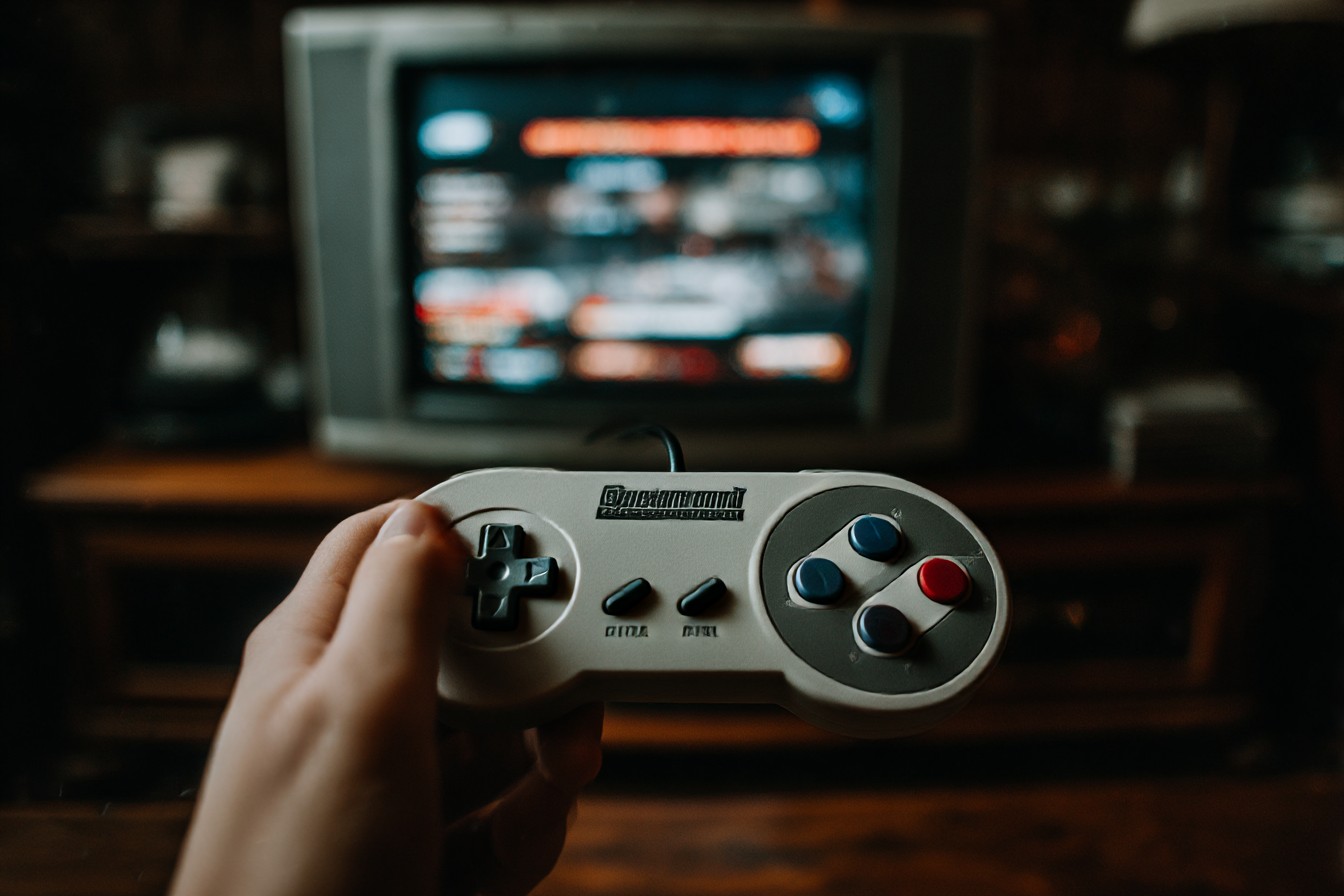
The Super Nintendo launched in 1991 and absolutely crushed it. Mode 7 graphics that made our Sega-loving hearts quietly jealous. Sound chips that produced actual music instead of electronic screeching. A controller that felt right in your hands. And a games library so absurdly strong that even the most devoted Genesis defenders among us had to admit Nintendo nailed it.
Quick Rankings
- Chrono Trigger – Time-traveling RPG perfection
- Super Metroid – Atmospheric exploration masterclass
- The Legend of Zelda: A Link to the Past – 2D Zelda perfected
- Super Mario World – The launch title that proved everything
- Final Fantasy VI – Epic storytelling that still resonates
- Super Mario RPG – Nintendo and Square’s brilliant team-up
- Earthbound – Weird, wonderful, emotionally devastating
- Donkey Kong Country – Visual spectacle with substance
- Street Fighter II Turbo – The fighting game that mattered
- Super Mario Kart – Friendship destruction simulator
1. Chrono Trigger (1995)
Genre: JRPG | Developer: Square
Chrono Trigger is what happens when you put Final Fantasy’s Hironobu Sakaguchi, Dragon Quest’s Yuji Horii, and Dragon Ball’s Akira Toriyama in a room and tell them to make the best RPG possible. They absolutely delivered. Time travel that actually affected the story, multiple endings based on when you defeated the final boss, combat that felt dynamic despite being turn-based, and a soundtrack that still gets covered by orchestras today.
What makes it untouchable: The New Game+ system that let you carry your progress into subsequent playthroughs to unlock different endings. Every era you visited felt distinct and alive. Your actions in 600 AD genuinely changed what you’d find in 1000 AD. This wasn’t just clever mechanics – it was storytelling through gameplay done perfectly. And that ending? Still hits hard.
Still holds up? Many consider it the greatest JRPG ever made. After replaying it for this list, we can’t argue.
[Read Tim’s passionate defense of Chrono Trigger as gaming’s peak →]
2. Super Metroid (1994)
Genre: Action-Adventure | Developer: Nintendo R&D1
Super Metroid created atmosphere so thick you could cut it with Samus’s arm cannon. The music was unsettling. The environments felt genuinely hostile. The sense of isolation as you explored deeper into planet Zebes was something most games still can’t replicate. John wouldn’t shut up about this game until we replayed it, and damn it, he was right. Once you mastered the wall jumping, space jumping, and grapple beam, Samus moved like a dream.
What makes it untouchable: The map design that rewarded curiosity without hand-holding. Finding a new power-up meant backtracking through familiar areas with fresh eyes, spotting passages you’d walked past twenty times. No quest markers telling you where to go. No tutorials explaining every mechanic. Just you, the planet, and your own sense of exploration. The escape sequence at the end still gets hearts racing.
Still holds up? It literally defined the “Metroidvania” genre. Every indie dev making exploration games is chasing what Super Metroid perfected in 1994.
[Read John’s deep-dive on Super Metroid’s atmospheric mastery →]
3. The Legend of Zelda: A Link to the Past (1991)
Genre: Action-Adventure | Developer: Nintendo
A Link to the Past was our only unanimous choice, which immediately made us suspicious of each other. Were we getting soft? But no – this game really is that perfect. The Light World and Dark World mechanic was genius design. Two complete versions of Hyrule that mirrored each other, but everything twisted and corrupted in the Dark World. Every dungeon introduced items that opened up new puzzle possibilities. The Master Sword actually felt legendary instead of just being “the good sword.”
What makes it untouchable: Dungeons that required you to think spatially and creatively. Boss fights that tested whether you’d actually mastered whatever item you’d just found. An overworld packed with secrets – heart pieces hidden under rocks, caves tucked behind trees, upgrades scattered everywhere. This was adventure gaming at its absolute peak, and the fact we all agreed on it might be the most shocking thing on this list.
Still holds up? Still the gold standard every 2D Zelda gets compared to. Breath of the Wild is brilliant, but A Link to the Past is timeless.
[Read how A Link to the Past united even our argumentative crew →]
4. Super Mario World (1990)
Genre: Platformer | Developer: Nintendo
Super Mario World came bundled with the SNES, and thank god because this was Nintendo announcing exactly what their new hardware could do. The cape power-up that let Mario fly across entire levels if you built up enough speed. Yoshi, who felt like an actual companion instead of just a power-up. Secret exits hidden everywhere that opened up the Star Road and turned casual players into obsessive level-hunters trying to find that 96th completion star.
What makes it untouchable: Level design that developers still study today. Early stages teach you mechanics naturally through gameplay. Later stages expect you to have mastered everything simultaneously. The Special Zone that cranked difficulty up to genuinely challenging levels for players who thought they’d beaten everything. And those ghost houses with their twisted layouts and fake doors? Still brilliant.
Still holds up? Feels as tight and responsive today as it did in 1990. The controls are perfect. The level design is perfect. It’s just… perfect.
[Read Tim’s experience with Super Mario World and why it justified discovering retro gaming →]
5. Final Fantasy VI (1994)
Genre: JRPG | Developer: Square
Final Fantasy VI – which North America got as Final Fantasy III because numbering was apparently too complicated – pushed the SNES so hard you half-expected the cartridge to start smoking. Fourteen playable characters with their own storylines and development arcs. An opera scene that proved games could be genuinely artistic. A villain who actually succeeds halfway through the game and breaks the entire world. Square was showing off, and we’re still grateful.
What makes it untouchable: That moment when Kefka wins. When the world literally ends and you realize the second half of the game takes place in a post-apocalyptic wasteland where everything went wrong. The Esper magic system that let you customize how each character developed. The multiple character scenarios that let you experience the story from different perspectives. The Nobuo Uematsu soundtrack that orchestras still perform. This was ambition meeting execution perfectly.
Still holds up? The story and character moments hit as hard today as they did in 1994. Kefka remains one of gaming’s greatest villains.
[Read Joe’s journey through Final Fantasy VI and why Kefka deserves villain of the decade →]
6. Super Mario RPG: Legend of the Seven Stars (1996)
Genre: RPG | Developer: Square
Nintendo and Square teaming up to make an RPG felt like finding out your two favorite bands were doing a collaboration album. The timing-based combat where pressing buttons at the right moment increased damage or reduced incoming attacks added actual skill to turn-based battles. The humor that poked fun at Mario conventions while respecting them. The isometric 3D graphics that showed what the SNES could still accomplish even as the N64 was about to launch.
What makes it untouchable: Square took Mario’s world and gave it actual depth. Character development for Mario, Bowser, and Peach. Original characters like Geno and Mallow who fit perfectly into the Mushroom Kingdom lore. The story about Star Pieces and Smithy that felt epic without losing Nintendo’s trademark charm. And recruiting Bowser to your party? That moment was legitimately brilliant game design.
Still holds up? The humor, timing-based combat, and charm haven’t aged a day. This is how you do accessible RPGs without dumbing them down.
[Read John’s analysis of how Mario RPG balanced accessibility with depth perfectly →]
7. Earthbound (1994)
Genre: JRPG | Developer: Ape/HAL Laboratory
Earthbound at number seven nearly caused Joe to have an actual breakdown. He wanted it higher. He threatened to quit. He wrote approximately 47 Slack messages explaining why we were wrong. But here’s the thing – Earthbound is brilliant precisely because it’s so weird and personal that ranking it objectively is basically impossible. A modern-day RPG set in a twisted version of America. Fourth-wall-breaking humor mixed with genuinely unsettling moments. A final boss you defeat by praying. Music that shifts from catchy to creepy to heartbreaking.
What makes it untouchable: It dared to be different when every other RPG was trying to be Final Fantasy. The telephone save system where you called your dad. The Mr. Saturn characters that were simultaneously adorable and deeply strange. The Starmen enemies that were genuinely creepy. The ending that still makes grown adults get a bit misty-eyed. This game had heart, weirdness, and emotional moments that most games still can’t replicate.
Still holds up? The quirky charm and emotional gut-punches feel completely timeless. This is one of gaming’s most important titles because it proved weird could work.
[Read Joe’s comprehensive, slightly unhinged love letter to Earthbound →]
8. Donkey Kong Country (1994)
Genre: Platformer | Developer: Rare
Donkey Kong Country’s pre-rendered graphics looked absolutely impossible on 16-bit hardware. We’re talking detailed character models, atmospheric backgrounds, water effects that seemed like they belonged on the next generation of consoles. Rare was showing off what the SNES could do with clever tricks and artistic talent. But here’s the thing everyone forgets – beyond the visual spectacle, the level design was legitimately brilliant.
What makes it untouchable: Mine cart stages that required split-second timing and memorization. Underwater levels that actually controlled well – genuinely rare in 90s platformers. Animal buddies like Rambi the Rhino and Squawks the Parrot that fundamentally changed how levels played. And that David Wise soundtrack? Aquatic Ambience alone justified this game’s existence. The difficulty curve that started accessible and ended genuinely challenging for completionists hunting those bonus rooms.
Still holds up? The graphics look dated now, obviously. But the level design, music, and gameplay remain excellent.
[Read Tim’s defense of Donkey Kong Country as more than just a pretty face →]
9. Street Fighter II Turbo (1993)
Genre: Fighting | Developer: Capcom
Street Fighter II on SNES was the reason controllers got thrown and friendships got tested. Sam presented actual tournament footage from 1993 to defend this game’s inclusion, complete with frame data and win-rate statistics. This wasn’t some watered-down port of the arcade version – this was legitimate arcade-quality fighting at home, and it felt revolutionary. Eight fighters initially, each with genuinely different play styles and strategies.
What makes it untouchable: The Turbo version that fixed the original’s slower pace and let you play as the boss characters. Finally controlling Balrog, Vega, Sagat, and M. Bison felt like getting the complete experience. The two-player versus mode that destroyed countless afternoons as players figured out combos, learned to counter each character’s moves, and developed their own fighting styles. This was competitive gaming before esports existed.
Still holds up? The gameplay is still perfectly balanced and endlessly replayable. Modern fighting games owe everything to what Street Fighter II established.
10. Super Mario Kart (1992)
Genre: Racing | Developer: Nintendo
Super Mario Kart nearly didn’t make this list because Joe called it “just a racing game with shells,” which led to Sam hosting an impromptu Mario Kart tournament where Joe finished dead last in every single race. After that humiliation, he quietly agreed it deserved inclusion. Mode 7 graphics made the tracks rotate and scale in ways that felt genuinely revolutionary. Eight racers with different stats and handling characteristics. Battle Mode that turned friendly gaming sessions into genuine blood feuds.
What makes it untouchable: The item balance was absolutely perfect. Red shells for targeted attacks. Green shells for skilled ricochet shots. Banana peels for strategic placement. Lightning that shrunk everyone else. Every race came down to that final lap scramble where anything could happen and frequently did. The track design that mixed straightforward circuits with technical challenges – Rainbow Road’s difficulty, Ghost Valley’s gaps, Bowser Castle’s hazards.
Still holds up? The gameplay is still addictively competitive, though modern Mario Kart entries have obviously surpassed it technically.
[Read Sam’s investigation into how Mario Kart destroyed more friendships than Monopoly →]
The Games That Didn’t Make It (And Why We’re Still Bitter)
Creating this list meant leaving off incredible games that deserved consideration. Super Castlevania IV with its gothic excellence. Mega Man X and its perfect action platforming. ActRaiser’s genre-blending brilliance. Final Fantasy IV’s character-driven storytelling. Kirby Super Star’s variety and charm. Secret of Mana’s cooperative adventuring.
We argued about every single one of these. Tim went to bat hard for Super Castlevania IV. John insisted ActRaiser deserved a spot. Sam wanted more fighting game representation. Joe kept pushing Earthbound higher until we told him to shut up. But in the end, these ten games represent not just quality – they represent the titles that defined what the SNES could accomplish and influenced gaming for decades afterward.
If your favorite didn’t make the list, we get it. The SNES library was so ridiculously strong that any top ten is going to leave off somebody’s cherished childhood memory. Feel free to yell at us in the comments. We’re used to it. We’ve been yelling at each other about this for weeks.
Individual game deep-dives written by whichever New Player Ready crew member fought hardest for that game’s inclusion. Because passion should be rewarded, even when it’s slightly unhinged.