Here’s something I teach in my history classes – sometimes understanding why something failed teaches more than understanding why something succeeded. The Dreamcast’s failure is more instructive than its success because it proves that making excellent games isn’t enough to win console wars. Sega created a brilliant console, supported it with genuinely excellent software, built an online infrastructure years ahead of competitors, and still lost completely. Understanding why requires understanding that console dominance isn’t determined solely by software quality.
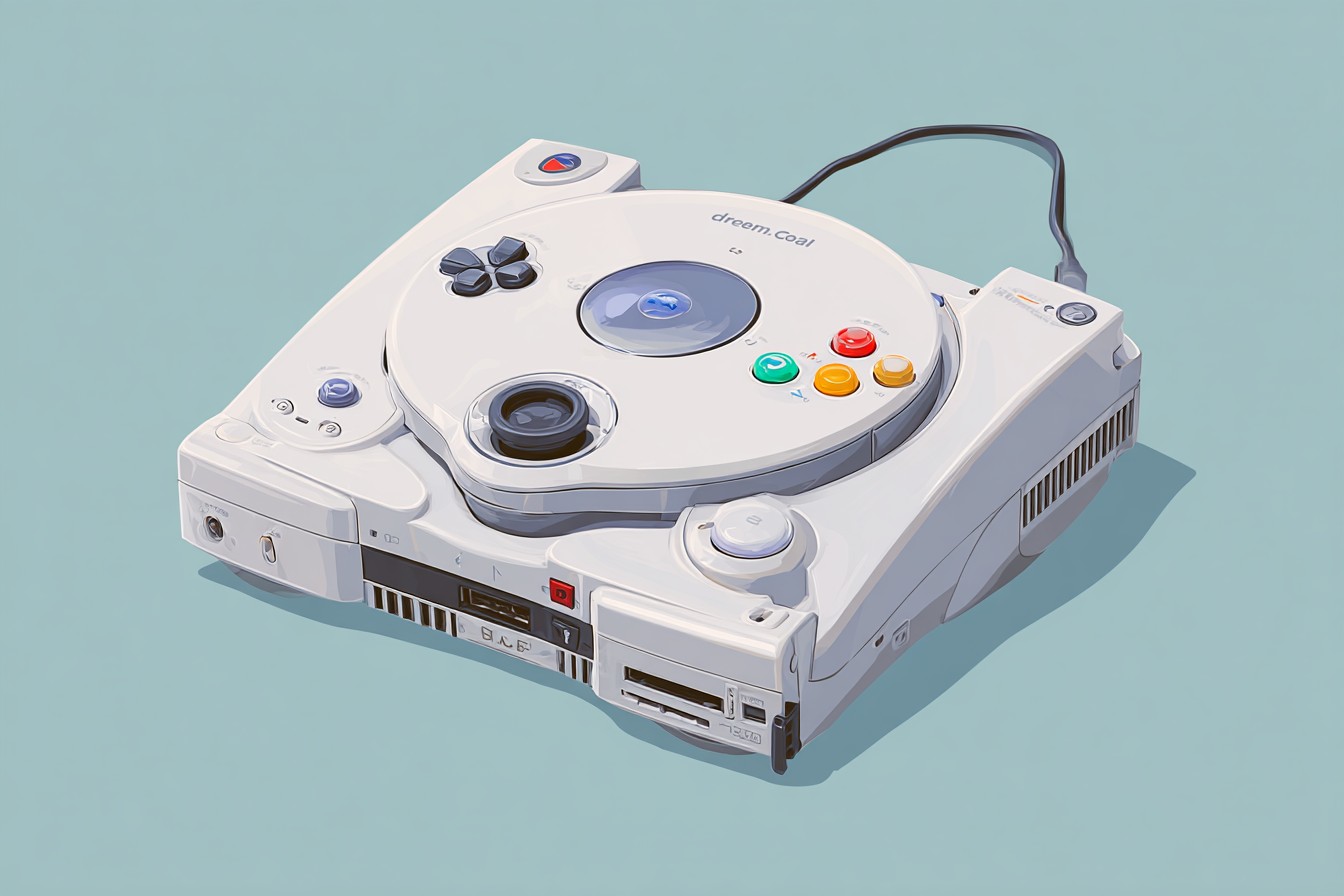
The Dreamcast launched in Japan in November 1998 and North America in September 1999. It was Sega’s last console before they exited hardware manufacturing entirely. The console was technically advanced for its time – 128-bit processor, 16MB of RAM, built-in modem for online gaming. The games were excellent. The online infrastructure was genuinely innovative. By any reasonable standard, the Dreamcast was a success as a console. But commercially, it was a catastrophic failure that led Sega to abandon hardware manufacturing forever.
The Dreamcast sold approximately 10 million units worldwide before being discontinued in 2001. The PlayStation sold over 100 million units. The PlayStation 2, released the same year the Dreamcast was discontinued, went on to sell over 150 million units. The numbers show the scale of the failure. The Dreamcast didn’t fail because the console was bad. It failed because the market had already decided the outcome before the console’s launch.
What Made The Dreamcast Good
The Dreamcast was technically innovative. It had a built-in modem and online gaming infrastructure before online console gaming was standard. Games like Phantasy Star Online proved that console players wanted online experiences. The Dreamcast had online multiplayer functionality that the PlayStation didn’t have. This was genuinely ahead of its time.
The games were genuinely excellent. Shenmue was an ambitious adventure game that showed what was possible on the hardware. Jet Grind Radio proved that cel-shading could work and influenced games for decades. Soul Calibur was an arcade-perfect translation. Power Stone proved that multiplayer fighting games could be unconventional. Skies of Arcadia was a solid JRPG. The library had variety and quality that deserved commercial success.
The controller was well-designed and the VMU (visual memory unit) was innovative. The memory card with a built-in screen was genuinely unique. The controller had a sensible design that worked well. The system felt modern and forward-thinking.
Sega’s marketing was aggressive and they believed in the product. They invested in third-party relationships. They supported the system actively. By every measure of effort and execution, Sega did a good job launching and supporting the console.
Why The Dreamcast Failed
But none of that mattered because the market had already decided. The PlayStation had achieved dominance in the previous generation. Game publishers had relationships with Sony. Retailers had shelf space dedicated to PlayStation games. Parents knew PlayStation was the console. The market momentum was overwhelming and seemingly impossible to overcome.
The PS2 was coming and everyone knew it. The Dreamcast launched in 1999 knowing that the PlayStation 2 was coming in 2000. That knowledge poisoned the launch. Retailers didn’t want to invest heavily in Dreamcast when they knew a more powerful console was coming. Gamers waited for the PS2. Publishers were already committed to PS2 development. The Dreamcast entered a market that had already decided its fate.
The DVD question was crucial. The PlayStation 2 came with a DVD drive, which was genuinely valuable in 2000 when DVD players cost $300+. The Dreamcast used proprietary GD-ROM media. In hindsight, it’s obvious that DVD capability would matter enormously. At the time, Sega decided that focusing on games was more important than adding DVD functionality. They were wrong. People bought PS2 partly because it was a cheap DVD player. The Dreamcast couldn’t offer that value proposition.
Third-party support wavered immediately. Electronic Arts, one of the largest publishers, hesitated to commit to Dreamcast. EA was already heavily invested in PlayStation development. Committing resources to a new console meant diverting resources from profitable PlayStation development. Major publishers made the economically rational choice to support the market leader rather than gamble on the challenger.
Sega’s financial position was terrible. The company had been losing money for years. The Saturn had failed before it. The company was already struggling financially before Dreamcast launched. That financial weakness meant they couldn’t afford the marketing push that might have overcome market resistance. They couldn’t afford to offer publishers incentives to develop for their platform. They couldn’t afford to weather a slow launch period.
The Timing Problem
The Dreamcast’s timing was genuinely unfortunate. Launching in 1999 with a more powerful console coming in 2000 was a marketing disaster. People told others “wait for the PS2.” That advice poison the launch. Retailers stocked Dreamcast expecting demand that never materialized because customers were waiting for PS2.
The DVD timing was bad luck more than bad planning. DVD was becoming standard just as the Dreamcast launched. A year earlier and DVD might have been unproven. A year later and everyone would have had DVD players. 2000 was the exact moment when DVD capability became a valuable system feature. The Dreamcast hit that window when DVD value was at maximum and the console didn’t have it.
The economy also mattered. The US was entering a recession around 2000-2001. Consumer spending declined. That economic timing hurt a console trying to establish market share against an entrenched competitor. Better economic times might have let the Dreamcast establish itself. The recession made gamers even more reluctant to adopt a new system.
What Dreamcast Could Have Done Differently
Could Sega have succeeded with different choices? Possibly. If they’d delayed Dreamcast launch to launch simultaneously with PS2, the timing wouldn’t have felt as desperate. If they’d included DVD capability, they’d have offered value proposition that PS2 matched. If they’d secured EA’s exclusive support, they’d have had games that mattered. If they’d had better financial position, they could have offered publishers better incentives.
But those are all conditional. The fundamental problem was that the market had consolidated around PlayStation and reversing that seemed impossible. Nintendo had successfully maintained dominance through generations. Sony seemed to be achieving the same. Beating both Nintendo and Sony with better software alone wasn’t feasible.
The Dreamcast proved something crucial – software quality alone doesn’t determine console success. Market positioning, third-party relationships, economic timing, and luck matter enormously. A console with excellent games and innovative features still failed because of circumstances beyond its control.
The Aftermath And Legacy
The Dreamcast’s discontinuation in 2001 led to Sega’s exit from hardware manufacturing. The company became a third-party publisher. This was devastating commercially but it also freed Sega from the hardware expense of competing with Sony and Nintendo. Sega’s games probably generated more revenue per dollar after exiting hardware.
The Dreamcast community never died. The console has a devoted fanbase that still produces games and mods. The Dreamcast represented something special – a moment when Sega was confident, innovative, and focused on player experience. The failure doesn’t diminish that achievement.
The Dreamcast proved that innovation and quality games aren’t sufficient for console success. The console had better online infrastructure than competitors. It had innovative games. It had forward-thinking design. And it lost completely to market forces beyond the console’s control.
What This Means For Understanding Gaming History
The Dreamcast’s failure teaches that gaming industry success is determined by multiple factors simultaneously. Games matter. Hardware matters. Third-party support matters. Market timing matters. Economic conditions matter. When all these factors align, success happens. When they don’t, even excellent products fail.
The Dreamcast wasn’t a bad console. It was an excellent console released at the wrong time to a market that had already decided its fate. That’s a tragic story but it’s an important one. It proves that business success isn’t determined purely by quality. It’s determined by market forces, timing, and circumstances that are often beyond your control.
The Dreamcast’s legacy is that it proved Sega could make genuinely excellent hardware and software. That it still failed proves something important about how markets work and how little control a challenger has against an entrenched dominant player.