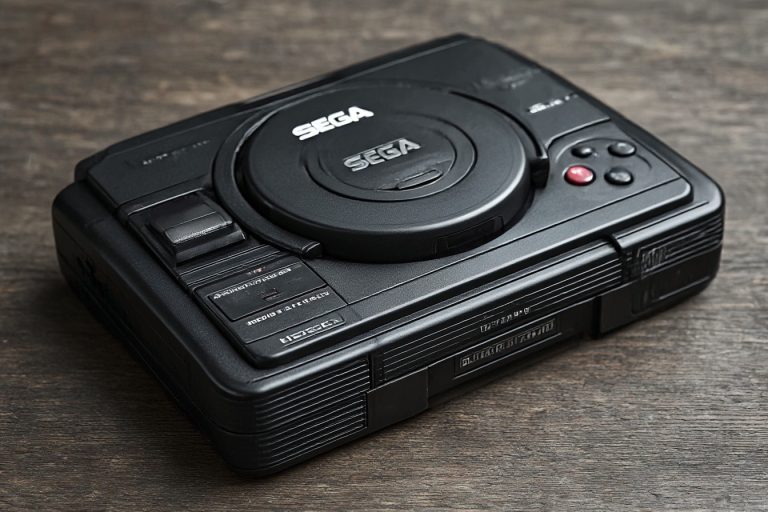

The Add-On That Proved CD Gaming Was Coming, But Cost Too Much to Get There
I’m a history teacher from Phoenix and a lifelong Sega devotee. I’ve spent decades arguing that Sega got screwed by market timing and that Sega made better strategic decisions than people give them credit for. I refuse to retire the phrase “blast processing” even though everyone makes fun of me for it. The Sega CD is the perfect example of Sega being right about the future while being wrong about the present. The Sega CD (known as Mega-CD outside North America) was a CD-ROM peripheral for the Sega Genesis/Mega Drive, released in the early 1990s to expand storage for full-motion video, enhanced audio, and larger games. It failed commercially. But it proved that the gaming industry was moving toward CD-ROM technology before Sony proved it with the PlayStation.
Sega CD Game Statistics
| Specification | Details |
|---|---|
| North American Release | October 15, 1992 |
| Japanese Release (Mega-CD) | December 12, 1991 |
| European Release | April 1993 |
| Launch Price (North America) | $299 |
| Price Drop (by 1995) | $159 |
| Model 2 Price | $229 |
| Japanese Launch Price | ¥49,800 |
| European Launch Price | £270 |
| Lifetime Sales (Conservative) | 2.24 million units worldwide |
| Lifetime Sales (With Variants) | Up to 6 million units |
| Games Library | 216-260 titles |
| CPU Addition | Ricoh RF333C (Motorola 68000) at 12.5 MHz |
| Additional RAM | 256 KB (512 KB Model 2) |
| CD Capacity | 540 MB |
| Best-Selling Game | Sonic CD (1.5 million copies) |
| Genesis Install Base | 30+ million |
| Sega CD Attach Rate | 7-10% of Genesis owners |
| Production Timeline | 1991-1996 |
The Vision: Why Sega Believed in CD-ROM
The Sega CD launched in Japan on December 12, 1991, at ¥49,800, with strong initial sales of 200,000 units in the first three months. Sega saw the future clearly. Cartridges had reached their limits. They were expensive to manufacture. They had storage limitations. They were proprietary to each console. CD-ROM technology was cheap, high-capacity, and becoming standard in consumer electronics. Sega understood that CD-ROM gaming was inevitable. The problem was that Sega tried to prove this concept before the market was ready to accept it.
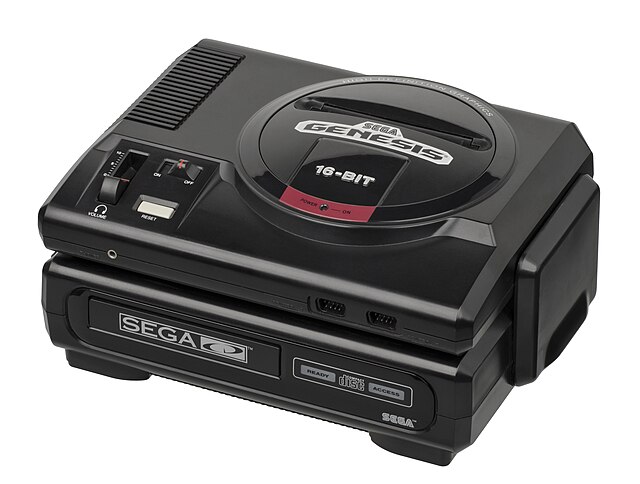
The Sega CD wasn’t supposed to replace the Genesis. It was supposed to extend it. You plugged the CD-ROM drive into the top of your Genesis and suddenly you had a new console. Games could use full-motion video. Games could store CD audio tracks. Games could be significantly larger than cartridge games. The add-on tray-loading CD-ROM drive sat atop or under the Genesis and integrated via the expansion port, making it technically innovative and practically awkward.
Sega’s timing was strategic but ultimately premature. The PlayStation wouldn’t arrive until 1994 in Japan and 1995 in North America. By the time Sony proved that CD-ROM gaming could dominate the market, Sega had already suffered through years of poor Sega CD sales and negative perception. Sega was right about where gaming was headed. They were just years too early in trying to get there.
The Hardware: More Power Bolted Onto Existing Hardware
The Sega CD added a Ricoh RF333C (custom Motorola 68000) at 12.5 MHz, twice the Genesis speed, plus a HuC6280 audio processor at 7.67 MHz for CD-DA and ADPCM. It also included 256 KB main RAM (512 KB on Model 2), 64 KB CD-ROM cache, and 6 KB boot RAM, while using Genesis RAM as well.
This was fundamentally different from how the PlayStation approached next-generation gaming. Sony created an entirely new console from scratch. Sega took an existing console and bolted on additional hardware. The advantage was that Genesis owners could upgrade. The disadvantage was that the Sega CD was always going to feel like an awkward add-on rather than a unified console experience.
The Sega CD leveraged the Genesis VDP but added FMV decoding, supporting 320×240 interlaced video and CD-Graphics overlay. This meant that games could display full-motion video cutscenes, something that cartridge-based games simply couldn’t do. Games like Night Trap used FMV extensively, creating an experience that felt genuinely different from cartridge games.
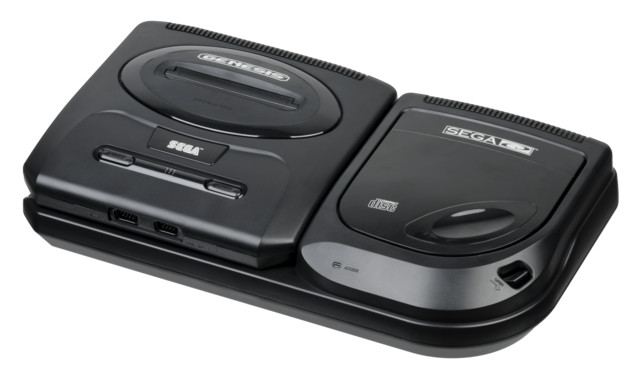
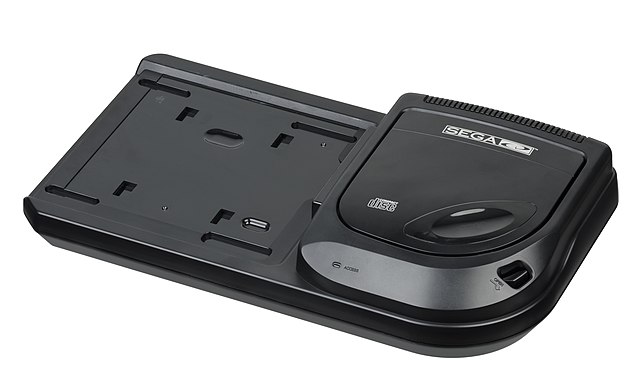
Sega released two major models. The Model 1 (1991-1993) was larger with a horizontal tray and a noisier drive. The Model 2 (1993-1996) was smaller with a quieter drive, top-loader option, and reduced price of $229. The Model 2 improvements addressed some of the Model 1’s complaints, but by that point the damage was done. Early adopters had already decided the Sega CD wasn’t worth the investment.
The Sales Reality: Better Than People Think, But Still a Failure
Sales figures for the Sega CD vary wildly depending on the source, and this is where the Sega CD’s reputation becomes complicated. Official Wikipedia figures list 2.24 million units worldwide as the most cited conservative figure, but VG Digest and Sega Classics blog sources claim up to 6 million units including all variants.
The truth is probably somewhere in between, but even the optimistic number represents commercial failure relative to the Genesis’s 30+ million unit install base. The Sega CD achieved only a 7-10% attach rate among Genesis owners. That means 90% of Genesis owners didn’t think the Sega CD was worth buying.
Breaking down the numbers by region tells the story. In Japan, Sega CD sold 200,000 units in the first three months but slowed dramatically, with estimates of 850,000 total across the entire lifespan. In North America, estimates range from 1.5 million total, with price drops to $159 by 1995 and bundle deals helping late sales. In Europe, only 60,000 of 70,000 shipped units had sold by August 1993, representing a disastrous launch. Brazil received roughly 30,000 units through Tectoy licensing.
These numbers matter because they show how consistently the Sega CD failed across every major market. It wasn’t a regional failure. It was global failure. Everyone said no to the Sega CD, and they kept saying no even as Sega dropped prices and created new models.
The Problem: Expensive, Unreliable, With Awful Launch Games
The Sega CD had several fundamental problems. First was the price. The North American launch price was $299, which is staggering for an add-on in 1992. That’s nearly the cost of a new console. For $299, you could buy a new Genesis, a new SNES, or the Sega CD. Most people chose to buy a different console rather than upgrade their existing one.
The European price of £270 was equally prohibitive, especially in markets where the Genesis wasn’t as dominant. Europeans had strong computer gaming cultures with the Commodore 64 and Amiga. They didn’t see why they should buy an expensive add-on when they already had alternatives.
The second problem was hardware reliability. The Model 1’s tray-loading drive was notorious for mechanical failures. Loading times were slow. Some drives failed within months of purchase. The later Model 2 addressed these issues with a quieter, more reliable drive, but the damage to the Sega CD’s reputation was already done.
The third problem was the launch library. The launch games were poor, with hype far exceeding quality. Night Trap was controversial and technically mediocre. Sega had hoped that FMV would be a killer feature that justified the hardware cost. Instead, FMV games proved to be gimmicks that wore thin quickly. After you watched the same cutscene a few times, the novelty of full-motion video disappeared. You were left with gameplay that was often shallow and repetitive.
The fourth problem was competition. Cartridge games on the Genesis and SNES were still delivering excellent experiences. Why spend $300 on an add-on that promised next-generation gaming when you could spend $60 on a new cartridge that delivered proven fun? The value proposition didn’t exist.
The Games: Some Gems, But Mostly Disappointment
The Sega CD library eventually reached 216-260 titles across all regions, but the quality was inconsistent. The best-selling game was Sonic CD with 1.5 million copies sold, which proves that when the Sega CD had genuinely good games, they sold. Sonic CD was a different take on Sonic the Hedgehog with alternate time periods and a fantastic soundtrack. It’s a legitimate great game.
But Sonic CD was the exception, not the rule. Most Sega CD games were experiments that didn’t work. Games tried to use FMV as the primary gameplay mechanic, and they failed. Games tried to port arcade titles with FMV cutscenes, and they felt bloated. Games tried to be interactive movies, and they proved that interactive movies are inherently less engaging than either pure games or pure movies.
There were ports of games like Final Fantasy and Lunar that took advantage of CD audio and storage for expanded content. These games were better on Sega CD than on cartridges, but not dramatically better. They offered the promise of what CD gaming could be, but the hardware limitations of the Genesis kept them from achieving their full potential.
The problem was philosophical. Sega and third-party developers didn’t know how to design games specifically for CD-ROM storage. They thought it was about FMV and CD audio. They didn’t understand that the real advantage of CDs would be game size and complexity. Games like Final Fantasy VII proved that when you have massive game worlds with hundreds of hours of content, CDs start to make sense. But those games needed new hardware to run them. The Sega CD couldn’t deliver that because it was tethered to Genesis-era hardware.
Why It Failed: Being Right About the Future, Wrong About the Timing
The Sega CD failed because Sega was right about where gaming was heading but wrong about when the market would accept it. The Sega CD was discontinued around 1996 as Sega shifted focus to the Saturn, which was itself a flawed console. By 1996, Sega had essentially given up on the Sega CD and was preparing for the next generation.
By that point, the PlayStation had already proven that CD-ROM gaming could work. Sony had built an entirely new console around CD technology, and the market had embraced it. Sega had tried the same thing years earlier and failed. The difference was that Sony had better timing, better games, better marketing, and better execution.
Sega halted in-house development by 1993, which meant that Sega wasn’t even trying to create killer apps for the system. If the company that created the hardware wasn’t committed to making the games that would prove the system’s potential, how could they expect third-party developers to invest?
The Sega CD also had a fundamental design flaw. It was an add-on to an existing console rather than a new console itself. This meant that it was always competing with the Genesis for developer attention. Why make a Sega CD game when you could make a Genesis game that reaches 10 times the install base? The attached nature of the hardware meant that the install base would always be a fraction of the Genesis install base, which meant that commercial viability for Sega CD games was always questionable.
What the Sega CD Proved
Despite its commercial failure, the Sega CD proved something important. It proved that CD-ROM gaming was viable. It proved that FMV could be implemented on consumer hardware. It proved that CD audio could enhance game experiences. It proved that CD capacity enabled game sizes that cartridges simply couldn’t match.
The Sega CD actually outperformed the 3DO (2 million units) and the Atari Jaguar CD (20,000 units) in terms of attach rates and sales, which shows that among premium gaming add-ons of the era, the Sega CD was relatively successful. But relative success among failures is still failure.
The Sega CD proved that you needed more than just capacity to make a successful gaming platform. You needed games that justified the cost. You needed reliable hardware. You needed the right timing. You needed buy-in from first-party developers. The Sega CD had none of these except capacity.
The Legacy: Paving the Way for PlayStation
The Sega CD paved the way for Saturn and PlayStation CD experiments, and was a precursor to Sony-Sega collaboration discussions that ultimately declined. Sega had the right idea about the future of gaming, but they couldn’t execute it properly. Sony learned from Sega’s mistakes and built the PlayStation as a unified CD-based console rather than an add-on.
In that sense, the Sega CD’s greatest achievement was failing in a way that made it clear what a successful CD-based console would need to look like. The PlayStation was the Sega CD’s answer, and it dominated the market in ways the Sega CD never could.
Does It Still Hold Up?
Playing Sega CD games today is an interesting historical experience. Sonic CD is still a great game. The soundtrack is excellent. The gameplay holds up. Some of the port games like Lunar are still engaging if you’re patient with the pacing.
But most Sega CD games don’t hold up. FMV games are hilariously dated. The video quality is so compressed that it’s barely watchable by modern standards. The gameplay underneath the FMV is often shallow. Games that built their entire value proposition on FMV cutscenes feel hollow when you can experience infinitely better video and storytelling through other media.
The Sega CD’s real value as a piece of gaming history is that it represents an evolutionary dead-end. It was Sega’s attempt to bridge the gap between cartridge and CD gaming. It failed, but it taught the industry what wouldn’t work and helped establish what would.
Conclusion
The Sega CD was an expensive add-on that arrived at the wrong time with the wrong games and unreliable hardware. It sold between 2.24 and 6 million units depending on how you count, representing a failure relative to the Genesis’s 30+ million unit install base. Fewer than 10% of Genesis owners thought it was worth $299.
But the Sega CD was also proof of concept. It proved that CD-ROM gaming was coming. It proved that FMV could be implemented on consumer hardware. It proved that you could extend a console’s lifespan with an add-on. It proved that Sega understood where gaming was headed.
What the Sega CD couldn’t overcome was price, hardware reliability, poor launch games, and lack of developer commitment. These problems were fatal. Even as Sega dropped prices and improved the hardware, the damage was done. The market had spoken. They didn’t want the Sega CD.
The real irony is that the Sega CD proved to be right about everything except timing. Three years later, the PlayStation arrived and proved that CD-ROM gaming could dominate. Sega had tried to do the same thing and failed. Being right about the future doesn’t matter if you can’t execute in the present.
Rating: 6/10 — The correct vision with catastrophically wrong execution

Joe’s a history teacher who treats the console wars like actual history. A lifelong Sega devotee from Phoenix, he writes with passion, humor, and lingering heartbreak over the Dreamcast. Expect strong opinions, bad puns, and plenty of “blast processing.”
0 Comments