My shame about being a bit behind the times on The Legend of Zelda is a bit justified; many people have fond memories of exploring Hyrule as children. I did not begin playing Zelda until I was over 40 years old. For months, my daughter requested that I play A Link to the Past on her Super Nintendo and I refused to play it because I simply assumed it was kids’ stuff. What a huge error I made.
Around 2011 (after my second divorce), I was questioning virtually every part of my life. Sarah, my daughter, came home from college for winter break and set up her retro gaming collection in my living room. She had been trying to get me to play video games again for a while, and demonstrated a number of the classic games that I had not played when I was a kid. While none of the others interested me very much, she kept telling me that this Zelda game was going to be different.
“This one is going to be great,” she said repeatedly. “This one has puzzles and exploration. It is kind of…like building a project for your brain.” Because I love anything that lets you build something and figure out how it works, I agreed to let her talk me into playing for 20 minutes before I went to sleep.
Three hours later, I was still sitting on the couch, fully engrossed in trying to save Princess Zelda from that castle. Sarah had dozed off in the recliner, but I wasn’t going anywhere. There was something appealing about how the game forced you to use your wits and solve problems using methods similar to those I employed to figure out how all of the parts of a particular job site fit together.
I especially liked the item upgrade system (although I would not realise that is what they were referred to until later). Once you discovered each new tool (the boomerang, lantern, and bow) it resolved the immediate problem in front of you, but it also caused you to view all of the locations you had previously visited in a different light. Those dark rooms that had previously blocked your path were no longer dark. And those enemies that had formerly blocked your access due to being separated by a gap were no longer an obstacle. It was like discovering a new power tool that completely altered your approach to every single job site.
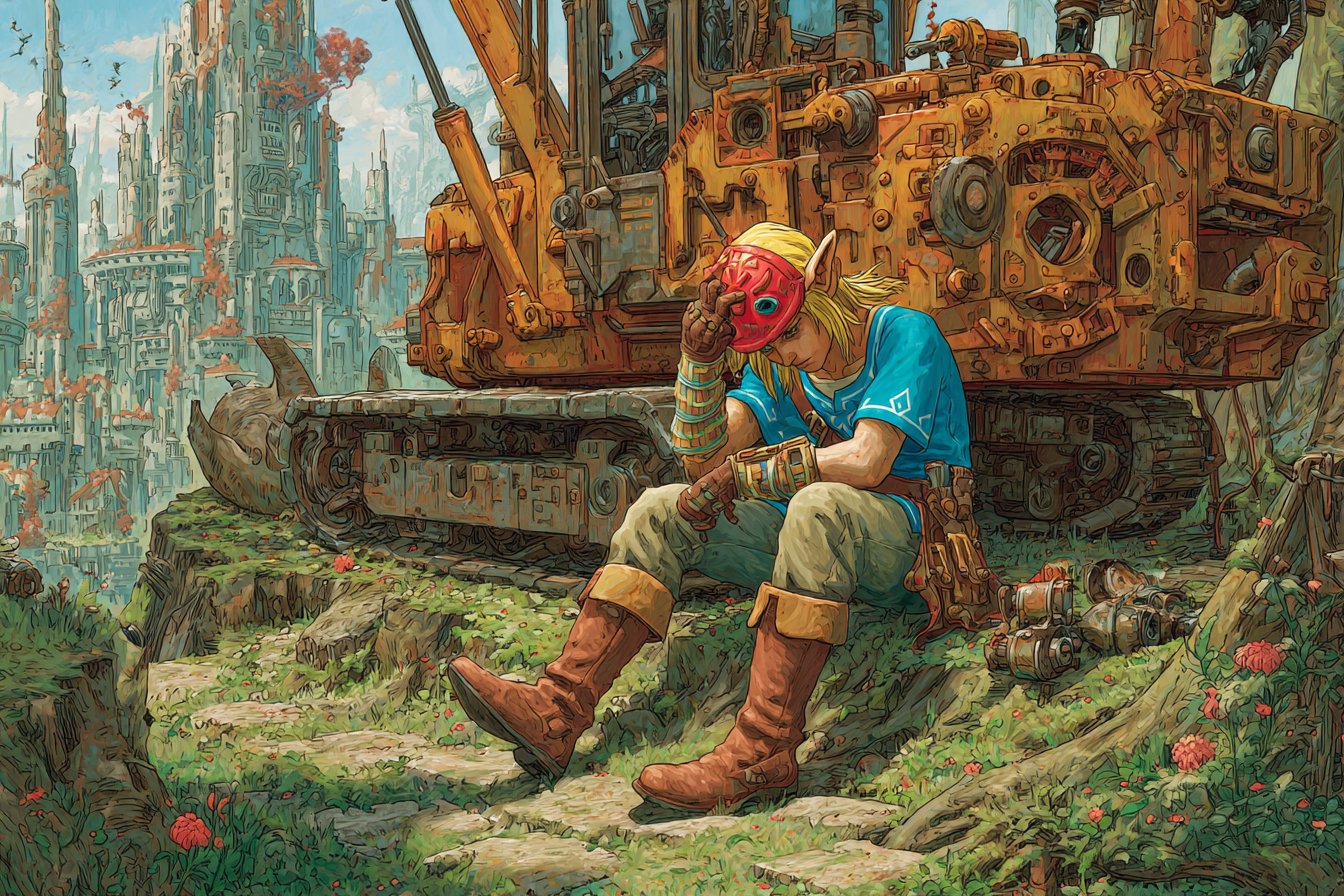
I recall spending an entire weekend trapped inside what would ultimately prove to be the Desert Palace and was convinced that there was something wrong with the game because I could not make any progress. At the time, I did not recognise that the Zelda rule was: If you cannot proceed in the game, then you probably missed something obvious directly in front of you. I was near quitting when I noticed a portion of a wall that appeared to be a slight variation in colour from the surrounding walls. I exploded it. Secret passageway. I got a thrill when that wall came tumbling down, as if I had just received word that I had just secured the largest contract I had ever bid on.
It took me approximately two months of evenings and weekends to complete the first game. I approached the game very systematically — much like how I construct homes — slowly, methodically, and thoroughly examining each step before proceeding. Sarah periodically checked in on my progress, providing me with helpful hints when I became stuck, but generally allowing me to figure things out myself. I believe she realised that figuring things out was half the fun for me.
When I learned about the Dark World revelation, I nearly had a coronary. As I had constructed maps of what I believed was the entirety of the game world, I was suddenly handed a duplicate of the entire world — but it was twisted and distorted. It was as if I had completed a house believing that it was complete, only to discover that I had a second-floor that I had never seen before. The way familiar locations were warped into something evil but recognizable… I had never experienced anything like that in any medium prior.
The final battle against Ganon in the game was extremely stressful. During my dozen plus hours spent attempting to rescue Princess Zelda from that castle, I had grown attached to that tiny little pixelated Link character. I knew his limitations and abilities, and now he was standing face-to-face with this gargantuan, malevolent pig creature wielding a trident. My palms were dripping with sweat during that final battle. When the credits rolled, and I saw Link place the Master Sword back in its pedestal, I felt relieved and disappointed simultaneously. I had achieved something, but it was over.
That is when Sarah turned me onto Link’s Awakening. Then Ocarina of Time. Then Majora’s Mask. Next thing I knew, I was steeped in this entire franchise, traveling backwards through all thirty years of Zelda’s history as if I had lost decades of time. My fellow construction workers thought I had become insane, but I didn’t care. I was having more fun than I had experienced in years.
Ocarina of Time was revolutionary — even years after playing it. The 3D environment was enormous compared to the top-down environments in earlier Zelda games. The first time I walked into Hyrule Field as Adult Link and gazed upon the enormity of the world stretching out before him… it gave me the same feeling of wonderment that I get whenever I stand atop a tall building that I have assisted in constructing and gaze out at the city skyline.
However… The Water Temple man… That was a monster. I literally drew diagrams on graph paper so as to attempt to organise all of the rooms that I explored at each water level. It took me three weeks of evening sessions to navigate through that temple. Organising skills used to tackle the immense amount of data contained in The Water Temple proved useful in organising future construction projects — although it was arduous nonetheless. When I defeated Dark Link and obtained the Longshot, I may have executed a celebratory dance in my living room. Don’t tell my crew.
Video game music is unique. While I am not musically inclined — video games don’t lend themselves well to music either — Koji Kondo’s scores have burrowed deep into my mind. To this day, the A Link to the Past main theme sends chills down my spine. Even today, while I work on construction sites, The Song of Storms from Ocarina still randomly pops into my head. There is something enchanting about how the music relates the story along with visuals that I had never encountered before.
Over the past ten years, I have played most of the major Zelda titles available today. Initially skeptical regarding the vibrant colours in Wind Waker, but the ocean-based exploration of Wind Waker reminded me of those fishing trips my father and I used to go on when I was young and produced a sense of familiarity/coming home for me. Wind Waker’s creative diversion from traditional Zelda styles in Twilight Princess produced the same sensation of returning home. Breath of the Wild completely overturned my assumptions for what a Zelda title could be — producing the same sensation of discovery that I experienced when first playing A Link to the Past — albeit in an expansive open-world environment.
I think it is impressive that Nintendo has consistently produced quality in their Zelda titles regardless of generation or philosophy of development design. Be it 2-D or 3-D, linear or open-world, the core concept remains constant — exploration, puzzle-solving, and developing mastery over tools and techniques. Problem-solving wrapped in entertainment — a form of entertainment that appeals deeply to the problem-solving nature of my mind that spends all day attempting to devise efficient solutions for building structures quickly and safely.
In addition to continuing to grow older, continuing to play additional titles in the Zelda franchise has modified my relationship with Zelda. Recognise the patterns now — three-act structure, dungeon sequence, and how each new item restricts access to areas previously inaccessible until you obtain it. Though recognising patterns does not diminish my satisfaction — actually enhances it; it feels as if I am conversing with an old acquaintance whom I have known for years — but who always has something new to say.
Sarah and I continue sharing our experiences with Zelda titles. Frequently send each other text messages when new Zelda titles are released; we often communicate about challenging elements of titles; and we frequently debate which titles are superior. This provides a universal language for both Sarah and myself; additionally fills in some of the lost time when Sarah grew-up and worked nonstop.
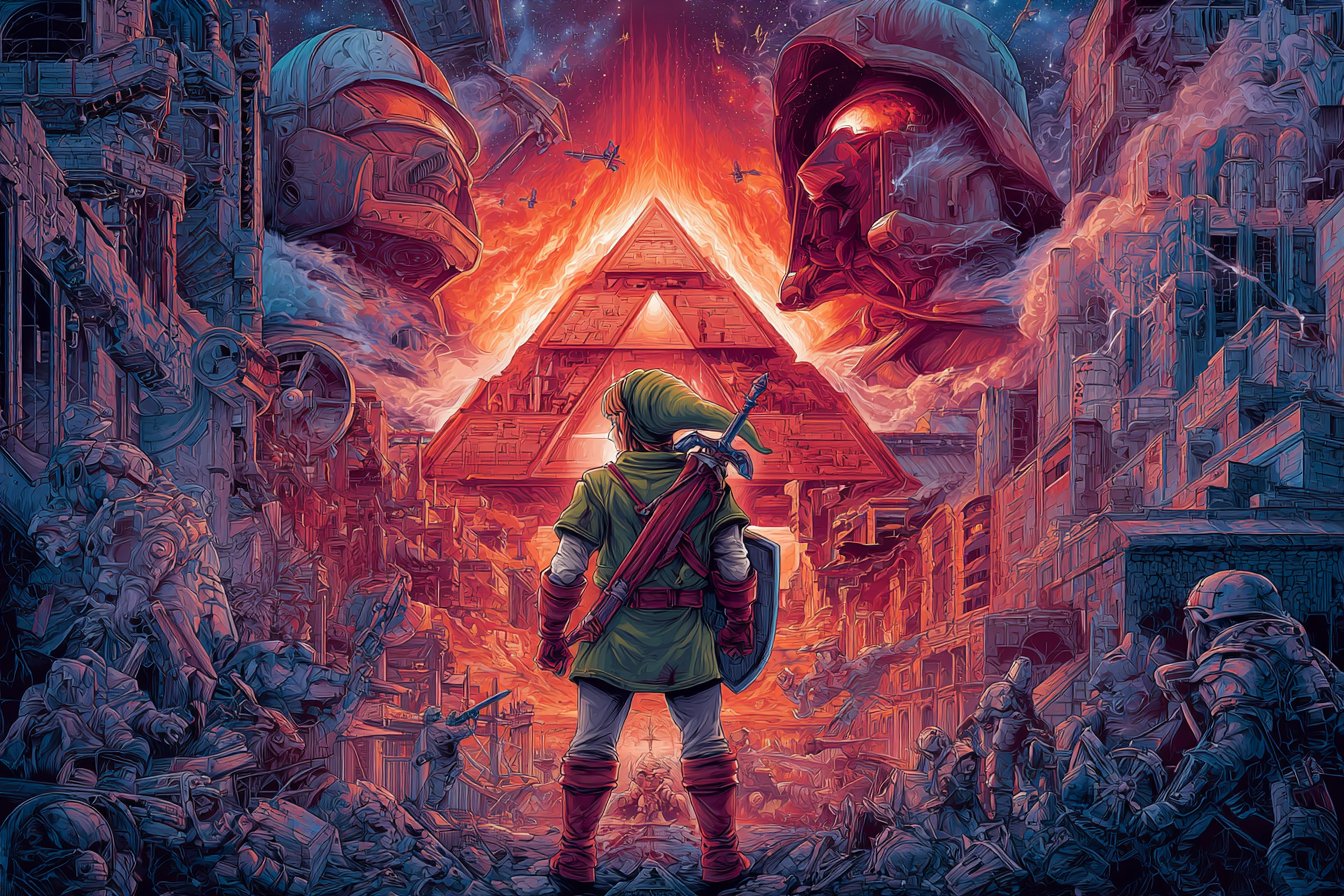
Less than fifty fathers and daughters in their fifties and twenties engage in prolonged discussions about whether the timeline split adds value or detracts from the overall storyline for Zelda titles; however, we love discussing it.
Looking back, I am astonished that it took me forty years to discover something that would provide such joy for me. Poverty prevented me from experiencing many cultural references that many other individuals take for granted; however, being an adult freed me from nostalgia associated with my youth and enabled me to appreciate craftsmanship present in these games in ways that perhaps would not have occurred as a child. The design of each individual level; mechanisms for advancing levels; subtle manipulation by designers of players’ psyches to produce feelings of discovery and achievement — are all examples of exquisite craftsmanship when paying attention to how they are designed.
At least nine of the principal Zelda titles are displayed in my game room — ranging from the original NES cartridge to current releases on the Switch. Visitors to my residence are usually perplexed by why all of these colorful/fantasy games are displayed in a residence occupied by a rugged construction foreman; however, I have long-since ceased worrying about what anyone else believes regarding my hobby.
There is comfort inherent in understanding that as long as Nintendo produces Zelda titles — there will be additional intricately-designed worlds to explore; additional puzzles to solve; additional adventures to experience. After more than twelve years spent catching up on the Zelda franchise — I now comprehend why everyone has been talking about Zelda for thirty years. Occasionally waiting for something worthwhile makes all worthwhile waits worth the wait — even if it requires forty years to locate them