Saturday afternoons at my mate Kevin's house always ended the same way—four controllers spread across his mum's coffee table, the Mega Drive humming away beneath the telly, and someone inevitably shouting "No fair, you're playing as Wolverine again!" That someone was usually me, because honestly, who wouldn't want those adamantium claws slicing through Sentinels like butter through… well, butter.
X-Men on the Genesis wasn't just another beat-em-up. It was comic book magic stuffed into a black plastic cartridge, and it understood something that most licensed games completely missed: being a superhero should feel absolutely mental in the best possible way.
The first time we fired it up, Kevin's little brother actually gasped when Cyclops let loose with that optic blast. Not the weedy little pew-pew you'd expect from most games, but this proper screen-filling laser beam that made the Yamaha sound chip scream like it was actually melting metal. The Genesis always had that gritty, metallic edge to its audio—you know, that FM synthesis twang that made everything sound slightly industrial—and X-Men used every decibel of it.
Four players. That was the magic number. Kevin's house had the four-controller adaptor (his dad worked for British Telecom and apparently earned enough for such luxuries), so we could all pile in simultaneously. Me on Wolverine, obviously. Kevin usually nabbed Cyclops because he loved anything that involved precise timing—same reason he was brilliant at Street Fighter II. His brother would go for Nightcrawler because teleporting around the screen made him feel clever. And whoever else was round would get stuck with… well, whoever was left.
The thing about X-Men is it didn't just let you button-mash your way through hordes of enemies. Each character felt properly different. Wolverine's berserker barrage was all about getting in close and staying there, slashing everything that moved until the screen cleared. Cyclops needed space—his optic blasts were devastating but you had to position yourself right, like playing snooker with lasers. Nightcrawler could teleport behind enemies and catch them off-guard, which sounds simple until you're frantically trying to remember which direction you're facing after popping up behind a Sentinel.
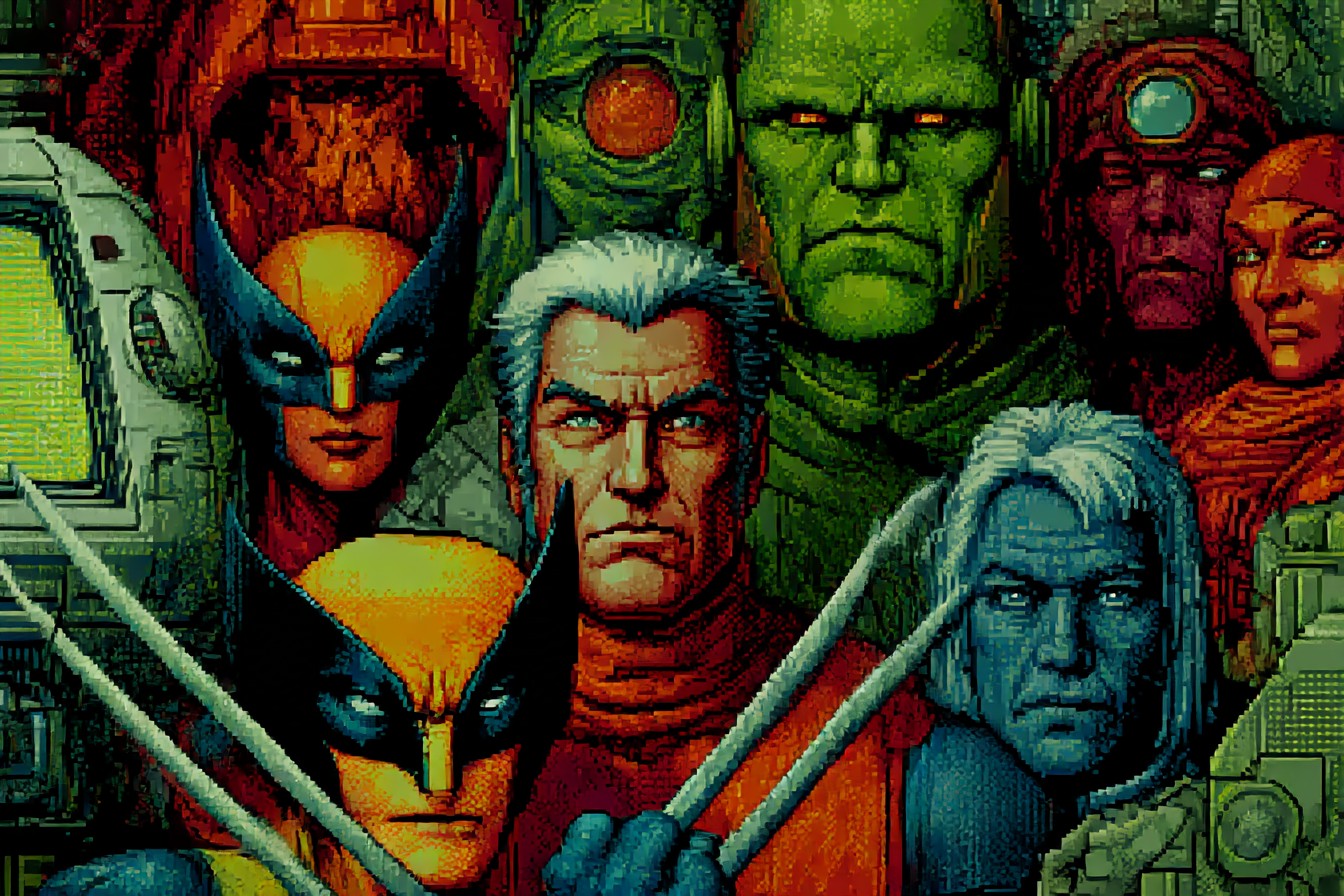
And then there was the mutant power system. Hold down all the buttons at once and—BOOM—screen-clearing devastation that drained your health but looked absolutely spectacular. We learned pretty quickly that timing these powers was crucial. Save them for the boss fights, or that bit in the second level where about twenty Sentinels decide to have a party on your face. But sometimes, when things got really hairy and someone was about to lose their last life, you'd hear "Right, I'm doing it!" followed by the most satisfying explosion of pixels and sound the Genesis could muster.
The levels themselves felt like proper comic book set pieces. That opening stage in the Danger Room was perfect—it taught you the basics while making you feel like you were actually training at Xavier's School. The colors were bold and punchy, the way comics should be. None of that washed-out, "realistic" nonsense you get sometimes. This was Saturday morning cartoon bright, and proud of it.
But it was the Sentinel fights that really got us going. These massive robots stomping across the screen, firing lasers and launching their hands like guided missiles (because apparently that's what giant mutant-hunting robots do). The first time one of those metal fists came flying toward us, Kevin actually ducked. Properly ducked, like it was going to smash through the telly and take his head off.
The two-player games we'd played before—Streets of Rage, Golden Axe, that sort of thing—they were brilliant, don't get me wrong. But there was something about having four heroes on screen at once that felt… well, it felt like reading a proper X-Men comic where everyone gets to do something cool instead of just standing around looking moody.
Kevin's mum used to make us cheese and pickle sandwiches cut into triangles (the only acceptable way to cut a sandwich, obviously), and we'd munch away between levels, arguing about comic book stuff we only half-understood. Who was stronger, Wolverine or Colossus? Could Cyclops's beams actually cut through adamantium? Why did Magneto's helmet look like a bucket someone had welded horns onto?
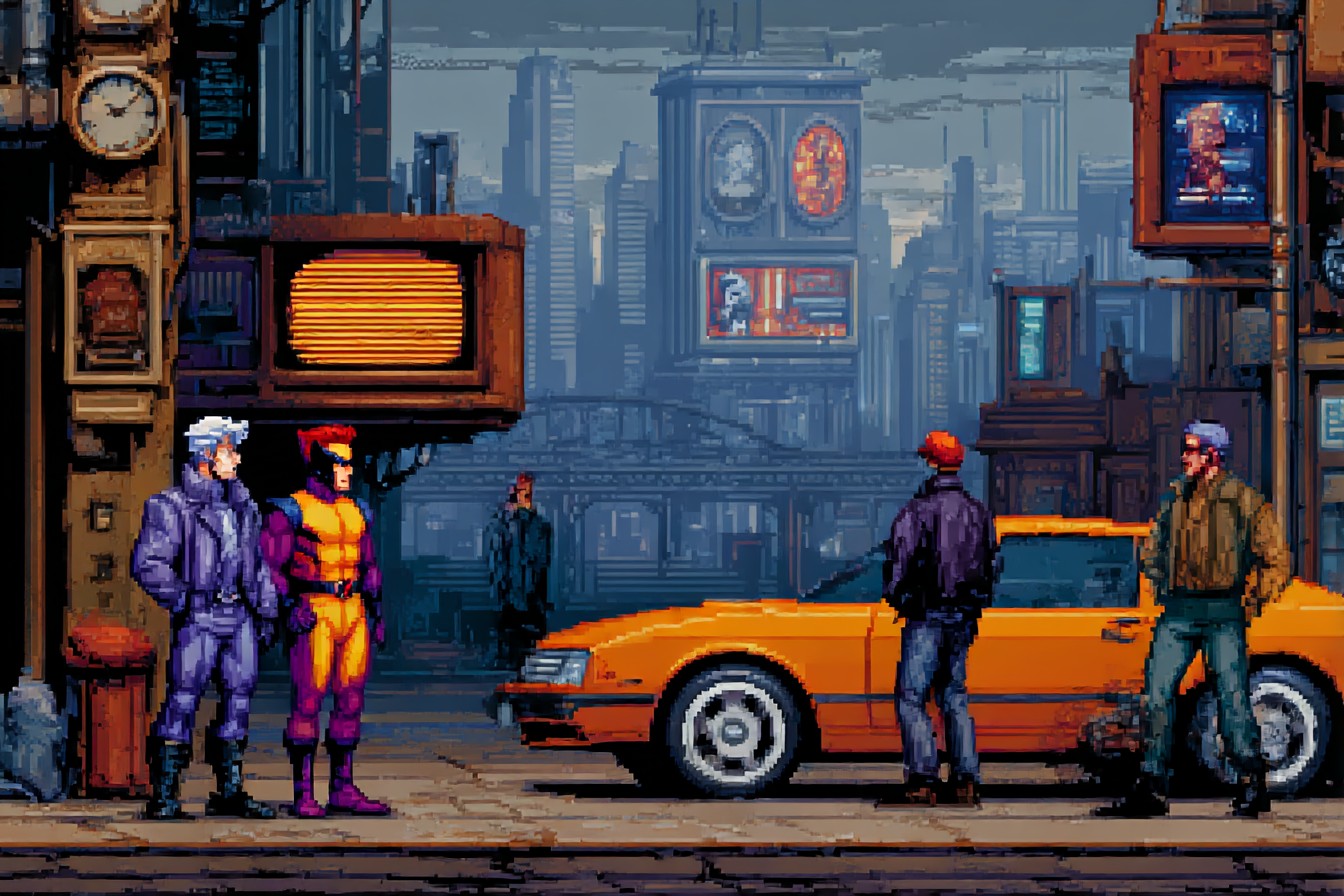
The music deserves special mention, actually. That Mega Drive sound chip might have sounded like robots having an argument, but it perfectly suited the whole mutant superhero vibe. The main theme had this urgent, heroic quality that made even walking to the next screen feel like you were marching into battle. And when things got intense—say, when a Sentinel was bearing down on you and your health was flashing red—the music would ramp up accordingly. Not subtle, but then again, neither was punching a giant robot in the face while wearing a bright yellow costume.
We must have completed that game dozens of times over the summer holidays. Sometimes we'd try to do it with different character combinations, just to see how it played out. All Wolverines was chaos—brilliant, berserker chaos. All Cyclops was like the world's most precise laser light show. All Nightcrawlers… well, that usually ended with someone getting confused about where they'd teleported to and walking straight into a Sentinel's fist.
Looking back now, with my receding hairline and my kid asking why the graphics look "all blocky," I realize what made X-Men special wasn't just the four-player action or the faithful character moves. It was how it understood that being a superhero—even a pretend one on a Saturday afternoon—should feel like the most important thing in the world. Every punch, every laser blast, every teleport felt like it mattered. Like you really were saving the world from giant robots, one continue at a time.
The cartridge still works, by the way. Sits in my collection next to all the other classics, ready for the next generation to discover what proper superhero action feels like. Because some things—like adamantium claws and optic blasts and four mates crowding around a telly—never go out of style.