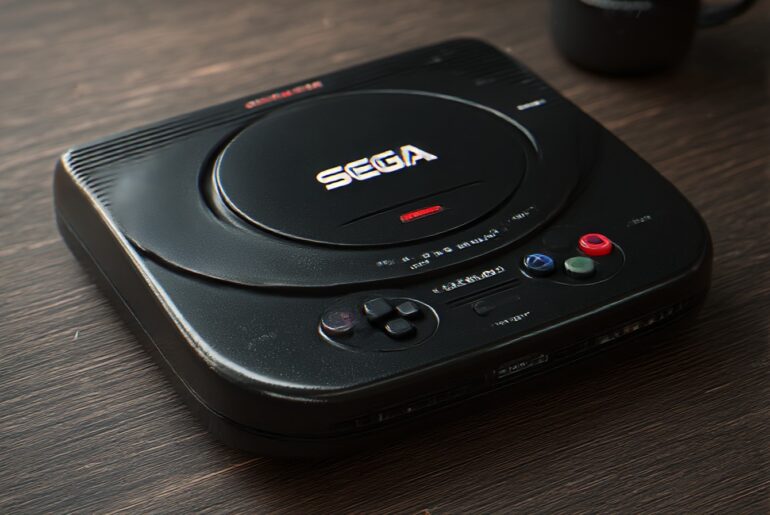
The moment I first plugged that distinctive three-pronged controller into port one, I knew something had shifted in my world. Not just in gaming—though that was obvious enough—but in how I thought about what entertainment could actually be. The N64 didn't just arrive in our living room; it bulldozed through every assumption I'd built up about what home consoles were capable of.
I'd spent years wrestling with flat sprites, don't get me wrong. The Mega Drive had taught me to love that crunchy FM synthesis, and the SNES had shown me how smooth scrolling could make your eyes water in the best possible way. But when Mario's polygonal face turned toward me in that file select screen, actually tracking my controller input with those rubber-band expressions… mate, I nearly dropped the pad. It felt like the future had arrived early and decided to wear dungarees.
Setting the thing up was its own adventure. That RF switch had already claimed permanent residence behind our telly, a sort of gaming customs checkpoint that every console had to negotiate. The N64 slotted right into the established hierarchy—RF out from the console, into the switch, coaxial cable snaking behind the cabinet like some sort of electronic umbilical cord. My mum still insisted on inspecting every connection, convinced that one loose wire would somehow break Coronation Street forever.
The controller situation was… well, let's be honest, it was mental. That three-pronged design looked like something an alien committee had approved after a particularly long meeting. I spent the first week holding it wrong, trying to use all three grips simultaneously like some sort of gaming contortionist. Then my mate Dave came round, picked it up, and demonstrated the proper technique: left hand on the center prong, right hand on the rightmost grip, Z-trigger under your left index finger. Suddenly everything clicked. That analog stick wasn't just responsive—it was precise in a way that made every previous D-pad feel like steering a shopping trolley with three wonky wheels.
Super Mario 64 came bundled with the system, and I genuinely thought there'd been some sort of mistake. Games weren't supposed to look like this. The courtyard outside Peach's castle stretched away in actual three dimensions, with proper perspective and everything. I spent probably an hour just running Mario around in circles, marveling at how the camera would swing around to follow him. The freedom felt intoxicating after years of left-to-right scrolling. When I discovered I could walk behind trees, examine objects from different angles, even look up at the sky… it was like someone had handed me a magic window into a parallel universe where physics made sense but everything was slightly more cheerful.
The memory expansion situation became a family negotiation. The Expansion Pak cost nearly forty quid, which might as well have been four hundred in our household budget. But Perfect Dark needed it, and Perfect Dark looked absolutely incredible in the screenshots. I ended up doing extra chores for two months straight—washing up, hoovering, even helping dad with the garden shed disaster that had been brewing since 1993. When I finally slotted that silver cartridge into the system, the difference was night and day. Textures that had looked a bit rough suddenly snapped into focus, frame rates smoothed out, and Joanna Dark's world became properly immersive rather than just impressive.
GoldenEye changed everything about multiplayer gaming in our house. Before that, taking turns had been the natural order—one person plays, others watch, everyone gets increasingly fidgety. Four-player split-screen meant we could all pile onto the sofa at once, each claiming our corner of the screen like digital territory. The arguments were legendary. Screen-watching accusations flew like shrapnel. Someone always wanted to ban Oddjob (usually whoever'd just been hat-murdered three times running). The Facility became our Colosseum, and proximity mines turned every doorway into a trust exercise.
Loading times? What loading times. Cartridges meant instant gratification—power on, straight into the action, no sitting through company logos or disc-spinning delays. When a game crashed (rare, but it happened), you'd wiggle the cart, maybe blow into the slot if you were feeling traditional, and you'd be back in action within seconds. There was something deeply satisfying about that physical connection between game and system, the solid click of a properly seated cartridge, the slight resistance when you pressed it down into the slot.
The Rumble Pak was pure wizardry. First time a Koopa shell knocked Mario over and I actually felt it through the controller… I mean, I knew it was just a little motor spinning an off-center weight, but my brain refused to process it as anything other than magic. Racing games became visceral experiences. Every crash, every collision, every gear change transmitted itself through your palms. It was like the game world had suddenly grown nerve endings.
Memory cards presented their own organizational challenges. Save files scattered across different cartridges, some games storing progress internally, others requiring the Controller Pak… it became a careful dance of data management. I had a little notebook where I'd scribble down which saves lived where, because nothing was worse than losing twenty hours of progress because you'd forgotten which memory card held your Zelda file.
The graphics debates with my PlayStation-owning mates were fierce but ultimately pointless. They had their smooth textures and CD-quality audio; we had our sixty frames per second and zero loading times. Both systems had their strengths, and honestly, I was just happy to be living through what felt like a renaissance of creativity and technical ambition. Every month brought something that pushed boundaries we didn't even know existed.
Years later, I can still close my eyes and remember the exact feel of that Z-trigger under my finger, the slight mushiness of a well-worn analog stick, the particular click of the C-buttons arranged in that distinctive cross pattern. The N64 controller wasn't just an input device—it was a passport to three-dimensional worlds that felt genuinely alive. Modern controllers might be more ergonomic, more refined, bristling with features the N64 pad couldn't dream of. But there was something pure about that strange three-pronged design, something that perfectly matched the experimental spirit of the games it was built to control.
That setup taught me that gaming wasn't just about entertainment—it was about possibility.