Flipping through a shoebox of old Mega Drive cartridges last weekend, I found myself holding something that instantly transported me back to Saturday afternoons in 1993. The metallic sheen of X-Men caught the light just right, and suddenly I could smell the radiator dust and hear the distant sound of my mum hoovering upstairs while I was absolutely glued to the screen downstairs.
You know what's mad? X-Men on the Genesis wasn't even supposed to be the definitive version. That honor was meant for the arcade cabinet – all four players, massive sprites, coin-munching glory. But here's the thing: sometimes the home port becomes the real deal by accident. The Genesis version squeezed that arcade magic into a grey plastic shell and somehow made it feel… intimate? Personal? Like the X-Men were fighting Magneto specifically in your living room.
I remember getting it for my birthday – probably my thirteenth, which would make it '93 or '94. My cousin Gary was round, and we spent the entire day figuring out the special moves. This was pre-internet, obviously, so discovering that Wolverine could do his berserker barrage by mashing punch repeatedly felt like cracking the Da Vinci Code. The manual helped, sort of, but it was one of those translations that made you wonder if the writer had ever actually seen the game running.
The sound design still gives me goosebumps. That Yamaha chip in the Genesis – the YM2612, if you want to get technical about it – had this particular metallic bite that made Wolverine's claws sound genuinely nasty. When Cyclops fired his optic blast, it wasn't just a sound effect; it was a proper audio assault that made you lean back in your chair. Storm's lightning crackled through the TV speakers like it was trying to escape into the room.
What really got me was how each character felt completely different to control. Wolverine was all aggression and close-range fury – you'd wade into crowds of Sentinels and just start swinging. Cyclops was methodical, precise, standing back and picking off enemies with those devastating beam attacks. Nightcrawler… well, Nightcrawler was chaos. Teleporting around the screen, confusing yourself as much as the enemies, but somehow making it work through sheer supernatural agility.

And Storm? Storm was pure power fantasy. Flying over everything, calling down lightning strikes like some sort of weather goddess. Which, obviously, she was, but playing as her made you feel it in your thumbs. The Genesis pad wasn't exactly ergonomic perfection – those sharp edges could leave marks on your palms during extended sessions – but somehow it translated her abilities perfectly.
The levels themselves were proper comic book panels come to life. Fighting through the Danger Room felt like being inside a training montage. The Sentinel factory was all industrial menace and giant robot assembly lines. And that final confrontation with Magneto? Pure Saturday morning cartoon drama, but with enough challenge to make you sweat through multiple attempts.
Gary and I developed this routine where we'd take turns on different levels, but we both wanted to be Wolverine. Naturally. He's Wolverine. Who wouldn't want those claws? We'd negotiate like tiny diplomats – "I'll be Logan for the Sentinel bit if you let me have first go on the new level." Sometimes it worked. Sometimes it ended with one of us sulking upstairs until mum intervened with squash and biscuits.
The thing about beat-'em-ups from that era is they understood something modern games sometimes forget: repetition can be hypnotic if you get the rhythm right. Punching through waves of identical enemies sounds boring on paper, but when the animation frames are smooth and the sound effects hit just right, it becomes almost meditative. You'd find yourself in this flow state, barely thinking, just reacting to patterns and timing special moves by instinct.
I've played the arcade version since, on various collections and emulation setups. It's undeniably more impressive – bigger sprites, more colors, that four-player chaos that made pizza places into temporary gladiator arenas. But there's something about the Genesis port that feels more… mine? Maybe it's just nostalgia talking, but I think it's the intimacy of it. Home console gaming in the '90s was still a relatively solitary or small-group activity. You weren't competing with strangers for quarters or dealing with sticky joysticks that had seen too many Friday nights. It was your TV, your controller, your saves.
Speaking of saves – the Genesis X-Men used a password system that was typical for its time but absolutely maddening in practice. Those strings of random characters that looked like they'd been generated by a drunk typewriter. We'd write them down on scraps of paper that would inevitably get lost or become illegible. I probably restarted that game more times than I care to admit, not because I wanted to, but because the password from last week had mysteriously transformed into hieroglyphics.
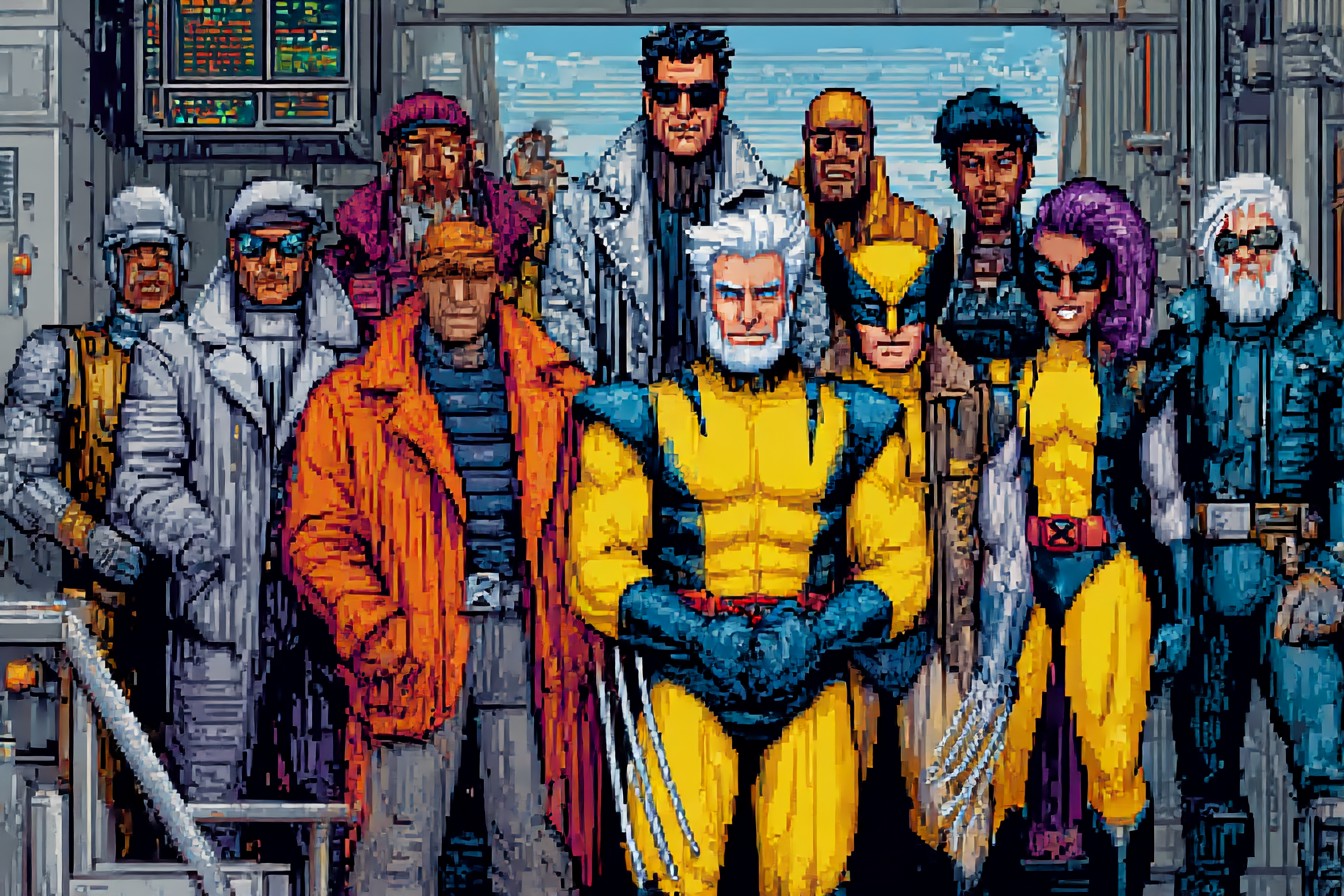
The sequel, X-Men 2: Clone Wars, was even better in some ways. More characters, including fan favorites like Beast and Gambit, and levels that felt more ambitious. But it never quite recaptured that first game's magic for me. Sometimes the original lightning doesn't strike twice, even when you improve almost everything about the formula.
Playing these games today – whether on original hardware with all its fuzzy RF charm or through modern emulation that cleans up every pixel – they still hold up remarkably well. The core mechanics are solid, the character animations have genuine personality, and that soundtrack… honestly, fire up the Danger Room theme and try not to get pumped. I dare you.
There's something deeply satisfying about games that know exactly what they want to be. X-Men on Genesis wanted to be a superhero power fantasy with tight controls and satisfying combat. No complex morality systems, no branching narratives, no online components. Just you, your mutant powers, and an endless supply of Sentinels that needed a proper kicking.
That simplicity feels almost revolutionary now.