
Why the Most Advanced Console of Its Generation Couldn’t Compete With Market Inevitability
I run a pub in Bristol with a back room full of arcade cabinets and early home systems. I maintain original hardware. I understand the difference between arcade authenticity and emulation. I know what it takes to keep vintage machines running. The Sega Dreamcast represents something I deeply respect: technical ambition paired with architectural innovation. It was the most advanced home console of its generation. But it arrived at exactly the wrong moment in history, facing a competitor whose momentum was simply unstoppable. The Dreamcast didn’t fail because it was bad. It failed because the PlayStation 2 was inevitable.
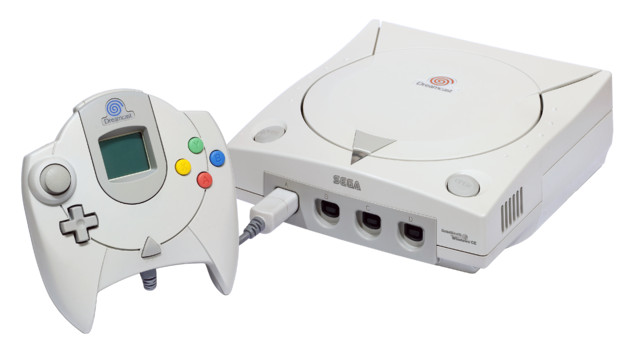
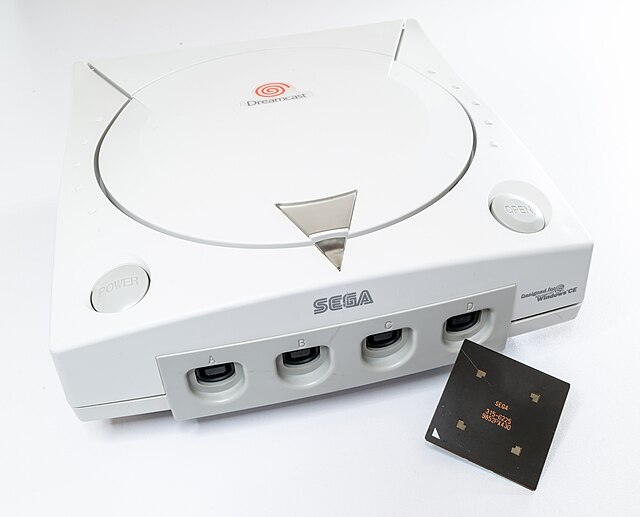
The Dreamcast released November 27, 1998, in Japan and September 9, 1999, in North America. It featured a Hitachi SH-4 32-bit RISC CPU at 200 MHz (360 MIPS, 1.4 GFLOPS FPU), a NEC PowerVR2 GPU at 100 MHz capable of 3 to 7 million polygons per second, Yamaha AICA sound with an ARM7 processor at 45 MHz supporting 32/64 channels of ADPCM, 16 MB of main RAM, 8 MB of video RAM, 2 MB of audio RAM, 128 KB of VMS backup memory, and a GD-ROM drive capable of storing 1.2 GB. The system sold 9.13 million units worldwide. That number looks like failure, but it’s actually the result of Sega making the most advanced console possible and launching it directly into the path of the PlayStation 2 juggernaut.
Sega Dreamcast Technical Specifications
| Specification | Details |
|---|---|
| Release Date | November 27, 1998 (Japan), September 9, 1999 (North America) |
| CPU | Hitachi SH-4 32-bit RISC at 200 MHz (360 MIPS, 1.4 GFLOPS FPU) |
| GPU | NEC PowerVR2 at 100 MHz (3–7 million polygons/sec) |
| Sound Processor | Yamaha AICA (ARM7 at 45 MHz) |
| Audio Channels | 32/64 channels ADPCM |
| Main RAM | 16 MB |
| Video RAM | 8 MB |
| Audio RAM | 2 MB |
| VMS Backup | 128 KB |
| Storage | GD-ROM drive (1.2 GB) |
| Polygon Performance | 3–7 million polygons/sec |
| Lifetime Sales | 9.13 million units worldwide |
| Generation | 128-bit home console |
The Hardware: Arcade DNA in a Home Console
The Dreamcast was essentially a home console version of Sega’s arcade hardware. Sega had just released the Naomi arcade board, which shared the same chipset as the Dreamcast. This meant that Sega’s arcade games could be ported to home hardware with minimal modification. This also meant that arcade developers already understood the hardware. The development community was ready from day one.
The Hitachi SH-4 CPU running at 200 MHz was genuinely powerful for 1998. The instruction set was efficient. The floating-point performance was exceptional. The 360 MIPS and 1.4 GFLOPS FPU meant that games could handle complex mathematics required for 3D graphics. The PowerVR2 GPU was an innovative architecture that used tile-based rendering instead of immediate mode rendering. This made efficient use of the available bandwidth.
The tile-based rendering approach was different from what the PlayStation was doing, but it wasn’t inferior. In fact, for certain types of games, the PowerVR2 approach was more efficient. Games could achieve higher polygon counts and better texture filtering using the PowerVR2’s deferred rendering approach. The architecture was technically sophisticated in ways that the PlayStation’s immediate mode rendering wasn’t.
The Yamaha AICA sound processor with 32 to 64 channels of ADPCM audio was exceptional. That’s more audio channels than any console had. That meant games could have complex, layered soundtracks with dynamic audio that responded to gameplay. The ARM7 processor dedicated to audio meant the main CPU wasn’t burdened with sound processing. Games could sound incredibly sophisticated.
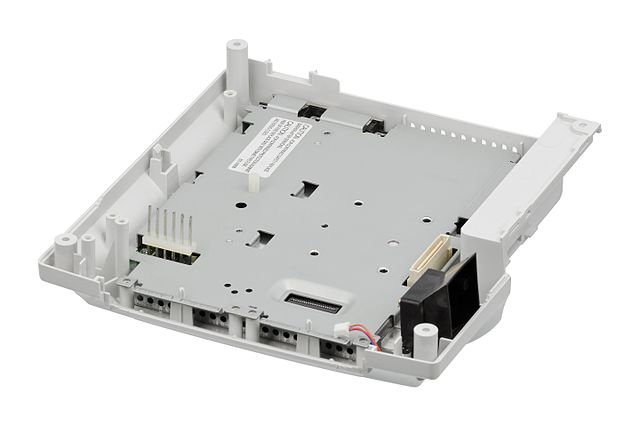
The 16 MB of main RAM and 8 MB of video RAM was generous for the era. The 2 MB of audio RAM gave the sound system dedicated memory. The total memory configuration was well-balanced for what the hardware needed to do. The GD-ROM drive could store 1.2 GB of data, which was substantial for game content.
By every technical measure, the Dreamcast was an accomplished piece of hardware design. It wasn’t just powerful. It was thoughtfully engineered. Every component was chosen to work together efficiently. The architecture was coherent in a way that showed Sega understood what they were building.
The Library: Arcade Performance at Home
The Dreamcast’s library was distinctive because it was arcade-focused. Sega’s arcade expertise meant that arcade-quality games were native to the system. Soul Calibur on Dreamcast was essentially arcade-perfect. Jet Grind Radio brought arcade-style action to home hardware. Shenmue was an entirely new genre that only Sega could have made. Power Stone brought arcade party games to home consoles. Crazy Taxi was an arcade port that played perfectly on home hardware.
This arcade DNA was the Dreamcast’s strength. If you wanted arcade-quality gaming at home, the Dreamcast delivered. Games felt responsive because they were designed on arcade hardware and optimized for the Dreamcast’s architecture. The framerate consistency was excellent. The controls were tight. The gameplay was arcade-level.
But this was also the Dreamcast’s weakness. The PlayStation was building a library of home-developed games. Final Fantasy and Metal Gear were coming to PlayStation. The market wanted next-generation home games, not arcade conversions. The Dreamcast was optimized for what gamers used to want, not what they were starting to want.
The Moment: Why the Dreamcast Couldn’t Win
The Dreamcast launched in Japan in November 1998. The PlayStation 2 was announced in March 1999, less than five months later. By the time the Dreamcast arrived in North America in September 1999, the PS2 had already been announced. Developers had already begun porting engines to PS2 hardware. Publishers had already made commitments.
The PS2’s DVD support was the killing blow. The Dreamcast used GD-ROM, a proprietary format. The PS2 used DVDs, which were already becoming a consumer format. DVD players were selling separately for hundreds of dollars. The PS2 offered DVD playback as a built-in feature. That single decision made the PS2 more valuable than the Dreamcast to consumers who wanted both a game console and a DVD player.
This wasn’t a technical competition. It was a market reality. The Dreamcast was technically advanced. The PS2 was technically adequate. But the PS2 offered something the Dreamcast couldn’t: the future. And the market voted for the future.
Technical Innovation: The Things the Dreamcast Did Right
The Dreamcast had a modem built in. Online gaming on a console was revolutionary. The Dreamcast connected to the internet years before this became standard. That innovation mattered. The problem was that North American internet adoption was still ramping up. Most people didn’t have broadband. The modem meant nothing if you didn’t have fast internet. The PS2 eventually offered network connectivity as an add-on when broadband became more common.
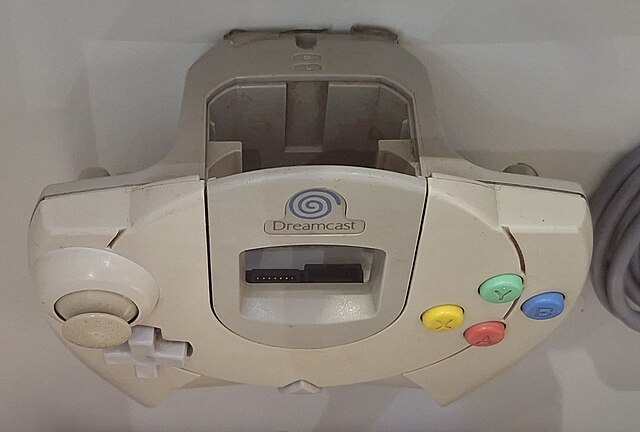
The VMS backup memory in the controller was ingenious. A mini-screen on the controller that could display game information. That innovation mattered. It was the Dreamcast saying “we’re thinking about features beyond just the console.” But innovations don’t matter if the broader market isn’t ready for them.
The tile-based GPU architecture was technically sophisticated. The PowerVR2 was an innovative approach to graphics rendering that offered advantages in certain scenarios. But it was different from what developers knew. They had to learn new techniques. By the time developers understood the PowerVR2’s advantages, the PS2 had already established market dominance.
The 9.13 Million Units: Not Failure, But Inevitability
The Dreamcast sold 9.13 million units worldwide. That sounds like a failure number until you understand the context. The Dreamcast was competing against a system that had already sold millions of units and had the entire industry’s momentum behind it. The Dreamcast launched late against an opponent that was unstoppable.
9.13 million units is actually respectable. It’s not the number of a bad console. It’s the number of a good console that arrived at the wrong moment. It’s the number that represents Sega doing everything right and still losing because the market had already decided.
Why the Dreamcast Matters
The Dreamcast proved that Sega could still make cutting-edge hardware. After the Saturn was a failure, after Nintendo had dominated the 32-bit generation, Sega came back with the Dreamcast and showed they understood hardware design. The Dreamcast proved that Sega’s arcade expertise could translate to home console design. The Dreamcast proved that innovation mattered.
But the Dreamcast also proved something darker: that market momentum is more powerful than technical achievement. That being first matters more than being best. That a competitor with established dominance is almost impossible to overcome, regardless of technical superiority.
The Dreamcast’s failure ended Sega’s time as a hardware manufacturer. Sega never made another console after the Dreamcast. That’s the real legacy: not a console that failed because it was bad, but a console that failed because the market was already spoken for.
On Original Hardware
The Dreamcast is one of those systems where original hardware actually matters. Playing on a Dreamcast with original controllers and a CRT television feels authentic in ways that emulation can’t replicate. The controller has a specific feel. The dial inputs feel responsive. The game feels connected to the hardware in ways that emulation abstracts away.
The GD-ROM drive has a specific sound. The load times have a specific rhythm. These aren’t nostalgic complaints. They’re part of the authentic experience. If you want to understand what Dreamcast gaming actually felt like, you need original hardware. Emulation is convenient, but it loses something essential.
Conclusion
The Sega Dreamcast was the most advanced home console of 1999. It had powerful hardware. It had an innovative architecture. It had a distinctive library of arcade-quality games. It had features like built-in modem and backup memory that were ahead of their time. It was a genuinely impressive piece of hardware engineering.
But it lost the console war because the market had already decided on the PlayStation 2. The PS2’s momentum was unstoppable. DVD support made it a more attractive consumer product. Developer commitment was already established. Publisher relationships were already in place. The Dreamcast couldn’t overcome that market reality.
9.13 million units sold. That’s not a number that represents failure. That’s a number that represents an excellent console arriving at an impossible moment. It’s the number that represents the end of Sega’s time as a hardware manufacturer. It’s the number that proves that being first and establishing momentum is more important than being technically superior.
I maintain original arcade hardware. I understand authenticity. The Dreamcast was the last console Sega made. It was ambitious. It was innovative. It was ahead of its time in many ways. It deserved better than the market gave it. But that’s the nature of industry momentum. Once you’re behind, it’s almost impossible to catch up.
Rating: 9/10 — The most ambitious Sega console that arrived at the moment when market momentum was already insurmountable
Want to learn more about retro consoles? Cheque out our complete Top 10 ranking of the best 80s and 90s consoles

Samuel’s been gaming since the Atari 2600 and still thinks 16-bit was the golden age. Between accounting gigs and parenting teens, he keeps the CRTs humming in his Minneapolis basement, writing about cartridge quirks, console wars, and why pixel art never stopped being beautiful.
0 Comments