You know what still gives me goosebumps? That moment when you're holding the N64 controller for the first time, trying to figure out which prong goes where, and then Mario 64 loads up and suddenly everyone in the room goes dead silent. But that wasn't the game that broke my social circle. That wasn't the one that had us screaming at each other until someone's mum came downstairs with that look that means "turn it off or I'm confiscating it."
No, that honour belongs to Super Smash Bros.
I remember the exact Saturday it happened. My mate Dave had got his hands on a Japanese import months before the PAL release, and he'd been bragging about it for weeks. "It's mental," he kept saying, which coming from Dave meant either genuine brilliance or complete rubbish—with him, there was rarely anything in between. We'd arranged this whole thing like we were planning D-Day: four controllers, enough pizza to feed a small army, and strict instructions that nobody was allowed to leave until we'd "properly tested" this mysterious fighting game that let you play as Mario.
The thing is, none of us really knew what we were getting into. We'd grown up on Street Fighter and Tekken, games where you picked your fighter and stuck with them, learned their moves until your thumbs could execute combos in your sleep. Proper fighting games with proper rules and proper frame data that the arcade kids would lecture you about if you dared suggest that button mashing might actually work sometimes.
Super Smash Bros threw all of that out the window, then set fire to the window frame for good measure.
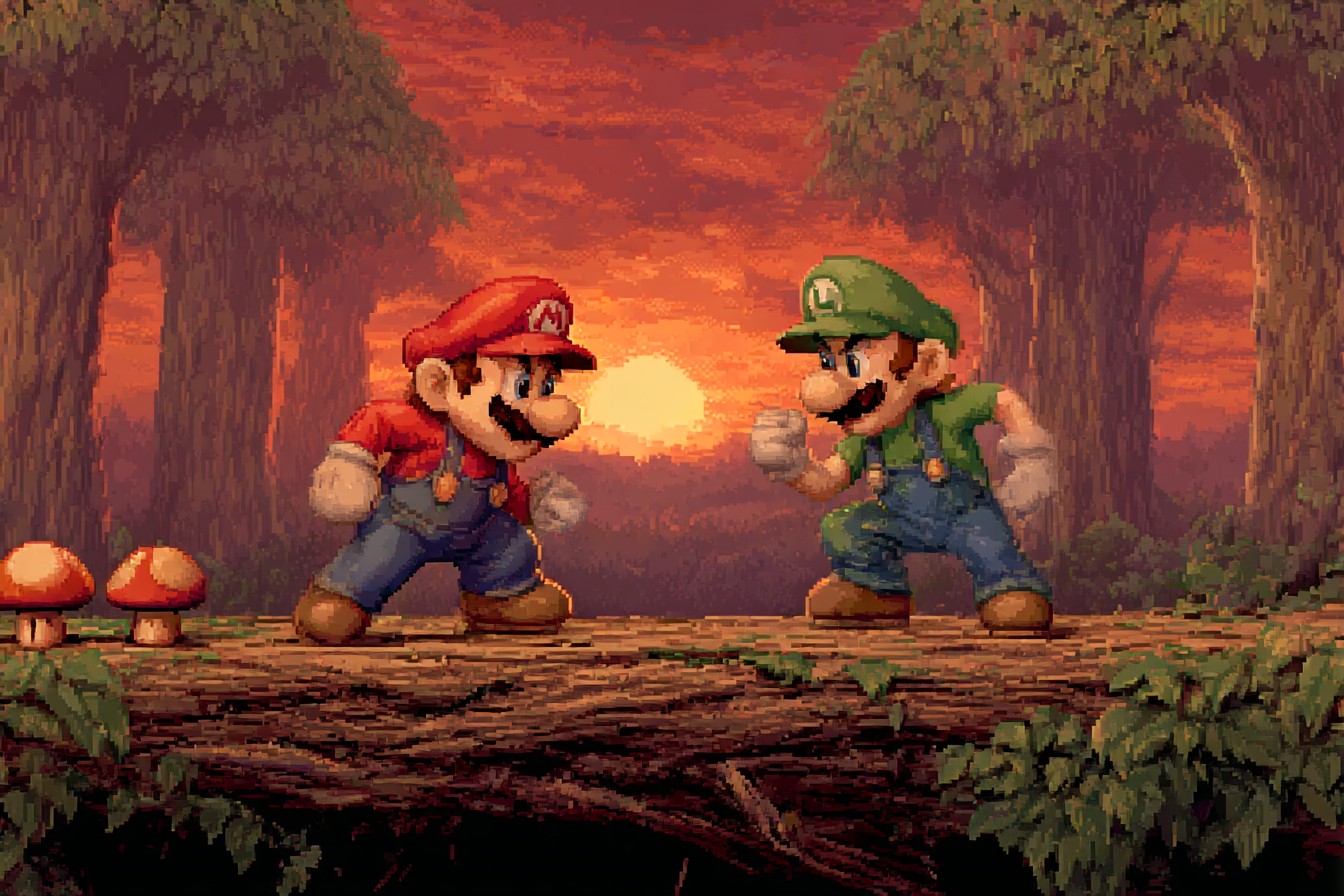
First match: Mario vs. Link vs. Pikachu vs. Samus, some stage that looked like a kid's drawing of a castle. We're all fumbling with the controls, trying to figure out why there's no fireball motion and why everyone keeps falling off the edges. Then Dave accidentally knocked my Mario clean off the platform with Link's sword, and something just… clicked. This wasn't about memorizing twenty-hit combos or spending hours in training mode. This was about chaos, pure and simple, wrapped up in characters we'd been playing as since we were kids.
Within about ten minutes, we'd discovered something that would define our friendship for the next several years: we were all absolutely rubbish at Smash Bros, but we were rubbish in completely different ways. Dave was the button masher who somehow always managed to land the most devastating hits through pure blind luck. Sarah—yeah, we actually had a girl in our gaming circle, revolutionary stuff for 1999—was the methodical one who'd stand back and wait for the perfect moment to strike. I was the show-off who kept trying to pull off elaborate aerial combos and mostly just fell off the stage. And Pete? Pete was the one who'd pick Kirby every single time and spend the entire match trying to inhale people.
The game didn't just break down our preconceptions about fighting games—it demolished our entire social hierarchy. See, in Street Fighter, skill mattered. The kid who could pull off Ryu's Super combo consistently would always beat the button masher, end of story. But Smash Bros? Complete lottery. Dave could be getting absolutely destroyed for three minutes straight, then accidentally grab a Poké Ball, summon something terrifying, and suddenly he's won the match. The randomness wasn't a bug—it was the entire point.
And the characters, bloody hell, the characters. This was 1999, remember, when crossovers meant Sonic appearing in a single Game Gear cartridge if you were lucky. The idea that Mario could punch Pikachu while Link fought Samus on the same screen was like… well, imagine if Disney suddenly announced that Mickey Mouse and Darth Vader were going to have a proper scrap. It shouldn't have worked. It should have been a marketing gimmick that fell apart the moment you actually tried to play it.
Instead, it became the perfect party game almost by accident. Every character felt completely different but equally viable. You could win with anyone if you played smart, but you could also lose with anyone if you got cocky. The stages weren't just backgrounds—they were active participants in the mayhem. That first time someone got launched by the barrel on Donkey Kong's level, or when the platforms started moving on Mushroom Kingdom, we realized this wasn't just fighting. This was performance art disguised as a video game.
The real genius was how it handled victory. In Street Fighter, you won by being better than your opponent, full stop. In Smash Bros, you won by being luckier, sneakier, or just more persistent than everyone else. Sometimes all three at once. I've seen matches where the person in last place with thirty seconds left managed to sneak a victory by playing keepaway while the other three beat each other senseless. I've seen perfectly good friendships tested because someone grabbed the hammer pickup and went absolutely mental for twenty seconds.
But here's the thing that still amazes me about that game—it created this weird democracy of skill. My little sister, who couldn't do a dragon punch if her life depended on it, could absolutely wreck any of us if she got lucky with items. My dad, who thought video games were a waste of time until he saw me playing as Samus, ended up spending an entire Sunday afternoon figuring out her charge shot. Even my nan had a go once, picked Jigglypuff because "she's pink and round, like me," and proceeded to put everyone to sleep and then complained that the game was boring.
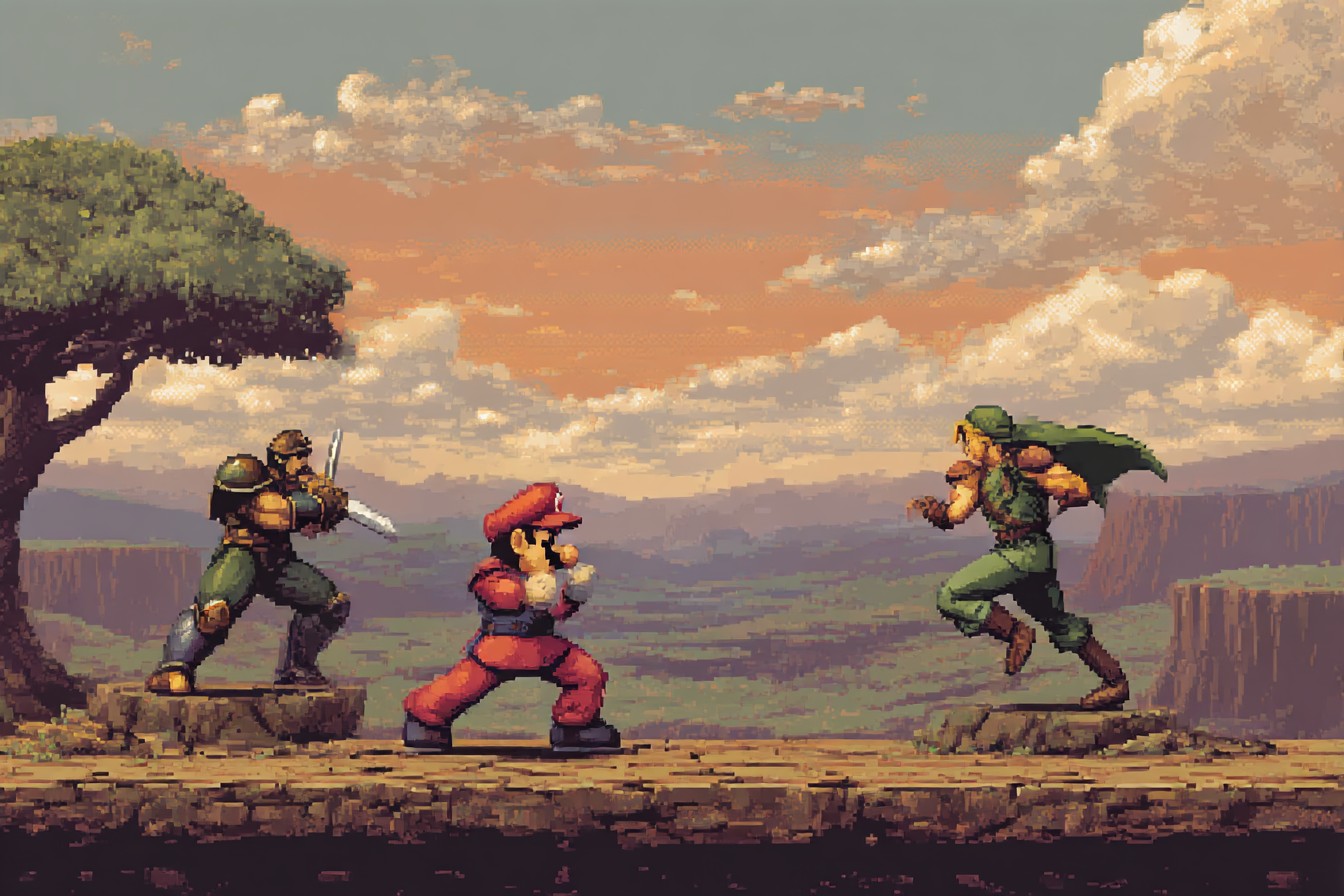
The multiplayer wasn't just about competition—it was about shared chaos. We'd spend hours setting up custom matches, turning items on and off, arguing about which stages were "fair" (spoiler: none of them were, and that was the point). Someone would always try to establish house rules—no throwing people off edges, no cheap moves, definitely no camping—and those rules would last exactly until the first time someone was losing badly and needed to improvise.
Looking back, Super Smash Bros on the N64 was probably the last great couch co-op experience before online gaming changed everything. You had to be in the same room, breathing the same stale air, sharing the same bag of crisps, arguing about who got which controller. The trash talk was immediate and personal. When Dave threw me off Final Destination for the twentieth time, I could punch him in the arm without worrying about getting banned from a server.
That little grey cartridge turned every sleepover into a tournament, every birthday party into a battle royale. It took characters from completely different universes and somehow made them feel like they'd always belonged together, beating seven shades of pixels out of each other while we screamed at the television.
And honestly? I'm not sure gaming parties have ever been quite the same since.



