Standing in my mate Dave's bedroom in 1996, staring at his brand-new N64 with Super Mario 64 spinning in the cart slot, I felt something shift in my understanding of what games could be. Not just technically—though watching Mario's face stretch and squish in real-time was pure wizardry—but fundamentally. This wasn't just a step up from 16-bit. This was games stepping through a doorway into somewhere completely different.
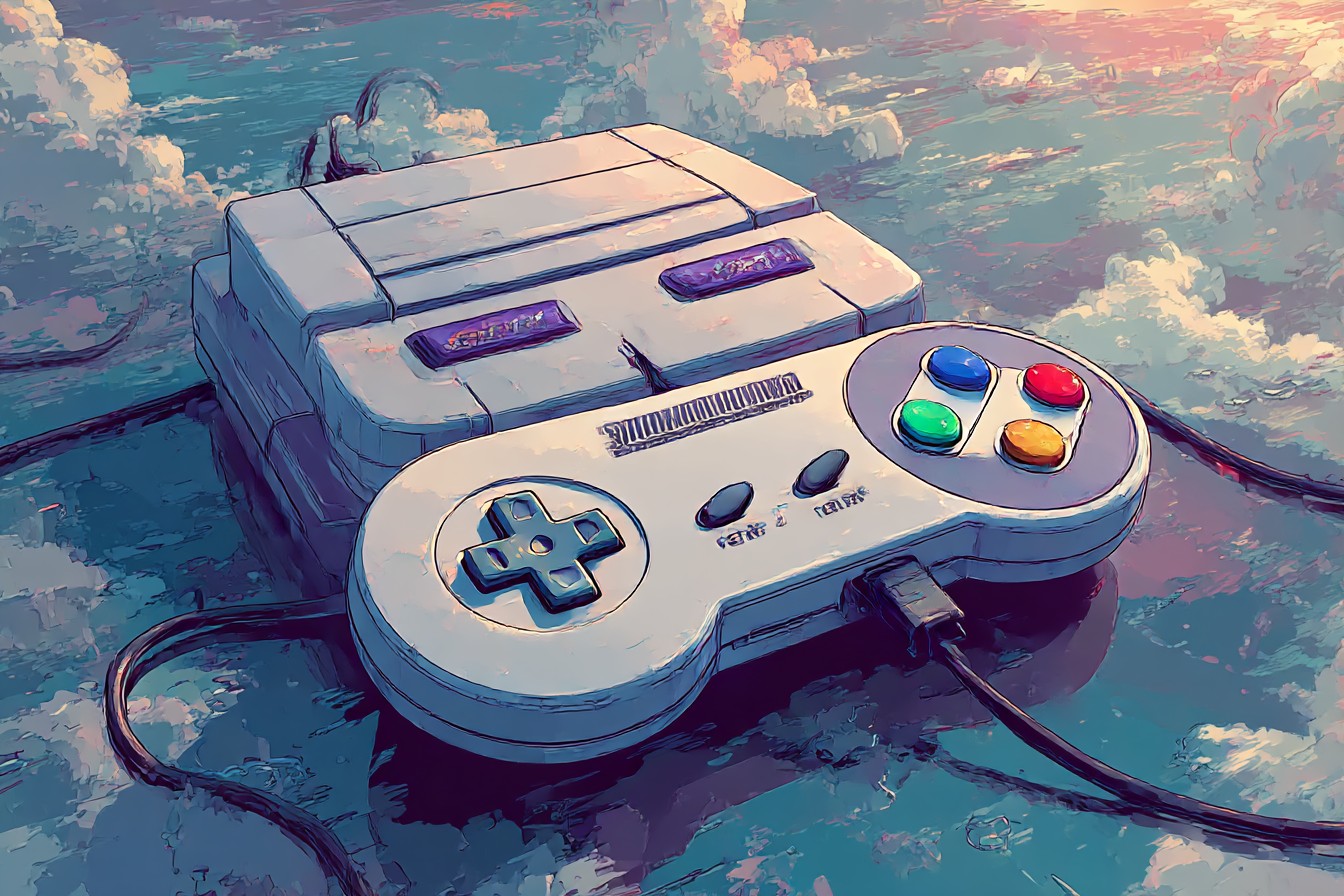
See, I'd been a proper SNES devotee up until that moment. Still am, if I'm being honest. That machine taught me what "cinematic" meant before Hollywood caught on. A Link to the Past didn't just tell you Hyrule was vast; it made you feel the weight of rain on cobblestones, the echo of your boots in ancient dungeons. Super Metroid's Zebes felt like a living planet with actual weather systems and geological history. Mode 7 effects in F-Zero made me believe I was piloting something impossibly fast through cities that existed beyond the screen's edges.
The SNES controller fit human hands like Nintendo had been studying ergonomics for decades. Those shoulder buttons—L and R—felt revolutionary when they appeared. Street Fighter II suddenly had six attack buttons that made sense. Super Mario World's cape physics responded to the exact pressure you applied to the run button. The D-pad clicked with authority. Everything about that controller whispered "precision."
But then came the N64's three-pronged oddity, and initially, we all held it wrong. Dave insisted you were supposed to grip the middle prong and right handle, leaving the D-pad orphaned on the left. Felt like trying to eat soup with a fork. Took me weeks to understand the genius: different games, different grips. Mario 64 lived in that center-right configuration. Fighting games could swing back to left-right traditional. The analog stick—that beautiful, spring-loaded miracle—gave us movement with actual subtlety for the first time.
Walking slowly through Princess Peach's castle, I discovered something I hadn't known I was missing: the ability to sneak. On SNES, you moved in eight directions at fixed speeds. Mario 64 let you tiptoe, stroll, jog, or sprint with infinite gradations between. That first time I barely nudged the stick and watched Mario creep forward like he was trying not to wake someone… man. Revolutionary doesn't cover it.
The visual leap felt impossible. SNES sprites were gorgeous—hand-crafted pixel art that still looks stunning today—but they lived in a flat world. Donkey Kong Country's pre-rendered characters hinted at volume and depth, but they were still locked to horizontal planes. N64 polygons were rough, jagged, swimming in Vaseline-smeared textures, but they existed in actual space. You could walk around them. Behind them. The camera could follow Mario up walls, down pipes, through paintings that rippled like water.
I spent hours in that first castle courtyard just moving the camera. Silly now, but transformative then. Games had always shown me predetermined views of predetermined spaces. Suddenly I was a cinematographer in my own interactive movie. The camera became a character—sometimes helpful, sometimes fighting you for control, but always there as proof that this world existed in three dimensions even when you weren't looking.
Sound made the difference too, though people forget this part. SNES had that beautiful SPC700 sound chip producing orchestral-quality samples that felt impossibly rich for home hardware. Chrono Trigger's soundtrack still gives me goosebumps. But N64's audio felt spatial. Sounds had distance, direction, echo. Ocarina of Time's Hyrule Field at night—hearing that haunting melody fade in and out as you approached and passed various landmarks—that was 3D audio design years before anyone called it that.
The technical jump from 16-bit to 64-bit wasn't just about more bits, though the marketing certainly hammered that point. SNES ran at roughly 3.5 MHz; N64's processor hit 93.75 MHz. But raw speed meant nothing without the architecture to use it. The Reality Signal Processor handled 3D calculations that would've melted a SNES. The Rambus memory gave developers 4MB to play with—expandable to 8MB with that beautiful red Expansion Pak—compared to SNES's 128KB of main RAM.
Storage told a different story though. SNES cartridges could hold up to 6MB of data by the end of the system's life. N64 carts maxed out around 64MB but cost manufacturers significantly more than CD-ROMs. This is why Resident Evil 2 on N64 felt like technical sorcery—Angel Studios compressed two CD-ROMs worth of content onto a single cart without losing the voice acting or FMV sequences. Witchcraft, basically.
Playing both systems today, the generational divide feels even starker than it did in '96. SNES games aged like fine wine—those pixel-perfect sprites and carefully composed screens look timeless on modern displays. N64 games… well, they show their age. Those early 3D experiments look rough through modern eyes, all swimming textures and aggressive anti-aliasing blur. But fire up Mario 64 or Ocarina of Time on original hardware through a good CRT, and the magic returns instantly.
The controller evolution alone tells the story of this transition. SNES perfected the 2D game controller—every button had purpose, every input felt deliberate. The N64 controller looks bizarre today because it was solving problems that didn't exist yet. How do you control a camera in 3D space? How do you move a character with analog precision while still needing digital inputs for menus and actions? Nintendo's solution—three handles, analog stick, trigger buttons—created a template that every subsequent controller followed.
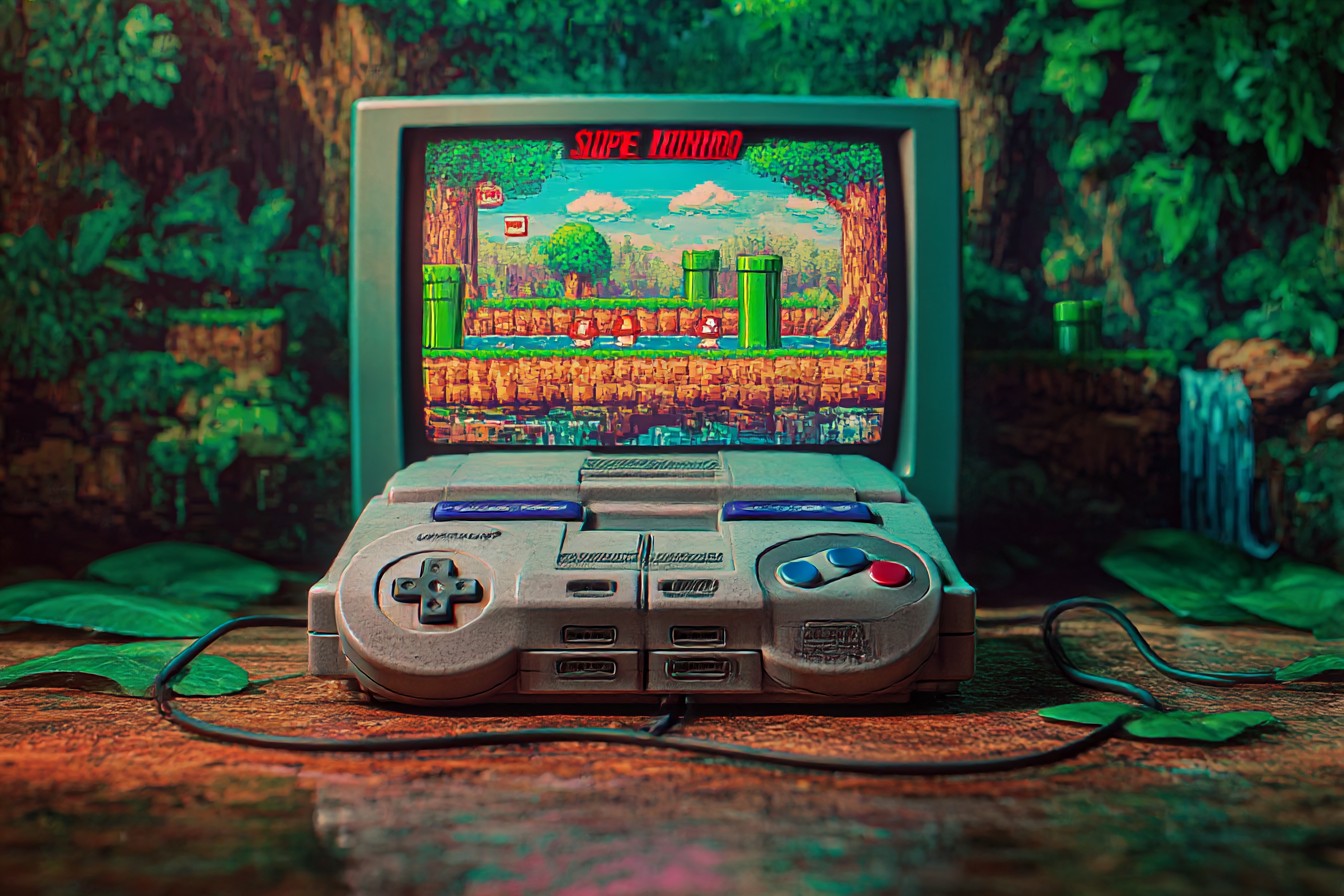
Different philosophies emerged too. SNES games felt crafted, each screen composed like a painting. Developers knew exactly what you'd see from any given position. N64 games had to work from infinite viewing angles. This pushed creators toward different solutions—environmental storytelling, atmospheric world-building, emergent gameplay that arose from players exploring 3D spaces in unexpected ways.
I'm not picking sides here—that console war already ended, and anyway, I owned both eventually. The SNES delivered the perfection of established forms: side-scrollers, top-down adventures, turn-based RPGs refined to absolute peaks. The N64 invented new forms entirely: 3D platforming, Z-targeting combat, analog movement, four-player split-screen mayhem that lasted until sunrise.
Both machines deserved their victories. Both taught us different lessons about what games could become. And both still live in my entertainment center, connected through a frankly embarrassing maze of switches and scalers, ready to remind me why we fell in love with this hobby in the first place.
Sometimes progress isn't about leaving the past behind—it's about understanding how we got here.



