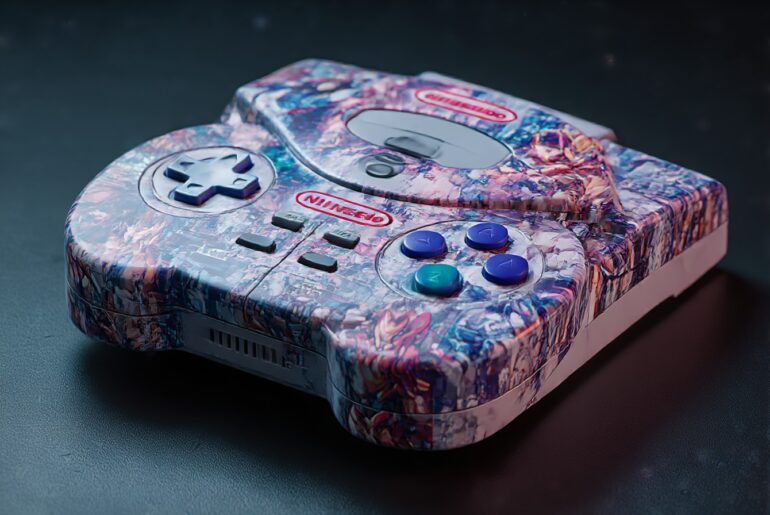
The six-button pad felt different in your hands, you know? Heavier somehow, more purposeful than Nintendo's sleek offerings. I remember unwrapping mine on Christmas morning 1993, the plastic still warm from being stored next to the radiator, and thinking this thing looked like it meant business. Three extra buttons meant three more ways to accidentally throw a fireball when you meant to block in Street Fighter II, but it also meant Mortal Kombat could finally breathe properly on home consoles.
Funny thing about the whole Genesis versus Mega Drive naming mess—we called it Mega Drive in the UK because some German synthesizer company had already nabbed "Genesis" over here, but honestly? The games didn't care what badge was stuck on the front. Sonic still ran at breakneck speed, Streets of Rage still sounded like Saturday night in neon, and Phantasy Star IV still made me cry actual tears during that ending sequence. Call it whatever you want; the cartridges fit the same way.
I was never really a "console war" kid in the purest sense. Sure, I had my Mega Drive first, but I'd sneak round to my mate David's house to play Super Mario World and pretend I wasn't impressed by how smooth those sprites moved. The truth is, Sega's machine had this gritty, almost rebellious character that Nintendo's family-friendly box just couldn't match. When you powered up Golden Axe, you knew someone was about to get an axe to the face, not rescued by a plumber in dungarees.
That Yamaha sound chip though—absolute magic in the right hands. Yuzo Koshiro basically turned Streets of Rage 2 into a chiptune nightclub, all thumping basslines and electronic stabs that made your speakers work for their money. Meanwhile, Thunder Force IV sounded like what I imagined fighter jets would listen to if they had headphones. The Genesis had this metallic, almost industrial tone that could make even the cheeriest platformer sound like it was recorded in a factory. Not a bug, definitely a feature.
Ecco the Dolphin scared the living daylights out of me, by the way. Absolutely gorgeous game, probably the most atmospheric thing I'd played up to that point, but those alien levels? Pure nightmare fuel. I'd rent it from Blockbuster, get about three levels in, have fever dreams about biomechanical sea creatures, then return it early claiming it was "boring." The bloke behind the counter knew I was lying, but never called me on it.

Speaking of rentals—remember when discovering a new Genesis game felt like archaeological work? You'd scan those wall displays, looking for something with decent box art that wasn't FIFA '94 for the fifteenth time, hoping against hope that all three discs would be in the case and at least one of them wouldn't have someone's jam fingerprints all over it. Half the games I fell in love with were complete accidents. Picked up Alien Soldier purely because the cover looked mental, ended up playing what might be the most ridiculous boss rush ever committed to silicon.
The really weird thing about Genesis games is how many of them felt like they were made by people who didn't quite understand the rules yet. Take Comix Zone—someone looked at the traditional side-scrolling beat-'em-up and thought, "What if the hero could rip through the comic book panels?" Completely barmy idea that somehow worked brilliantly. Or Castle of Illusion, where Mickey Mouse moved with this bouncy, almost liquid animation that made every jump feel intentional rather than mechanical.
Contra: Hard Corps still makes my palms sweat. Not because it's particularly scary, but because it's absolutely relentless in a way that modern games rarely dare to be. You'd get maybe three hits before dying, enemies would spawn from every conceivable angle, and the screen would be so full of bullets that it looked like a geometric screensaver having a panic attack. But when you finally, finally managed to see that ending screen… mate, you'd earned it.
The RPGs were something special too. Phantasy Star II arrived when most console RPGs were still figuring out how to tell stories without putting you to sleep, and suddenly here's this space opera with actual character development and moral complexity. I spent hours just wandering around the overworld, listening to that haunting music and pretending I understood what "climatrol" meant. The game came with a bloody great manual that was practically a novella—proper world-building before anyone called it that.
Shinobi III let you run up walls and throw shuriken at everything that moved, which was basically my eight-year-old power fantasy made interactive. The animation was so fluid it looked rotoscoped, though I'm pretty sure it wasn't. Joe Musashi moved like he was auditioning for a martial arts film, and every level felt like a different movie set. Surfing on missiles? Sure, why not. Fighting a mecha spider while hanging from a helicopter? Tuesday afternoon material.

But here's the thing that really gets me about Genesis games—they aged weirdly well because they never tried to look realistic in the first place. Sonic's spiky blue blur still looks fast today because speed was always more important than detail. Streets of Rage characters still look cool because they were designed to be cool, not anatomically correct. The limitations forced creativity, and creativity has longer legs than technical prowess.
I've got my original console set up next to a more modern machine these days, and switching between them is like flipping through photo albums from different decades. The Genesis games still feel immediate, still grab you by the collar and demand attention. There's no hand-holding, no tutorial levels that last forty minutes—just "here's the controls, now don't die." Refreshing, in its own brutal way.
The controller cable was always too short though. Always. You'd end up sitting cross-legged on the floor, practically kissing the telly, because wireless wasn't even a dream back then. But somehow that made it more intimate, more focused. The game had your complete attention because you physically couldn't do anything else.
Those games shaped my understanding of what interactive entertainment could be—not just distractions, but genuine expressions of creativity that happened to run on cartridges. Whether you called it Genesis or Mega Drive, the magic was the same.