Last weekend I found myself explaining to my nephew why his parents should let him buy a Dreamcast—not because it's cheap (though it is), but because half the stuff he loves in modern games was basically prototyped on that little white box twenty-three years ago. Kid's obsessed with open-world games where you can just wander around and do mundane stuff. I nearly choked on my tea when I realized he was describing Shenmue.
The Dreamcast died too young, sure, but its games? They're still teaching developers lessons. I've got my original console hooked up via VGA to a Dell monitor that weighs about as much as a small car, and firing up these games still feels like time travel. Not backward—forward. These games predicted the future so accurately it's almost unsettling.
Take Shenmue, right? Yu Suzuki basically invented the modern open-world template in 1999. Everyone bangs on about Grand Theft Auto III being revolutionary, but Shenmue was already letting you check your watch, buy drinks from vending machines, and ask random NPCs for directions two years earlier. I remember spending actual hours just watching Ryo's daily routine unfold in real-time. The game ran on its own clock—shops opened and closed, people had schedules, weather changed. My mates thought I'd lost my mind, sitting there waiting for a virtual arcade to open at 10 AM so I could play Space Harrier.
But that's exactly what modern games do now, isn't it? Red Dead Redemption 2 gets praised for letting you watch NPCs live their little digital lives, but Shenmue was already doing that when most people were still arguing about whether the PlayStation 2 would have DVD playback. The attention to mundane detail—examining every drawer in your house, the way Ryo would carefully move objects around—that's pure modern gaming DNA right there.
Then there's Jet Set Radio, which basically invented cel-shading as we know it and wrapped it around a game about urban art and rebellion that feels more relevant now than it did then. The graphics still look fantastic because they weren't trying to be realistic—they were trying to be timeless. Smart move, as it turns out. I fired it up last month and my daughter immediately wanted to know if she could play "the graffiti game." The music, the movement, the way it made vandalism feel like performance art… Tony Hawk's games were great, but JSR had this punk aesthetic that influenced everything from Ni No Kuni to Genshin Impact.
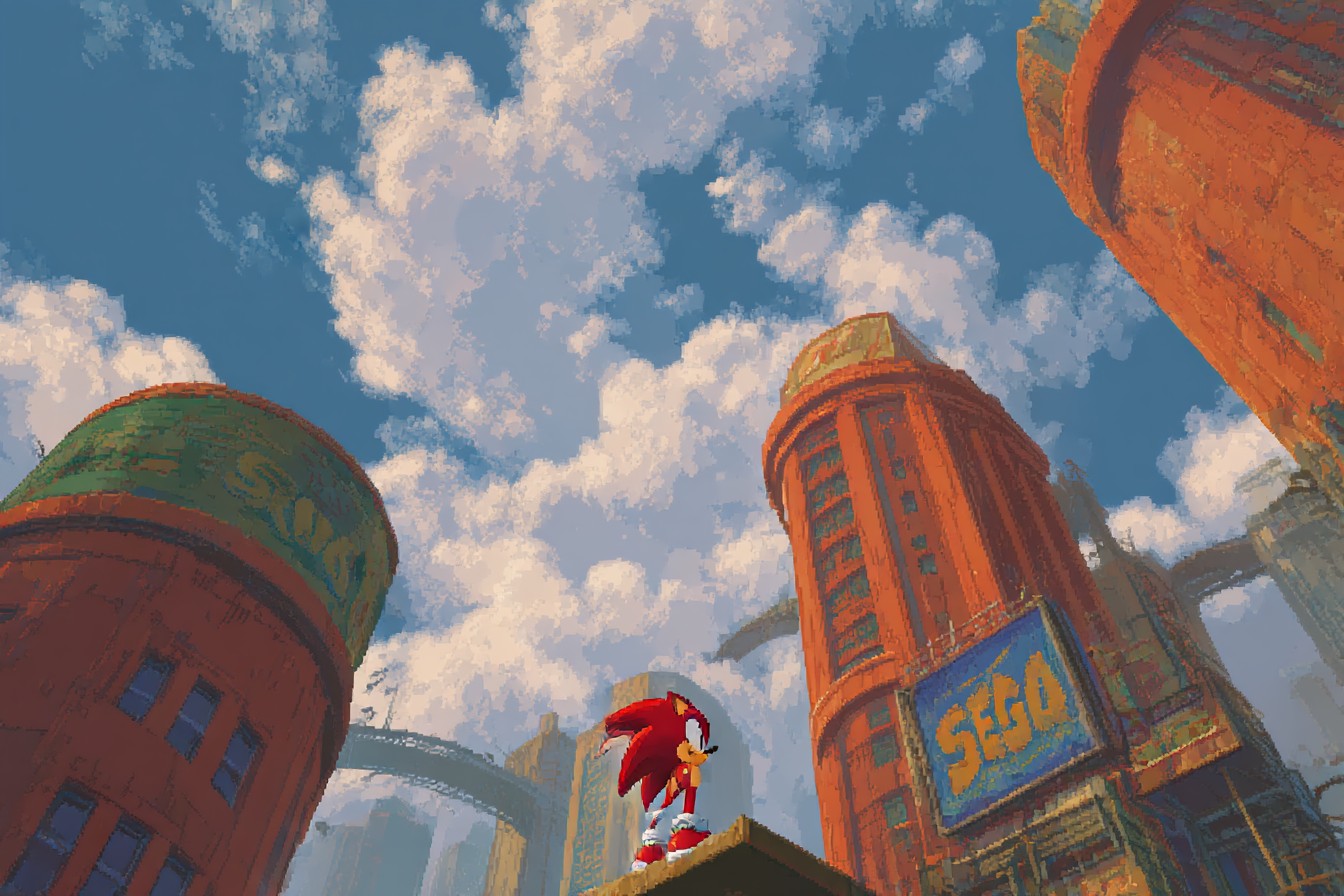
The multiplayer stuff was mental too. I had a 56k modem that screamed like a banshee every time it connected, but playing Phantasy Star Online felt like stepping into the future. Here was a console doing proper online RPG action when most people were still figuring out email. The lobby system, the real-time combat, the way you could drop items for other players—it's basically the template every online action-RPG uses today. My Hunter reached level 127 before the servers shut down, and I'm not ashamed to admit I was genuinely sad when that community dissolved.
Soulcalibur deserves a mention here because it showed what arcade-perfect really meant when most home conversions were still making compromises. The character models looked better than most PlayStation 2 launch games, the 60fps never dropped, and the weapon-based combat system was deeper than anything Street Fighter was offering at the time. I've got mates who still insist Soulcalibur on Dreamcast feels better than any of the sequels. The timing, the response—something about that original code just clicked.
Space Channel 5 predicted rhythm games going mainstream by about five years. Before Guitar Hero, before Rock Band, before anyone really understood that musical games could be massive, there was Ulala teaching us that dancing could be gaming and gaming could be art. The presentation was so far ahead of its time—interactive music videos, basically—that when Harmonix started making rhythm games huge, it felt like the industry was finally catching up to what Sega had already figured out.
Even the weird stuff was prescient. Seaman, that bizarre virtual pet thing with Leonard Nimoy narrating? It was basically Tamagotchi meets AI chatbot, predicting our current obsession with virtual assistants and digital companions by decades. I spent embarrassing amounts of time talking to that creepy fish-thing, and it would remember conversations and respond in ways that felt genuinely uncanny for 2000. Now we're all arguing with ChatGPT and teaching AI to be our friends—Seaman was the proof of concept.
Crazy Taxi nailed the open-world driving formula years before everyone else. The Offspring and Bad Religion soundtrack, the anarchic driving physics, the way you could just ignore objectives and cause mayhem—that's basically every open-world game now. It also pioneered that specific type of arcade-to-console port that doesn't just recreate the original but improves on it. More modes, more music, better graphics. The template for every "definitive edition" that followed.
What makes this all more impressive is that the Dreamcast was doing this stuff while being essentially a boutique console. Sega knew they were probably going down swinging, so they took risks. No focus groups were telling Yu Suzuki to make Shenmue more like other games because there weren't any other games like Shenmue. The creative freedom that comes from having nothing left to lose produced some of the most forward-thinking game design ever.
I've been replaying a bunch of these lately—some on original hardware, some through emulation, some on modern re-releases—and they still feel fresh. Not retro-fresh, but actually contemporary. That's the mark of truly great game design, isn't it? When something from 1999 feels more modern than stuff released last year.
My nephew ended up getting that Dreamcast, by the way. His parents caved when I showed them Jet Set Radio running at 480p through VGA. Sometimes the future needs a proper introduction to its own past.



