Saturday afternoon, nineteen-ninety-five. I'm sprawled on the carpet in my mate David's front room, controller in hand, watching this yellow star-shaped character stretch his arms across the screen like some sort of cosmic elastic band. The game was Ristar, and honestly? I'd never heard of it before that moment. David's older brother had picked it up from Blockbuster Video—you know, back when you could rent games for the weekend and pray the previous customer hadn't saved over all the good bits.
"What's this supposed to be then?" I remember asking, squinting at the peculiar protagonist bouncing around what looked like a Saturday morning cartoon fever dream. The character moved differently from anything I'd played before. While Sonic was all about speed and Mario was about precision jumping, this little guy grabbed onto things with telescopic arms that seemed to defy every law of physics my twelve-year-old brain thought it understood.
That afternoon turned into an evening, and honestly, it should've been a weekend. Ristar was one of those games that snuck up on you—not with flashy advertising or playground buzz, but with this quiet, confident weirdness that made you forget you were supposed to be playing Street Fighter II instead.
The stretch mechanic was brilliant in that way only Sega seemed to manage in the mid-nineties. You'd grab onto enemies, poles, switches, basically anything the developers thought looked grabbable, and Ristar would extend these rubbery arms that made every interaction feel tactile. I mean, you could grab a baddie, stretch back like a slingshot, and launch yourself across the screen. It was platforming physics that actually felt physical, if that makes sense.
What really got me was how the game used this central gimmick throughout every level. This wasn't just a novelty move you'd use occasionally—it was the entire language of the game. Need to swing across a gap? Grab that overhead branch. Want to take out that robot shooting at you? Stretch-grab him and headbutt the circuits out. There was something deeply satisfying about the way Ristar's arms would extend with this lovely animation, like watching proper cartoon physics in real-time.
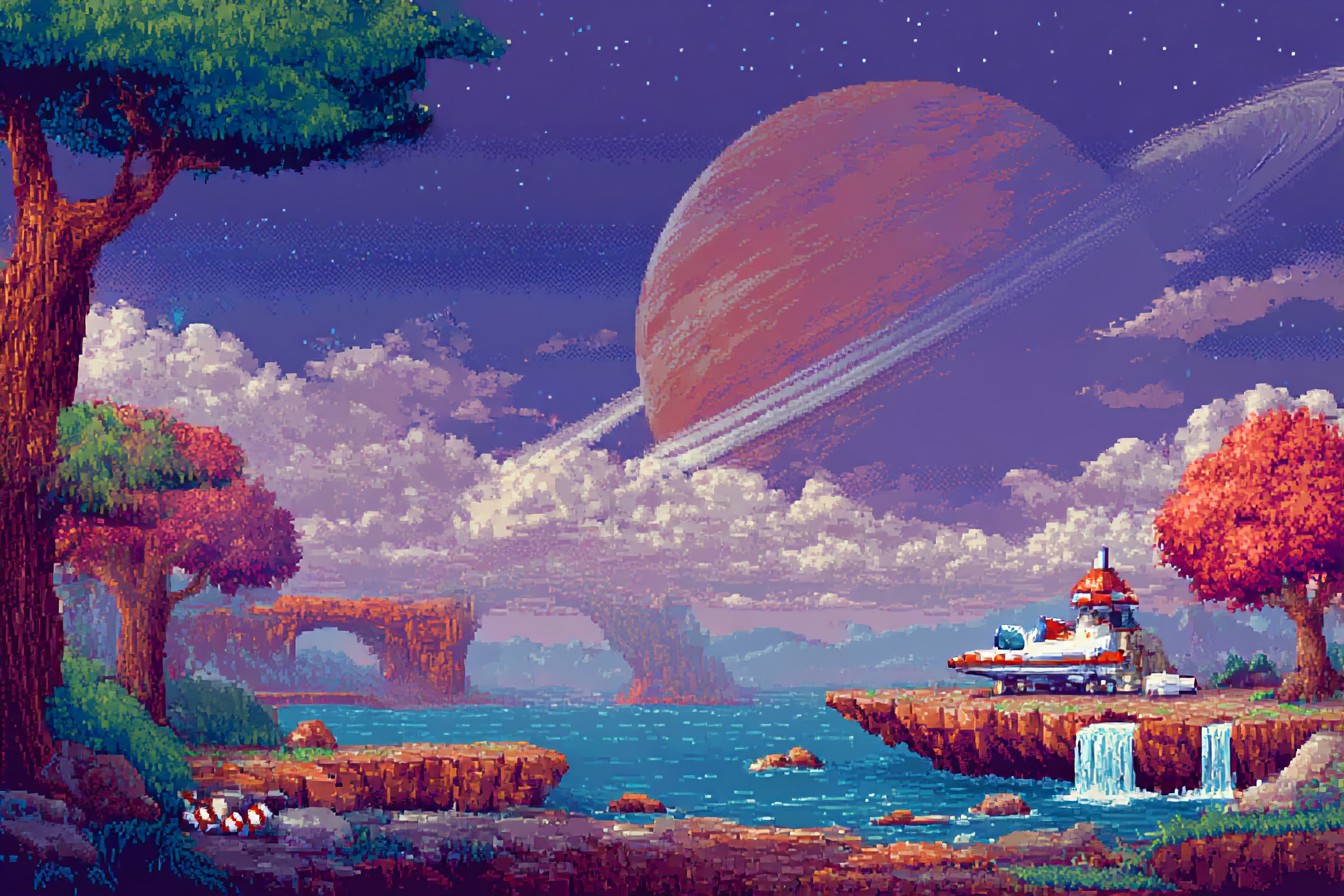
Visually, the thing was an absolute stunner. I'm talking proper Mega Drive eye candy here—the sort of colorful, detailed sprites that made you wonder why anyone would ever need more powerful hardware. Each planet had this distinct personality, from lush jungle worlds with backgrounds that seemed to breathe, to mechanical levels that looked like they'd been designed by someone who really, really loved drawing gears and pistons.
The music, though. Christ, the music. That Yamaha sound chip was singing in ways that made my ears happy. Each world had these memorable tunes that somehow matched the visual themes perfectly. There was this underwater level—Undertow, I think it was called—where the music had this dreamy, floating quality that made you feel like you were actually moving through liquid. And the boss themes! Proper dramatic stuff that made every encounter feel like a genuine showdown.
Speaking of bosses, they were mental in the best possible way. Each planet ended with these massive, screen-filling creatures that required you to really understand Ristar's stretchy moveset. I remember this one mechanical bird thing that you had to grab onto and redirect its own attacks back at it. Took me about fifteen tries to figure out the pattern, and when I finally did, it felt like solving a puzzle that had been designed specifically for my brain.
The thing is, Ristar came out right at the tail end of the Mega Drive's prime time. By 1995, everyone was talking about Saturn and PlayStation, about polygon counts and CD-quality audio. Here was this beautiful, inventive 2D platformer arriving just when the gaming world was convinced that 2D was finished, done, yesterday's news.
I didn't realize it at the time, but I was witnessing one of Sega's last great 16-bit hurrahs. The same team that had worked on Sonic was clearly putting everything they'd learned into this strange little star character. You could feel the craftsmanship in every animation, every sound effect, every carefully placed platform and enemy.
Playing it now—and yes, I still boot it up occasionally on my modded Mega Drive with the EverDrive cartridge—I'm struck by how confident it feels. There's no tutorial level explaining the mechanics; you just pick up the controller and start grabbing things. The game trusts you to figure out its language through play, which feels refreshingly old-school compared to modern hand-holding.
What makes me slightly melancholy is thinking about all the kids who never experienced Ristar because it wasn't Sonic or Streets of Rage. It didn't have the marketing push or the playground reputation. It was just this weird little gem sitting on rental shop shelves, waiting for someone curious enough to give it a go.
David's mum eventually called us for tea—fish fingers and chips, if memory serves—and we reluctantly switched off the Mega Drive. But I knew I'd be back. There was something about Ristar's world that felt unfinished in my head, like a book I'd only read half of.
Years later, when I started collecting retro games properly, Ristar was one of the first titles I hunted down. Not because it was rare or valuable, but because I wanted to preserve that feeling of discovery. That sense of stumbling across something genuinely special when you weren't looking for it.
These days, with digital storefronts and gaming databases cataloguing every release, it's harder to have those accidental encounters with hidden gems. Everything's documented, reviewed, ranked. But back then, wandering into a video shop and picking up an unknown cartridge felt like actual exploration.
Ristar deserved better than it got commercially. It was Sega doing what Sega did best—taking a simple, mad idea and executing it with style and personality. In a just world, it would've spawned sequels and spin-offs. Instead, it remains this beautiful footnote in 16-bit history, a reminder that sometimes the most memorable games are the ones nobody talks about.
If you've never played it, do yourself a favor. Whether it's through emulation, a rerelease collection, or tracking down original hardware like the obsessive I am—just experience that stretch mechanic once. Feel what it's like to grab the world with rubber arms and swing through levels designed by people who clearly loved what they were doing.
Some gems stay hidden. Others just need someone to dust them off and remember why they sparkled in the first place.



