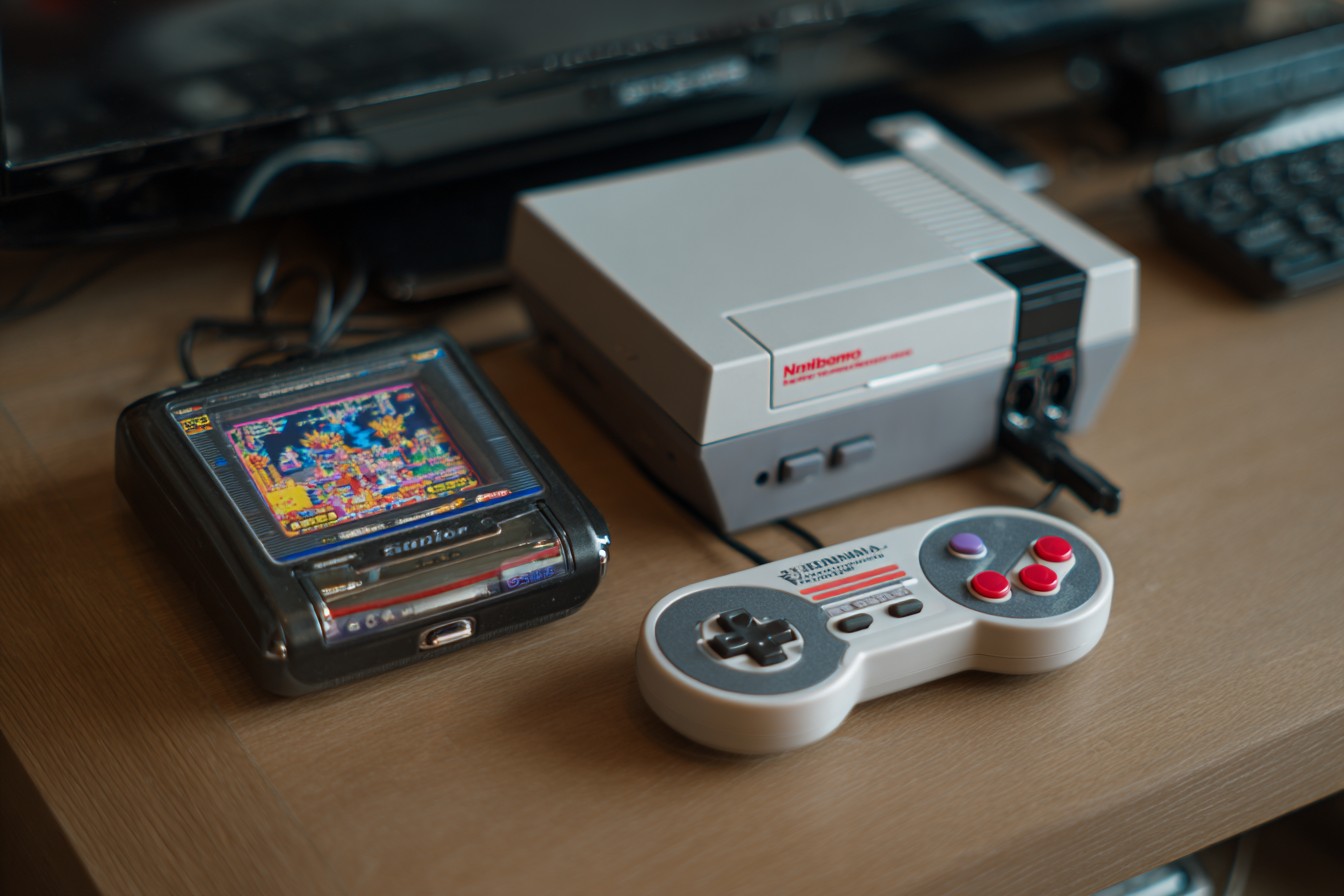

When I got involved in retro-gaming as an adult — without nostalgia from my childhood — I approached it in a practical manner. Having come from construction, I was aware of how to construct things efficiently and understand where to put my money and where to save it. While the collector’s market has caused prices for full sets of original packaged games to inflate, there is no reason to believe that you cannot enjoy playing retro games inexpensively if you are willing to make different choices than the collectors.
The only thing that the collector’s community does not want recognized is that you can acquire the exact same gaming experience for a tiny portion of the price that a collector would have to pay. A loose cartridge will perform exactly the same as a cartridge with the original packaging. The only difference is the visual presentation and the collectibility; the gameplay experience is the same. To be able to enjoy playing retro games on a budget, you have to understand this distinction.
To successfully play retro games on a budget, you must be able to make decisions that are strategically based upon the choices you make. You have to determine what is important to you: the gaming experience itself, or the preservation and authenticity of the packaging. For most budget gamers, the experience will always take precedence over the collector’s premium since the collector’s premium is so large and will not impact the gameplay experience. A loose version of the popular game “Super Mario World” for the Super Nintendo Entertainment System (SNES) will cost anywhere from $10 to $40 while a complete version of the same game, including its original packaging, will cost anywhere from $150 to $300.
Budget Retro Gaming Options
There are two basic components to budget retro gaming: the cost of the console itself, and the cost of the games themselves. The cost of the console is the major upfront cost. A fully functional SNES console will cost anywhere from $80 to $150 depending on the seller and the age of the console. In contrast, a loose copy of Super Mario World will cost anywhere from $10 to $40. Therefore, you can build a collection of ten games for less than $300. The cost of an NES console will vary similarly, with a functional console costing anywhere from $60 to $120. N64 games are typically very expensive due to their popularity among collectors. However, PlayStation games are typically much less expensive due to the sheer number that were produced and sold.
Once you purchase the initial hardware required to begin enjoying retro gaming, the other significant expense is the cost of the individual games. As previously mentioned, the cost of individual games varies significantly. Common SNES games can cost anywhere from $5 for a loose version to $100 or more for a rare version. Similarly, common Genesis/Mega Drive games will generally cost anywhere from $5 to $20. N64 games are more expensive, with even relatively common versions costing anywhere from $30 to $50. PlayStation games are generally much less expensive, with common versions costing anywhere from $5 to $20. Additionally, Nintendo games tend to be more valuable than games for Sega and Sony consoles since Nintendo games are so highly sought after and well-regarded by collectors.
In addition to the individual costs of the console and games, the collector’s market has driven the cost of certain systems to be very high for collectors. In particular, the N64 is a very expensive system to collect since N64 cartridges are very durable and Nintendo games are highly regarded and therefore highly sought after by collectors. SNES games are also more expensive to collect since Nintendo has an excellent library of games and many fans of retro gaming want to include these games in their collections. Genesis/Mega Drive games are less expensive to collect since fewer fans seek to collect these games.
Strategies for Playing Retro Games on a Budget
While it may seem impossible to play retro games on a budget, several strategies can help you achieve this goal. Here are seven ways to reduce the cost of playing retro games:
Strategy #1: Choose Your Console Wisely
If you are extremely limited in your budget, your best bet is the original PlayStation console. The PlayStation is an inexpensive console to purchase, and the games are relatively inexpensive to purchase as well. You can buy a used PlayStation console for anywhere from $50 to $100. You can buy a used copy of a game for anywhere from $5 to $20. Since the PlayStation had such a massive library of games, you will likely never run out of new games to explore and play. The only drawback to using the PlayStation is that the games are old enough that the 3D graphics look primitive compared to today’s graphics. Also, the gameplay is somewhat dated in comparison to today’s games. However, the games are still enjoyable to play, and the sheer volume of games available ensures that you will find plenty of titles that you will truly enjoy.
If you have a slightly larger budget than the PlayStation, then the SNES or Mega Drive/Genesis consoles are probably your next best bets. While the individual games are more expensive than the PlayStation, the quality of the games is generally higher. The graphics and gameplay hold up much better than the PlayStation, and you are more likely to find games that you will really enjoy. Keep in mind that you will spend more money overall, but the satisfaction of playing these games is well worth it.
Regardless of which console you ultimately choose, you should select the console(s) that offer the largest selection of games within the genres and series that interest you the most. For example, if you are primarily a fan of sports games, then the Mega Drive/Genesis is probably your best bet. If you are primarily a fan of role-playing games (RPGs), then the PlayStation is your best bet. Finally, if you are primarily a fan of platformers, then the SNES is your best bet. Ultimately, choose the console that offers the largest selection of the type of games you enjoy.
Strategy #2: Buy Loose Games
Another huge advantage of buying retro games is that you do not need to pay the collector’s premium for complete, boxed games. Loose cartridges play identically to complete cartridges with the original packaging. The only differences are cosmetic and related to collectibility. A loose cartridge does not include the box and manual, but the cartridge plays the game in the same way. The price difference between a complete cartridge and a loose cartridge can be enormous — complete cartridges cost anywhere from five to ten times more than loose cartridges.
This is the single largest budget-saving strategy for playing retro games. Simply by choosing to buy loose cartridges, you can obtain the same gaming experience for a fraction of the cost. For example, a loose copy of “Mario” for the NES might cost $10 while a complete copy of the same game might cost $100. The only difference is that the loose cartridge is missing the original box and manual. You are not losing anything in terms of gameplay.
Of course, if you are a collector who values the preservation of packaging and the aesthetic appeal of the box and manual, then this is not a viable option for you. However, if you are simply looking to enjoy the gaming experience, then buying loose is the rational decision.
Strategy #3: Shop for Deals
Since buying retro games on a budget relies on making smart purchasing decisions, then shopping for deals is essential. Instead of looking at prices online, you should check local marketplaces, garage sales, thrift stores, estate sales, and other offline sources for deals. You may be able to find loose games for pennies on the dollar or find consoles at bargain prices. Many times, items are listed without the seller realizing their true value.
Therefore, patience is the ultimate budgeting strategy. If you are willing to wait for deals, then you will eventually find them. Conversely, if you buy retro games as soon as you find them at the first price you see, you will inevitably overpay. Setting up price alerts and watching online listings will increase your chances of finding good deals. Buying retro games at holiday times or during end-of-year sales can also yield bargains. Finally, knowing when to buy will help you find deals.
Finally, establishing a relationship with local sellers will improve your chances of finding deals. Joining local Facebook groups or posting messages asking about local retro game sales will connect you with potential sellers. Establishing relationships with local sellers will also give you leverage to negotiate prices.
Strategy #4: Consider Using an Emulator and/or Official Digital Releases
One of the least expensive ways to play retro games is through emulation. Emulators are essentially free software applications that allow you to run retro games on modern computers or mobile devices. Since emulators are free, the only cost is the initial cost of the device on which you plan to use the emulator. Additionally, many games are available digitally through official channels, such as Nintendo Switch Online, which provides users with access to a library of classic NES, SNES, Genesis, and N64 games for a monthly fee. At around $20 per month, this is a very affordable way to play hundreds of classic games.
The primary disadvantage of using an emulator is that you are not experiencing the game on the original hardware, and the experience is therefore different. However, the games are the same regardless of the platform on which you play them, and the cost savings of emulation is substantial.
Strategy #5: Prioritize Quality Over Quantity
Another way to manage the cost of retro gaming is to focus on quality over quantity. Instead of trying to collect every game ever released, you could focus on acquiring games that you truly enjoy. In fact, a smaller collection of games that you love is likely to be far more enjoyable than a larger collection of games that you rarely play.
Focusing on quality rather than quantity also allows you to be more selective when purchasing games. When you are only interested in acquiring games that you know you will play, you are less likely to waste money on games that you will never play.
Before you buy a game, you should research it thoroughly. Look for videos on YouTube or Twitch that show the gameplay. Read user reviews to see if the game lives up to expectations. Make informed decisions about what games you want to purchase. Do not buy a game blindly.
Strategy #6: Collect Across Multiple Systems
Another strategy to help you stretch your budget when collecting retro games is to collect across multiple systems. For example, you could collect a loose game from each of five different consoles. Rather than spending thousands of dollars to collect a complete library of games on one system, you could spend significantly less to collect a few dozen games across multiple systems. This not only saves you money, but also helps keep the hobby interesting by allowing you to switch back and forth between different types of games.
Strategy #7: Identify the “Trap” Games
Finally, one of the best strategies to help you avoid wasting your money on retro games is to identify the “trap” games. These are games that are overpriced because they are collectible, but are not necessarily worth the price. Examples of trap games include Stadium Events on the NES and Earthbound on the SNES. Both of these games are overpriced because they are rare, but neither of them are particularly good games. By avoiding the trap games, you can ensure that you are getting the best value for your money.
Realistic Budget Examples
Assuming you are on a very tight budget of $300, here is an example of a realistic budget for retro gaming:
* Purchase an original PlayStation console for $80.
* Purchase twenty loose games for $200.
You now have a vast library of games to play for a total investment of $280. Of course, this is an extreme case, but it illustrates how inexpensive it can be to start enjoying retro games.
If you are on a moderate budget of $500, here is another example of a realistic budget for retro gaming:
* Purchase an SNES console for $100.
* Purchase fifteen loose SNES games for $200.
* Purchase ten loose Genesis games for $150.
* Spend $50 on miscellaneous accessories such as controllers and cables.
You now have a wide selection of games from two systems for a total investment of $400.
If you have a larger budget of $1000, here is yet another example of a realistic budget for retro gaming:
* Purchase multiple consoles.
* Purchase a diverse library of games.
* Purchase all the necessary cables and adapters.
* Possibly purchase one or two complete games as collector pieces.
For this budget, you will be able to build a solid collection of retro games that includes both a broad library of games and a few unique collector’s items.
If you have an extremely large budget of $2000 or more, here is an example of a realistic budget for retro gaming:
* Purchase a complete collection of games for your favorite systems.
* Purchase original hardware for your systems in good condition.
* Purchase all the necessary cables and adapters to set up your systems correctly.
* Purchase additional items such as display screens, controller stands, etc.
With this amount of money, you will be able to build a serious retro gaming collection that is truly worthy of a serious collector.
Reality Check
Playing retro games does not have to be expensive. If you are willing to buy loose games and avoid the collector’s market, you can play almost any game you want for a fraction of the collector’s price. The experience of playing the game is identical, but the price is dramatically reduced. The collector’s market has artificially inflated the prices of many retro games. There is no reason why you have to pay the collector’s price. You can play retro games on a budget if you are willing to accept the fact that you are playing games, not collecting them.
Ultimately, the games are the same regardless of the price. Whether you spend $10 or $300 for the same game, the gameplay experience is the same. Therefore, choose the price point that is right for your budget.

Timothy discovered retro gaming at forty and never looked back. A construction foreman by day and collector by night, he writes from a fresh, nostalgia-free angle—exploring classic games with adult curiosity, honest takes, and zero childhood bias.
0 Comments