The smell of Saturday morning cartoons still hits me when I boot up my old Mega Drive. There's something about the way those Power Rangers games captured that exact feeling of rushing downstairs in pyjamas, cereal bowl in hand, ready for an hour of pure televisual chaos. Mighty Morphin Power Rangers on the Genesis—or Mega Drive if you're from my neck of the woods—wasn't just a game. It was interactive Saturday morning telly, complete with all the cheese and none of the ad breaks.
I remember the first time I saw it spinning in the rental shop carousel, wedged between Sonic 2 and some forgettable sports title. The cover art promised everything: giant robots, martial arts, teenagers with attitude. What it delivered was… well, actually pretty much exactly that, just with the slightly janky charm that made 90s licensed games so endearing.
The thing about Power Rangers games on Sega systems is they never tried to be anything other than what they were—pure, unadulterated fan service wrapped in fighting game mechanics that sort of worked if you squinted hard enough. The Genesis version threw you straight into one-on-one battles against Rita's monster-of-the-week brigade, and honestly? The sprite work was surprisingly decent for what could've easily been a quick cash grab.
I spent an embarrassing amount of time trying to master Tommy's Dragon Dagger moves. The button inputs felt like they'd been borrowed from Street Fighter II's homework and hastily rewritten, but when you pulled off a proper combo, that little rush of satisfaction was real. My younger brother would watch me play for hours, both of us making the "hai-ya!" sound effects because the game's audio was… let's call it economical.
The morphing sequences were where the magic happened, though. Sure, they were basically glorified loading screens dressed up with flashy animation, but they captured that essential Power Rangers DNA perfectly. You'd hit the morph button and watch your regular teenager transform into a spandex-clad superhero, complete with that distinctive helmet design that somehow managed to look both ridiculous and genuinely cool. The Mega Drive's sound chip gave those transformation jingles just enough metallic crunch to feel properly heroic.
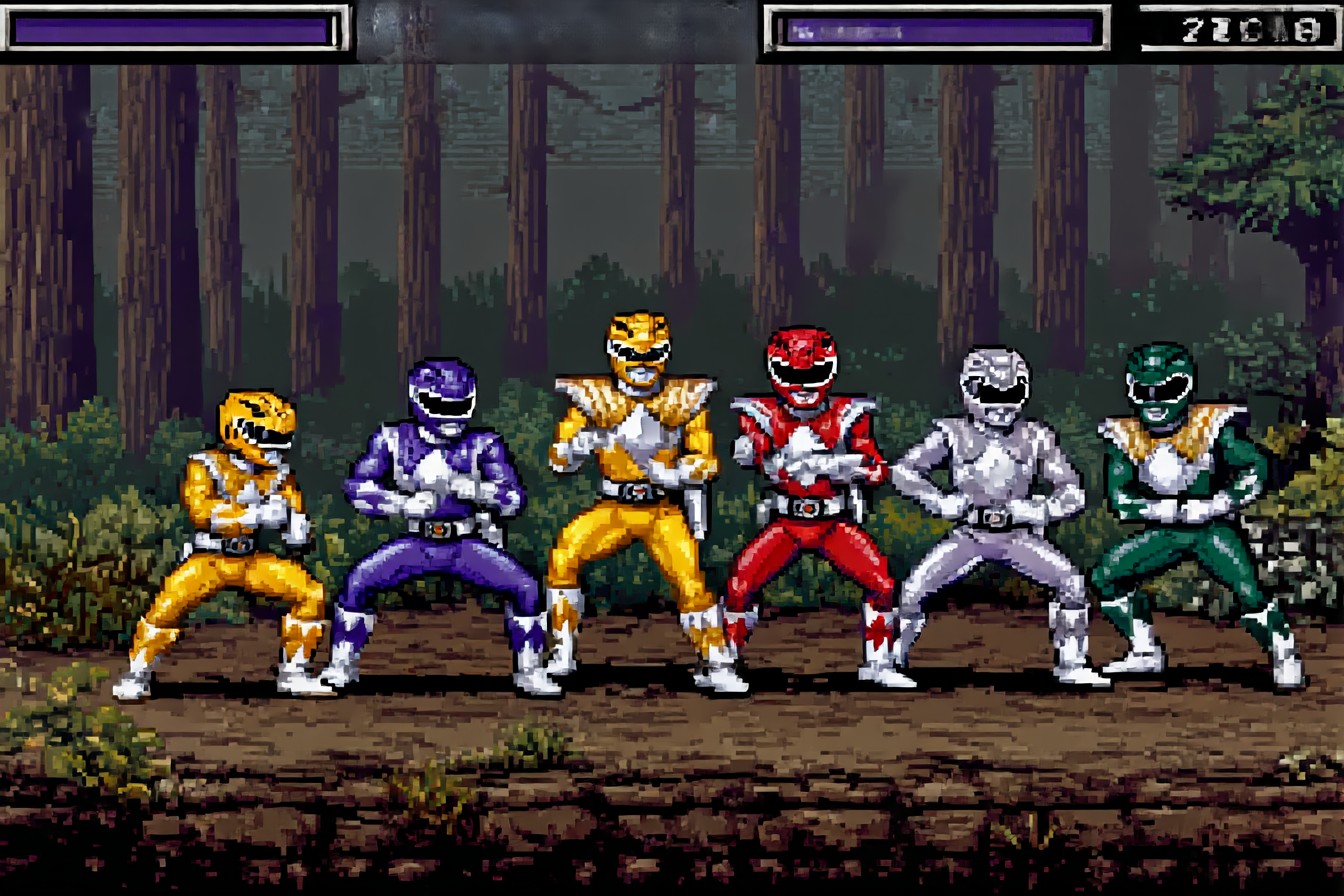
What really sold me on these games wasn't the fighting mechanics—though they were solid enough for weekend button-mashing sessions with mates—it was how they understood the source material. The developers clearly watched the show, probably while eating their own cereal, and figured out what made kids like us tune in every Saturday. Giant monsters? Check. Martial arts that defied physics? Double check. Megazord battles that made you feel like you were piloting a skyscraper-sized action figure? Triple check.
The Megazord sections were properly bonkers. Suddenly you're controlling this massive robot, throwing punches that could level city blocks, and the perspective shifts to make everything feel appropriately huge. The controls were clunky as anything—like trying to pilot a washing machine through treacle—but that almost added to the charm. These were supposed to be massive, unwieldy machines cobbled together from individual Zords, not nimble sports cars.
I'll admit, the Game Gear version held a special place in my heart too, even though it ate batteries like I ate Pick 'n' Mix. Playing Power Rangers on a tiny backlit screen while sitting in the back of the car on family trips felt like smuggling Saturday morning cartoons into the real world. The graphics took a hit, obviously, but the core experience translated surprisingly well to the portable format.
The password system was typical 90s stuff—long strings of characters that looked like someone had sneezed on a keyboard. I kept a little notebook specifically for jotting down these codes, right next to my carefully drawn maps of Zelda dungeons and my attempts to decode the secrets of Street Fighter move lists. That notebook's probably still somewhere in my mum's attic, a archaeological dig waiting to happen.
Looking back, what strikes me most about the Power Rangers Sega games is how they managed to be genuinely fun despite their obvious limitations. The fighting wasn't as tight as Tekken, the graphics weren't as polished as Mortal Kombat, and the sound effects occasionally made you wonder if someone had recorded them through a sock. But none of that mattered when you were seven years old and you'd just successfully pulled off Jason's signature move for the first time.
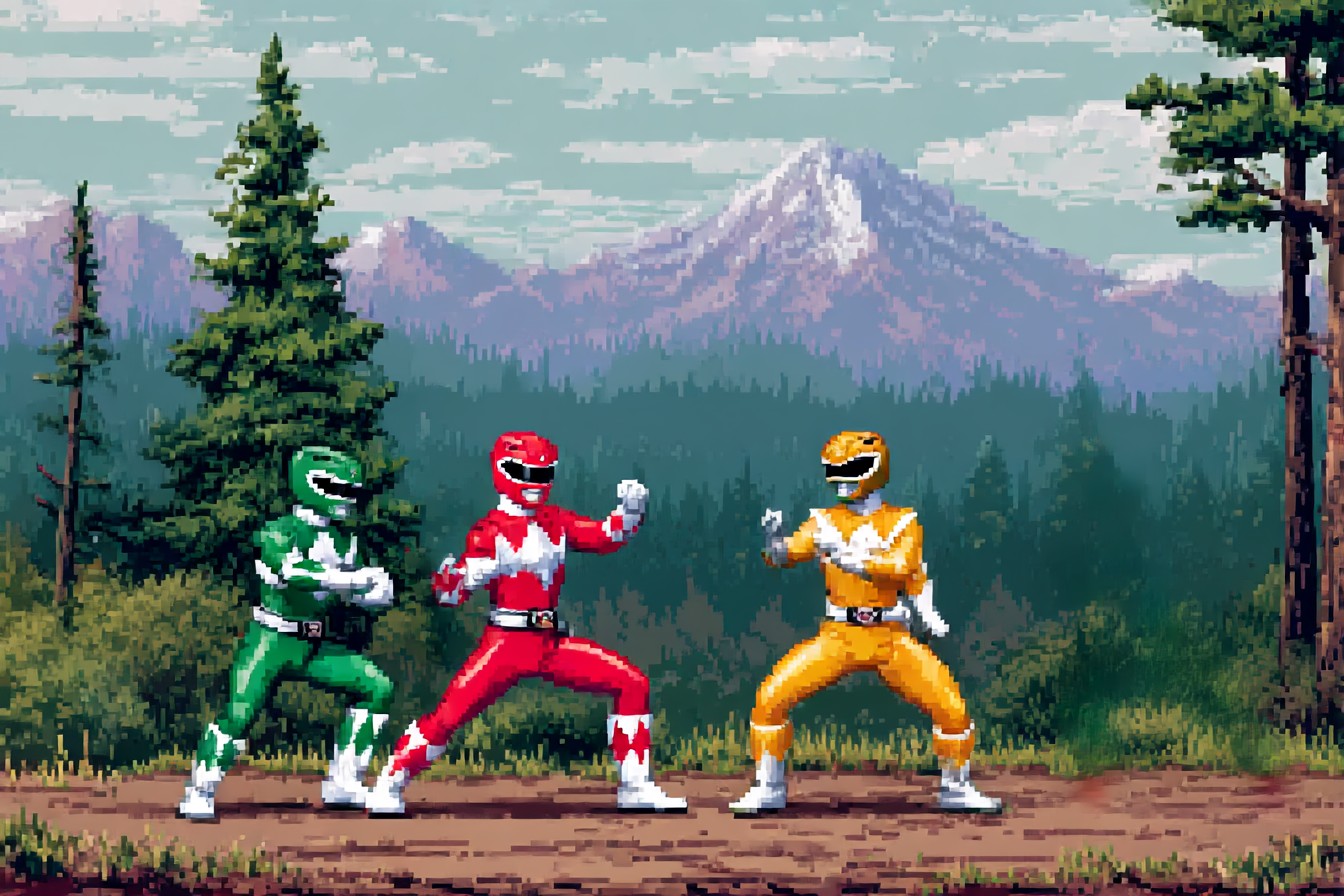
The two-player modes were where these games really came alive. Nothing quite compared to the trash-talking that would emerge when you and your best mate squared off as Red Ranger versus Green Ranger, both of you convinced you were the superior Power Ranger pilot. The game would slow to a crawl during the more spectacular special moves, but we'd just pretend it was dramatic slow-motion, like in the show.
These weren't technical showcases or genre-defining experiences. They were digital comfort food, the gaming equivalent of a Saturday morning cartoon marathon. They knew exactly what they were and never apologized for it. In an era where every game seemed to be pushing boundaries or reinventing wheels, the Power Rangers titles just wanted to let you live out your superhero fantasies for a few hours.
The legacy of these games lives on in my Steam library now, thanks to various retro collections and emulation efforts. My own kids have discovered them recently, and it's fascinating watching them experience that same joy I felt decades ago. They don't care about the dated graphics or the occasionally wonky hit detection. They just want to morph into colorful heroes and punch giant monsters, same as always.
Sometimes the simplest pleasures are the most enduring ones. Power Rangers on Sega systems proved that with the right amount of enthusiasm and a genuine love for the source material, even a licensed tie-in could capture lightning in a cartridge. Not bad for a game that probably started life as a boardroom conversation about marketing synergy.



