I was rummaging through a box of old Nintendo Power magazines last weekend when I found it—issue 129, October 1999, with that haunting Skull Kid on the cover. The memories hit like a freight train. Not just of the magazine, but of what came after. Majora's Mask. Christ, even typing that name gives me goosebumps.
Most people remember Ocarina of Time as the N64's Zelda masterpiece, and fair enough—it was revolutionary. But Majora's Mask? That was something else entirely. Something darker, weirder, more unsettling than Nintendo had ever attempted before. I'm talking about a game that opens with Link getting mugged by a creepy imp in a forest, having his horse stolen, and then being transformed into a walking shrub. Not exactly your typical hero's journey startup screen.
I picked up my copy from Electronics Boutique on launch day—October 26th, 2000 in the UK. Twenty-four quid, if memory serves. Had to sweet-talk my mum into driving me there during her lunch break because I couldn't wait until after school. The Expansion Pak requirement had me worried sick for weeks beforehand. See, Perfect Dark had already stretched our family gaming budget to breaking point with its fancy memory upgrade, and convincing the parental units that Link needed even more RAM was… well, it took some diplomatic finesse.
But bloody hell, was it worth it.
The three-day cycle wasn't just a gimmick—it was genius wrapped in clockwork. Every NPC had a schedule, a life, problems that played out whether you were there to witness them or not. Kafei's heartbreaking quest with Anju. The postman's obsessive routine. That poor soldier in the graveyard who just wanted to dance with his captain one last time. These weren't sidequests; they were little tragedies unfolding on repeat, waiting for you to notice.
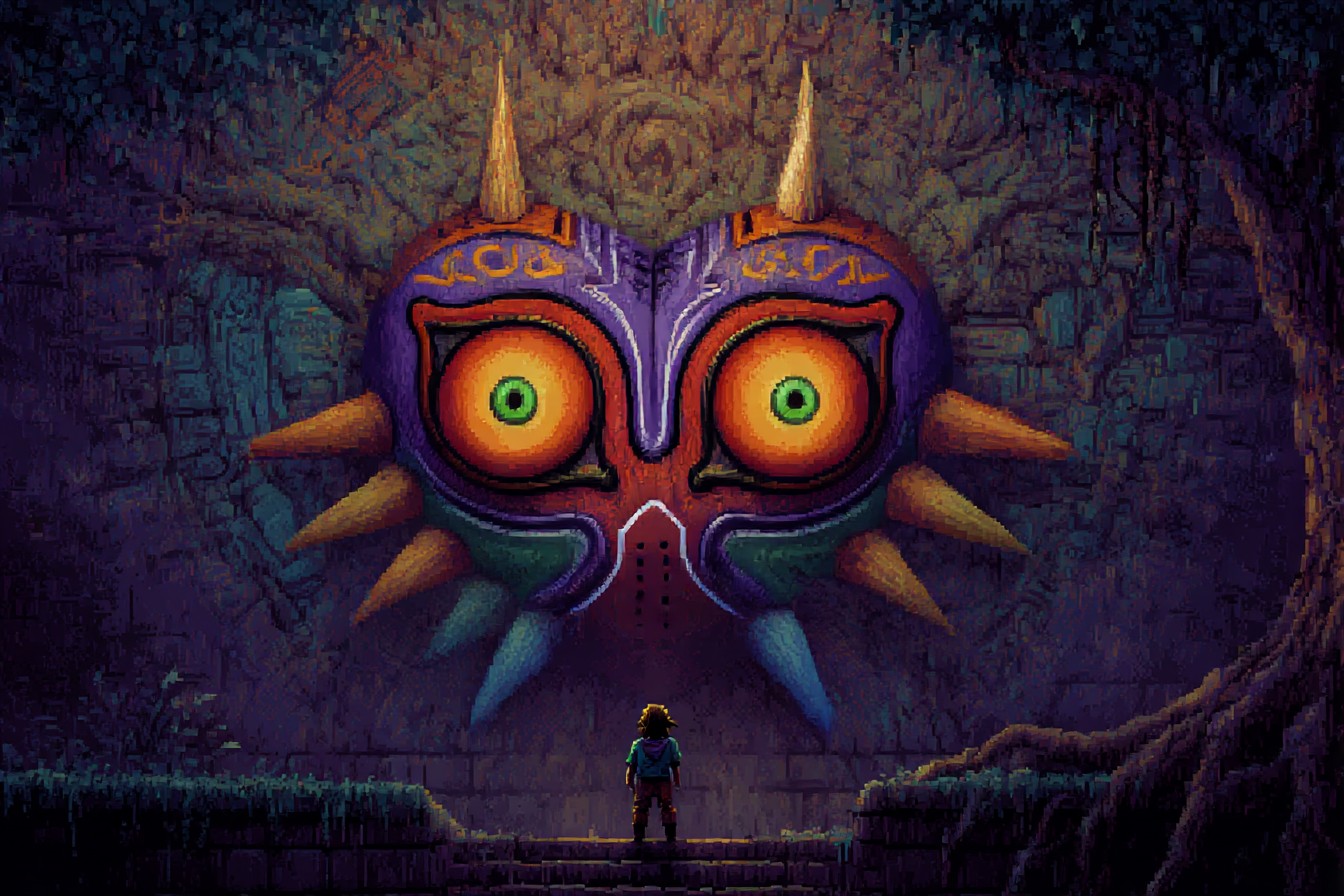
I remember the first time I properly understood the reset mechanic. I'd been mucking about in Clock Town, following different characters, learning their patterns. When that moon—Jesus, that moon with its bulging eyes and twisted grin—came crashing down, I genuinely felt sick. The screen going white, that awful rumbling sound… then suddenly you're back at the dawn of the first day, and it's like waking up from a nightmare only to realize you're still dreaming.
The mask transformations were mental. Deku Link felt completely alien—those little hop-skip movements, the way he'd burrow underground, shooting bubbles instead of swinging a sword. Goron Link was this unstoppable boulder of destruction, rolling around at breakneck speed until you smacked into a wall and saw stars. And Zora Link… man, swimming as Mikau was like being a dolphin with opposable thumbs. Each form had its own physics, its own way of seeing the world.
But it was the emotional weight that really got me. This wasn't about saving Hyrule from some ancient evil—it was about grief, loss, acceptance. The five stages, played out across four regions and countless NPCs. Darmani's ghost, desperate to return to his people. Mikau dying in your arms on that beach. Even Link himself, searching for a lost friend in a world that didn't know him.
The Song of Healing still gives me chills. That somber melody that helped tortured souls find peace, transforming their pain into masks you could wear. It's morbid when you think about it—literally wearing someone's trauma to gain their abilities. But somehow it felt respectful, like carrying their memory forward.
Clock Town became this living, breathing organism. I'd spend entire cycles just watching, learning who went where and when. The bombers with their secret codes. Cremia protecting her milk delivery. The carnival preparations that would never quite finish because time kept resetting. There's something profoundly melancholy about being the only person who remembers yesterday.
The dungeons were brilliant too, though completely bonkers. Stone Tower Temple—now there was a mindbender. Flipping the entire structure upside down? Having gravity work in reverse while you navigated as a block-headed Goron? My teenage brain couldn't quite process what was happening, but it felt revolutionary. Woodfall Temple had this swampy, poisonous atmosphere that made every step feel dangerous. Great Bay Temple was underwater Zelda done right—none of that awful floaty swimming from other games.
And the bosses… Majora itself was properly unnerving. That floating mask with its rainbow hair and manic expressions. The way it giggled and spun, like some demented children's toy come to life. When it sprouted those tentacle arms and legs in the final phase, I genuinely jumped back from the TV. My younger brother walked in during that fight and immediately noped out of the room.
The soundtrack deserves a mention too. Koji Kondo and his team created something haunting and beautiful. Clock Town's theme starts cheerful enough but gets more frantic as the hours tick by. The Song of Storms turned apocalyptic. Termina Field at night sounded like musical anxiety. Even now, humming the Goron Lullaby makes me feel drowsy.
Playing it today—and yes, I still have that original cartridge, slightly yellowed but functional—feels like archaeology. Not just of gaming history, but of my own teenage years. I was fifteen when Majora's Mask launched, old enough to appreciate its themes but young enough to be genuinely disturbed by them. It taught me that Nintendo could be subversive, that family-friendly didn't mean dumbed-down.
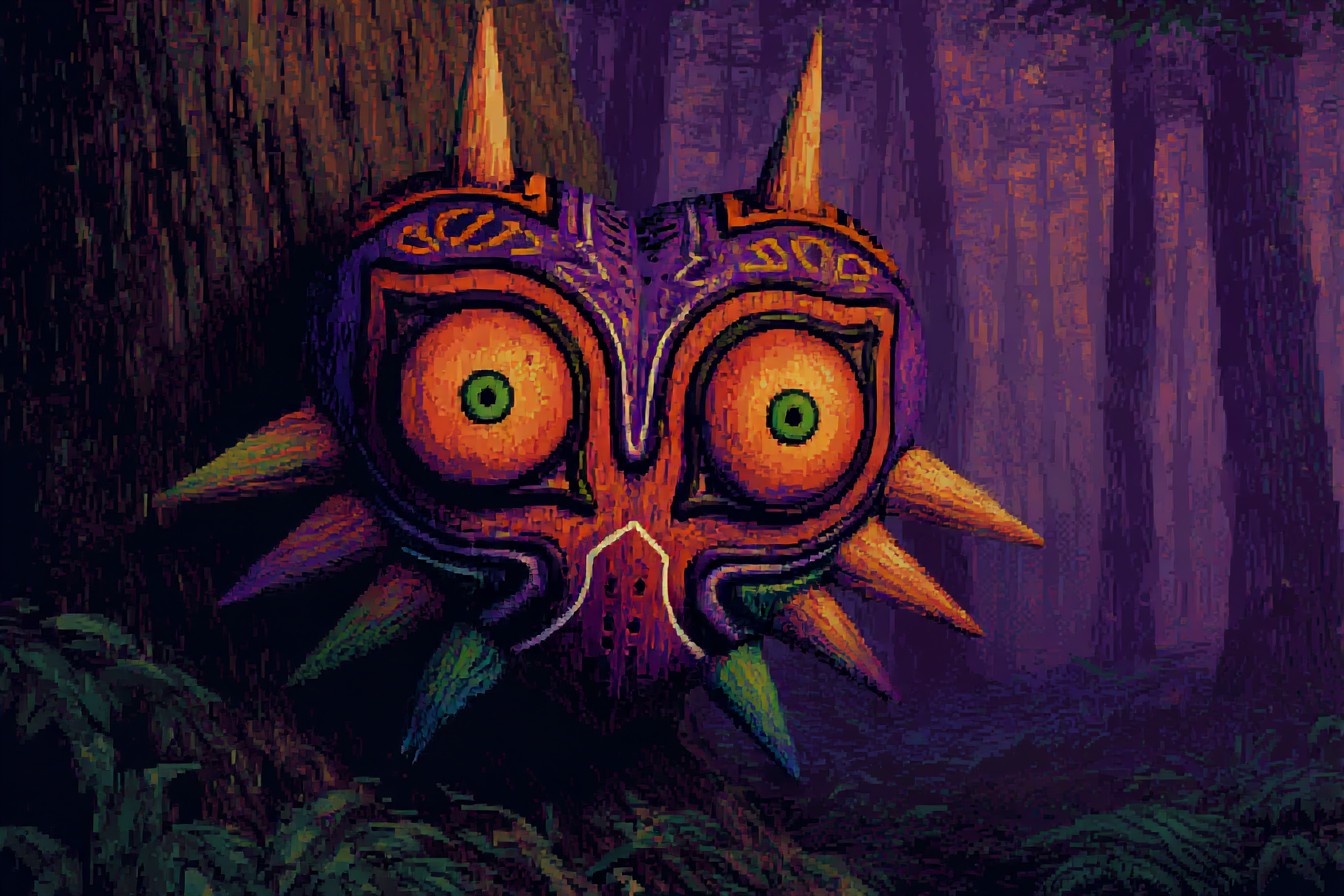
The 3DS remake was lovely, don't get me wrong. But there's something about experiencing it on original hardware—that slightly blurry N64 output, the distinctive controller in your hands, the Expansion Pak humming away—that modern versions can't quite capture. Maybe it's nostalgia, maybe it's the authentic jank, but Majora's Mask feels most at home on that chunky grey console.
People often ask if it's better than Ocarina of Time. Wrong question, honestly. They're siblings, not rivals. Ocarina was the foundation—smooth, accessible, universally beloved. Majora's Mask was the weird art project—experimental, challenging, occasionally infuriating. Both masterpieces, just pointing in different directions.
Twenty-odd years later, games are still chasing what Majora's Mask achieved. That sense of a world continuing without you, of time as both enemy and ally, of masks—literal and metaphorical—that we wear to cope with loss. Nintendo's darkest hour remains one of gaming's brightest moments.
That moon's still falling, you know. Every time I hear that carnival music, I'm fifteen again, racing against time in a doomed world, trying to save everyone while knowing I can only save some. And somehow, that's beautiful.



