You know that moment when you're rummaging through an old box in the loft and you find something that stops you dead? I had that exact experience last weekend. Not with some forgotten photo or love letter—though there were plenty of those—but with a crumpled Nintendo 64 t-shirt I'd completely forgotten I owned.
The thing was properly vintage, not in that manufactured way where they distress new fabric to look old. This had earned its faded glory through years of actual wear. The classic N64 logo stretched across the chest, that brilliant multicolored cube design that still looks more futuristic than half the tech companies designing logos today. But here's what got me thinking—when did gaming merchandise stop being something you wore reluctantly and start being something you wore with pride?
I remember buying that shirt from Electronics Boutique back in '97, maybe '98. Paid about eight quid for it, which felt like proper money when you were earning pocket change. The shop assistant—this lad with curtains and a Metallica badge—asked if I wanted it gift-wrapped. Gift-wrapped! As if anyone was giving video game clothing as a present back then.
See, wearing gaming gear in the late '90s was… well, it marked you. Not in a good way, necessarily. You were broadcasting to the world that you spent your Saturday nights with a controller instead of down the pub. The shirt basically screamed "I know the Konami Code and I'm not ashamed!" which, let's be honest, was social suicide in most circles.
But something funny happened over the years. Somewhere between the GameCube and the Wii, gaming went mainstream. Suddenly everyone's mum was playing Wii Bowling, your dad was addicted to Angry Birds, and wearing a vintage gaming tee wasn't a confession—it was a badge of honor.
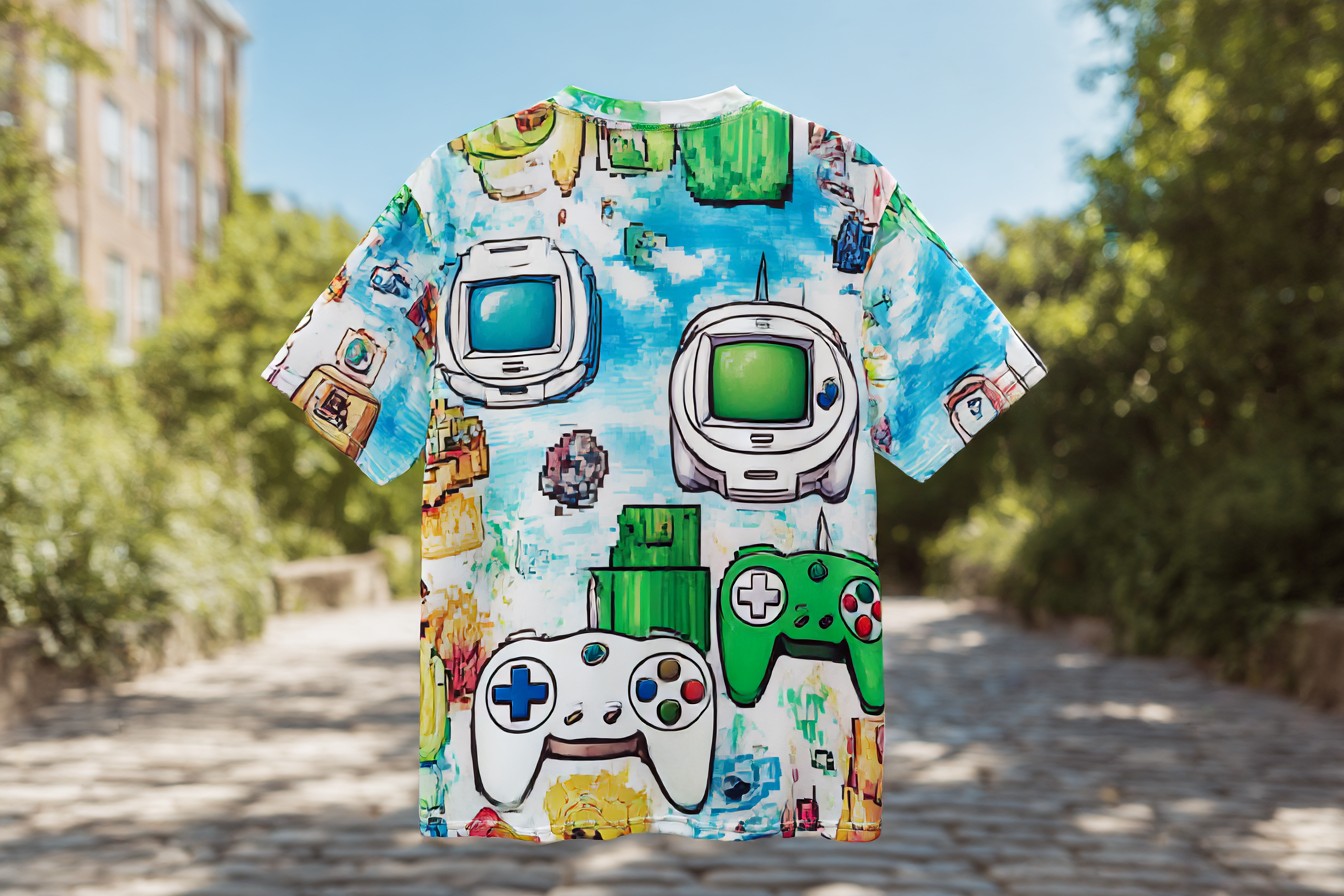
I started noticing the shift properly around 2010. Walking through town, I'd spot people wearing shirts with the original Super Mario Bros. artwork, or Pac-Man ghosts, or that iconic Zelda triforce. These weren't kids, either. These were proper adults, people with mortgages and sensible cars, proudly wearing their gaming history on their sleeves. Literally.
The N64 shirt, though—that one hits different. There's something about that console's branding that just worked. Nintendo knew they were pushing into uncharted territory with 64-bit processing and proper 3D worlds. The logo reflected that confidence. Clean, geometric, bold. It didn't need to scream; it just sat there looking supremely sure of itself.
I tried the shirt on, just for a laugh. Bit snug around the middle these days—occupational hazard of spending decades hunched over controllers—but it still fit. More importantly, it still felt right. Standing there in my boxers and this ancient gaming relic, I realized something: this wasn't just merchandise anymore. This was archaeology.
That shirt represents a specific moment in gaming history. The N64 era, when we were all figuring out what 3D meant, when the industry was transitioning from sprites to polygons, when multiplayer meant actual humans squashed onto one sofa arguing about screen-watching etiquette. Wearing it now is like wearing a piece of that time.
Think about it—gaming fashion has become this weird cultural shorthand. See someone in a Zelda hoodie? You immediately know they appreciate proper adventure games, probably spent hours exploring Hyrule, might even have strong opinions about whether Ocarina of Time or Breath of the Wild is the superior game. Spot a Street Fighter tee? That person knows the difference between a fireball and a dragon punch, probably has muscle memory for quarter-circle forward motions.
But it goes deeper than recognition. Gaming apparel has become a way for us to signal our tribe without saying a word. It's like wearing a band t-shirt, except instead of musical taste, you're advertising your gaming pedigree. "I was there," the shirt says. "I lived through the console wars, survived the polygon drought, witnessed the birth of 3D platforming."
The irony is that now gaming merchandise is everywhere, it's almost lost some of its meaning. You can buy a Pac-Man shirt in Primark for three quid. Kids who've never touched an arcade cabinet wear Mario mushroom hoodies. Not complaining, mind you—it's brilliant that gaming imagery has become so mainstream. But there's something special about vintage, authentic pieces.
My N64 shirt? That's got provenance. Battle scars from actual battles—a small tear near the hem from when I got too excited during a GoldenEye tournament, a faded spot on the shoulder where I spilled Tango during a marathon Mario Kart session. Each mark tells a story, carries a memory.
I've started wearing it again, actually. Not regularly—I'm not completely mad—but occasionally, when I'm feeling particularly nostalgic or when I'm setting up the old hardware for a proper retro gaming session. It's like putting on armor made of memories.
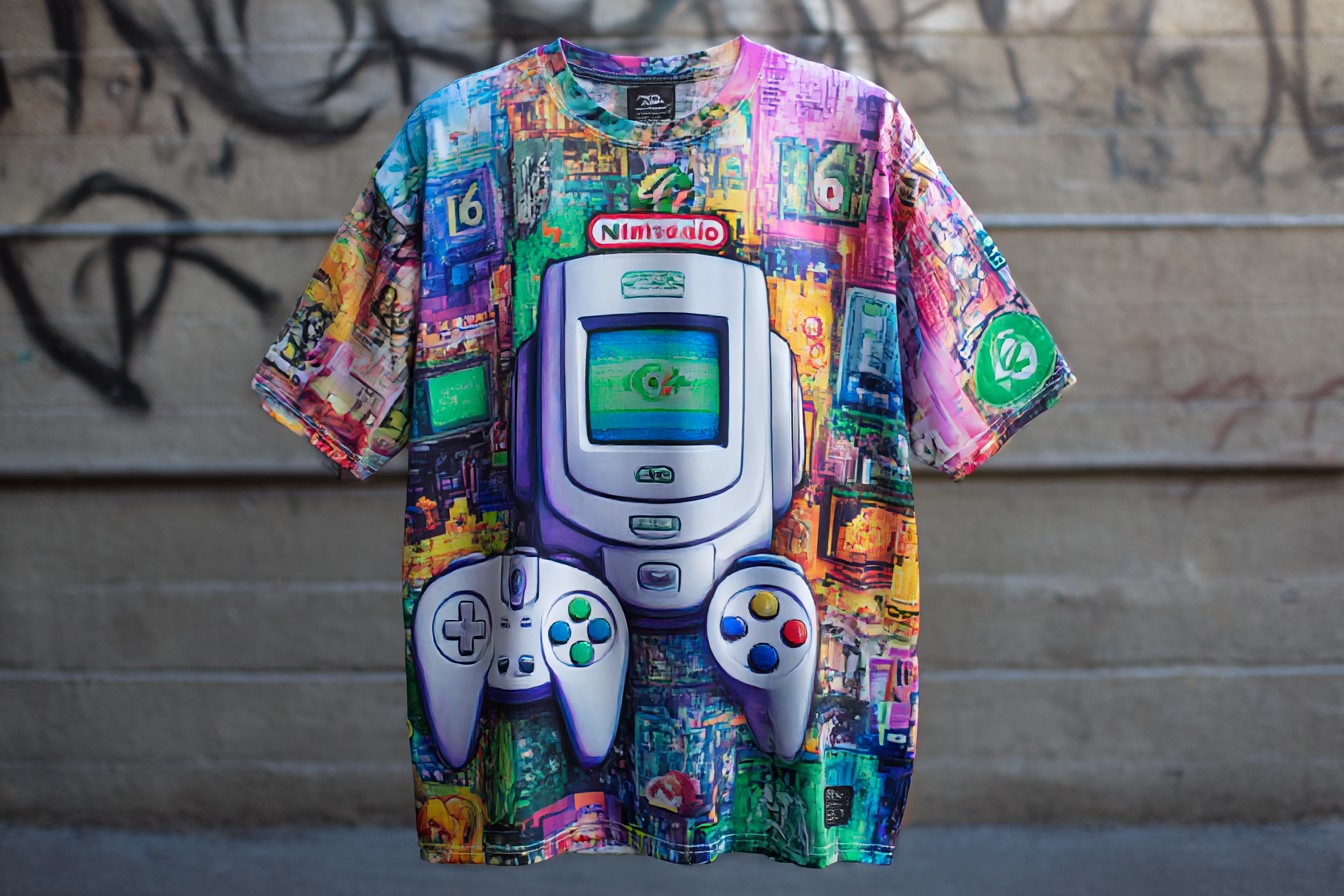
The really mad thing is how people react to it now. Younger gamers see it and get genuinely excited. "Is that original?" they ask, like I'm wearing a vintage band tee or something. Which, in a way, I suppose I am. The N64 was a brief, brilliant moment in gaming history, and wearing its merchandise now feels like carrying a flag for a nation that doesn't exist anymore.
Meanwhile, my generation sees the shirt and goes quiet for a second. You can practically see them transported back to 1997, remembering the first time they held that weird three-pronged controller, the first time they saw Mario's face stretch in the character select screen, the first time they realized gaming would never be the same.
That's the power of gaming fashion, really. It's not just about looking good or following trends. It's about carrying history, celebrating shared experiences, signaling membership in a club that spans generations. Whether it's a pristine new shirt with pixel-perfect artwork or a battle-worn veteran like mine, gaming apparel lets us wear our passion on our sleeves.
And honestly? In a world where everything feels temporary and digital, there's something wonderfully solid about a physical piece of gaming history. Something you can touch, smell, remember. Something that says: I was there when the future arrived, and I've got the t-shirt to prove it.



