Saturday afternoons in the mid-90s had this specific rhythm – mum making tea, dad doing something mysteriously important in the garage, and me hunched over the coffee table with three mates, all of us clutching those bizarre three-pronged controllers like alien artifacts we'd finally learned to decode. The N64 had landed in our house about six months earlier, and honestly? Racing games had become our weekend religion.
I'd been skeptical at first, you know. The controller looked like something designed by committee – specifically, a committee that couldn't decide whether humans had two hands or three. But once you figured out the grip (left hand on the center prong, right hand on the right, ignore that weird left stick unless you're playing something that actually uses it), everything clicked. The analog stick felt revolutionary after years of digital d-pads that only understood eight directions.
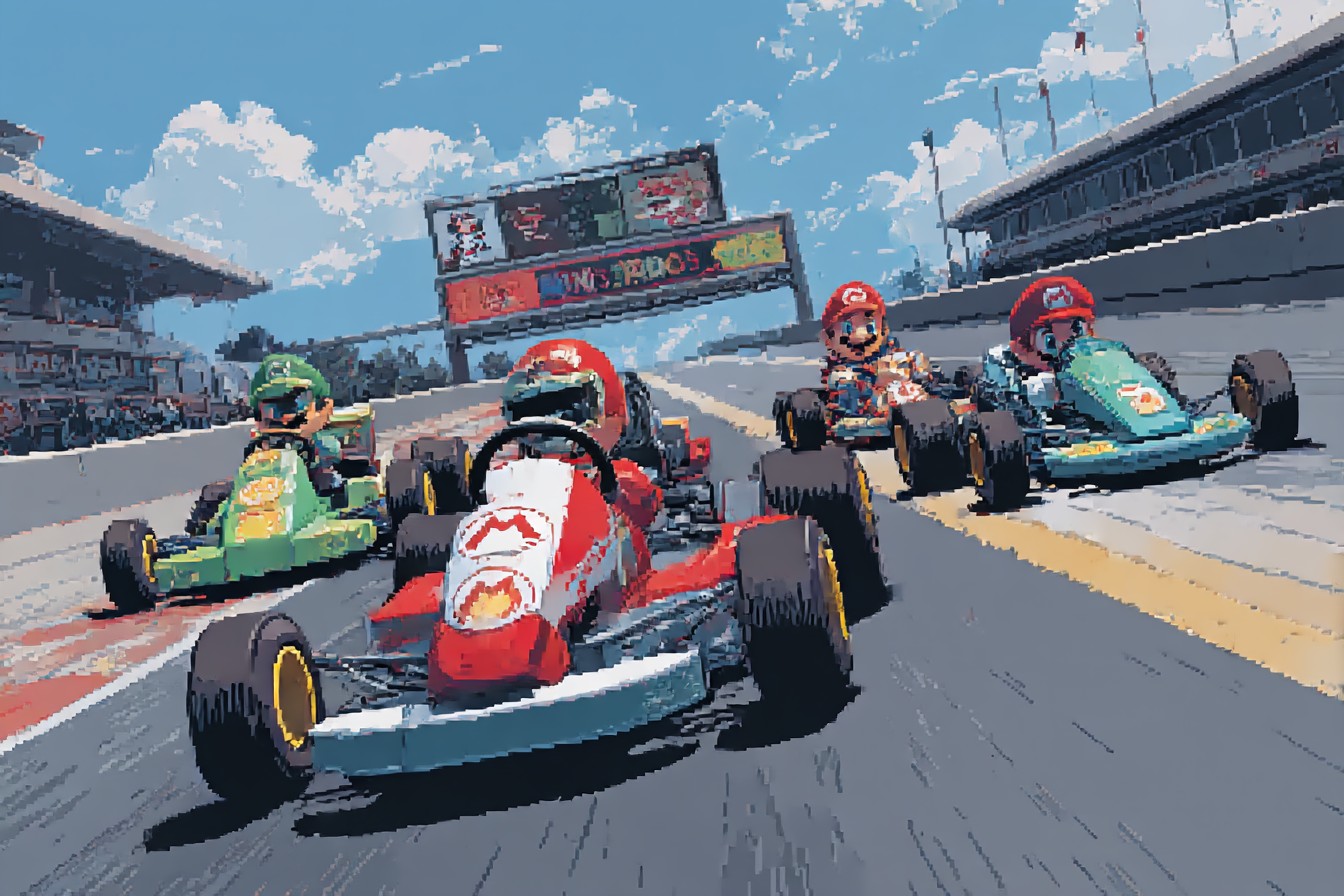
Mario Kart 64 was the obvious starter drug. We'd fire it up and immediately argue about character selection – everyone wanted Mario or Luigi because they felt "normal," but I'd already discovered Yoshi's acceleration advantage on tracks with lots of corners. Wario Stadium became our proving ground. Four laps of pure chaos, with those spinning fire bars that seemed designed specifically to ruin friendships. I still remember the exact sound of Dave's controller hitting the carpet after he got nailed by a blue shell on the final straight – that hollow plastic thunk followed by immediate regret and frantic checking for damage.
The rubber banding in Mario Kart was both infuriating and genius. You'd build up this massive lead, feeling smug about your racing line through Rainbow Road (God, that music), only to watch everyone catch up in the final sector like physics had suddenly become optional. But it kept things close. It kept us coming back. Even when James would inevitably pick Bowser and spend the entire race trying to ram people off the track instead of, you know, actually racing.
F-Zero X was a different beast entirely. Where Mario Kart was party chaos, F-Zero was pure speed worship. The framerate was silky smooth – thirty rock-solid frames per second when most racing games were stuttering messes. Captain Falcon's Blue Falcon felt like driving a missile with delusions of being a car. The tracks were these impossible roller coasters that defied gravity and common sense, and I loved every ridiculous loop and corkscrew.
The soundtrack, though. Jesus. That guitar-heavy techno-metal hybrid that made every race feel like the finale to an action movie you'd never seen but desperately wanted to. I'd sometimes just leave the game sitting on the track selection screen because the music was that good. Port Town, Mute City, Big Blue – each track had this distinct personality that the music captured perfectly. Big Blue sounded like speed itself had learned to play guitar.
What really got me about F-Zero X was how it handled 30 cars on screen without breaking a sweat. This was 1998, remember – most racing games could barely manage eight opponents without the framerate turning into a slideshow. But here was Nintendo showing off, putting thirty hovercars on these twisted tracks and making it all work. The collision detection was brutal, too. One wrong move and you'd go spinning off into the void, watching your energy meter drain while some smug AI opponent in a pink car sailed past.
Then there was Wave Race 64, which probably doesn't count as a traditional racing game but absolutely dominated our Sunday afternoons anyway. Jet skis on water that actually behaved like water – not that flat, textureless blue stuff we were used to, but proper waves that affected handling and created spray effects that made us go "whoa" every single time. The way your ski would bounce and buck over choppy water, or how you had to lean into turns to avoid wiping out… it felt revolutionary.
We developed this weird competitive streak around the dolphin park level. You had to thread between these floating markers while dolphins swam around looking judgmental, and hitting one meant instant disqualification. James – same James who'd spend Mario Kart races trying to murder people with Bowser – became obsessed with perfect runs. He'd restart over and over, chasing that ideal lap time while the rest of us got bored and wandered off to make more tea.
But the real revelation was Extreme-G. Nobody talks about Extreme-G anymore, which is criminal because it was basically Wipeout for the N64, except somehow more extreme (the name wasn't subtle). Futuristic bikes that could hit ridiculous speeds while you fired weapons at opponents like some kind of high-speed death match. The sensation of speed was incredible – the track would blur past while you desperately tried to navigate corners at velocities that should have been physically impossible.
The rubber-band AI was less forgiving than Mario Kart's, though. Fall behind in Extreme-G and you were done – no magical comeback mechanics, just the bitter taste of defeat and the loading screen asking if you wanted to try again. Which we always did, obviously. Something about those sleek bike designs and the way the engine noise would build as you hit top speed… it was intoxicating.
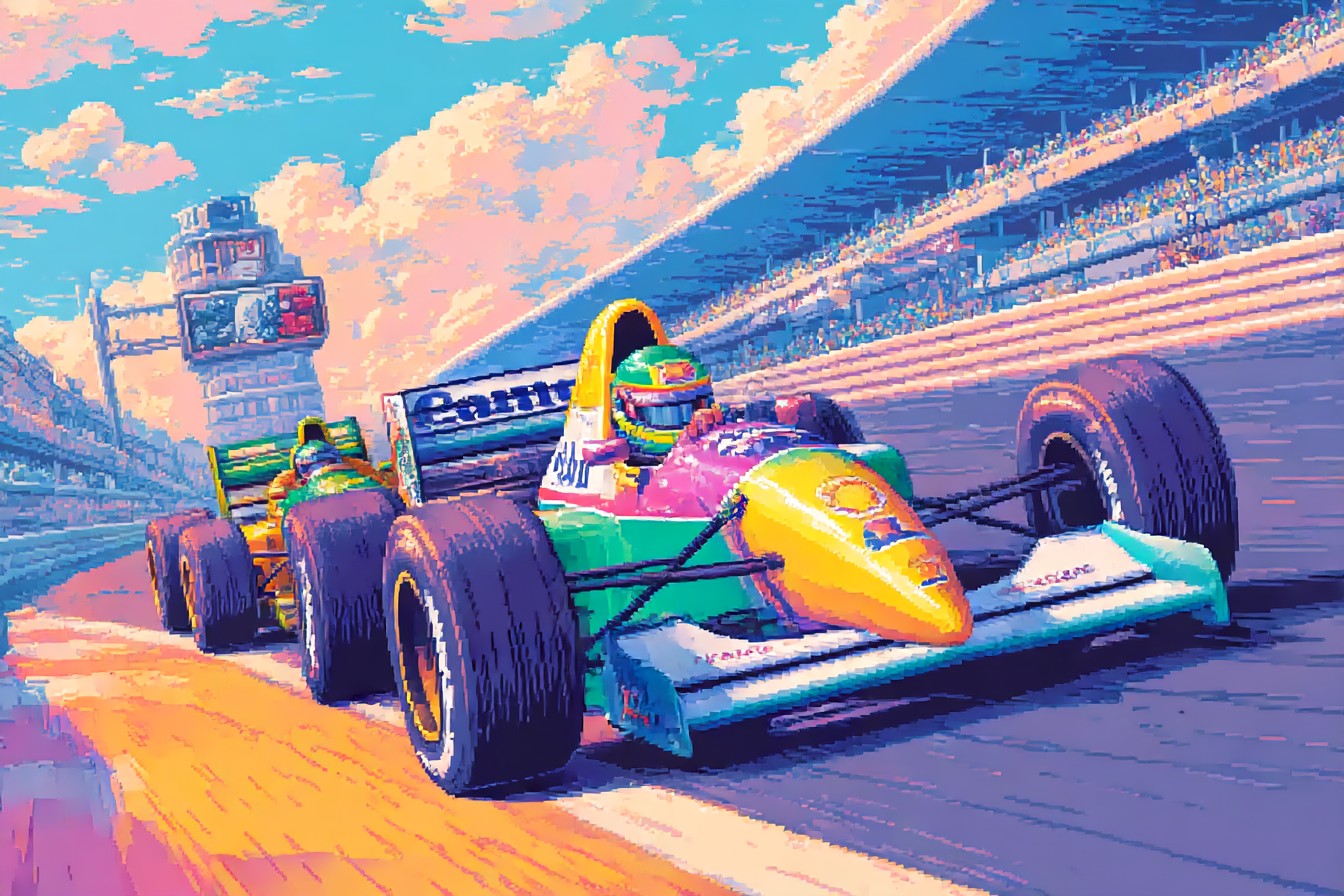
Looking back, what strikes me most about N64 racing games was how they made speed feel different. Mario Kart made speed feel fun – bouncy and colorful and slightly silly. F-Zero made speed feel dangerous, like you were barely in control of something that wanted to kill you. Wave Race made speed feel fluid, organic, natural. Extreme-G made speed feel violent, aggressive, like a weapon you'd learned to wield.
Those controllers, though. We went through so many analog sticks. The plastic would wear down from constant use, leaving loose, wobbly sticks that made precise steering nearly impossible. I learned to open up controllers and swap parts between working ones, creating these Frankenstein gamepads held together with electrical tape and hope. The local game shop started recognizing me as "the kid who needs another controller" because I'd show up every few months with another casualty of our racing obsession.
Nowadays I've got those controllers hooked up to a CRT in the spare room, and sometimes I'll fire up Mario Kart 64 just to hear that title screen music. The framerate's exactly as I remember it. The handling feels perfect. But something's different – maybe it's the absence of three other people crowding around a coffee table, maybe it's the lack of Saturday afternoon time pressure before parents needed the TV back.
Still magical, though. Still pure.



