Whenever someone brings up prequel-era Star Wars games, I immediately think about that weird period when everyone was trying to figure out what to do with Episode I. The film had landed with all the grace of a pod racer hitting sand, but the gaming world? We were still optimistic. Maybe interactive entertainment could salvage something from Jar Jar's wreckage.
I'd been living with my N64 for a couple years by then, completely smitten with that three-pronged controller and the way it made me feel like I was piloting actual spaceships instead of just watching pixels dance. When Battle for Naboo rolled up in 2000, I was already deep in my Rogue Squadron phase—that game had taught me that the 64 could make you believe you were actually skimming Tatooine's surface, dodging Imperial fire with your stomach in your throat.
But here's the thing about Battle for Naboo that I remember vividly: it didn't try to be Rogue Squadron with different ships. Factor 5 had already nailed space combat, so LucasArts decided to go broader. Ground vehicles, underwater sequences, that yellow Naboo starfighter that looked like someone had crossed a jet with a particularly aggressive hornet. The game felt like they'd taken the prequel's most visually interesting bits and said, "Right, how do we make this playable?"
I can still picture the box art sitting next to Majora's Mask in my local Electronics Boutique—that was back when game shops had proper names instead of being swallowed by corporate chains. The clerk, this bloke with a goatee who seemed to know the release schedule by heart, told me it was "basically Rogue Squadron on Naboo." Which wasn't wrong, exactly, but it wasn't the whole story either.
The first mission throws you straight into that Trade Federation blockade we'd seen in the cinema. Flying that N-1 starfighter felt… different from piloting an X-wing. Sleeker, somehow. More elegant. The yellow paint job helped—you felt like you were flying something that belonged in a royal hangar, not cobbled together in some Rebel garage. The way the ship handled had this particular weightiness to it, like the developers had actually thought about how Naboo engineering might differ from Imperial or Rebel tech.
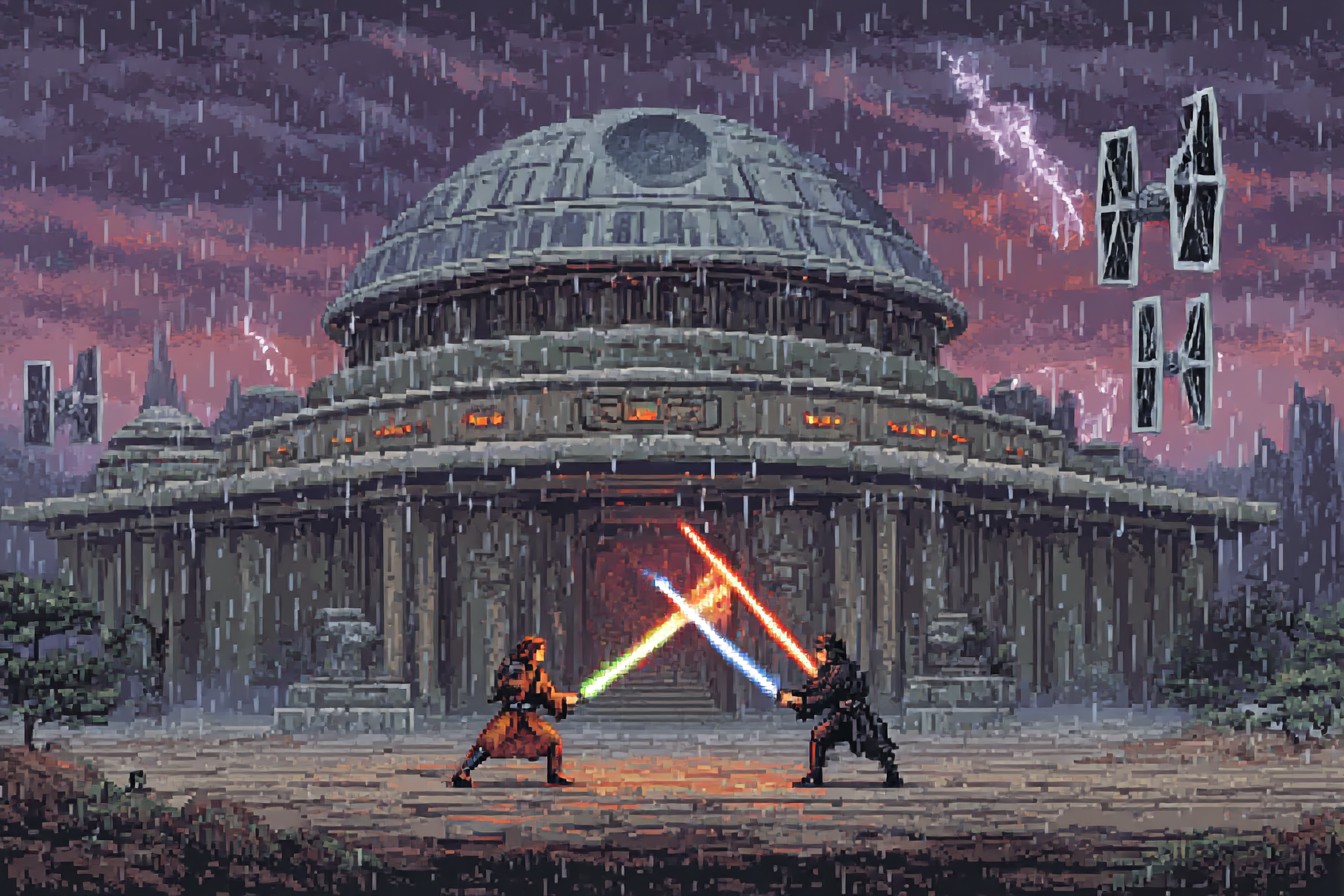
What really got me, though, was how the game expanded beyond the film's scope. Sure, you got the big moments—that climactic space battle, escorting Queen Amidala's transport—but then you'd find yourself piloting a Flash speeder through Theed's streets or manning gun turrets on a Republic cruiser. The variety kept things from feeling like you were just replaying the movie with a controller in your hands.
The underwater sequences were properly mental. I mean, who looks at Episode I and thinks, "You know what this needs? Submarine combat"? But there you were, piloting Gungan subs through Naboo's core, dodging sea monsters that looked like they'd escaped from a fever dream. My mate Simon absolutely hated these bits—kept saying they felt tacked on. But honestly? I loved how weird they were. The N64 was brilliant at making water feel genuinely alien, and those core passages with their bioluminescent creatures and impossible architecture… it was like exploring the inside of a planet-sized organism.
The lightsaber combat, though—that's where things got properly interesting. This was 2000, remember. We hadn't had proper Jedi dueling mechanics in games yet. Battle for Naboo gave you these third-person sequences where you'd control various Jedi characters, and the combat felt… chunky, I suppose. Not elegant like the films promised lightsaber fighting should be, but satisfying in a very N64 way. You could deflect blaster bolts, perform these elaborate combo attacks, and the force powers had real weight behind them.
I spent hours trying to perfect the timing on deflecting shots back at battle droids. There was this particular rhythm to it—wait for the bolt, hit the trigger at exactly the right moment, watch it zip back and drop a droid with their own fire. When you got it right, when you managed to clear a whole squad just by turning their shots against them, you felt like you'd cracked some fundamental truth about being a Jedi. Even if the animation looked a bit stiff compared to modern games.
The ground vehicle missions were where the game really found its footing, though. Those Flash speeders handled like they were actually hovering—none of this arcade racing nonsense where everything feels glued to the track. You could feel the repulsor engines working underneath you, especially when you'd boost over gaps or around corners. The physics weren't realistic, exactly, but they felt consistent. Believable within the game's own logic.
I remember one particular mission where you're chasing Trade Federation tanks through Theed's narrow streets, weaving between buildings while trying to line up shots with your limited ammo. The architecture whipping past, the constant chatter from your wingmen, the way the speeder would bounce slightly when you landed a particularly aggressive jump… it all came together to create this sense of controlled chaos that felt authentically Star Wars.
The sound design deserves special mention, actually. Ben Burtt's audio library was in full effect here—every blaster shot, every engine hum, every lightsaber clash had that unmistakable Star Wars DNA. But more than that, the way sounds layered together during hectic combat sequences created this beautiful cacophony. Explosions would overlap with droid chatter, your engine noise would mix with incoming fire, and somehow your brain would parse it all into a coherent battlefield soundscape.
Looking back now, Battle for Naboo feels like a bridge between eras. It was trying to capitalize on prequel excitement while building on the flight combat foundation that Rogue Squadron had established. Some bits worked better than others—those Jedi sequences never quite achieved the flowing grace they were aiming for—but the core flying remained absolutely solid.
The game also benefited from the N64's particular strengths. That controller, with its analog stick and shoulder buttons, was perfect for flight controls. The system's ability to handle multiple objects moving at speed meant those space battles could get properly chaotic without everything turning into a slideshow. And the Expansion Pak support meant higher resolution textures that made Naboo's environments feel more detailed than they had any right to on 1996 hardware.
These days, when I fire up Battle for Naboo on original hardware (still got that cart, slightly sun-faded spine and all), what strikes me most is how committed it feels. This wasn't a quick cash-in on movie hype. Someone at LucasArts clearly cared about making the prequel era feel like a proper gaming playground, even when the source material was giving them precious little to work with.



