Christmas morning, 1996. I'm sitting cross-legged on carpet that's probably seen better decades, staring at a box that looks like it was designed by aliens who'd never seen a games console before. The Nintendo 64. That weird three-pronged controller sticking out like a threat. Mum's already muttering about "another bloody machine for the telly," but I can't hear her properly because my heart's doing that thing where it forgets how to beat normally.
The game bundled with it? Super Mario 64. I'd seen screenshots in CVG, sure, but nothing—absolutely nothing—had prepared me for what happened when I pushed that chunky grey cartridge home and flicked the power switch.
Mario's face. That's what did it. Not the graphics, not the 3D worlds I'd read about, but Mario turning his head and looking at me through the screen. Proper looking, you know? Like he knew I was there. I spent about ten minutes just dragging my finger across that analog stick, watching his nose stretch and his eyes follow my movements. My little sister thought I'd lost it. Maybe I had.
But then I pressed start.
That courtyard. Christ, that courtyard. I'd been playing games for years by then—Mega Drive mostly, bit of SNES at my mate's house—but this felt like stepping through a doorway into somewhere that actually existed. The camera swung around behind Mario as he jogged forward, and I physically leaned with it. My body was trying to help me see round corners in a video game. Ridiculous, really.
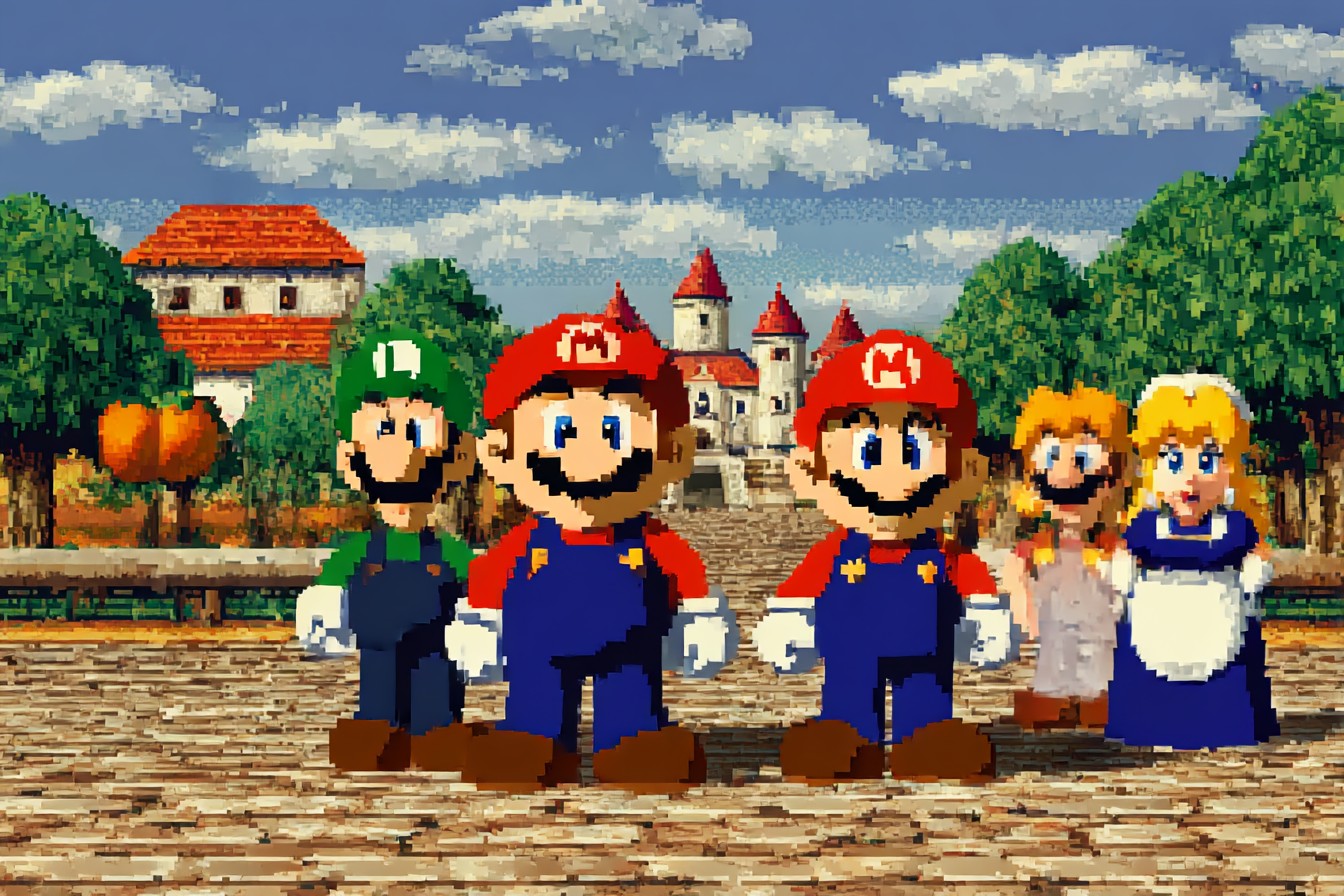
The analog stick was the revelation. Up until then, you went left or right, fast or slow. Digital. Binary. But this? This let me tiptoe. I could make Mario creep up to a sleeping Goomba or charge full-pelt toward a wall just because I could. The first time I managed to walk in a perfect circle, I called my dad over to watch. He was less impressed than I'd hoped, but he did that thing where he nods and says "very good" in a way that means he's trying to understand why this matters to me.
See, what people don't always get about the N64 is that it wasn't just about better graphics. Though they were mad, obviously. Those textures might look like porridge now, but back then? That was photorealism, mate. But the real magic was in how it made you think differently about space. About movement. About what a video game could be.
I remember the first time I climbed up to the castle's roof and just…stood there. Looking out over this little digital kingdom. Mario's world had always been about getting from left to right, jumping on things, collecting coins. Now it was about exploration. About finding secrets tucked away in corners you'd never even think to check. That first star I collected—just from chatting to a rabbit in the courtyard—felt like discovering buried treasure in my own back garden.
The learning curve was steep, mind you. That camera! Good God, the camera. We take it for granted now, but controlling your view with the C buttons while moving with the stick and jumping with A? My brain needed rewiring. I'd regularly run Mario straight off cliffs because I was too busy fighting with the camera to see where I was going. But when it clicked—and it did click, usually around the time you're chasing that bloody penguin down the slide in Cool, Cool Mountain—it felt like gaining a superpower.
Ocarina of Time came later, and that was another gear shift entirely. If Mario 64 taught me how to exist in 3D space, Ocarina taught me how to feel things in it. That first night on Hyrule Field, with the skeletal Stalchildren rising from the ground and that haunting music…I mean, I'd been scared of video games before. Resident Evil on my mate's PlayStation had me jumping at shadows for weeks. But this was different. This was atmospheric fear. Emotional fear. The kind that makes you want to find a campfire and wait for dawn.
Z-targeting. Now there's a revolution that doesn't get talked about enough. Lock onto an enemy, circle around them, keep your shield up—suddenly, sword fighting in 3D made sense. No more wildly swinging into empty air while a Moblin smacks you from behind. It was elegant. Graceful, even. I felt like I was learning actual swordplay, not just memorizing button combinations.
My mates took the piss at first. "It's just Mario with fancy graphics," said Danny, who was stubbornly loyal to his PlayStation. But I got him to try it. Sat him down with Mario 64, watched his face go through the same journey mine had. Skepticism, curiosity, wonder, addiction. Within a week, he was round mine every afternoon, begging for "just one more go" at getting that star in the lava level.
The thing about the N64 controller that everyone loves to mock now? It was genius. Absolute genius. Not for every game, granted—trying to play Street Fighter with that D-pad was like performing surgery with oven gloves. But for 3D games? For the games it was designed for? Perfect. That Z trigger was positioned exactly where your finger naturally wanted to rest. The analog stick had this satisfying resistance that gave you proper feedback. And yes, it got loose after a few months of Mario Party, but that was just character.
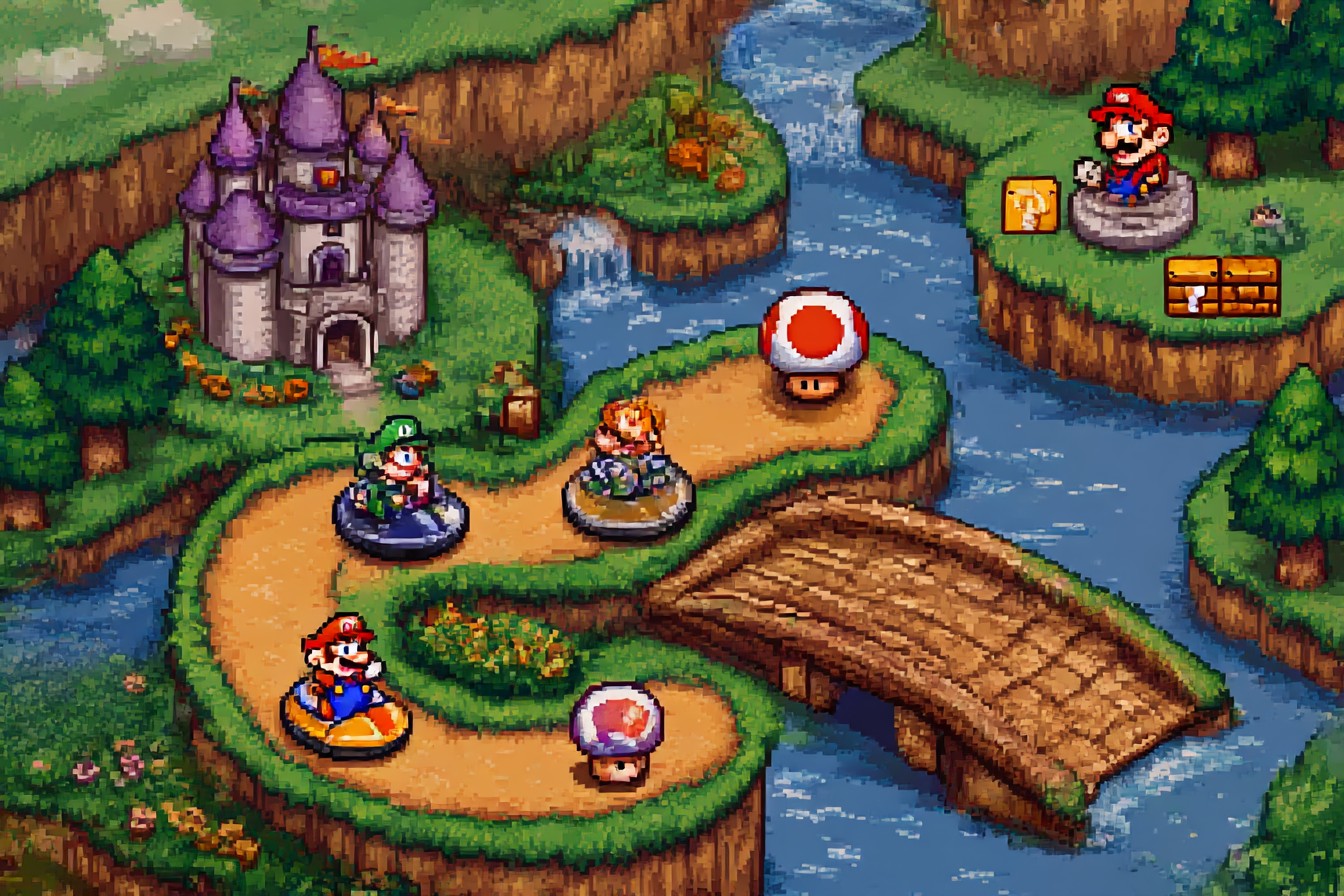
I must've put hundreds of hours into those early N64 games. Mario 64, Ocarina, Wave Race (what a game that was—water that actually looked wet!), Pilotwings, StarFox 64 with that ridiculous rumble pak making the controller buzz like an angry wasp every time you took damage. Each one felt like a glimpse into the future. Like someone had opened a window onto what games would become.
Looking back now, from the comfortable distance of multiple console generations and a slowly retreating hairline, I can see what the N64 really did. It didn't just give us better graphics or more buttons to press. It changed our relationship with digital spaces. It made virtual worlds feel like places you could inhabit rather than just traverse. It turned playing games from a series of challenges to overcome into experiences to live through.
That Christmas morning in '96, unwrapping a console that looked like it had fallen from space, I had no idea I was holding the future. I just knew Mario was looking at me, really looking, and when I pushed that stick forward, we were going somewhere together. Somewhere I'd never been before.
Somewhere I didn't want to leave.



