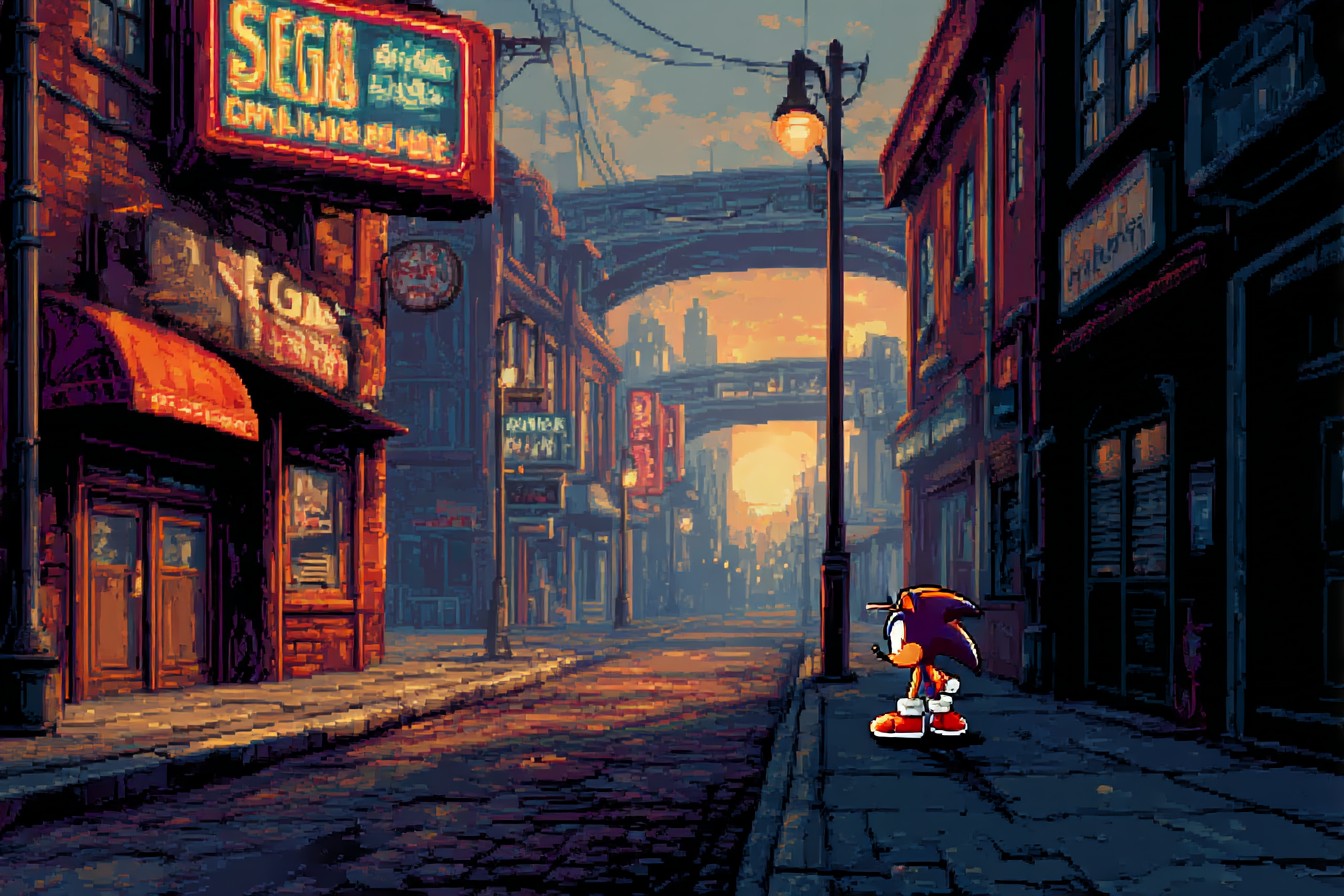
The cartridge slot on my Mega Drive has seen more action than a hotel key card, and honestly, most of those insertions were pure gold. There's something about Sega's 16-bit beast that just clicks differently—that chunky, satisfying thunk when you press down on a cart, the way the power LED winks at you like it's in on some joke. I've been thinking about this lately because my mate Dave came over last weekend with his eight-year-old, and watching that kid's face light up when Sonic spun through Green Hill Zone… man, it transported me right back to 1991.
See, the Genesis—or Mega Drive if you're proper like me—wasn't just competing with Nintendo. It was declaring war on the idea that games had to be polite. Where Mario tippy-toed through flower gardens, Sonic ran at the scenery like he was late for something important. The YM2612 sound chip didn't whisper sweet melodies; it grabbed you by the collar and screamed "THIS IS WHAT COOL SOUNDS LIKE" in that distinctive metallic twang that still gives me goosebumps.
Sonic the Hedgehog might seem like the obvious starting point, but honestly? Skip straight to Sonic 2. The original was brilliant for its time, but Miles "Tails" Prower changed everything. Having a mate who could drop in and out of your game without ceremony—revolutionary stuff. Chemical Plant Zone's music still lives rent-free in my head, and that underwater section where the music slowed to a heartbeat-panic? Pure evil genius. I spent countless afternoons with my younger brother, him controlling Tails with the sort of chaotic enthusiasm that only eight-year-olds possess, accidentally helping and hindering in equal measure.
But here's where I get a bit controversial—Sonic 3 & Knuckles is the real masterpiece. Yeah, I know it was technically two games duct-taped together by Sega's questionable release scheduling, but when you lock that second cartridge on top… magic. Hydrocity Zone made water levels not suck, which should've earned someone a Nobel Prize. The save system meant you could actually finish the thing without dedicating an entire Saturday to it. Plus, Knuckles could glide and punch walls, which appealed to my ten-year-old lizard brain in ways I'm probably still processing in therapy.
Streets of Rage 2 occupies a special place in my heart shaped exactly like a Final Fight cabinet at the local chippy. Side-scrolling beat-'em-ups were arcade currency, and bringing that experience home felt like smuggling contraband. Axel's punches had weight, Blaze moved like she was dancing, and Max Thunder… well, Max was basically a walking demolition crew with a surprisingly gentle grappling technique. The soundtrack by Yuzo Koshiro didn't just accompany the action—it was the action, all thumping bass and synth stabs that made every punch feel like it connected with the universe itself.
Gunstar Heroes was Treasure showing off, and I'm here for it. Everything on screen exploding simultaneously while you somehow still knew exactly where you were and what you were doing—that's game design mastery wrapped in beautiful chaos. The weapon combinations meant every playthrough felt different. Red and Blue weren't just character choices; they were philosophical statements about how you approached mayhem.
Now, let's talk about Phantasy Star IV, because RPGs on Genesis were rarer than honest politicians and twice as precious. While everyone was fawning over Final Fantasy VI on SNES, Sega quietly delivered one of the finest space operas in gaming history. The manga-style cutscenes were jaw-dropping for 1993, but it was the story that hooked me—genuinely mature themes wrapped in Saturday morning cartoon aesthetics. I remember being genuinely upset when certain characters met their fate. Games weren't supposed to make you feel things like that.
Contra: Hard Corps nearly broke my spirit and several controllers. Konami took everything that made Contra legendarily difficult and said "hold our beer." Four-player simultaneous destruction with branching paths that actually mattered? The European version was easier, but I stubbornly stuck with the US release because apparently I enjoy pain. Getting to the true ending required a flowchart and the sort of dedication usually reserved for religious pilgrimages.
Thunder Force III deserves mention for making the horizontal shoot-'em-up feel like a personal vendetta against alien scum. The weapon selection system—choosing your arsenal before each stage—added strategy to what could've been mindless blasting. That guitar-heavy soundtrack made every enemy encounter feel like a heavy metal concert with lasers.
Here's a deep cut for you: Rocket Knight Adventures. Sparkster the opossum in powered armor with a rocket pack shouldn't work, but it absolutely does. The momentum-based gameplay meant mastering your rocket thrust wasn't just about getting around—it was about becoming one with the physics. Plus, who doesn't want to drill through blocks as an armored marsupial?
Shinobi III brought ninja action to its logical conclusion—fast, fluid, and absolutely lethal. Joe Musashi moved like water, struck like lightning, and that surfing level… *chef's kiss*… pure video game poetry. The boss fights required pattern recognition and quick reflexes, but they never felt unfair. When you died—and you would die—it was because you needed to git gud, not because the game was cheating.
I could bang on about Ecco the Dolphin (beautiful, haunting, probably traumatized a generation of kids), or Golden Axe (couch co-op perfection), or even the bizarre brilliance of ToeJam & Earl (still don't fully understand it, still love it), but honestly, the Genesis library was stuffed with gems that each deserved their own weekend of exploration.
The thing about these games—and why I still fire up my Model 1 with its lovely audio warmth—is they were made by teams who understood that 16 bits meant you had to be clever. Every sprite, every sound sample, every line of code had to earn its place. No hiding behind polygon counts or texture resolution. Just pure, concentrated game design distilled into ROM chips that still boot up first time, thirty years later.
That's the Genesis magic right there—reliability wrapped in attitude, delivered through a controller that felt like it was built for actual human hands.



