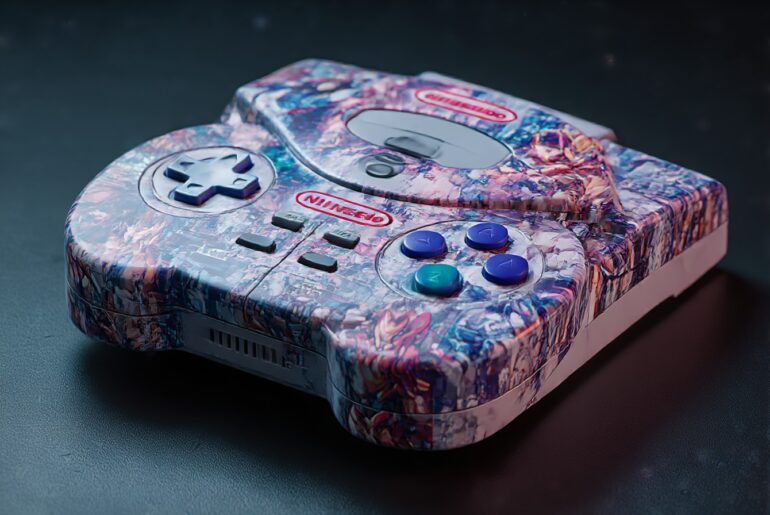
I was digging through a box of old controllers last weekend – you know, the archaeological layer where every gamer's dignity goes to die – when I found my original N64 pad. The stick's about as loose as my resolve around chocolate biscuits, but I held it anyway, thumb automatically finding that familiar groove. That's when it hit me: I'd been playing Super Mario 64 on my Switch all week, and somehow I'd forgotten to miss the three-pronged beast that taught me how to walk in 3D.
Here's the thing about Mario 64 on Switch – it shouldn't work as well as it does. I mean, we're talking about a game that was basically designed around one very specific, very weird controller. The N64 pad wasn't just an input device; it was a statement piece. "Look," Nintendo seemed to say, "we've got three handles because we're living in the future and you mortals just have two hands. Deal with it." And we did deal with it, mostly by pretending that left grip didn't exist unless we were playing something truly exotic.
But firing up the Switch version for the first time, I was genuinely curious how they'd handle the translation. The original game's camera controls were mapped to those yellow C buttons – four little plastic nubs that felt like typing on a calculator. Moving Mario with the analog stick while wrestling the camera with your thumb stretched across four separate buttons was… well, it was what we had, and we loved it anyway.
The Switch's twin sticks change everything, obviously. Right stick for camera control feels so natural now that I can't believe we ever lived without it. It's like someone finally gave you a proper screwdriver after years of using a butter knife. Mario responds exactly how you'd expect him to – that same bouncy, elastic movement that made 1996 feel like magic – but now you can actually see where you're going without performing finger gymnastics.
I spent my first hour just running around Princess Peach's courtyard, spinning the camera like a kid with a new toy. This is the same courtyard where I first learned that video game spaces could be… spaces. Real places you could explore from any angle. Back then, on our chunky CRT, everything looked slightly fuzzy around the edges, but that somehow made it more dreamlike. On the Switch's crisp LCD, every texture is razor-sharp, every polygon clearly defined. It's the same castle, but it's also not.
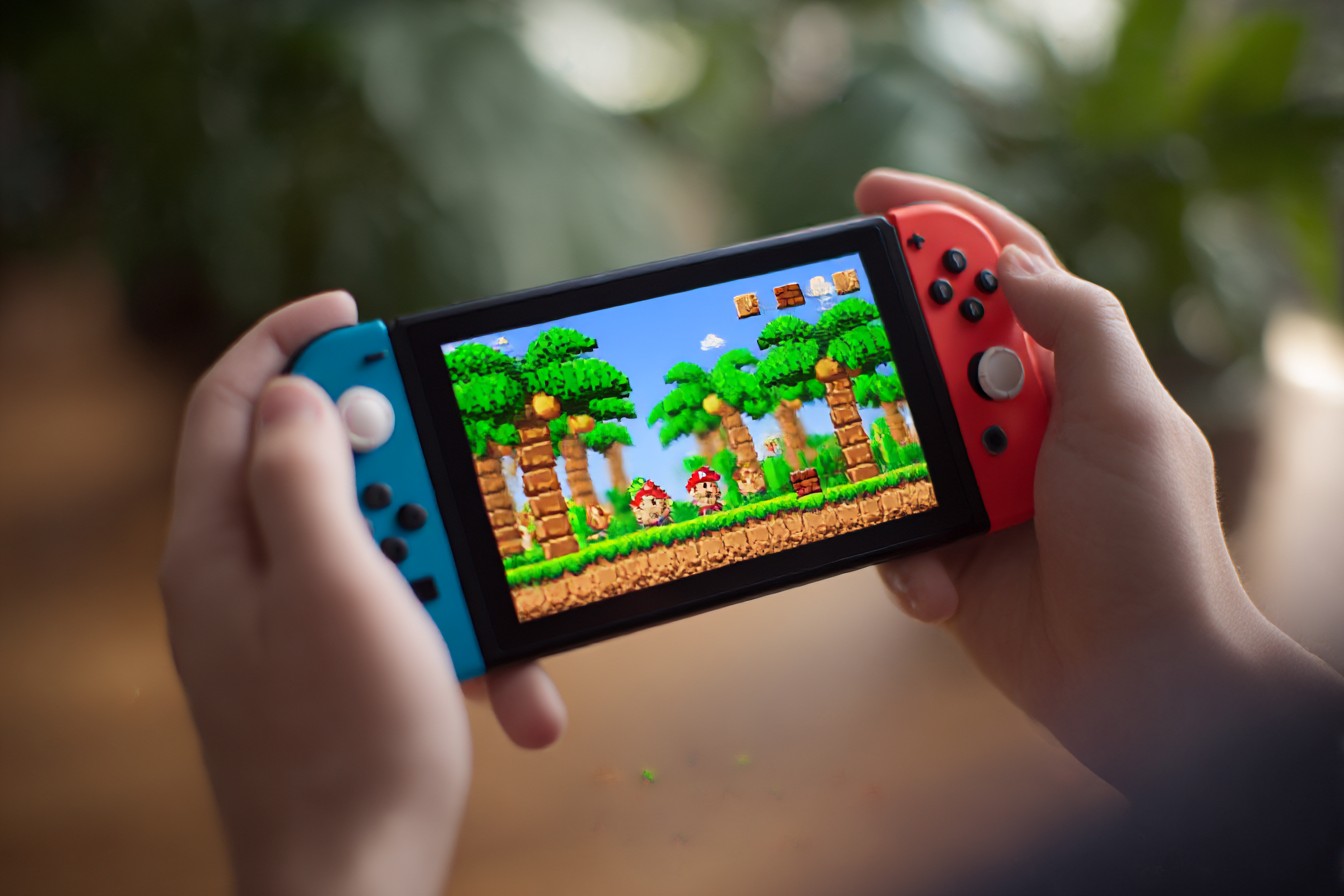
Portable Mario 64 hits different too. There's something surreal about playing this particular game on a bus or in bed. This was the game that demanded the living room, that required the big TV and the best seat on the sofa. It was an event. Now it fits in my jacket pocket, and I'm not sure my brain has fully processed that yet. I found myself playing it during my lunch break last Tuesday, sitting in my car with the rain drumming on the roof, collecting stars in Whomp's Fortress. It felt like smuggling a piece of childhood into my boring adult Tuesday.
The muscle memory is still there, buried but intact. I can still long-jump into that painting in the basement without thinking about it. My fingers still remember the exact rhythm for the penguin race, even though I'm pressing different buttons now. It's like riding a bike, if bikes were made of pixels and childhood wonder.
What gets me most is how the game's aged. I expected it to feel clunky, outdated. I mean, this thing predates the PlayStation 2 by four years. But Mario's movement still feels perfect – better than perfect, actually. That sense of momentum and weight, the way he builds speed in long jumps, the satisfying thunk when he ground-pounds… modern 3D platformers still chase this feeling and mostly fall short.
The graphics, though – that's where things get interesting. On the original hardware, everything was soft and slightly blurry, courtesy of the N64's anti-aliasing. It gave the whole game this dreamy, impressionistic quality. The Switch version is sharp as a tack, which reveals things I never noticed before. You can actually read the text on signs properly. The paintings look like actual paintings instead of pixelated smudges. But sometimes I miss that soft focus. It was like looking at the game through gauze, which somehow made it feel more magical.
Playing it now, I keep thinking about all the games that came after, all the lessons the industry learned from Mario 64. Every 3D platformer since owes something to this weird, wonderful experiment. But none of them quite captured the same sense of discovery, that feeling of being dropped into a playground where the rules were still being written.

The star collection still scratches the same itch it did twenty-seven years ago. There's something deeply satisfying about that little jingle, the way Mario holds the star up like he's just solved world peace. I caught myself grinning like an idiot when I grabbed the star from King Bob-omb for the hundredth time. Some things never get old.
Battery life takes a hit, I'll admit. This isn't exactly a power-efficient game, and the Switch isn't exactly known for marathon portable sessions anyway. But honestly? I'm fine with plugging in more often if it means I can have Mario 64 anywhere. It's a small price to pay for having what might be the most important 3D game ever made in my back pocket.
Coming back to Super Mario 64 on Switch feels less like playing a retro game and more like visiting an old friend who moved to a nicer neighborhood. Everything's familiar, but the surroundings are just a bit more polished. The heart of the experience – that pure joy of movement through impossible spaces – remains completely intact.
Sometimes the best ports don't just preserve a game; they help you remember why you fell in love with it in the first place.