There's something oddly magical about playing Super Mario 64 on a dual-screened handheld while sitting on a train that's gently swaying through the English countryside. I mean, you're holding what amounts to Nintendo's greatest 3D platformer ever made—arguably their most important game since the original Super Mario Bros.—and it's been squeezed into a device that fits in your jacket pocket. That's still mental to me, even though the DS version came out back in 2004.
I picked up my copy of Super Mario 64 DS on launch day, mostly because I'm the sort of person who gets genuinely excited about hardware launches. Always have been. There was something irresistible about the idea of Mario's grand 3D adventure being portable, even if I suspected it might lose something in translation. The original N64 version had been such a watershed moment—that first time you grabbed the analog stick and realized you could run Mario in proper 360-degree circles around Princess Peach's courtyard. Revolutionary stuff.
But here's the thing about the DS version that I don't think gets talked about enough: it's not just a straight port with touch controls bolted on. Nintendo actually went and redesigned significant chunks of the game to work around the fact that you're dealing with a D-pad instead of an analog stick. And honestly? They did a better job than they had any right to.
The biggest change, obviously, is the control scheme. That buttery-smooth analog movement from the original gets replaced with eight-directional digital movement, which sounds awful on paper. In practice, though, it works surprisingly well. Mario still feels like Mario—he's just a bit more…clicky, I suppose. Less like he's skating on ice, more like he's got proper grip on the ground. The running speed is adjusted to compensate, and the camera controls are mapped to the face buttons in a way that actually makes more sense than the N64's yellow C-buttons ever did.
What really impressed me, though, was how they handled the touch controls. This wasn't just Nintendo slapping touchscreen functionality onto everything because they could—though let's be honest, there was plenty of that going around in the DS era. The stylus actually serves a purpose here. You can control the camera by dragging on the bottom screen, which feels intuitive in a way that pushing tiny yellow buttons never quite did. There's also this neat little mini-map that shows your position in real-time, and you can tap it to get your bearings. Sounds simple, but when you're trying to navigate the labyrinthine mess that is Hazy Maze Cave for the hundredth time, that little quality-of-life improvement is worth its weight in gold.
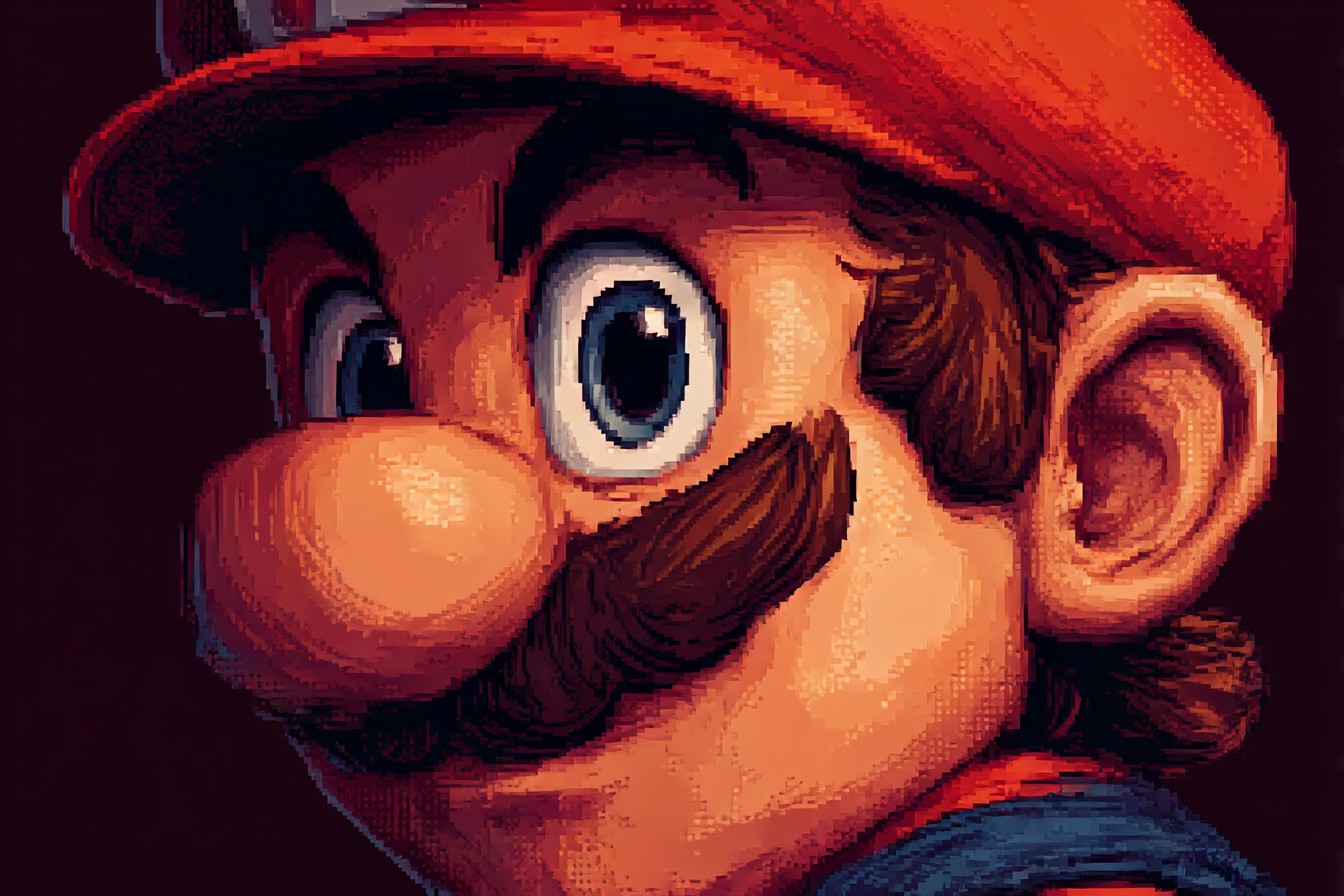
The visual upgrade is where things get interesting, and by interesting I mean "occasionally frustrating if you're a purist like me." The DS hardware is more capable than the N64 in some ways—better texture filtering, cleaner edges, that sort of thing. But it's also working with two tiny screens instead of whatever massive CRT you had plugged into your N64. The result is a game that looks sharper but somehow feels smaller. It's like watching Lawrence of Arabia on an iPhone. Technically superior, but you're missing some of the grandeur.
They added three new playable characters, too: Yoshi, Luigi, and Wario. This isn't just cosmetic—each character has unique abilities that open up different routes through familiar levels. Yoshi can flutter jump and eat enemies, Luigi can jump higher and run faster, Wario can break certain blocks that the others can't. It's proper character-based gameplay design, not just palette swaps with different voice clips. I spent ages replaying levels I thought I knew inside out, discovering secret areas that were only accessible to specific characters. That's good design, that is.
The multiplayer component deserves a mention, even though wireless DS multiplayer feels ancient now. You could actually play mini-games with up to four people using just one cartridge, which was properly impressive back when most handheld multiplayer required everyone to own the game. The mini-games themselves were hit-and-miss—some brilliant touch-control innovations, others feeling like tech demos—but the social aspect was lovely. Sitting around a table with mates, all hunched over our chunky DS units, styluses flying…it had the same energy as those old Game Boy link cable sessions, just with better graphics.
But here's what I keep coming back to: the portability factor changes everything about how you experience this game. Super Mario 64 on N64 was an event. You'd boot it up, settle into the sofa, maybe clear an evening to really dive in. The DS version becomes this thing you chip away at. Five minutes on the bus, grab a star. Waiting for the kettle to boil, knock out a quick race with that bloody penguin. It transforms the game from this epic, immersive experience into something more casual and accessible.
That's not necessarily better or worse—it's just different. I found myself noticing details I'd missed in hundreds of hours with the original because I was playing in shorter bursts, paying attention to smaller moments. The way the wind affects Mario's cape in Shifting Sand Land. The little animation flourishes when he grabs onto ledges. The fact that the penguin in Cool, Cool Mountain is genuinely, hilariously difficult to wrestle with using a D-pad instead of analog controls. (Seriously, that thing became my nemesis.)
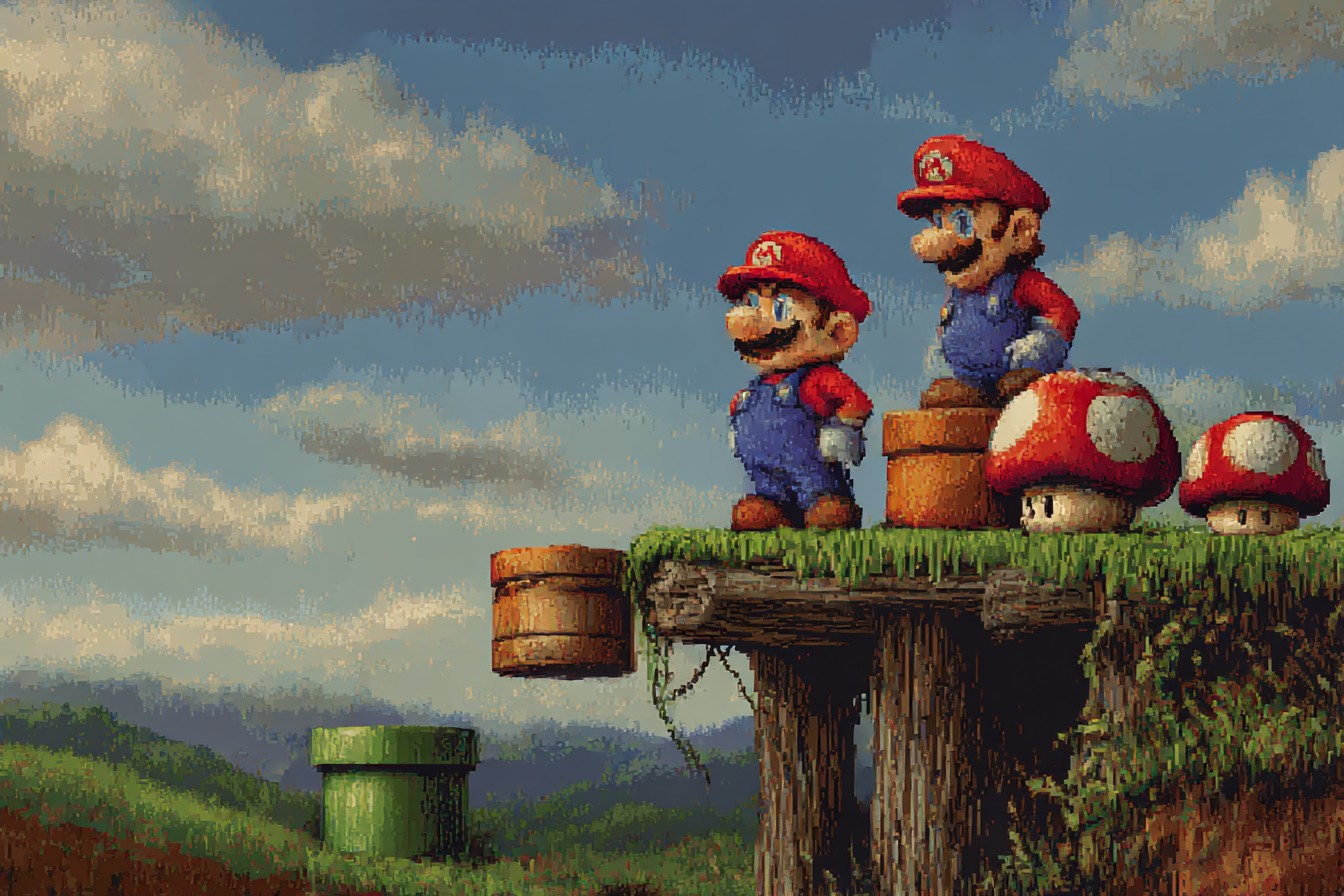
The touch-screen mini-games scattered throughout are mostly charming rather than essential. There's this one where you have to trace Luigi's face with the stylus that's simultaneously pointless and oddly relaxing. Another where you're catching falling coins by moving Mario around with the touch screen. They feel like the kind of extras you'd find in a Game & Watch collection—simple, quick diversions that show off the hardware without overstaying their welcome.
Sound-wise, it's mostly faithful to the original, though compressed through the DS's speakers it loses some of the punch. The iconic "Bah-bah-bah" when you collect a star still hits just right, though. And hearing Charles Martinet's Mario voice samples coming through those tiny speakers never stopped being endearing, even if they sounded like he was talking through a tin can sometimes.
Looking back nearly two decades later, Super Mario 64 DS feels like a successful experiment in handheld 3D gaming. It proved that complex, camera-controlled 3D platformers could work on portable systems without feeling compromised. Sure, it's not quite the revelation that the original was, but it didn't need to be. It just needed to be good Mario on the go, and it absolutely nailed that brief.
The fact that I can still boot it up today and immediately fall into that familiar rhythm of collecting stars and exploring painted worlds speaks to how well Nintendo adapted their masterpiece for new hardware. Sometimes the best ports aren't the most faithful ones—they're the ones that understand what made the original special and find new ways to deliver that same feeling.



